Tru-Vue Home | History | Viewers | Filmstrips | Cards | Boxes | Cases | Special Sets | Sales & Advertising
Tru-Vue 3D Cards
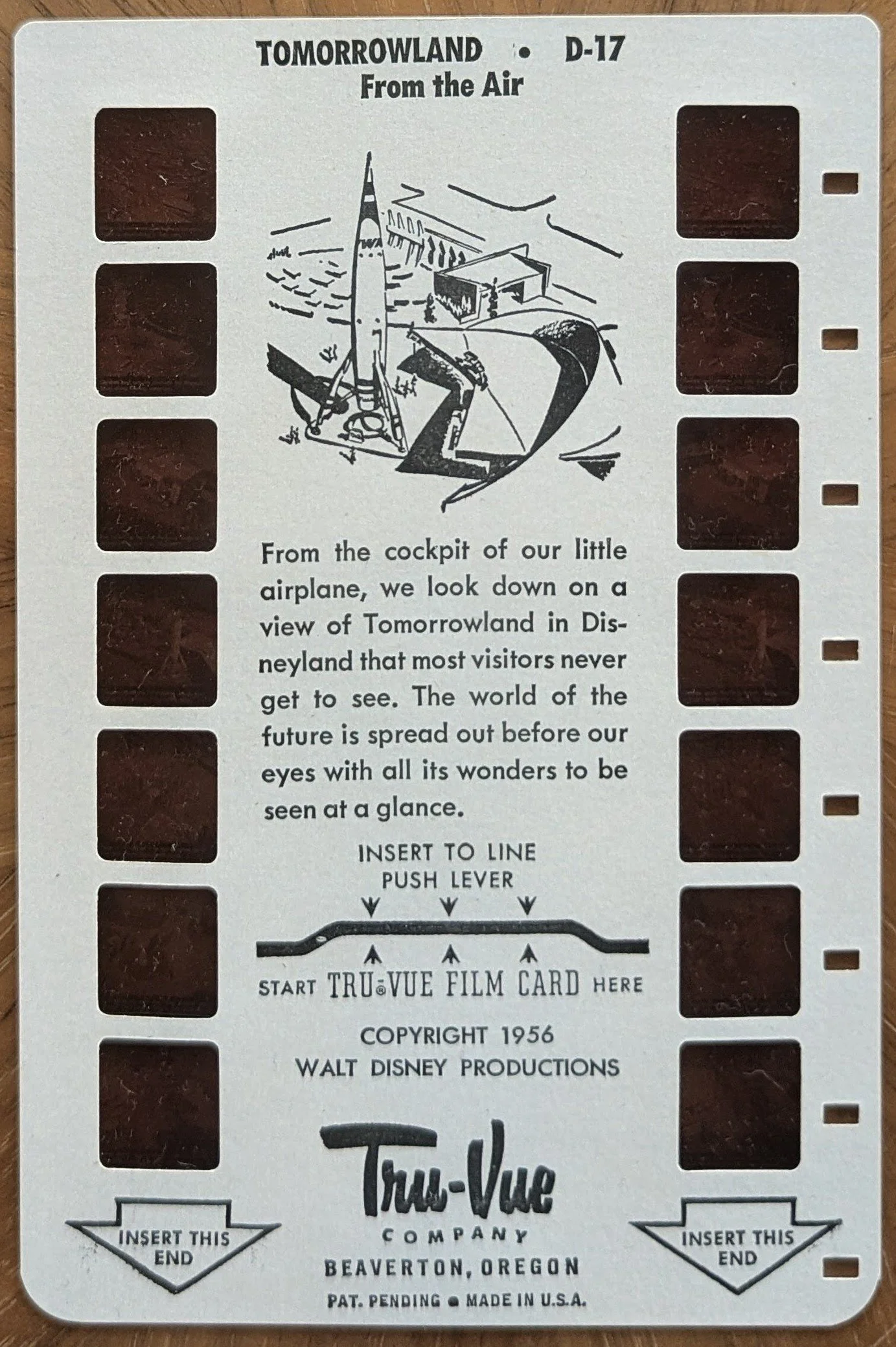
A New Era
When Sawyer’s acquired Tru-Vue, the company faced a major strategic challenge: how to manage two competing 3D product lines—View-Master and Tru-Vue—without confusing consumers or driving up costs. What followed was a fascinating period of brand strategy, product redesign, and technical experimentation that ultimately transformed Tru-Vue from a 35mm stereo filmstrip system into a stereo-card format.
In 1996, Tom Martin documented this pivotal transition in a comprehensive article for Inside 3-D. He details the key challenges Sawyer’s and the Tru-Vue team worked to solve:
Lowering the cost of Tru-Vue color production
Creating a format easier for children to handle than filmstrips
Keeping the View-Master and Tru-Vue brands clearly distinct in consumers’ minds
There’s strong evidence that Clarence Romrell—a Tru-Vue engineer who followed the company from Rock Island to Sawyer’s headquarters in Beaverton, Oregon—began developing new media and viewer concepts as early as December 1951. By May 1952, he had largely settled on the final 7-view multi-card format; probably no coincidence that it conveniently had the same number of views as View-Master reels. With the media design finalized, attention turned to creating a new viewer to match.
By 1953, Romrell had secured the design patent US-D171049-S for Tru-Vue’s first multi-card plastic viewer, known as the “Budget” viewer. This model debuted at the New York Toy Fair in March 1953. Several years later, in 1958, Romrell was granted the full utility patent (US-2834251), which covered both the functional viewer design and the 7-pair stereo mounting card.
Tru-Vue would go on to release additional plastic card viewers, including a battery-powered lighted “Deluxe” version and a compact 98-cent “Junior” viewer, along with a range of cardboard viewers marketed to corporate partners.
For the stereo cards themselves, a film with poor color stability was selected — likely as a cost-saving measure — so the stereo images in many Tru-Vue cards have faded over time.
Scroll to the bottom of our Viewers page for photos and detailed examples of the Tru-Vue card viewers. And be sure to track down Tom Martin’s Inside 3-D article for the full backstory, including original diagrams, early prototypes, and rare insights into the development of the Tru-Vue stereo card system.
Single Cards
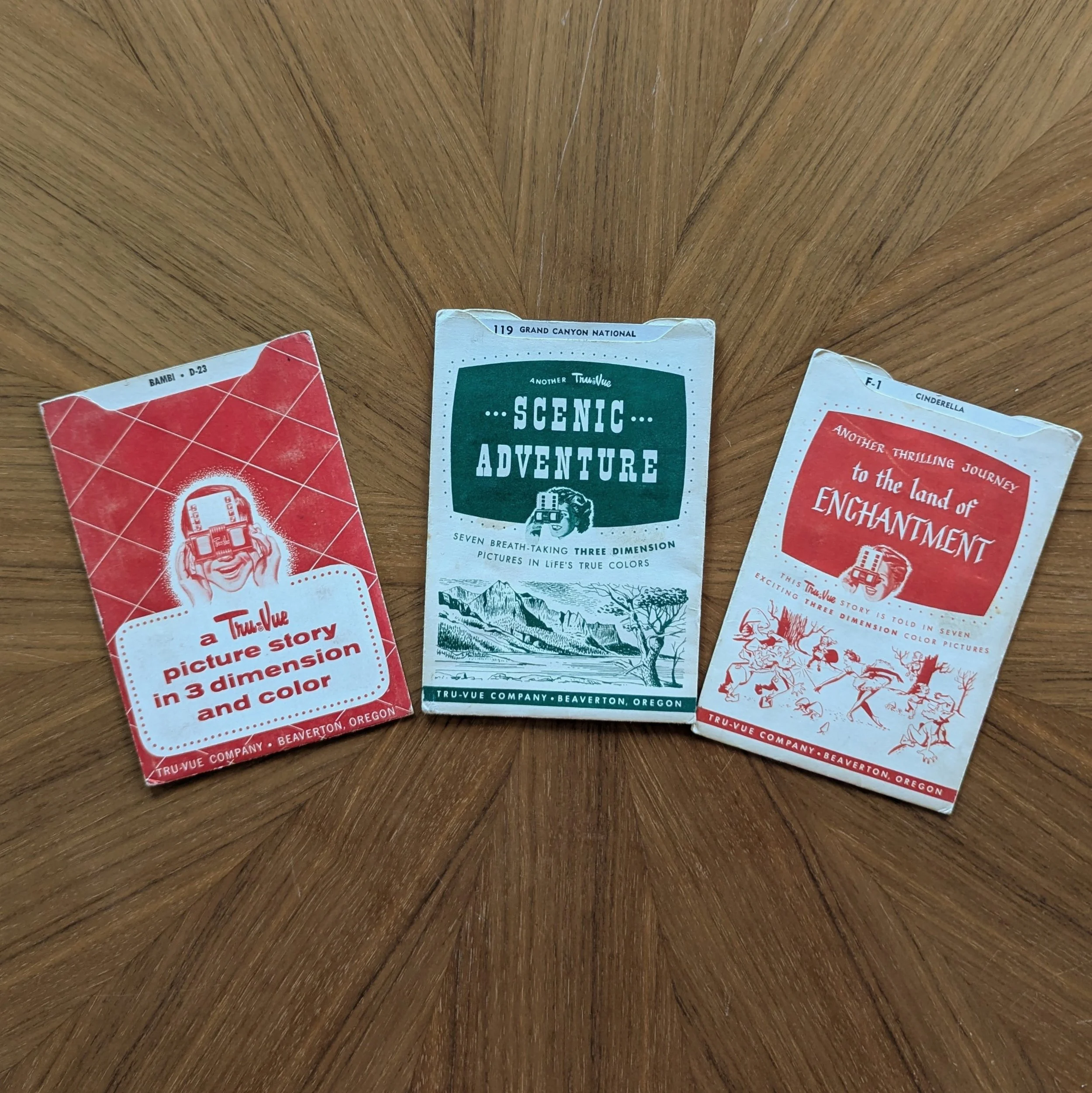
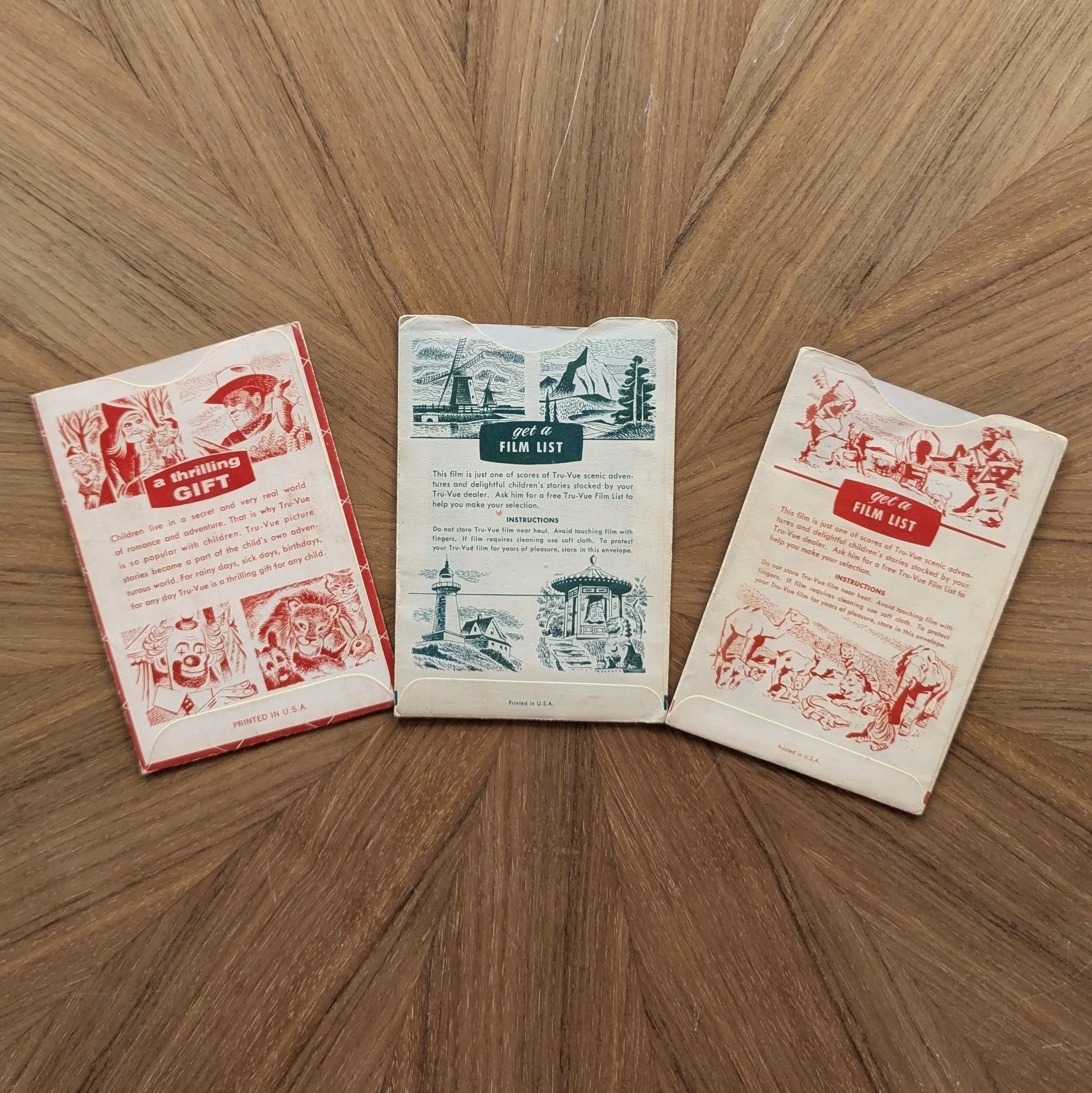
Tru-Vue cards hit the market with a variety of Children’s and Scenic subjects. The cards, tucked into colorful envelopes, could be found in retail stores, beckoning to children from their countertop racks and revolving floor displays.
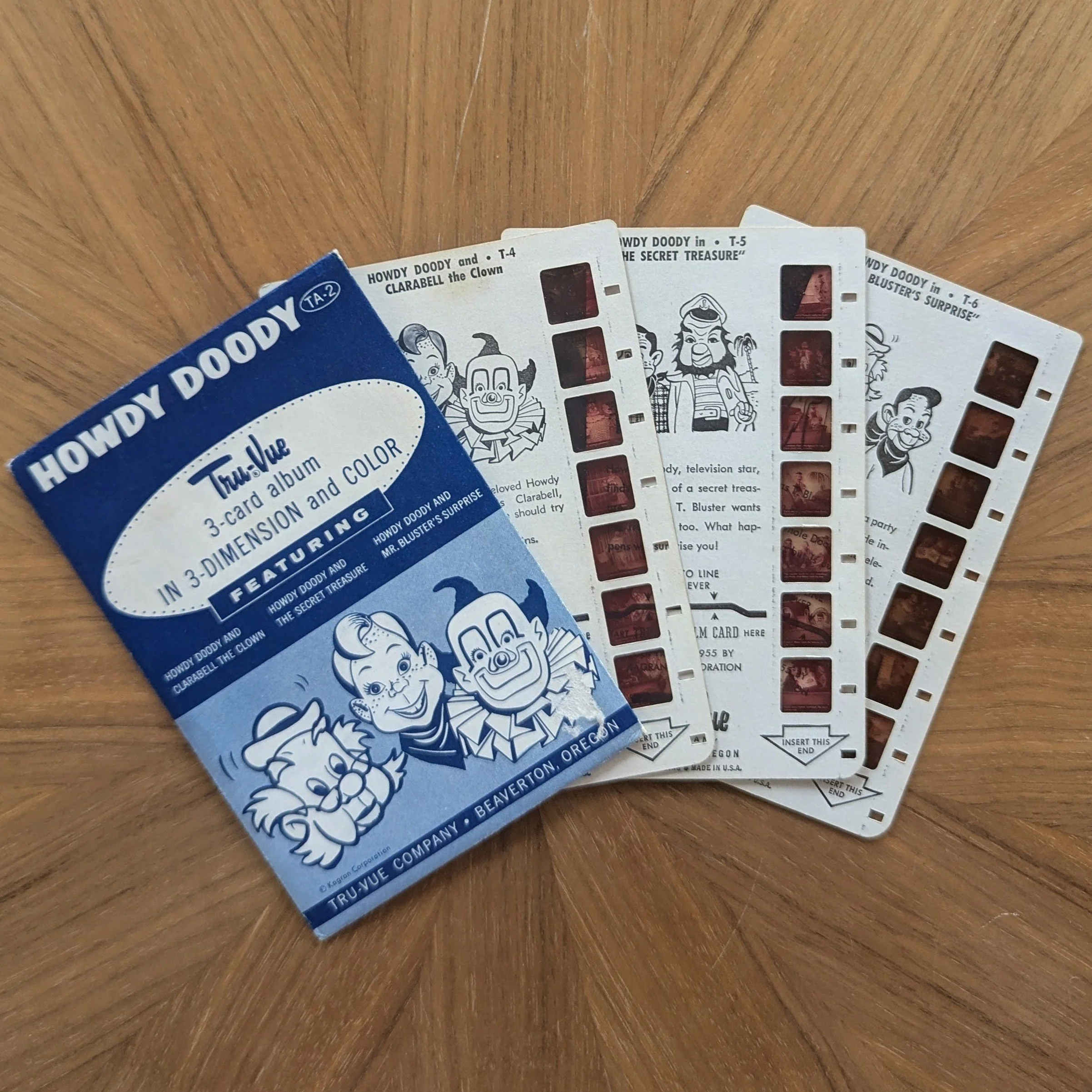
3-Card Albums
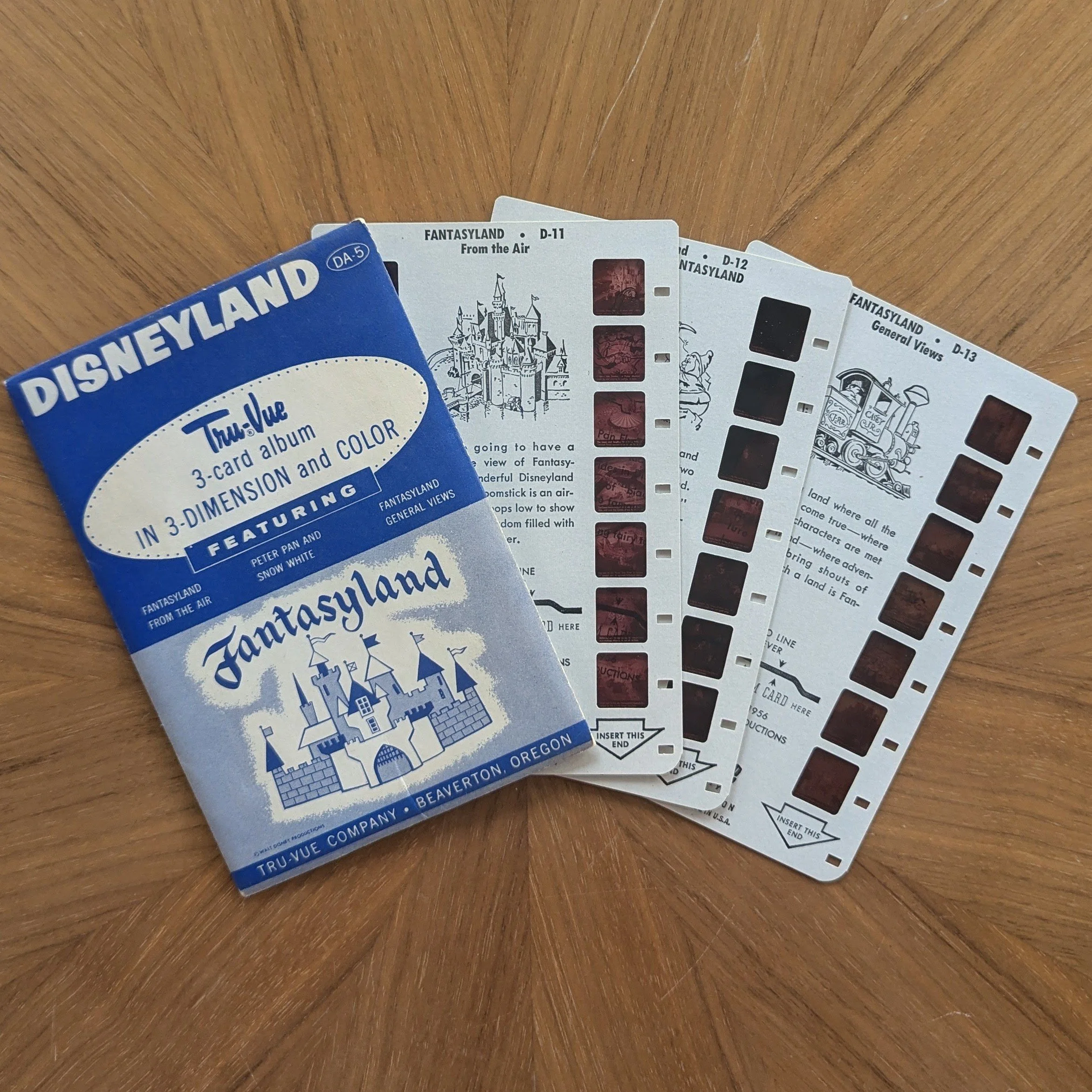
Besides the single-card envelopes shown above, Tru-Vue cards could also be purchased in themed “albums” containing 3 related cards in a single envelope. There were approximately 27 different albums. Themes ranged from television shows like Howdy Doody and Lone Ranger to fairy tales, circus, religious, Disney, and Disneyland. Collectors are often interested in the television and Disneyland albums.
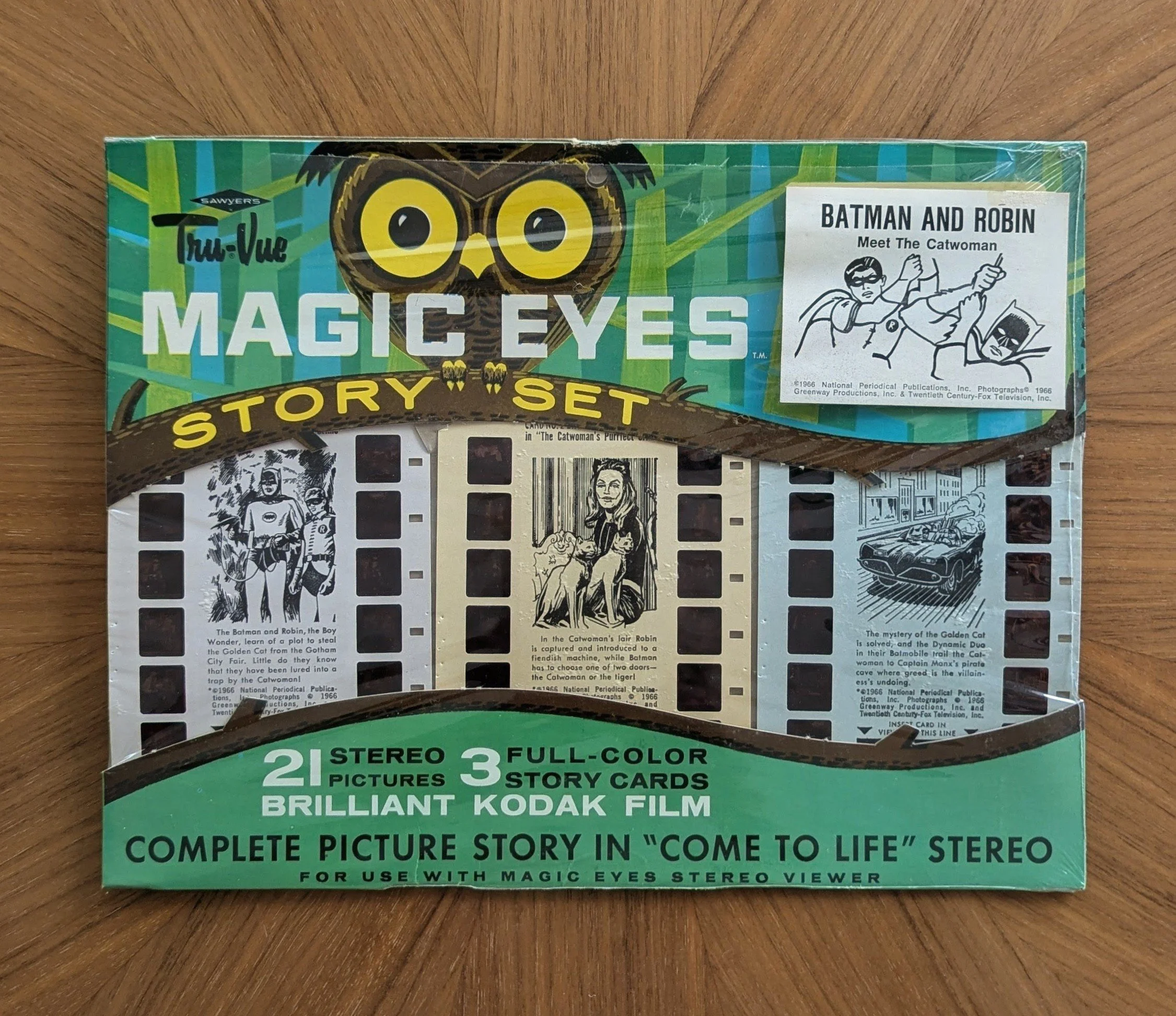
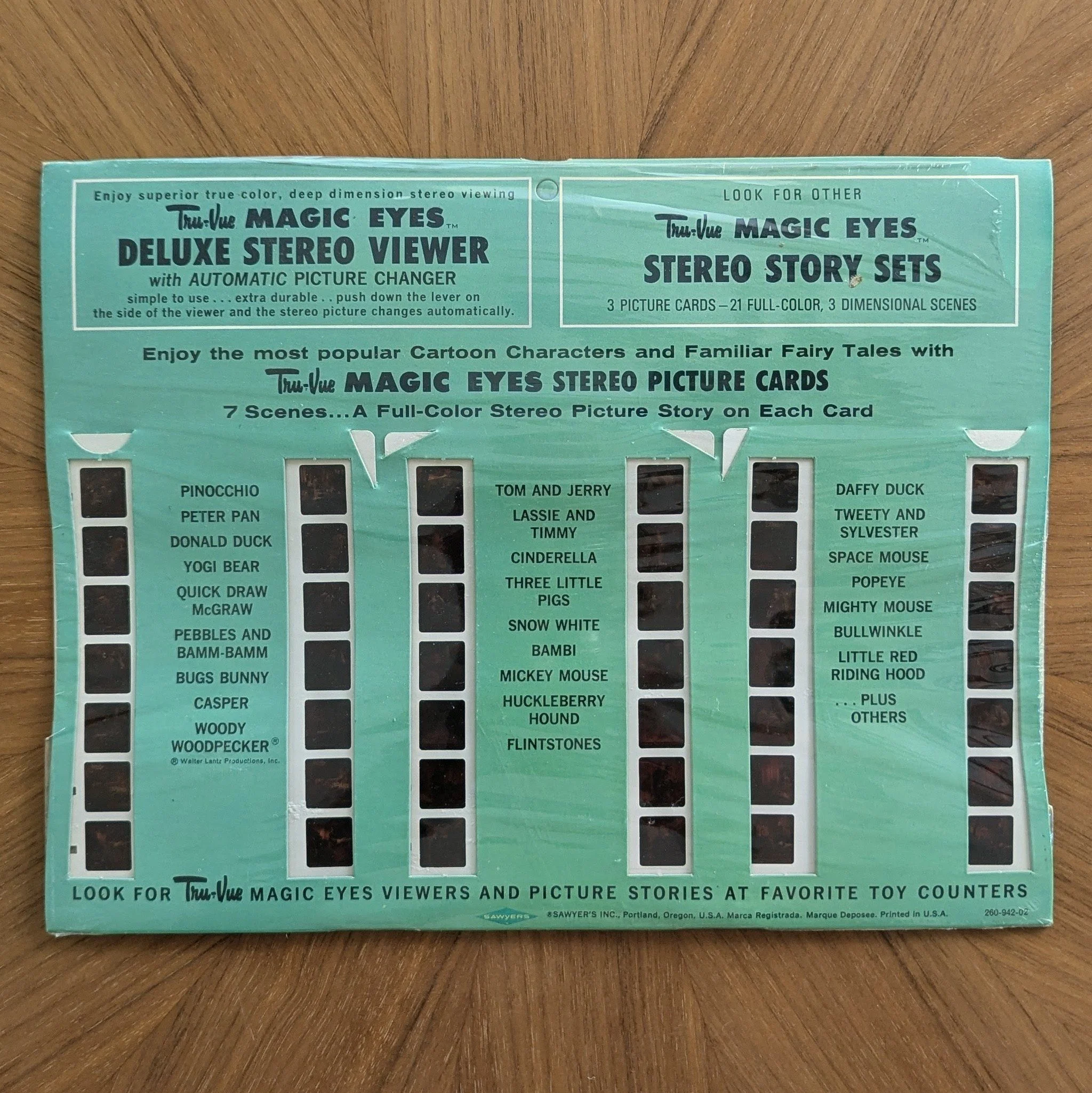
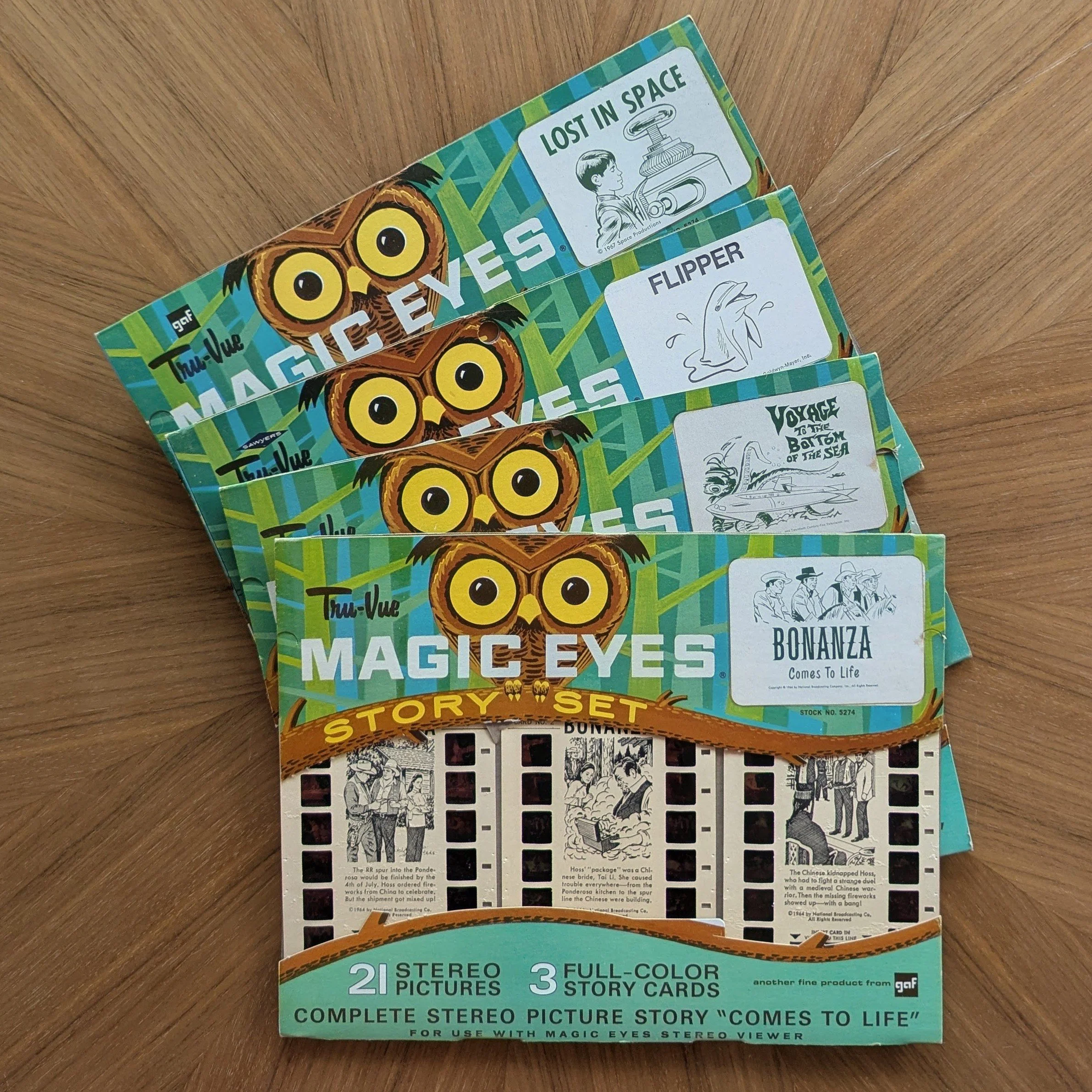
Magic Eyes 3-Card Story Sets
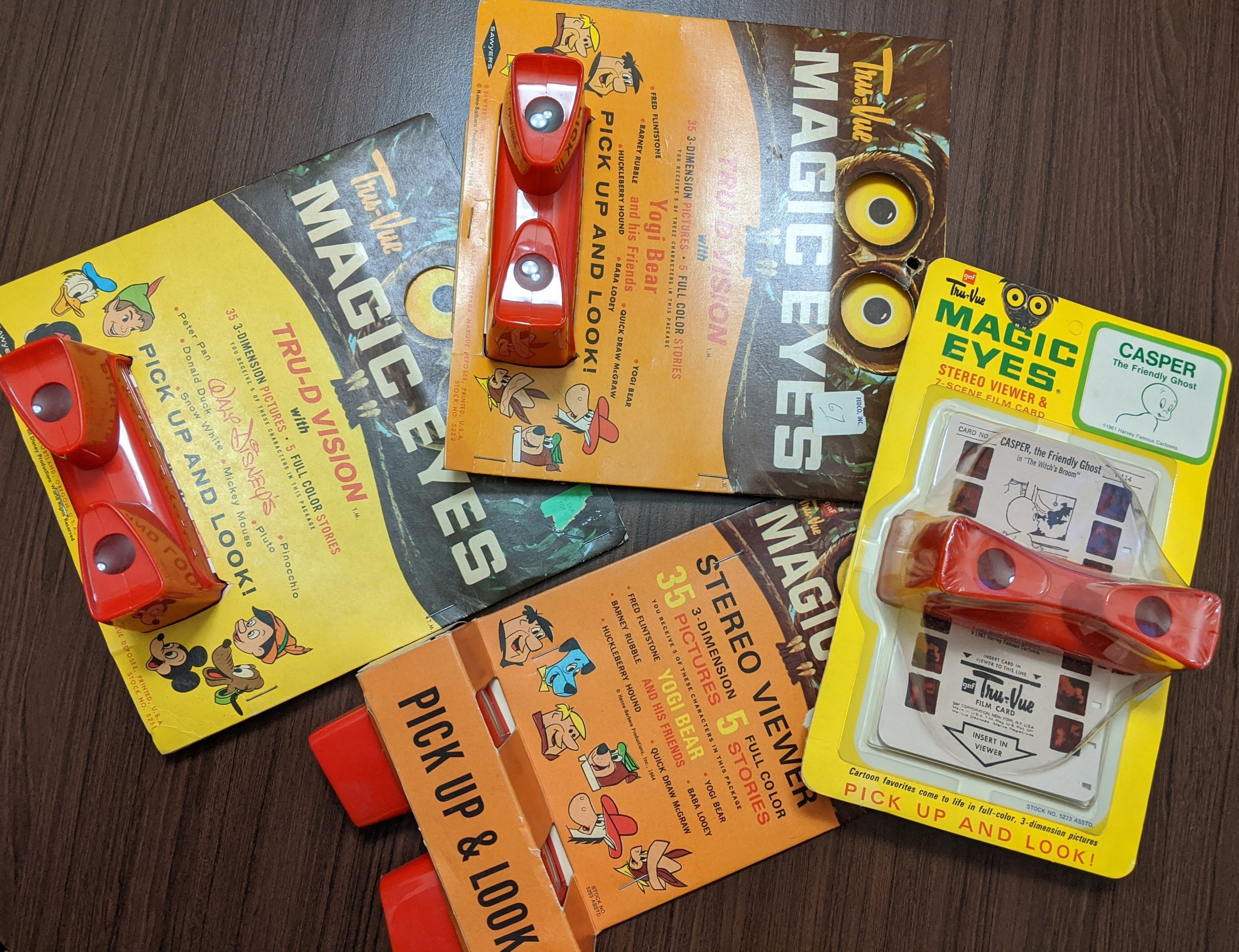
The Magic Eyes sets, with its wide-eyed owl mascot, also have 3 cards, but the outer envelope has been ditched in favor of the cellophane packaging. Here again, TV shows like The Munsters, Batman and Robin, The Green Hornet, Lost in Space, and The Addams Family, were popular subjects and still catch the eye of collectors when found in mint condition. The Magic Eyes theme would continue after Sawyer’s changed over to Gaf, and could also be found packaged with a viewer in a “pick up and look” package design.
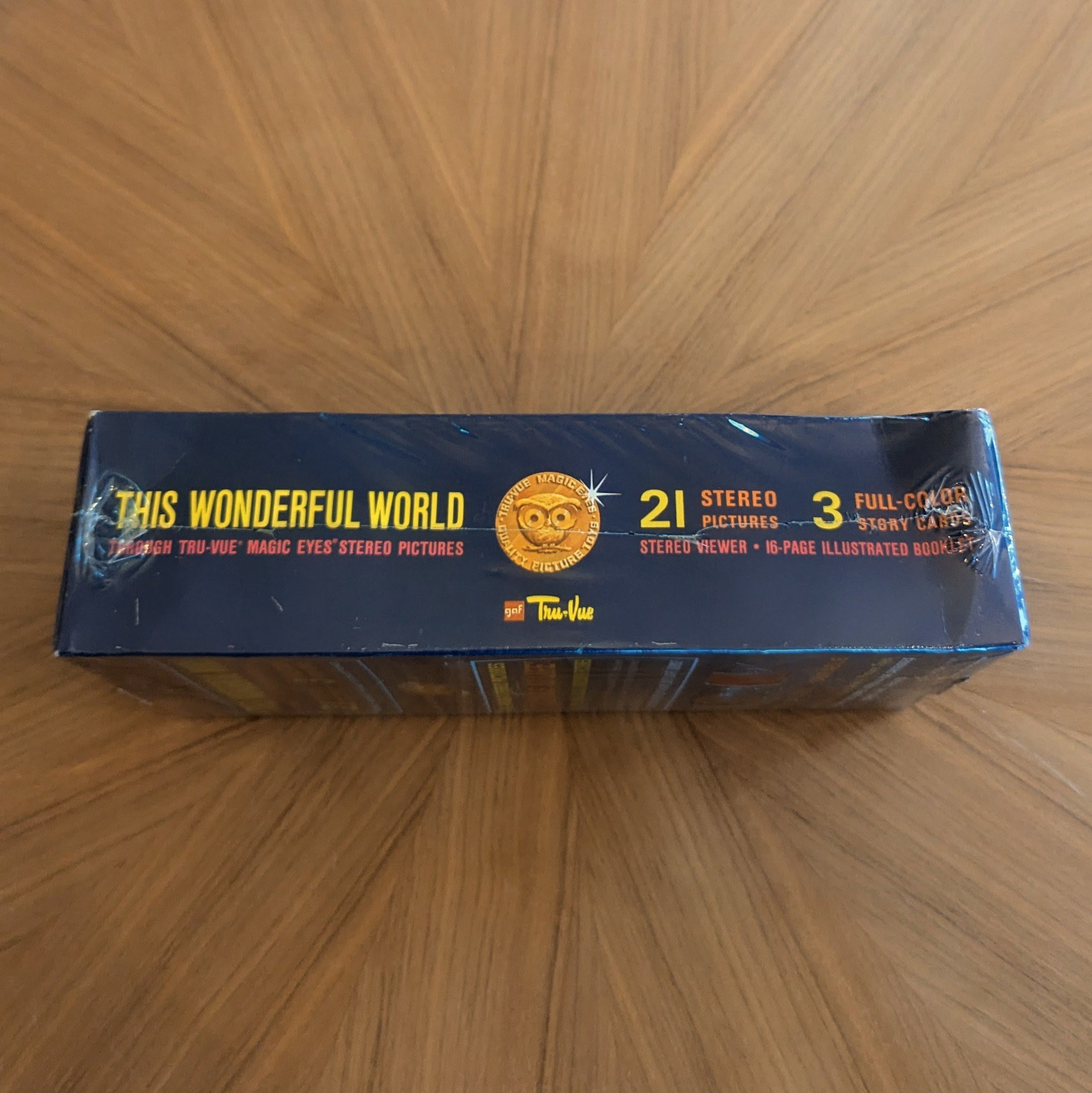
This Wonderful World 3-Card Sets
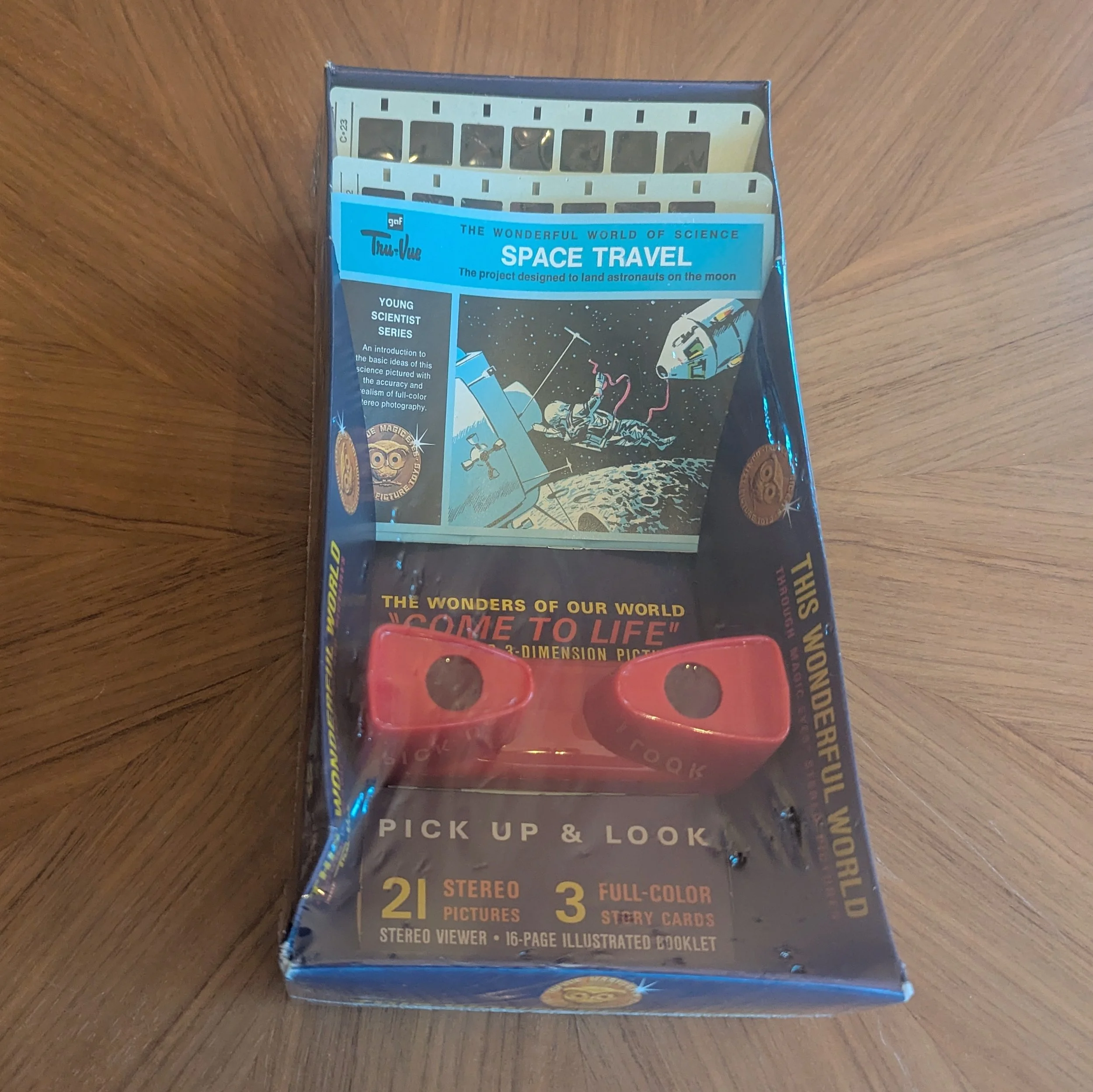
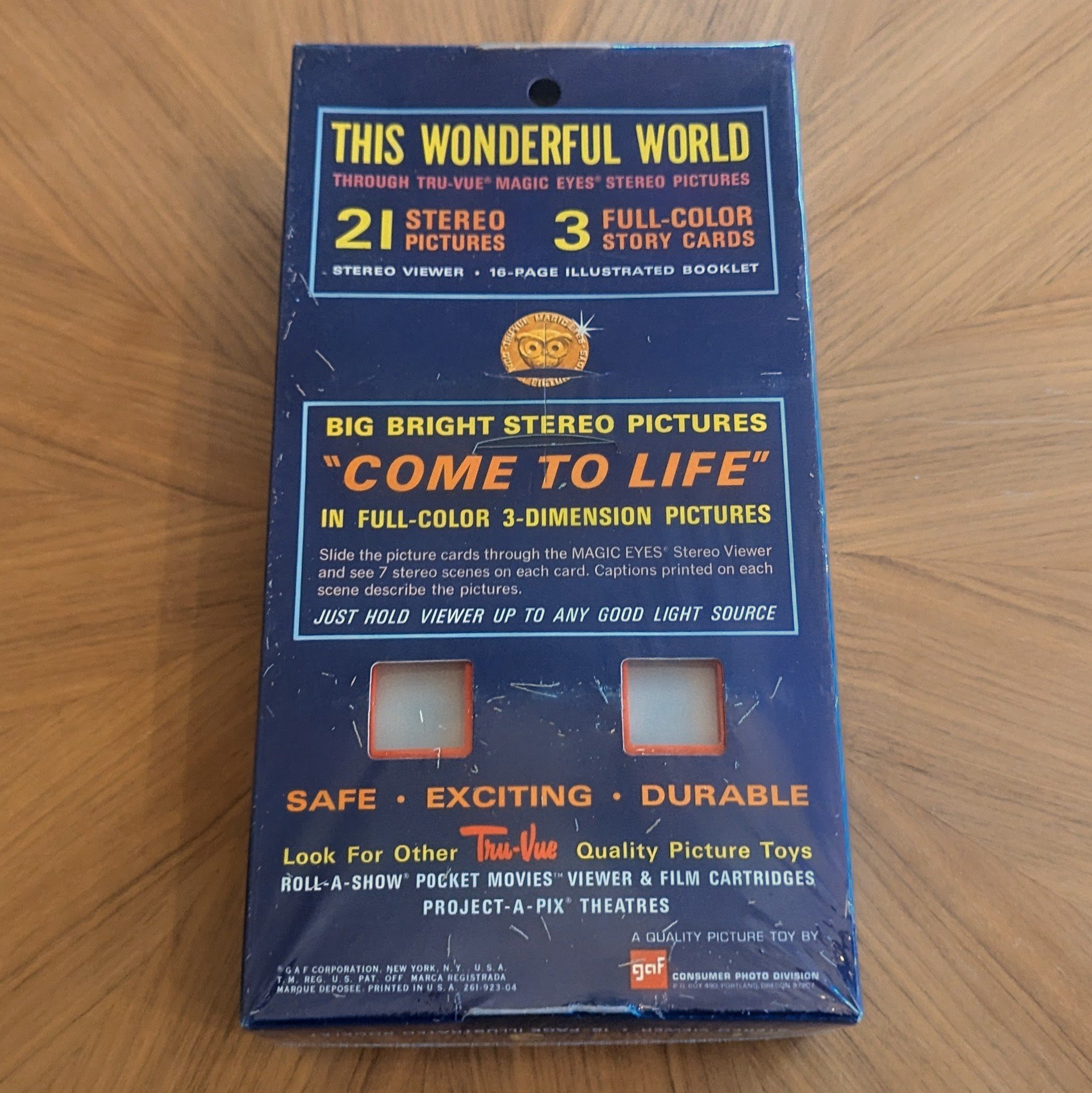
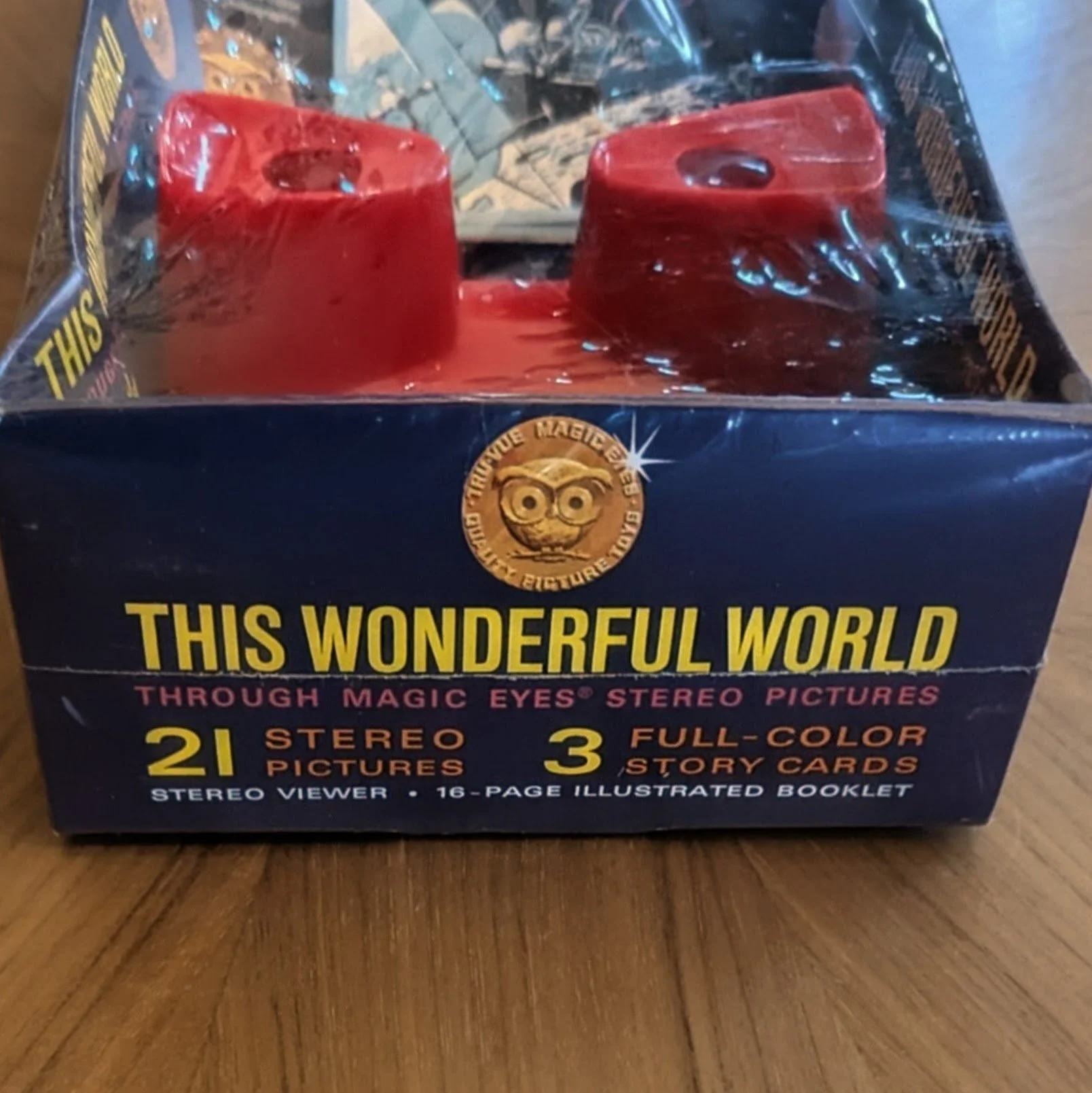
Another marketing angle for the Tru-Vue cards, this time with a focus on science. There are at least 13 sets on topics like rocks, sea life, space, birds, archaeology, and more. These were cellophane packaged with “pick up & look” designs.
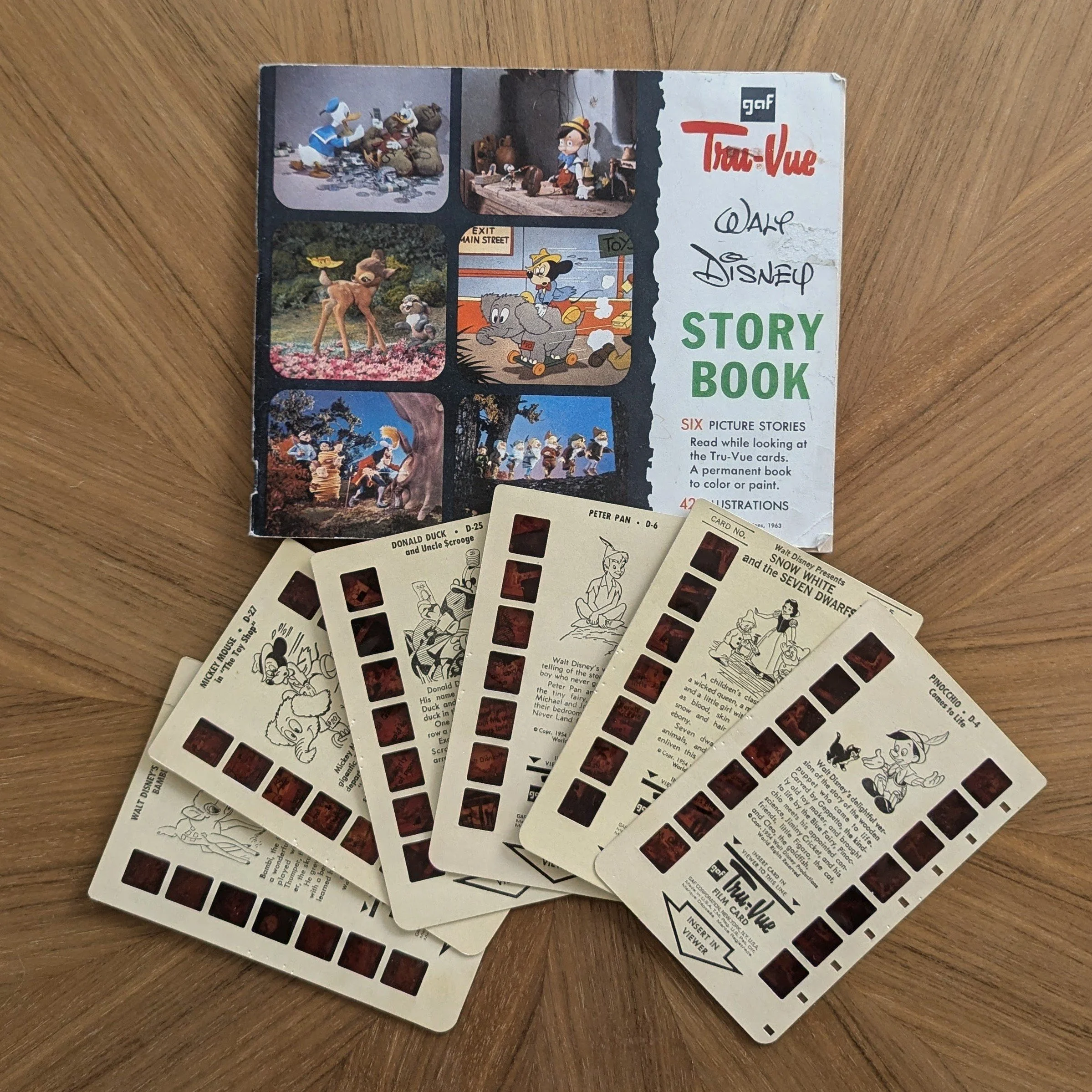
Tru-Vue Coloring Book & Card Sets
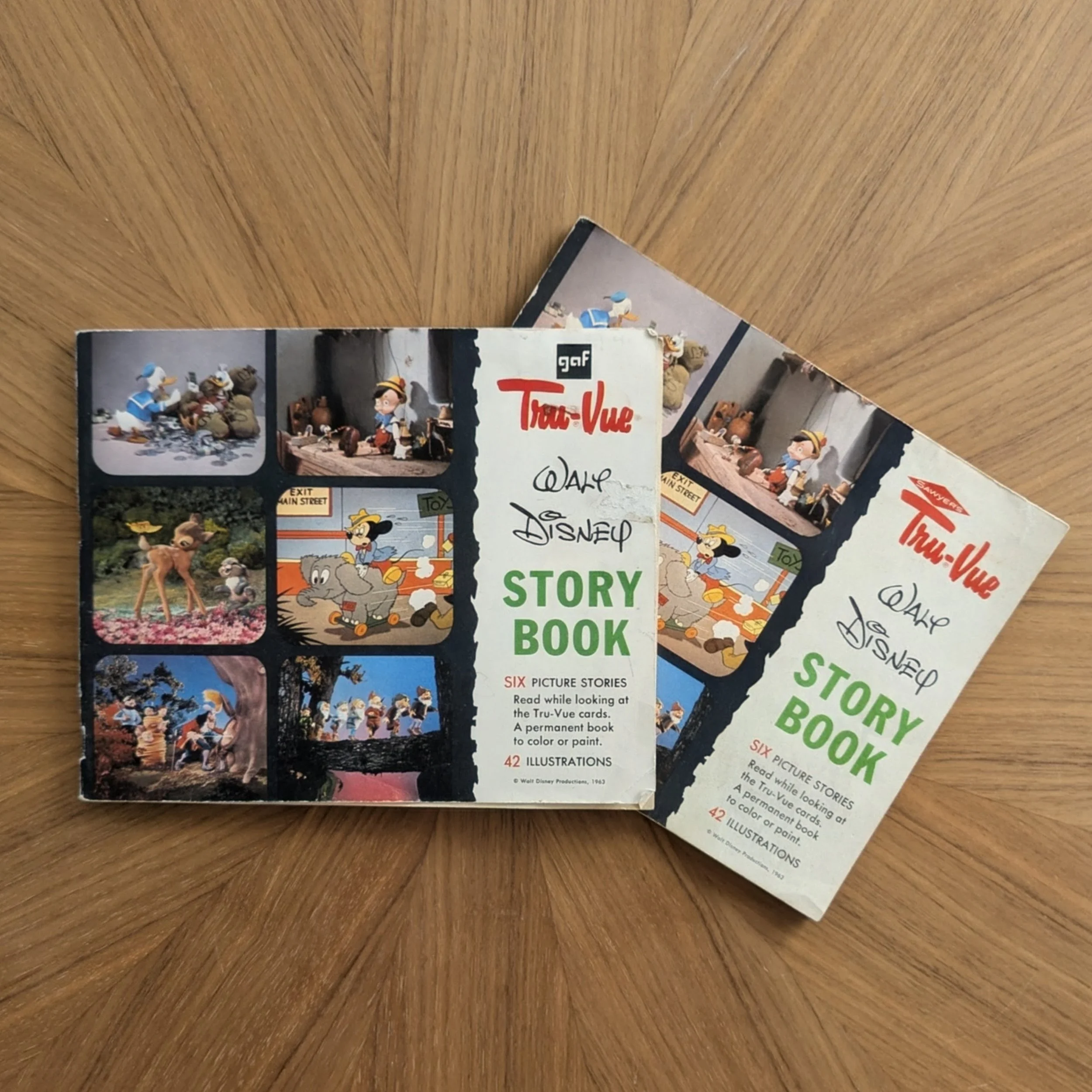
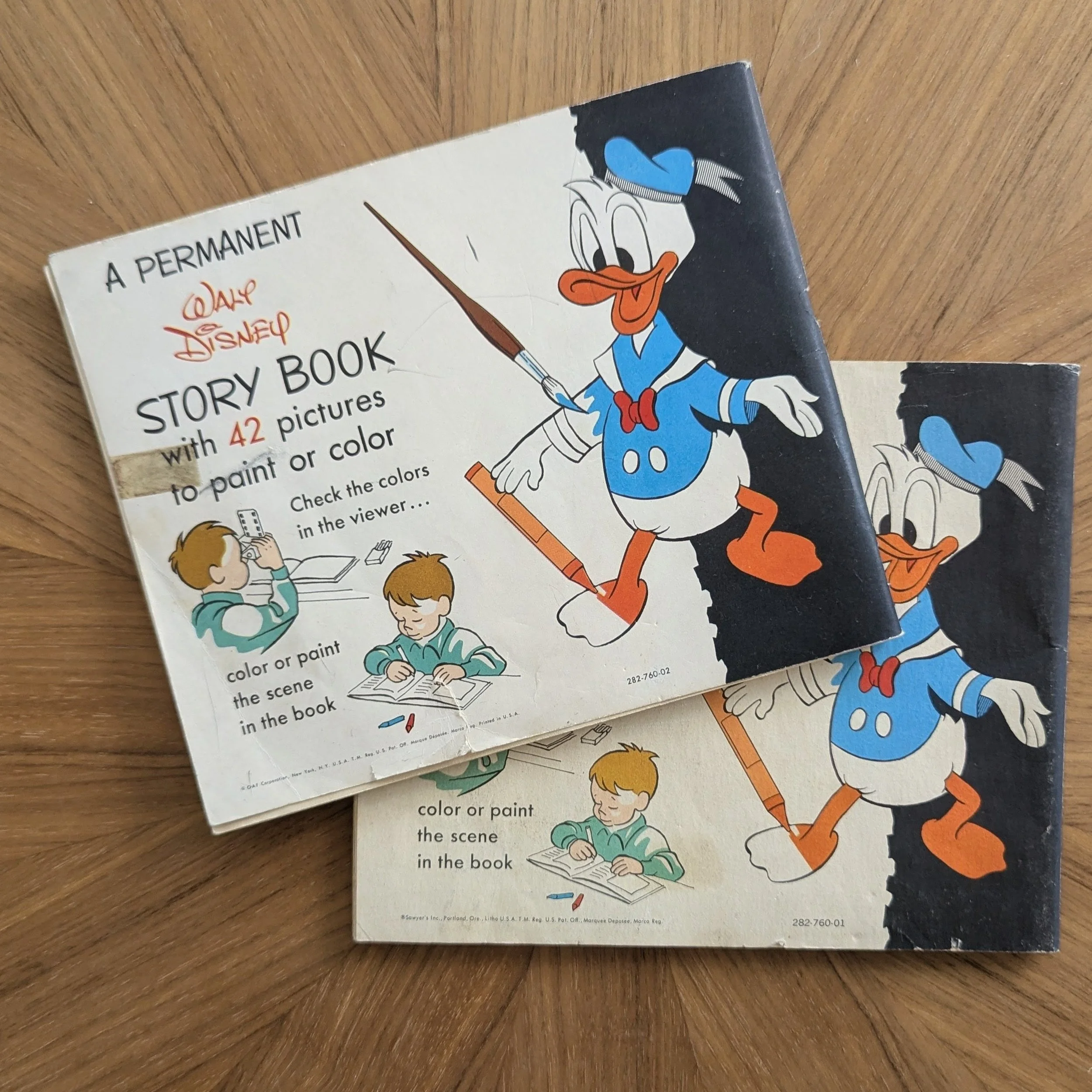
Tru-Vue published several coloring books under both the Sawyer’s and Gaf names. The coloring books had 6 stories and came with 6 Tru-Vue cards, 1 for each story, so youngsters could see the stories come alive in 3D while reading them. We wouldn’t classify these coloring books as rare, but they are scarce and very hard-to-find in clean, intact condition, with all 6 cards.
Comparison of Sawyer’s and Gaf Coloring Books
Master Files
Here are examples of “master file” Tru-Vue stereo cards in our collection. Most often, these cards do not have any graphics or text printed on them; instead, they have the catalog number and a date stamped on them, and may have the card title handwritten.
Unreleased Card
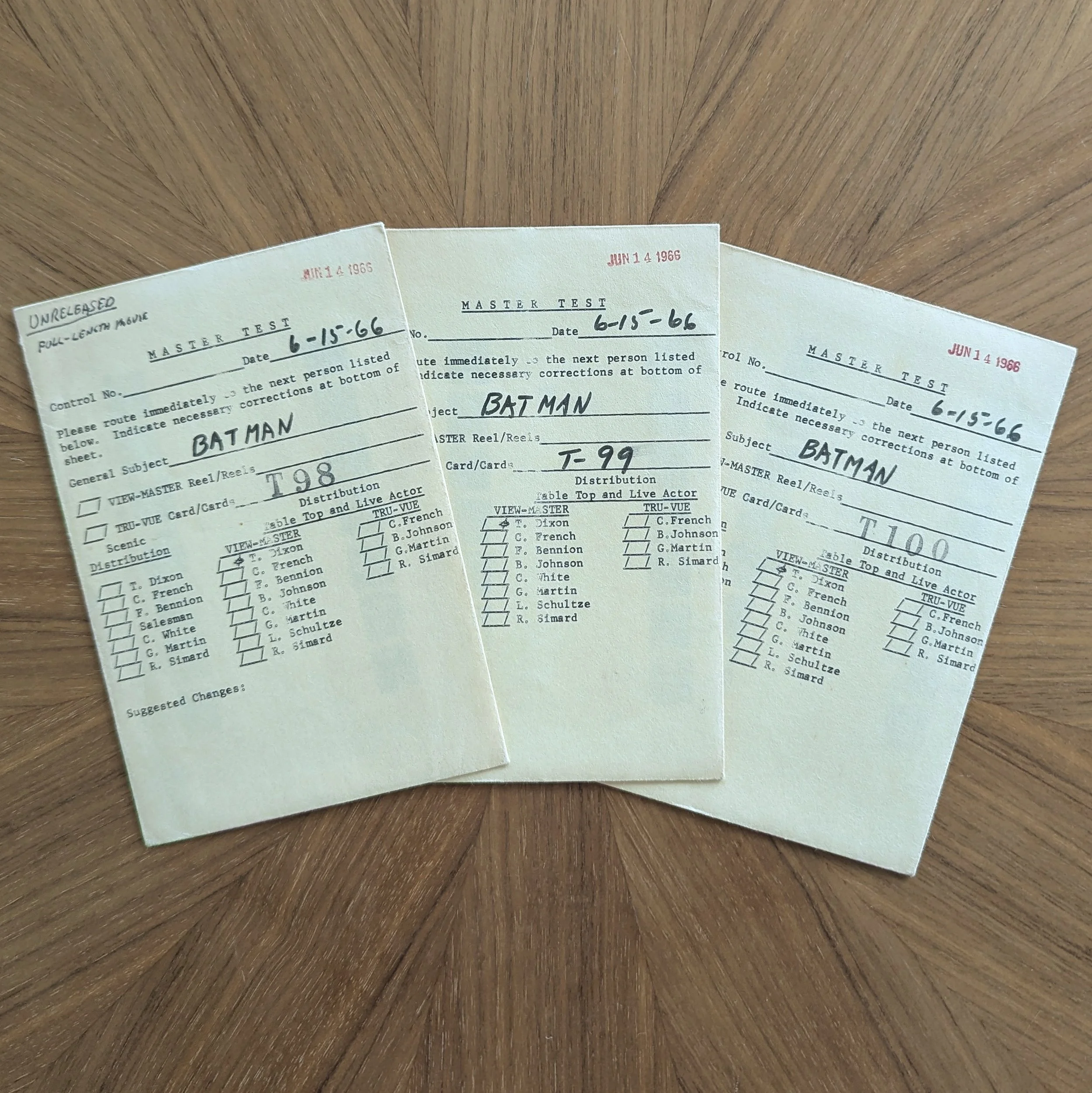
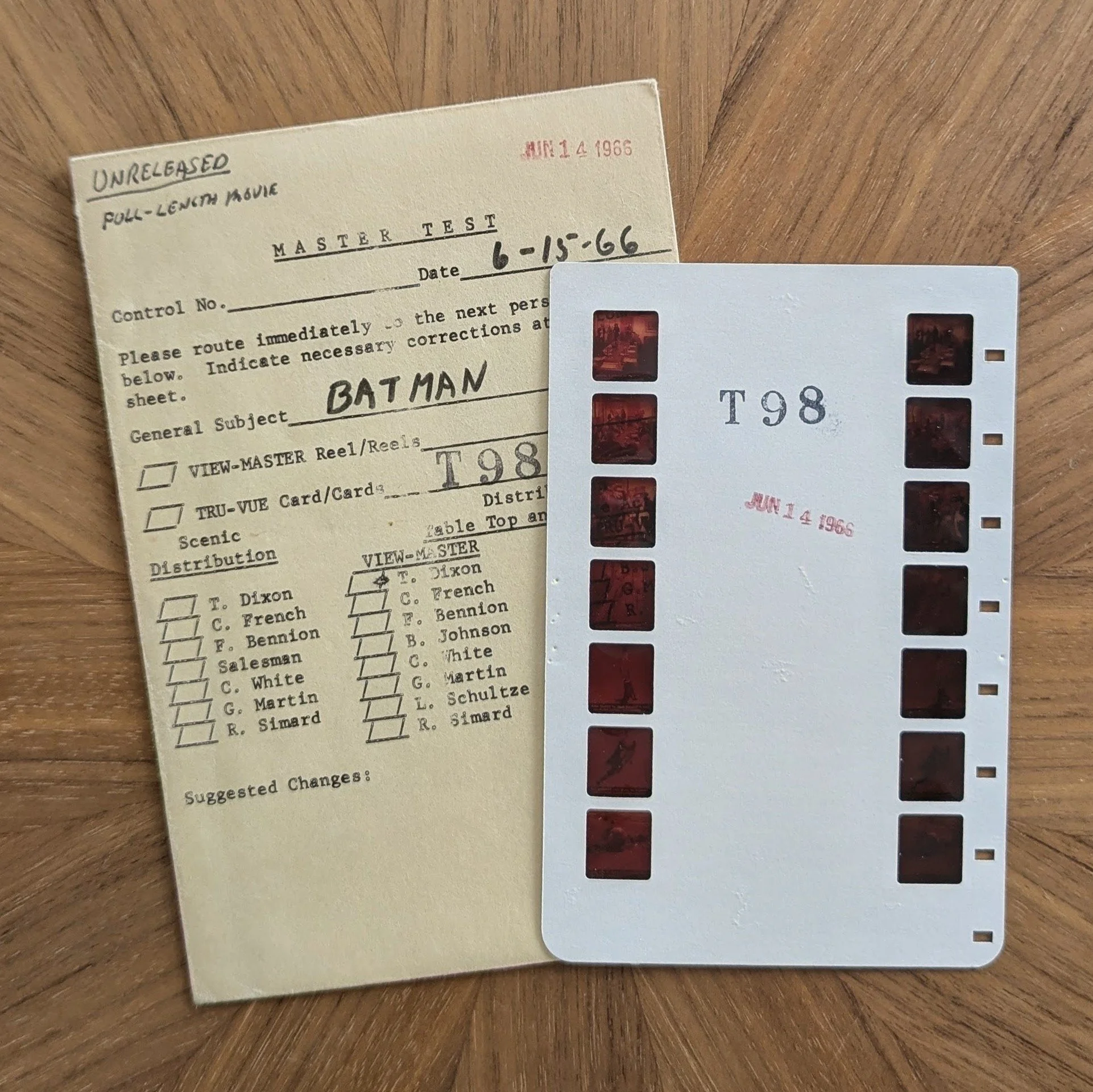
Typically, master files go on to be released. This set contains an example of an unreleased Batman card, T-98, as well as examples of envelopes printed with distribution checklists for routing and space for writing suggestions.
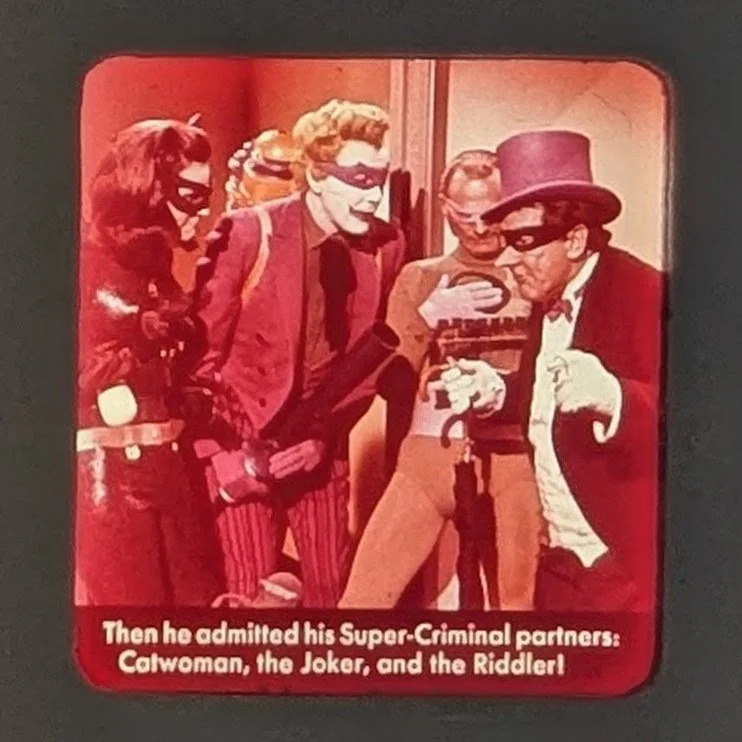
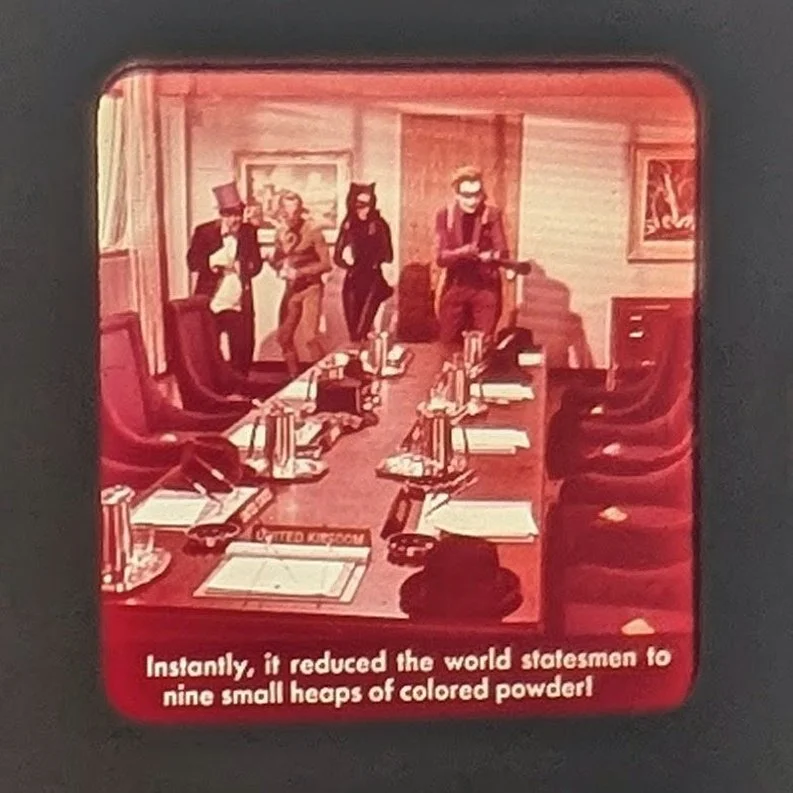
We don’t know the reason T-98 wasn’t released, and have shared a couple of images from the card below.
Other Master Files
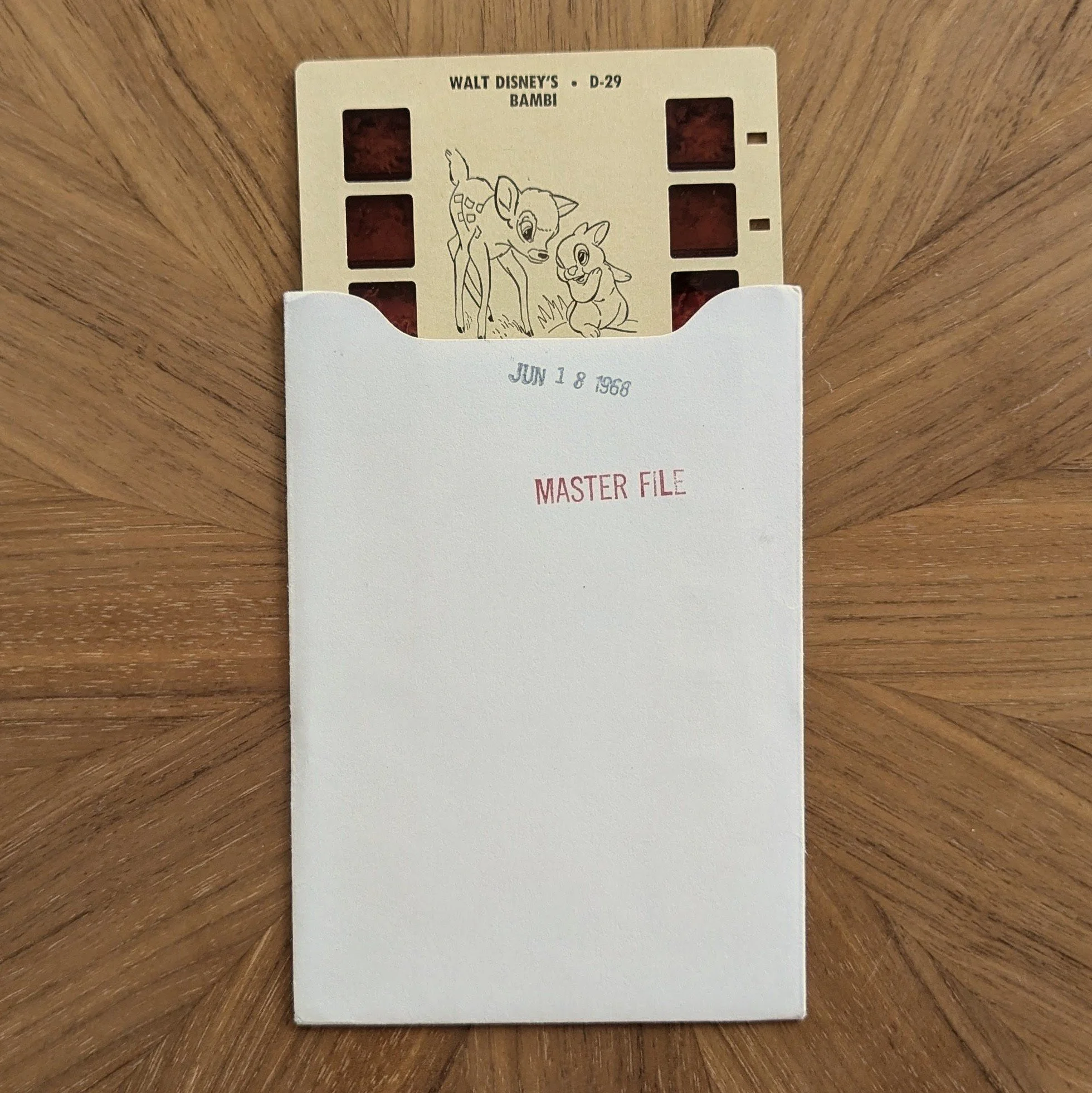
Front of Bambi master file
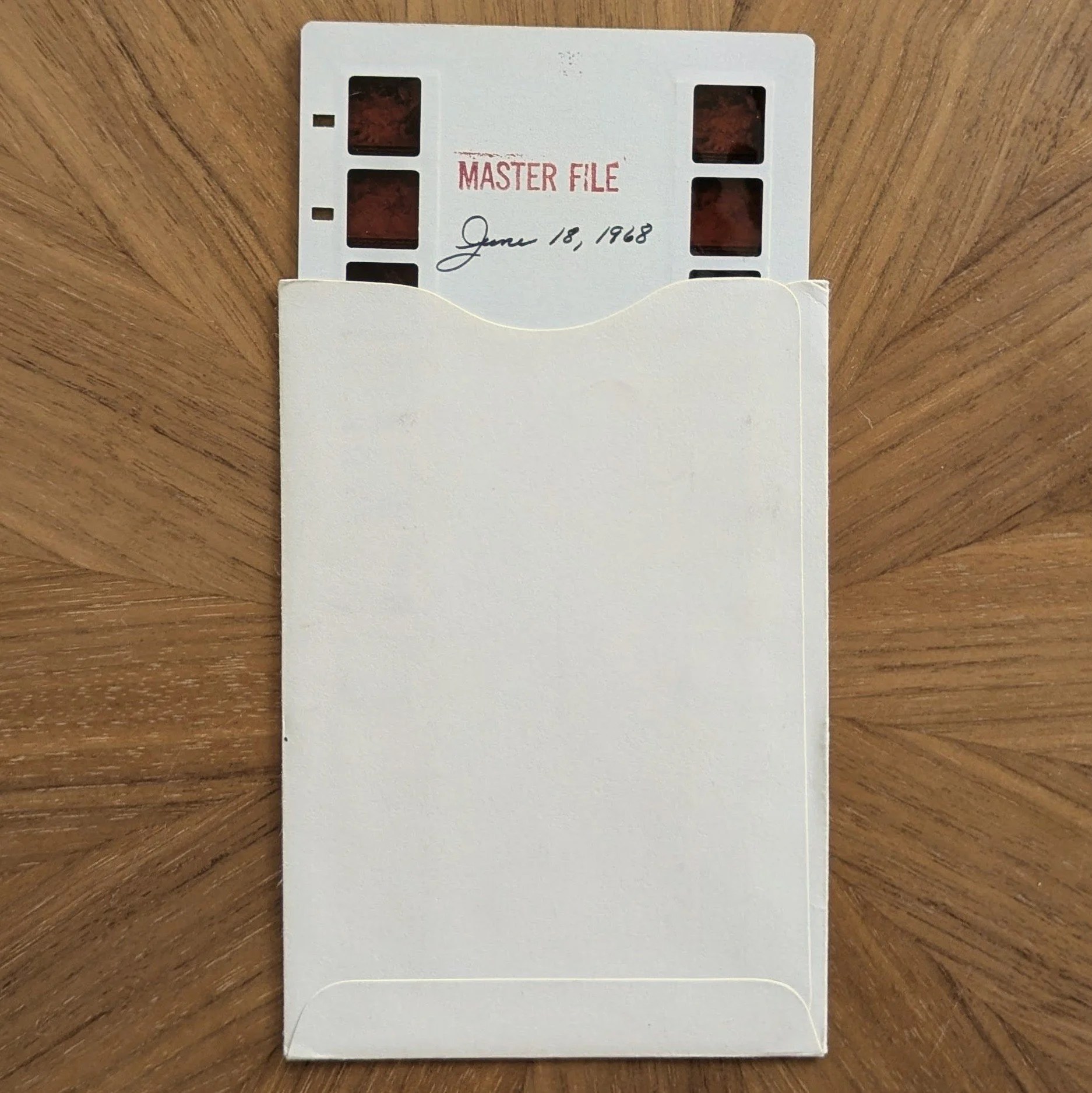
Back of Bambi master file
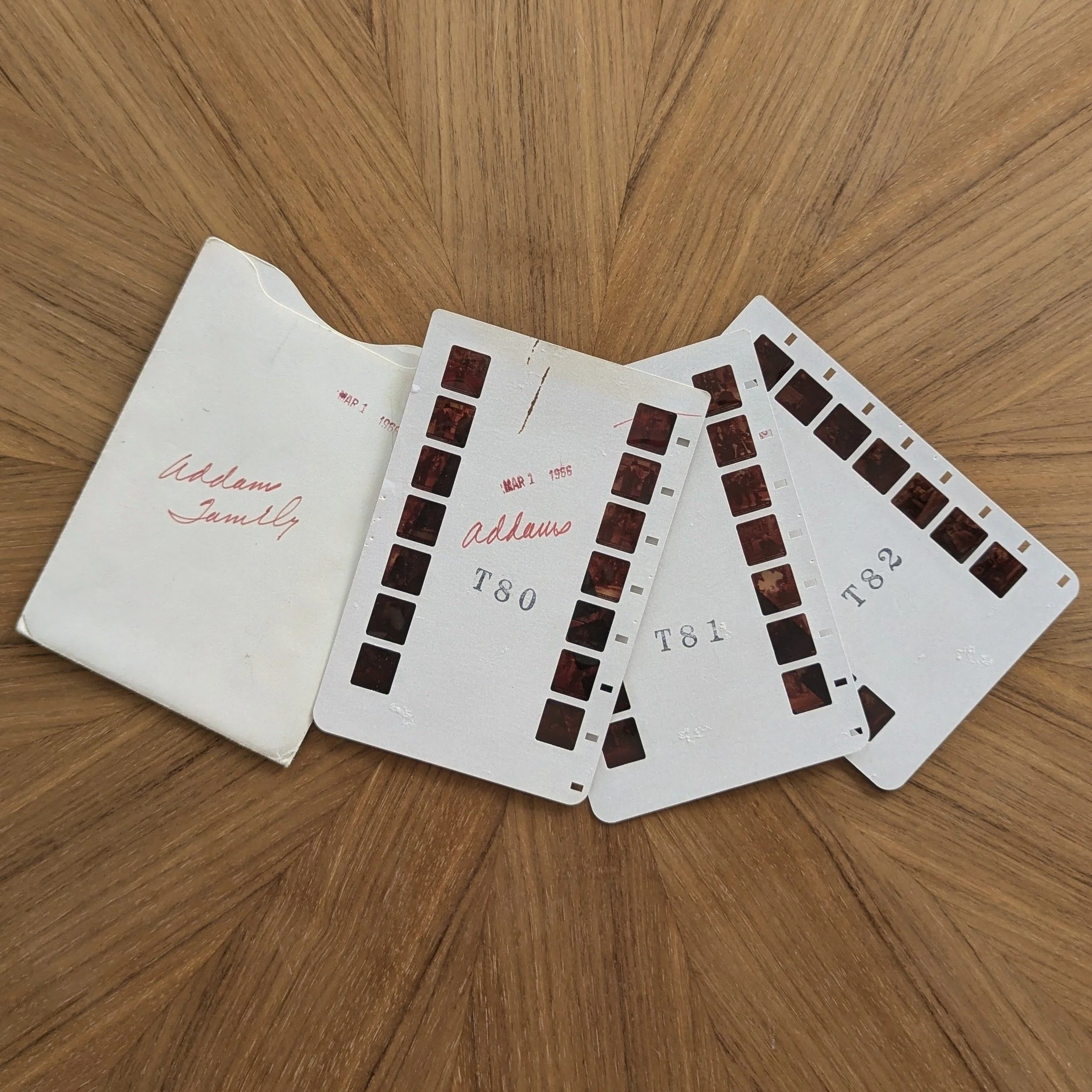
Addams Family master files
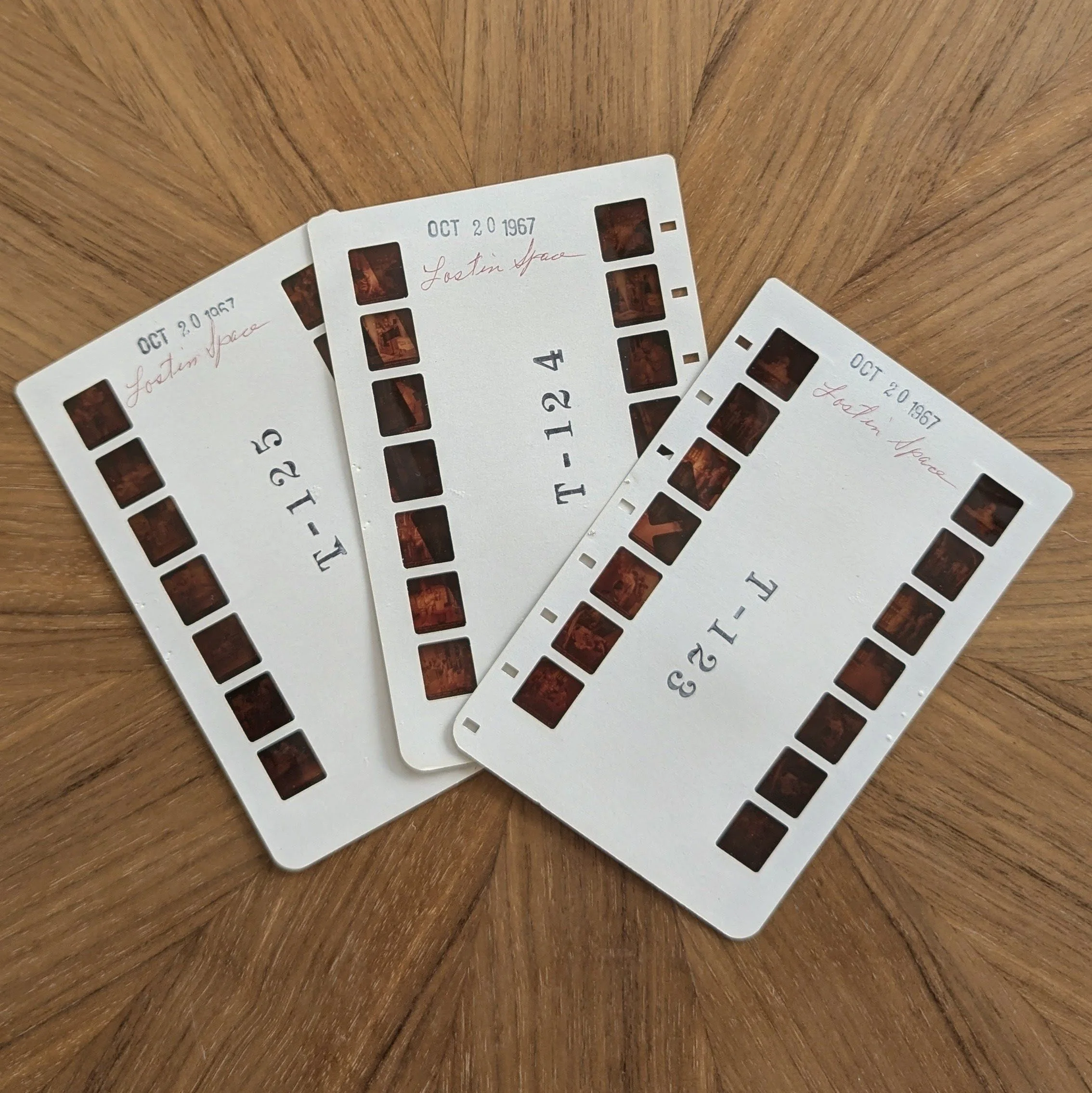
Lost in Space master files
Tru-Vue World Fairs Stereo Cards
Tru-Vue produced a set of cards for the 1964-65 New York World's Fair. The set is extremely scare today.
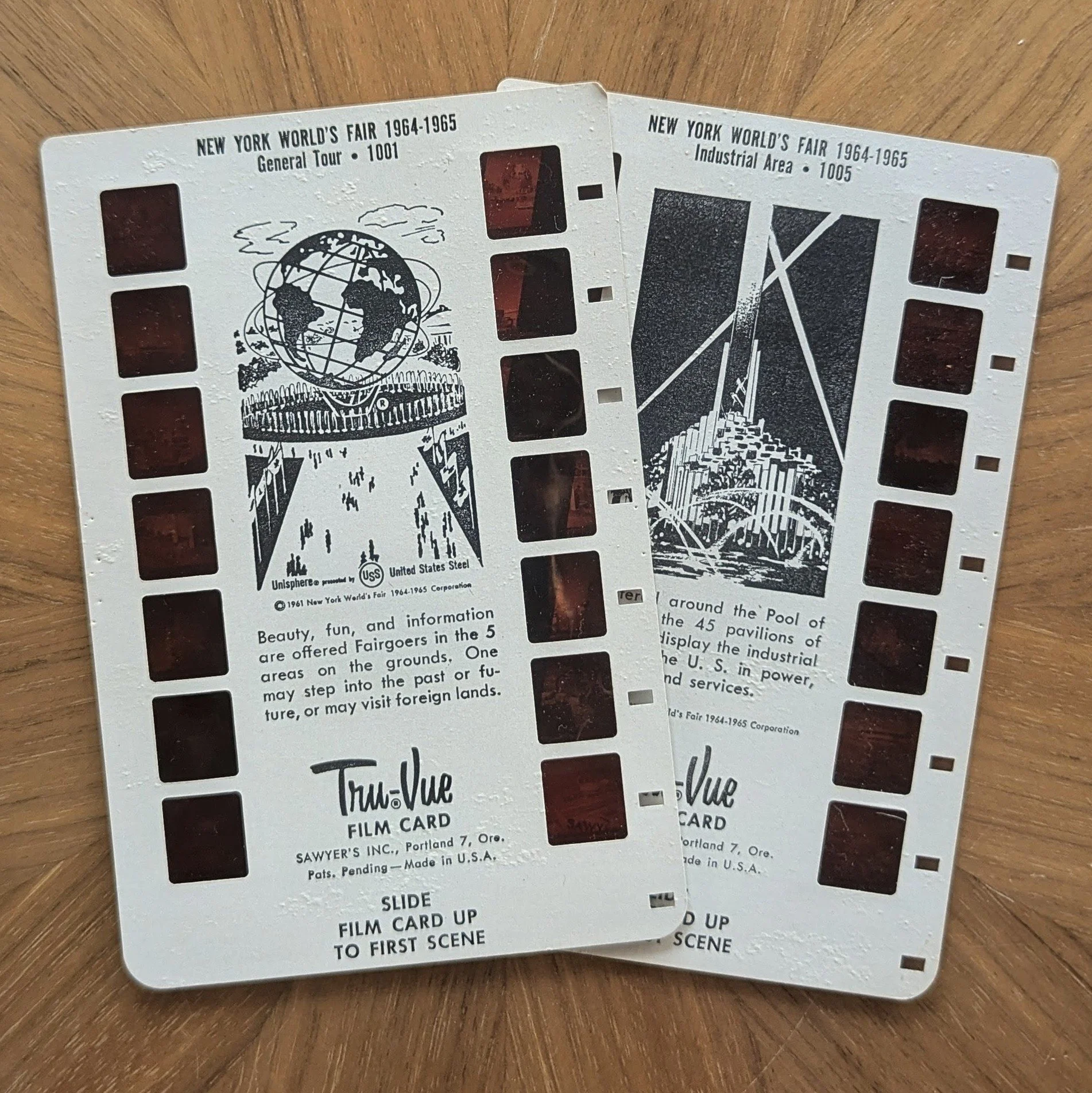
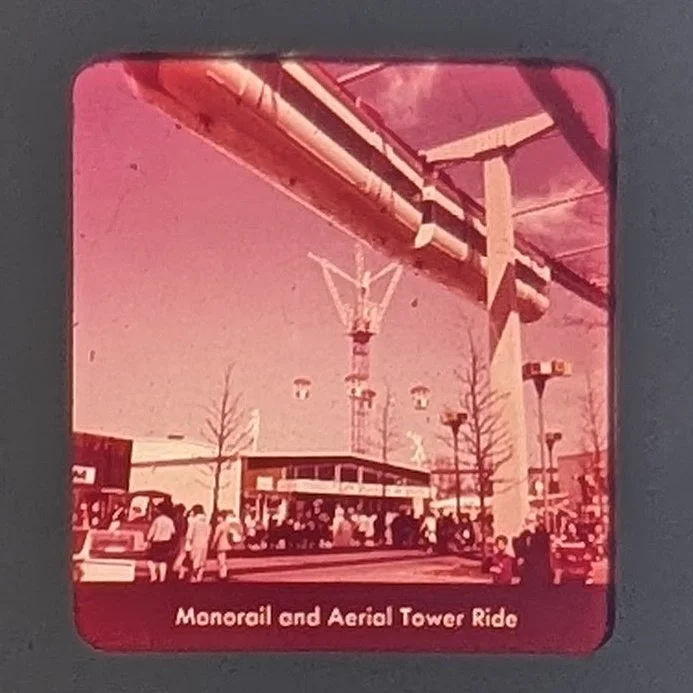
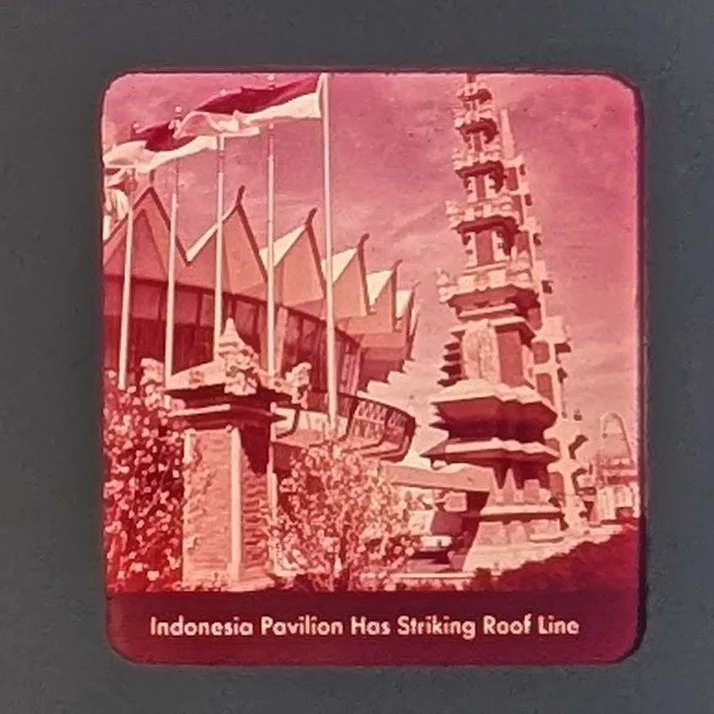
Commercial Tru-Vue Stereo Cards
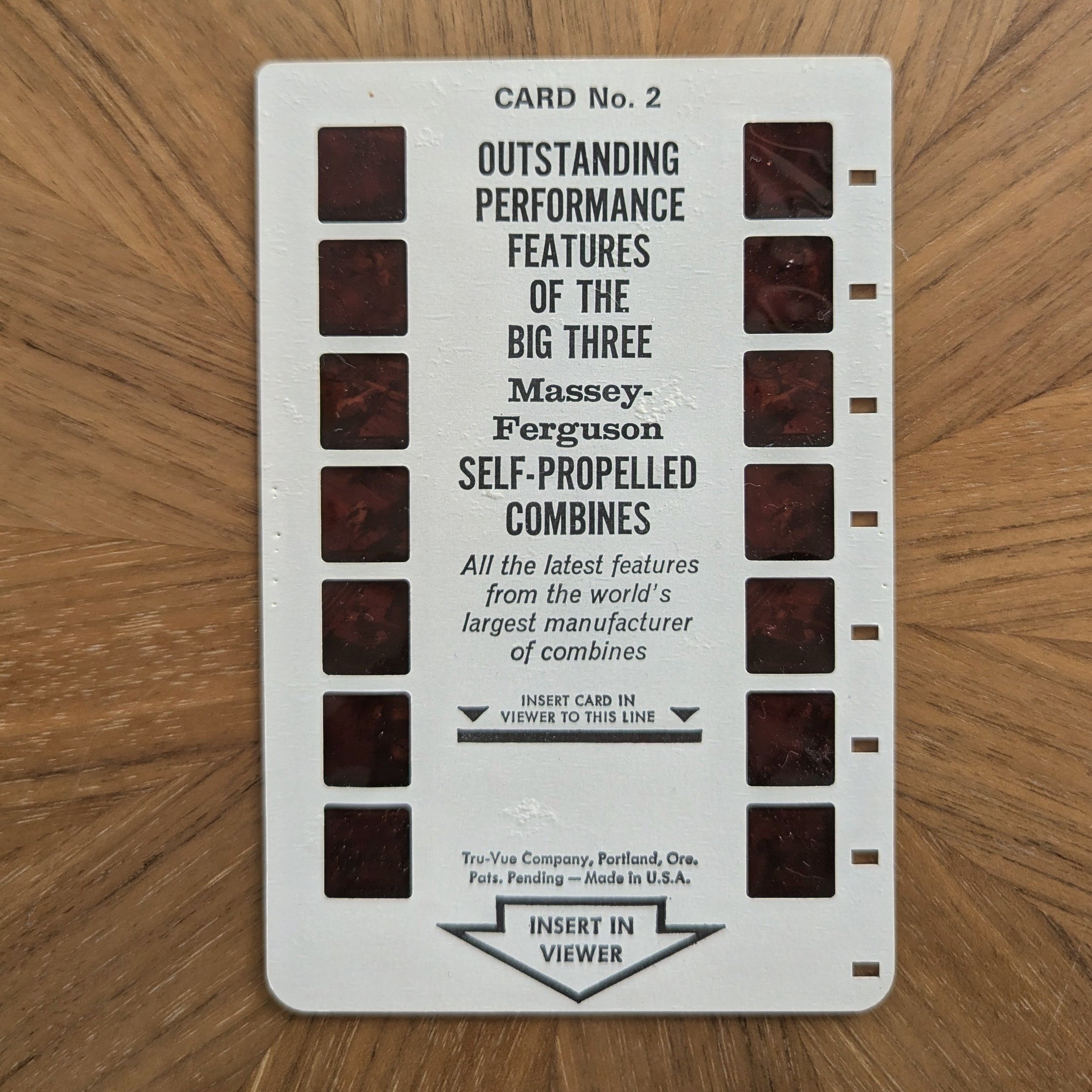
Commercial Tru-Vue cards are extremely scarce, but they do surface occasionally. They sometimes come with a custom cardboard viewer.
Massey-Ferguson Self-Propelled Combines - Card 2
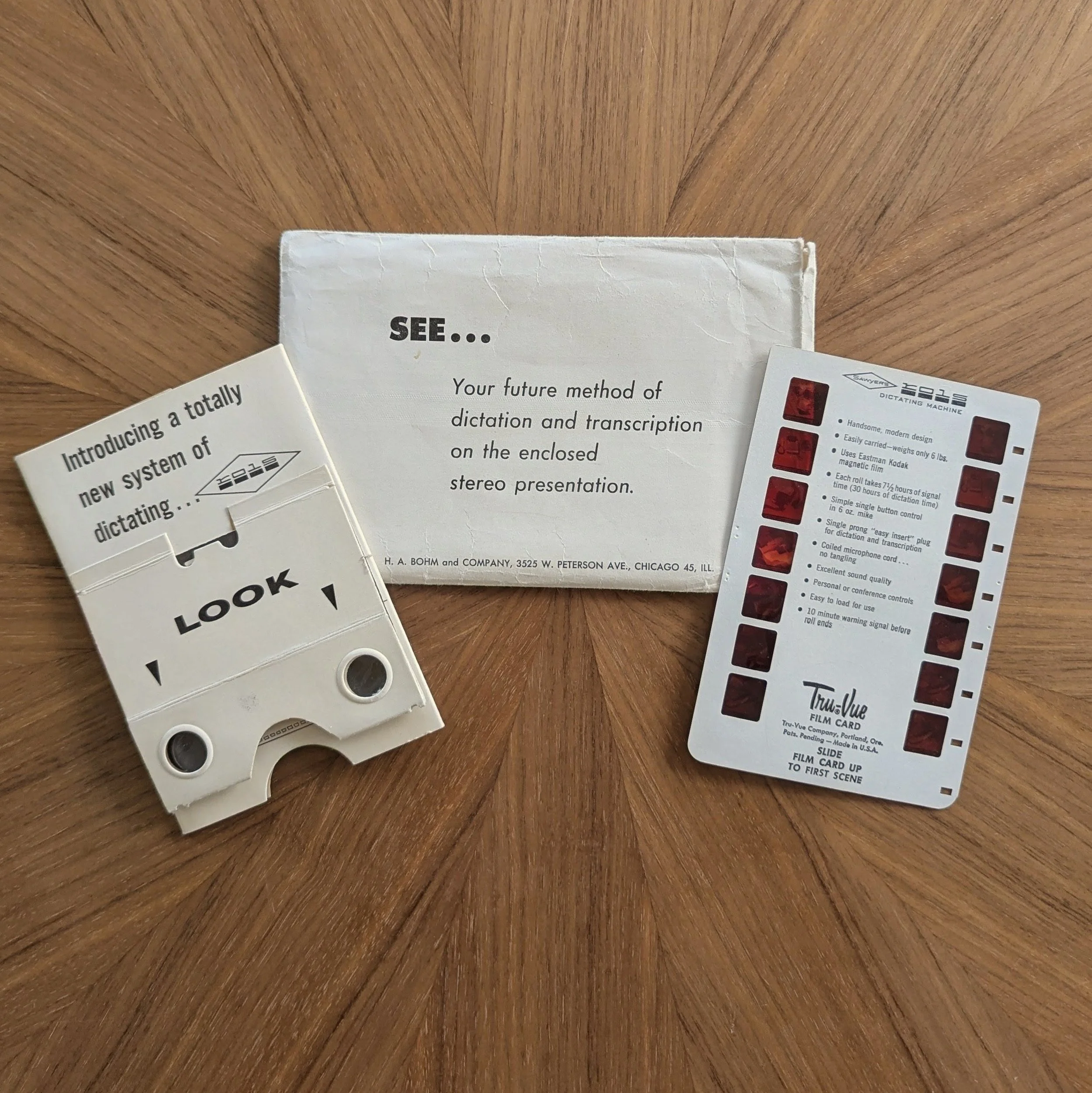
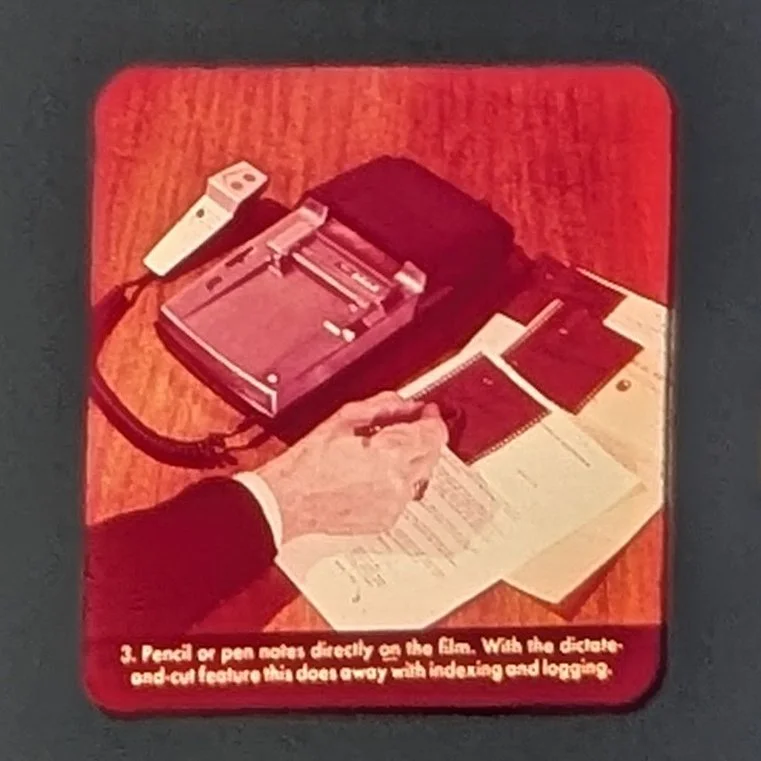
Rols Dictation
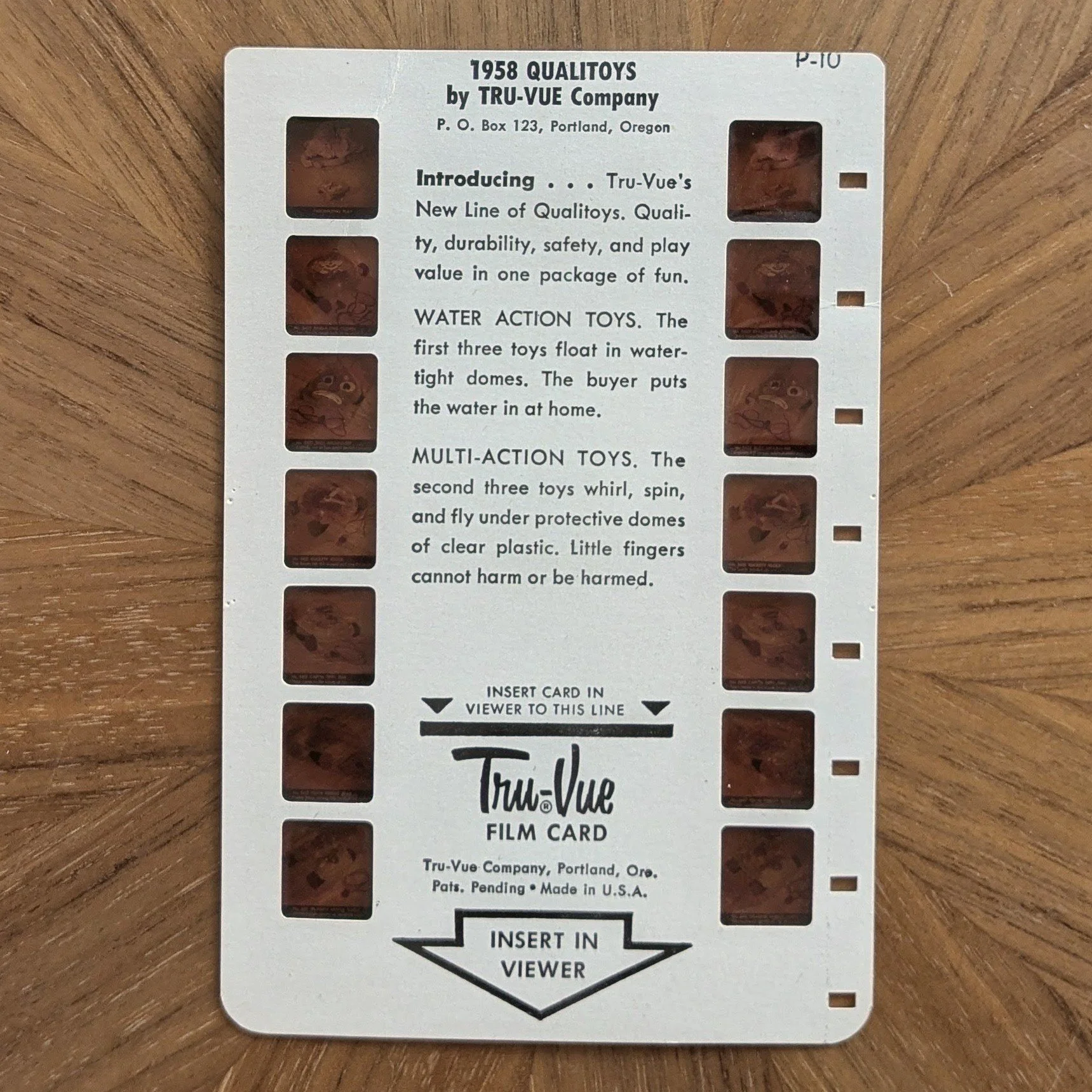
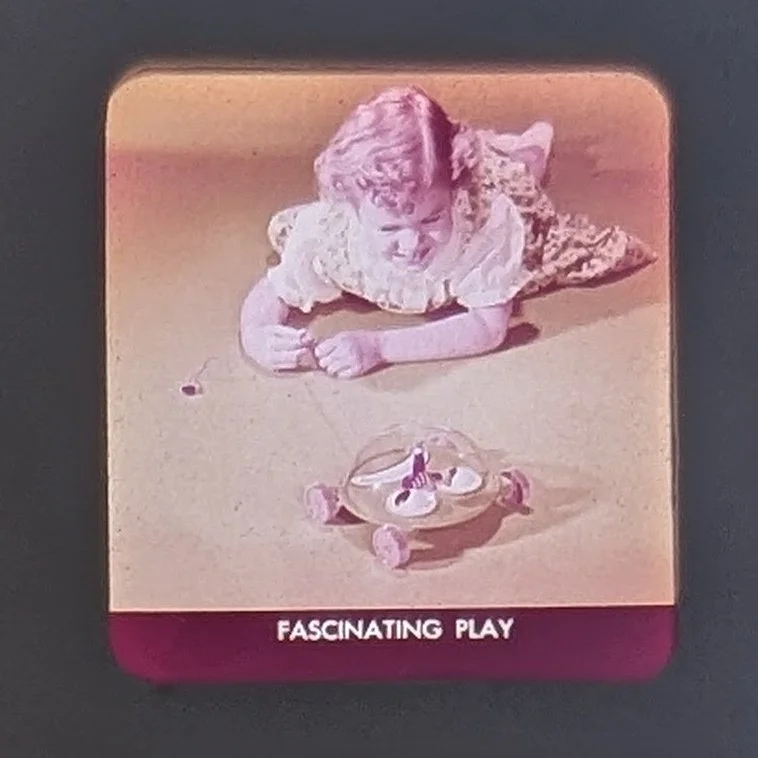
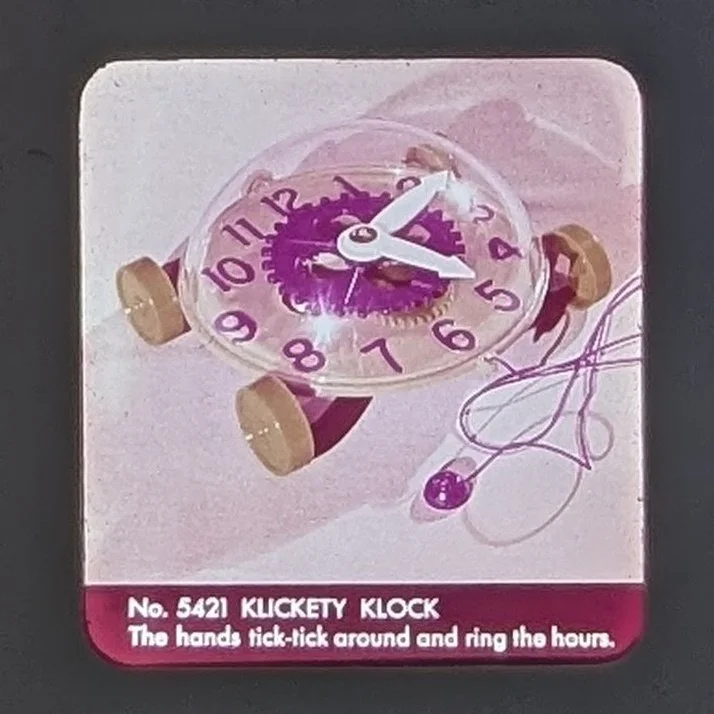
1958 Qualitoys by Tru-Vue Company
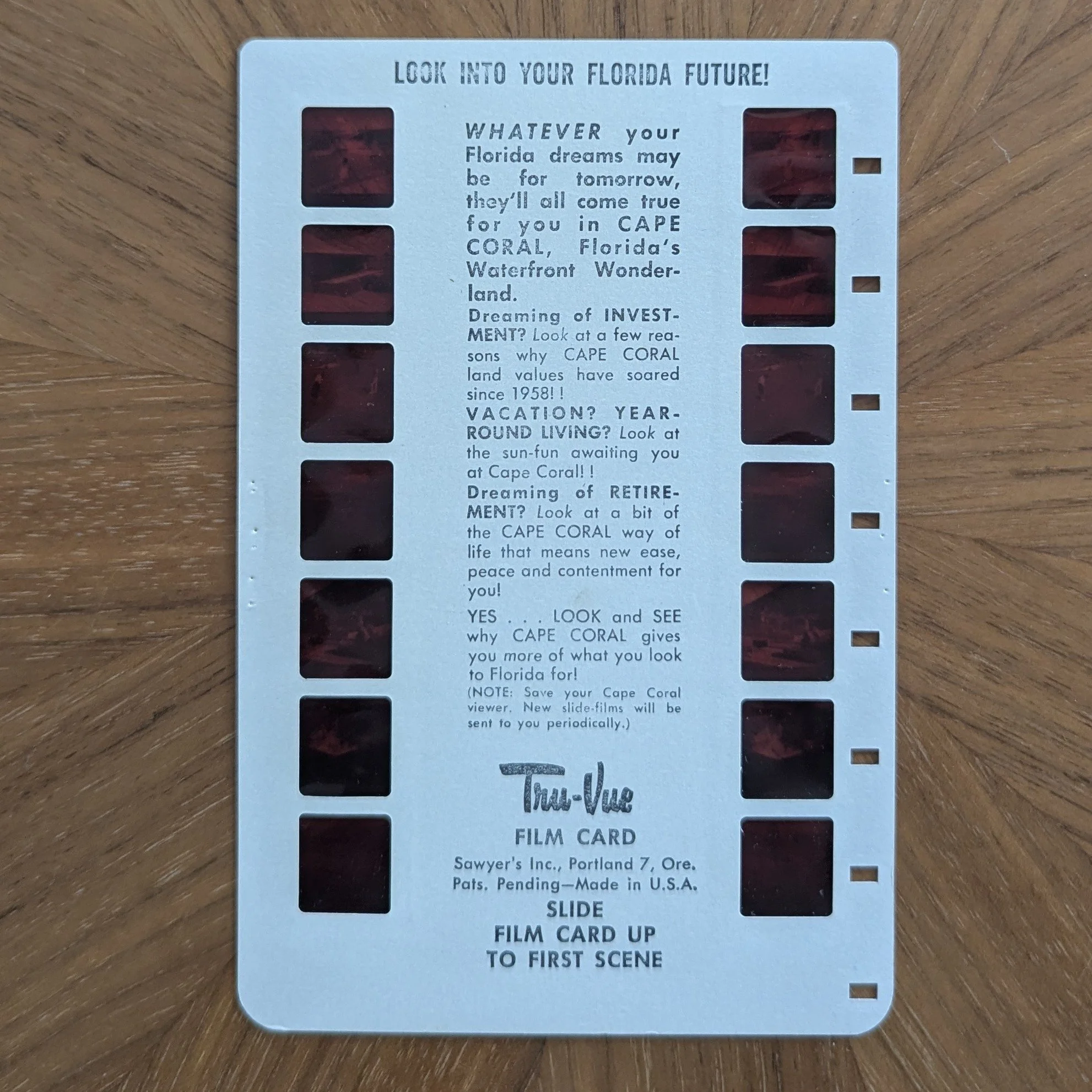
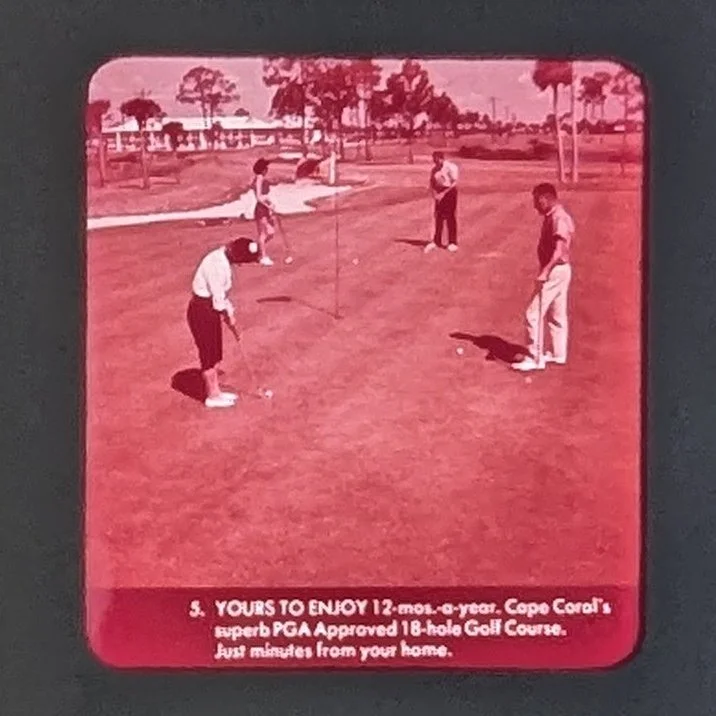
Cape Coral, Florida - Look into Your Florida Future
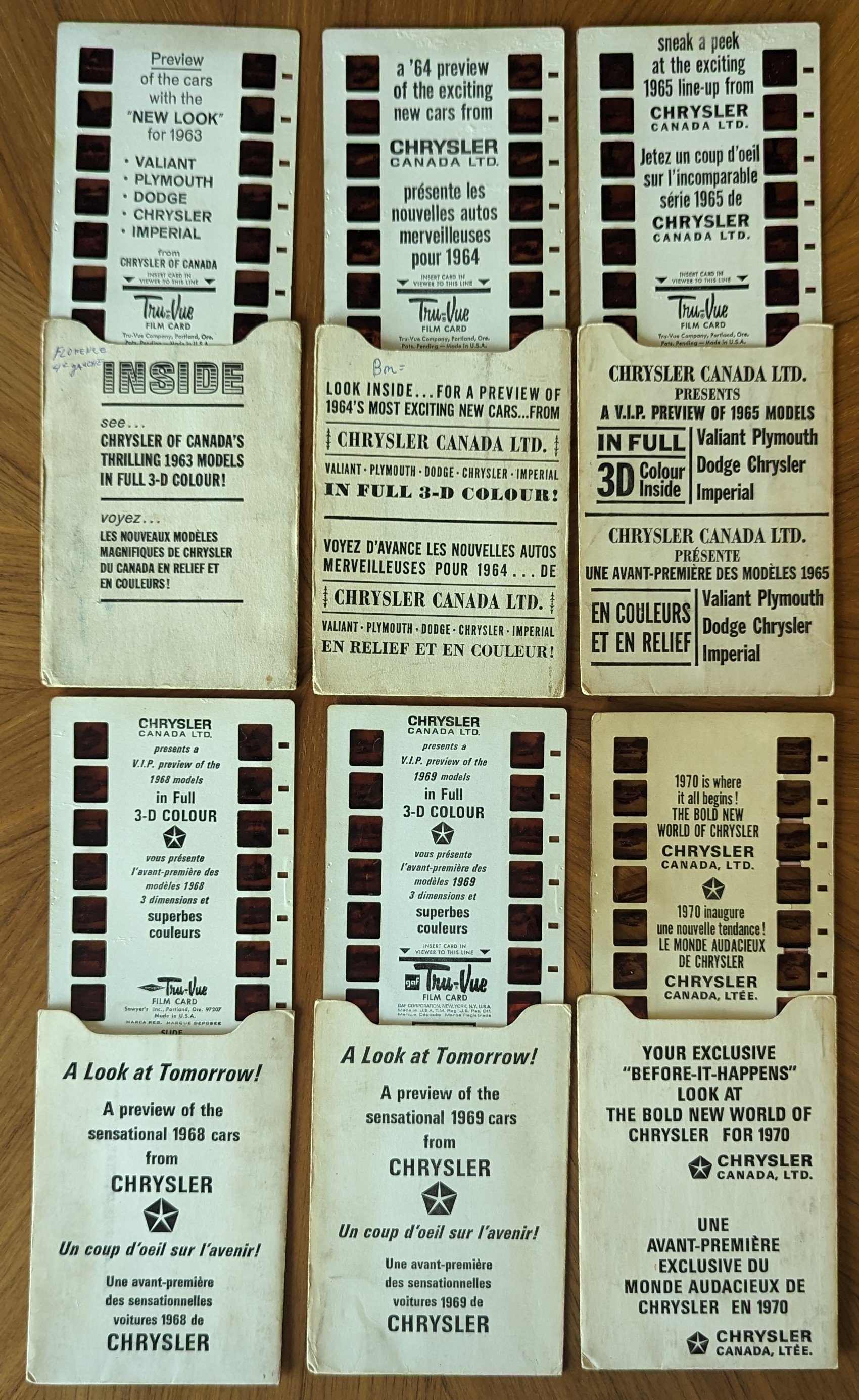
Chrysler of Canada
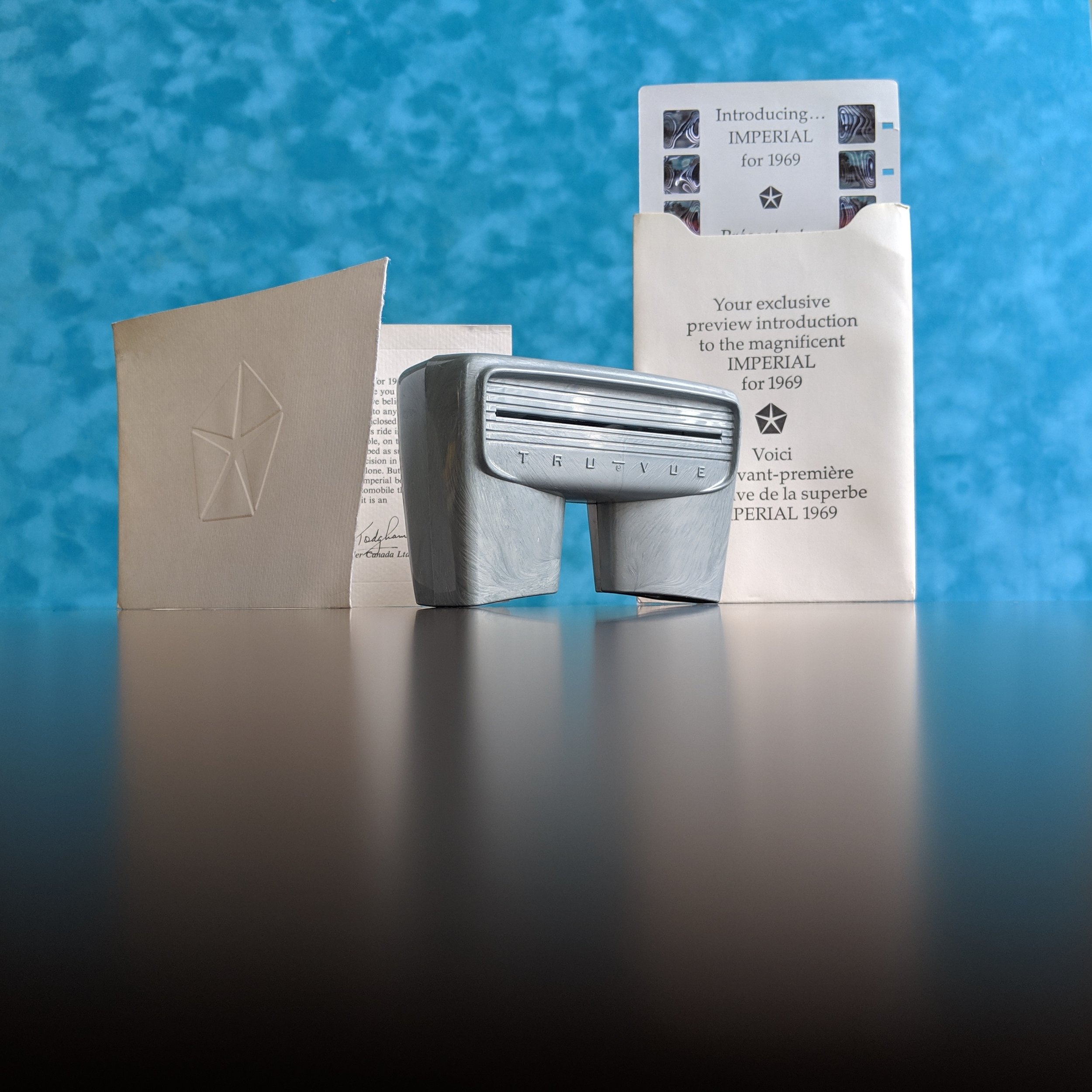
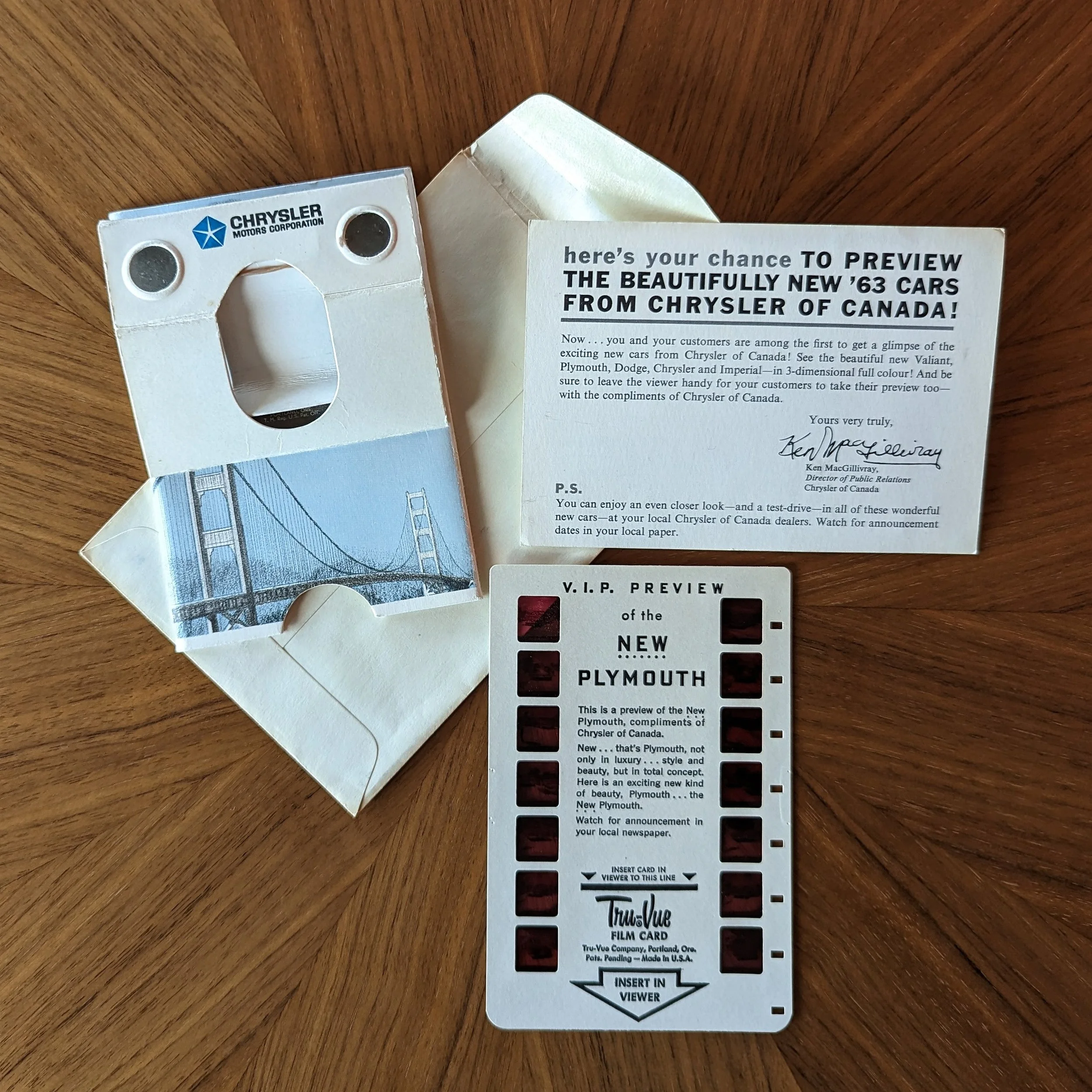
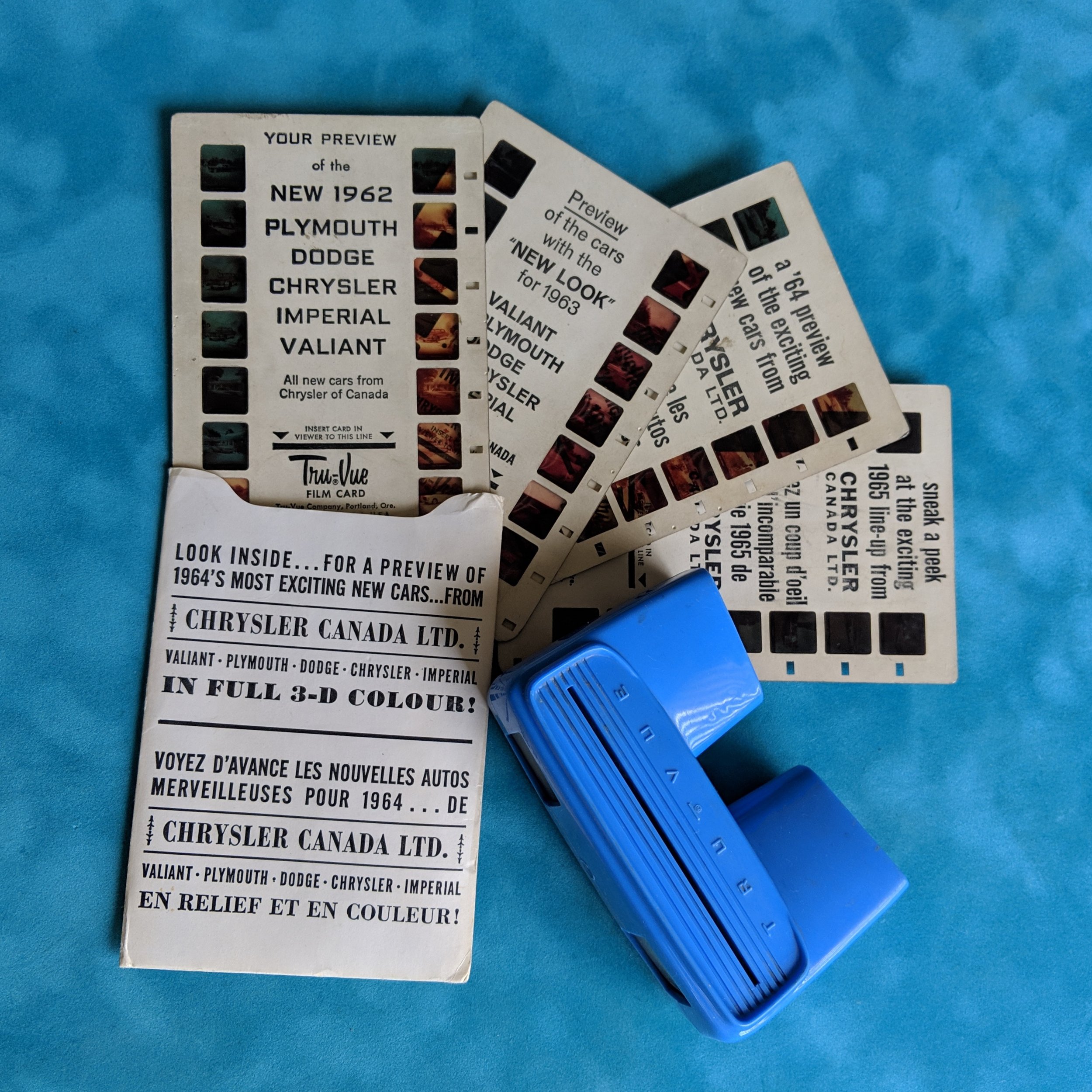
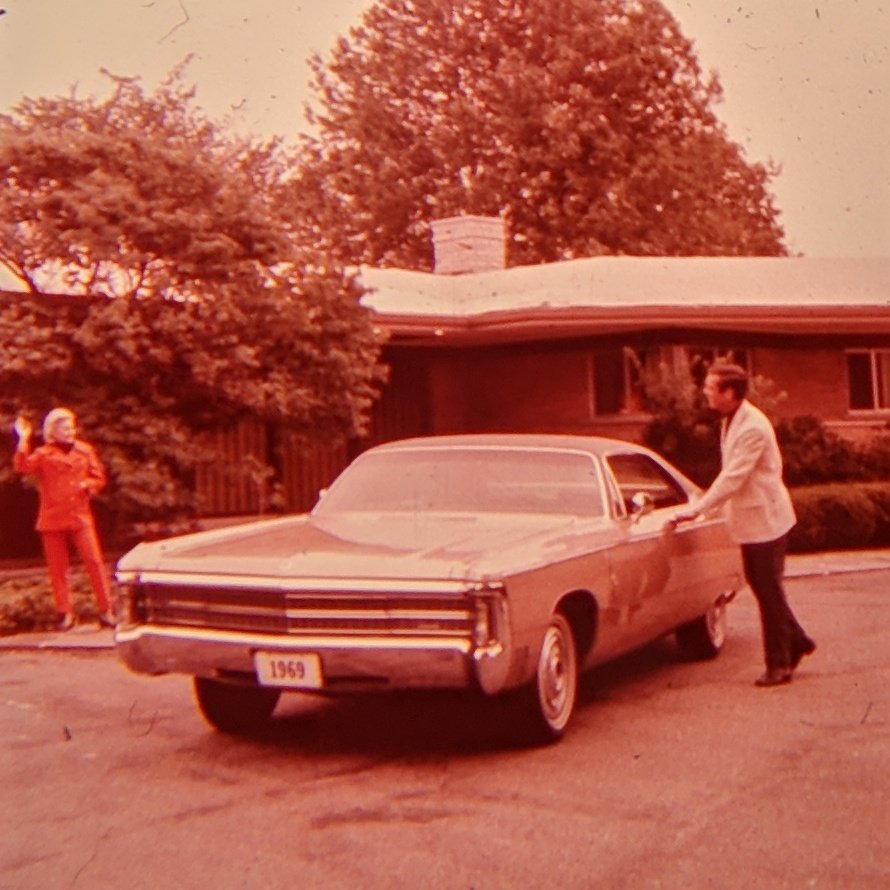
Throughout the 1960s and into the 1970s, Chrysler of Canada utilized Tru-Vue’s stereo card system to promote their new cars. The viewers ranged from various cardboard designs to a special silver version of their “Junior” viewer. Chysler Tru-Vue card titles in our collection include:
VIP Preview of the New Plymouth
1962 Chrysler Canada - Your Preview of the new 1962 Plymouth...
1963 Chrysler Canada - Preview of the cars with the New Look for 1963
1964 Chrysler-built Cars
1964 - Proof Reel - A '64 Preview of the Exciting New Cars from Chrysler Canada
A '64 Preview of the Exciting New Cars from Chrysler Canada
1965 Chrysler Canada - Sneak a Peek at the exciting 1965 line-up
1968 Chrysler Canada - VIP Preview of the 1968 models in 3D Colour
1970 is where it all begins! Chrysler Canada
Chrysler Canada Ltd presents a VIP preview of 1968 models
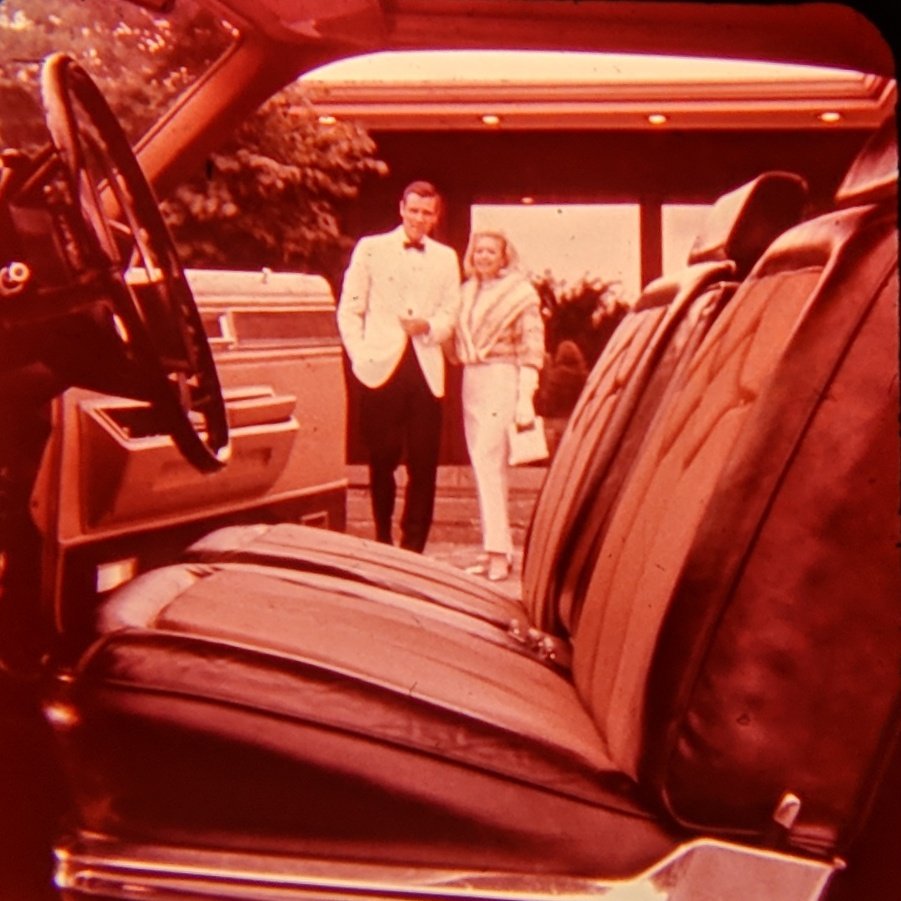
Around the World Program
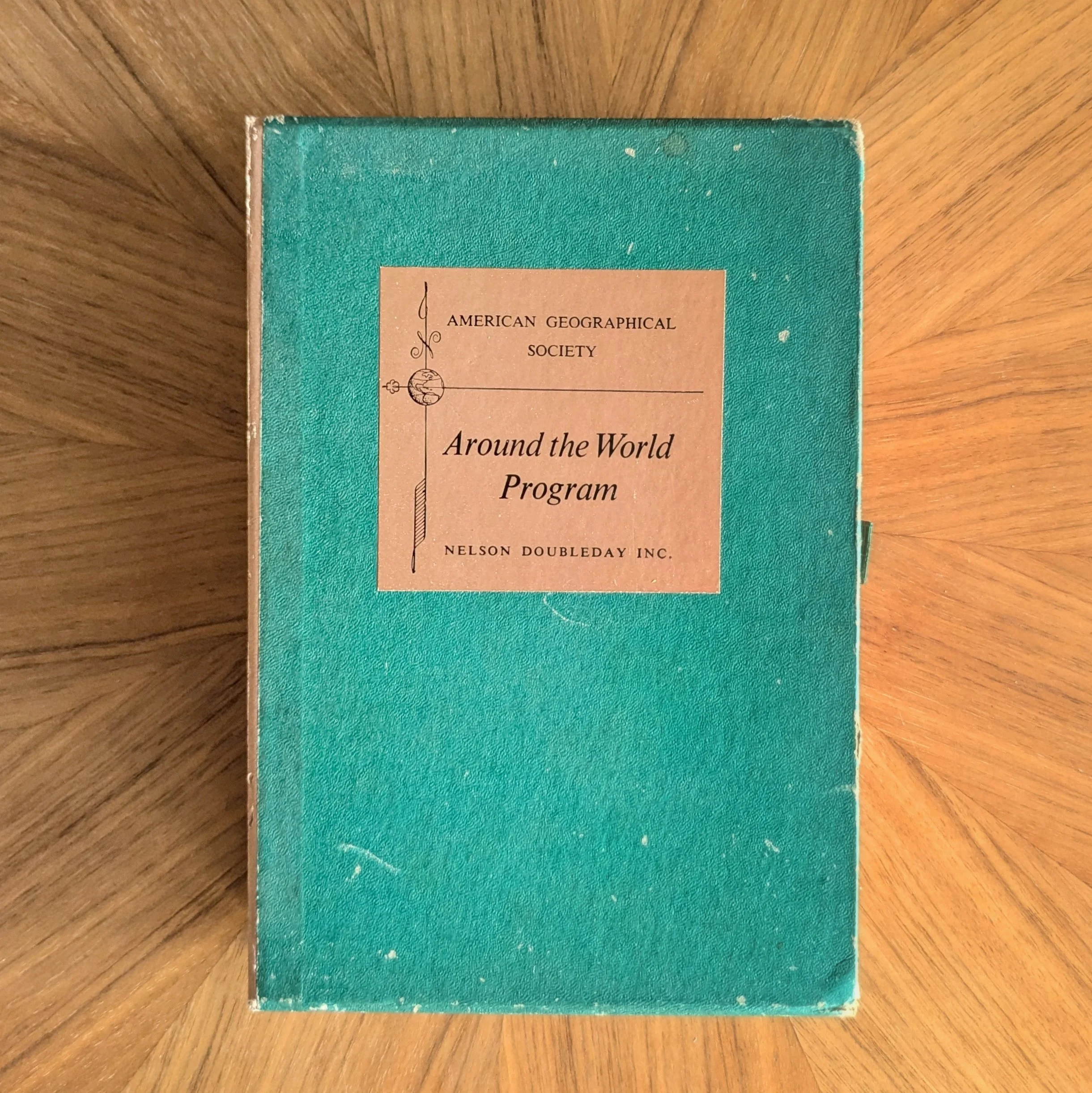
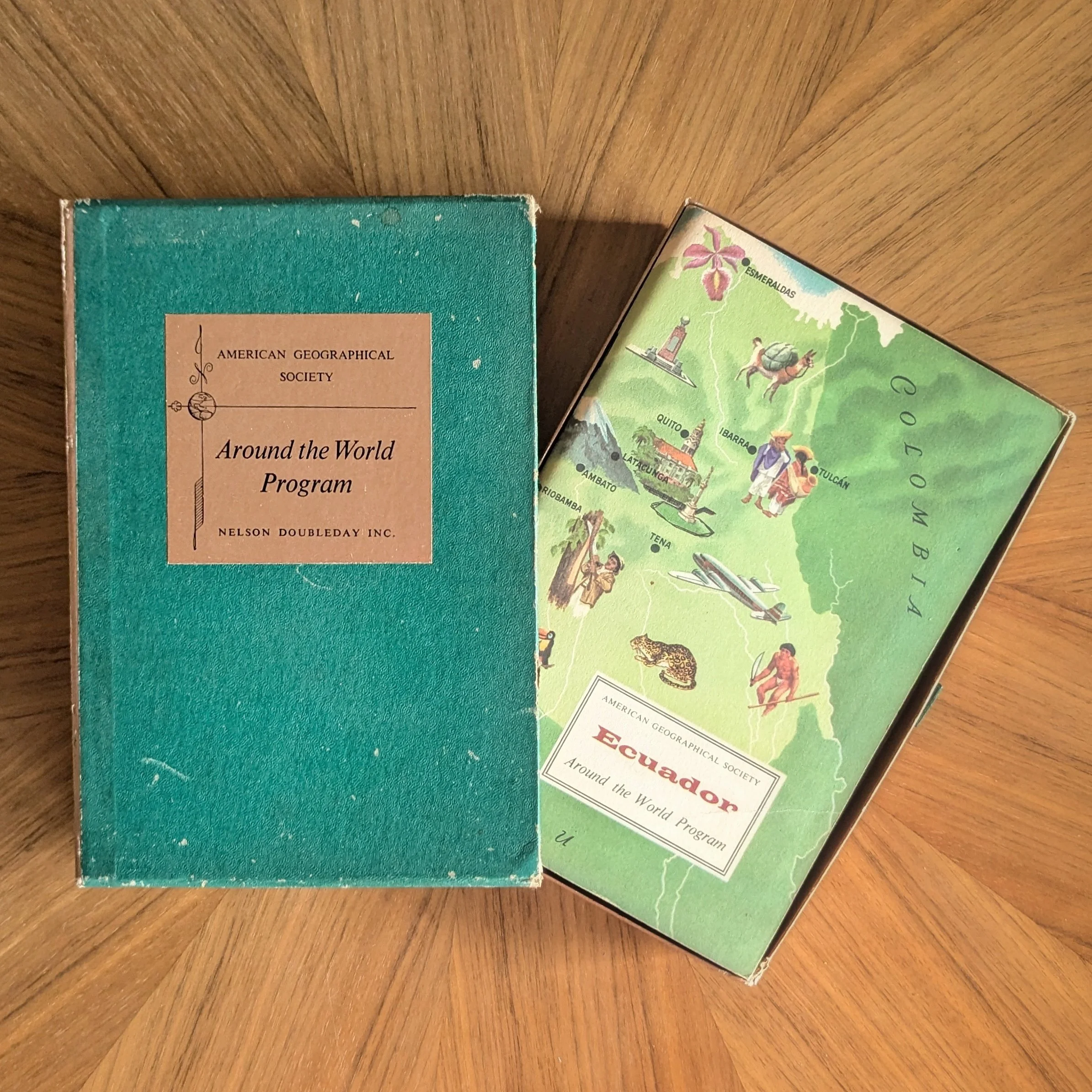
Tru-Vue Collaboration with the American Geographical Society
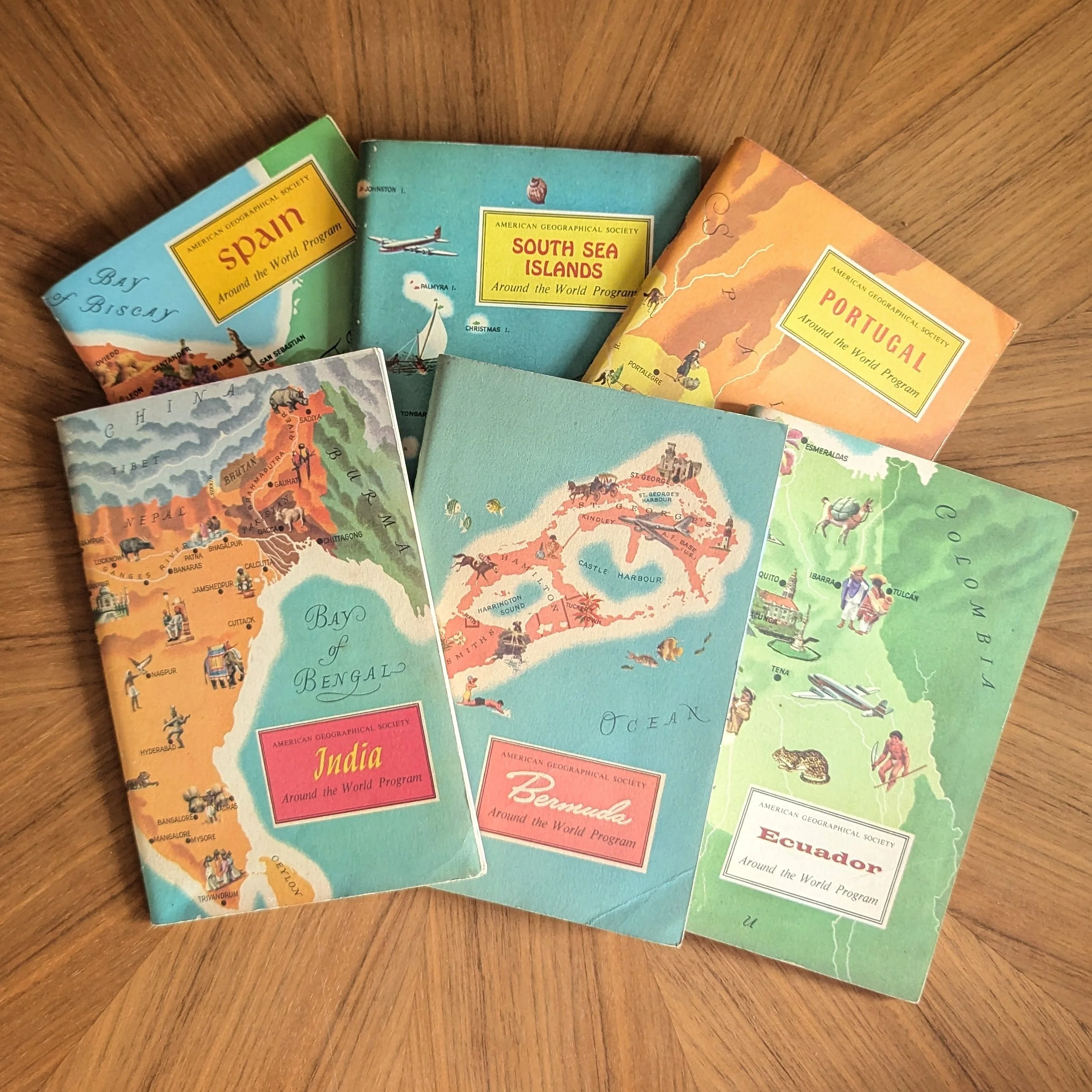
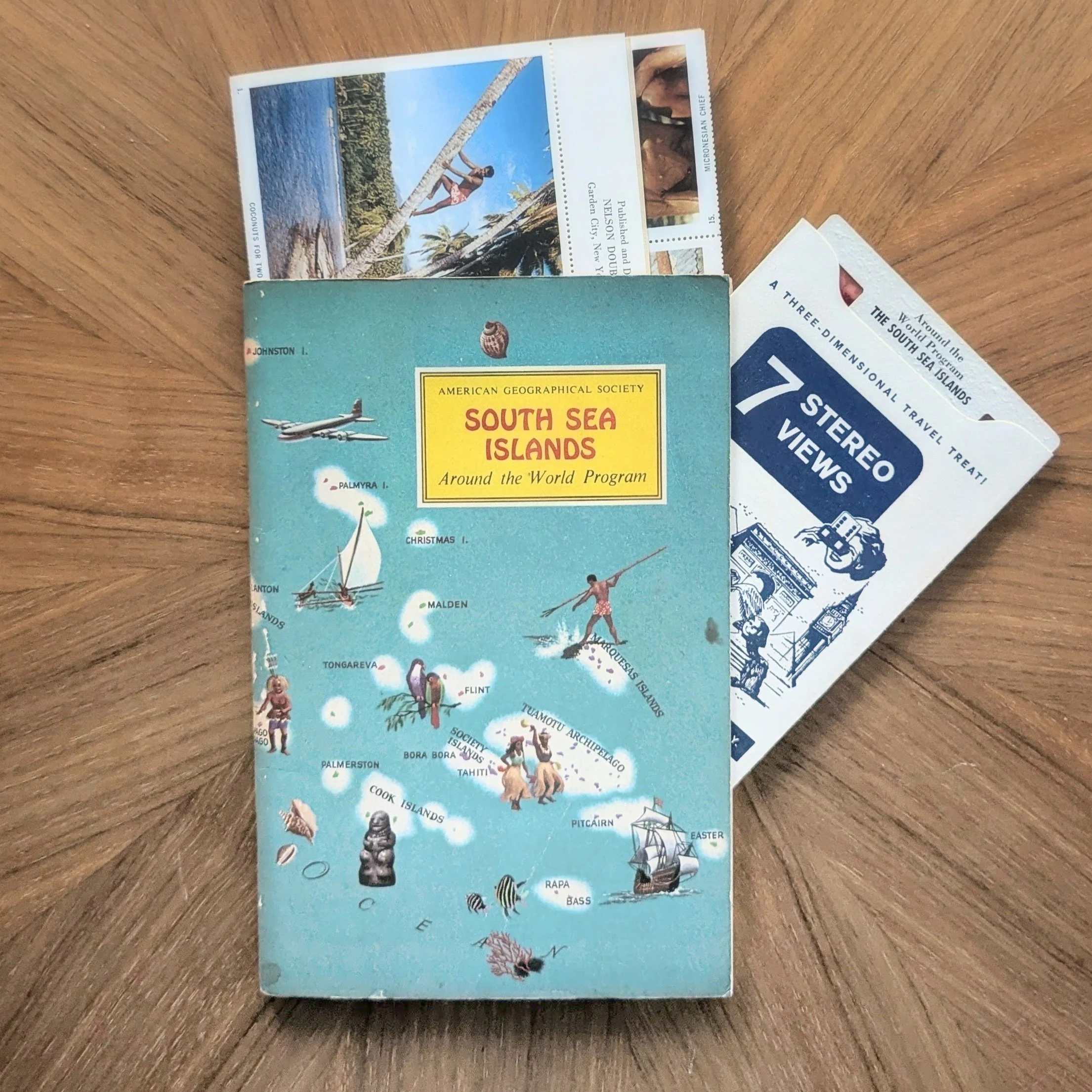
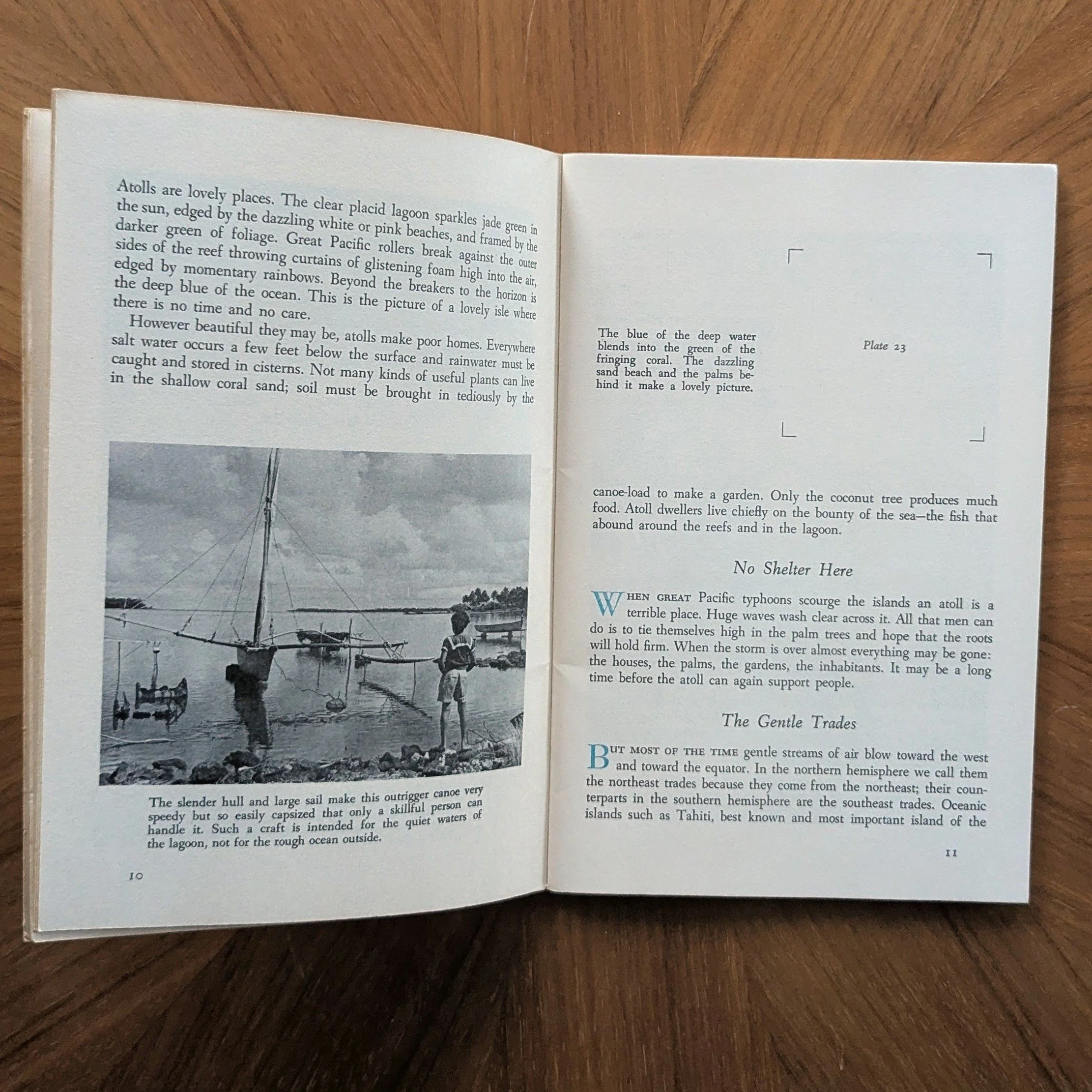
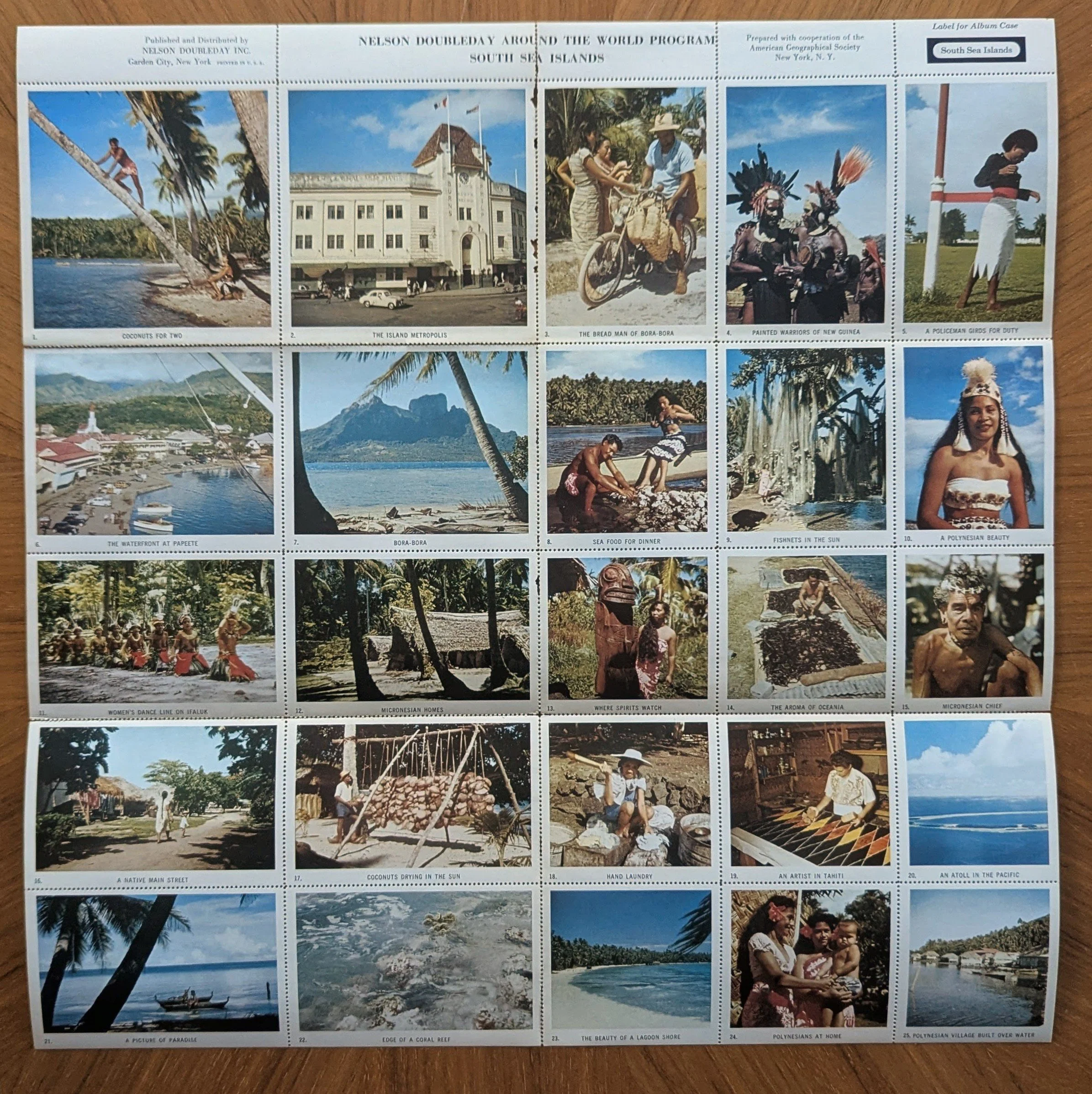
Tru-Vue created special, unnumbered cards of foreign countries especially for the American Geographical Society’s Around the World program. Subscribers to the Around the World program could optionally purchase the Tru-Vue country cards that matched the country booklet.
Continue to explore our Tru-Vue collection:
Tru-Vue Home | History | Viewers | Filmstrips | Cards | Boxes | Cases | Special Sets | Sales & Advertising