Tru-Vue Home | History | Viewers | Filmstrips | Cards | Boxes | Cases | Special Sets | Sales & Advertising
Tru-Vue Filmstrips
When it comes to the Tru-Vue filmstrips, there’s much to discuss! The box designs, the end flaps, the 3D images, the film type, the number of frames, the sprockets … whew! Not to mention ALL the changes in those things over the years.
Hardcore collectors love all the details. Others simply want to know, “How much is this filmstrip worth?” and that’s ok. That simple question is what started us on our collector journey.
There are a few great Tru-Vue resources that have been around for years. While some of it is outdated, they have some very insightful information that we don’t repeat here. So, if you TRU-ly want to become a well-rounded, knowledgeable Tru-Vue enthusiast, you simply must check them out, if you haven’t already:
Tom Martin’s wealth of Tru-Vue info, in particular: Tru-Vue Box Identification and Tru-Vue Films Not In Stereo Views
“Stereo’s Missing Link,” John Dennis
Stereo Views - An Illustrated History & Price Guide, 2nd Edition, John Waldsmith
Our write-up below builds on knowledge gained from those sources plus what we’ve discovered combing through our own collection. We hope you enjoy reading our contribution.
The Original Tru-Vue Filmstrip Box
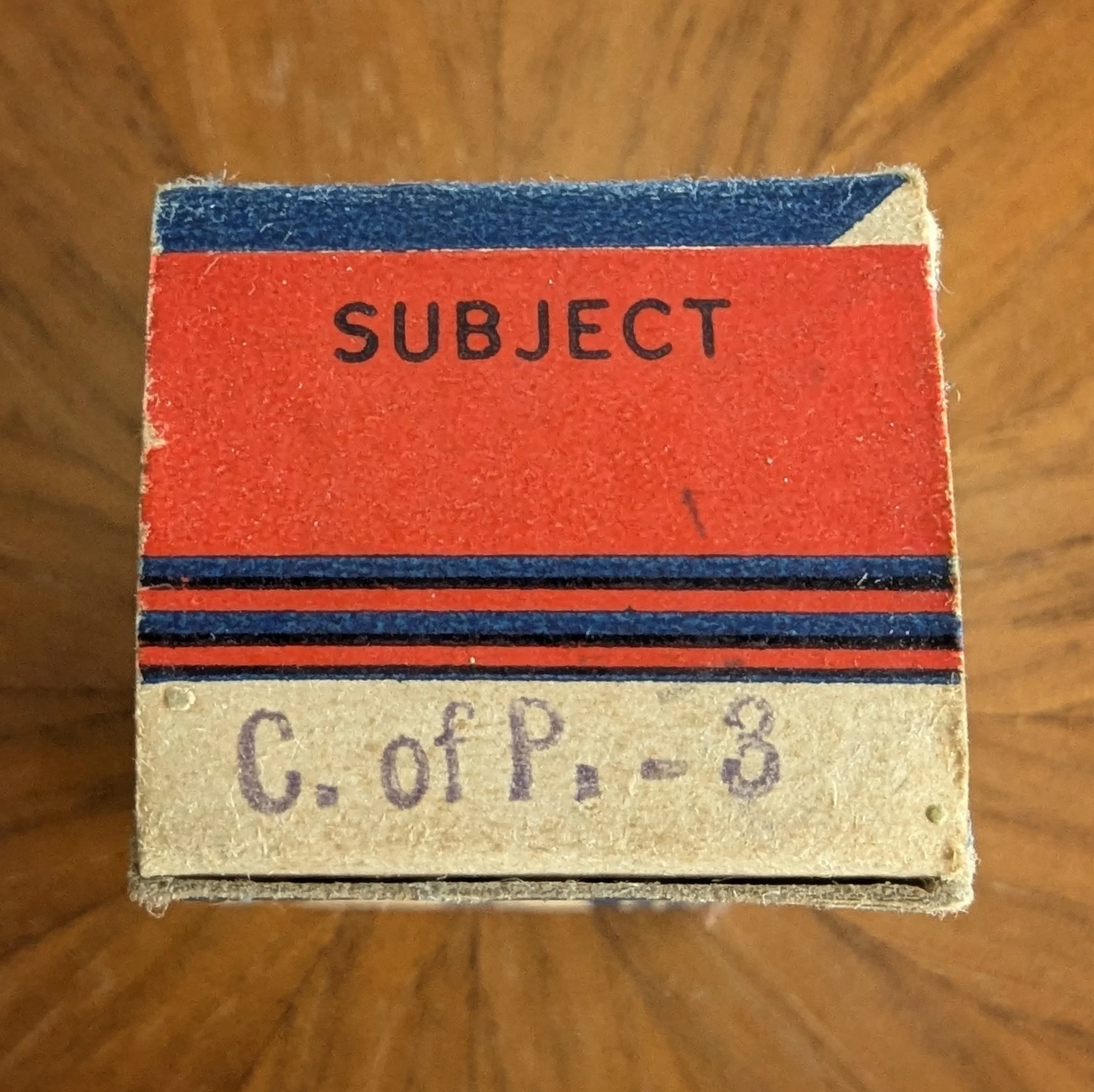
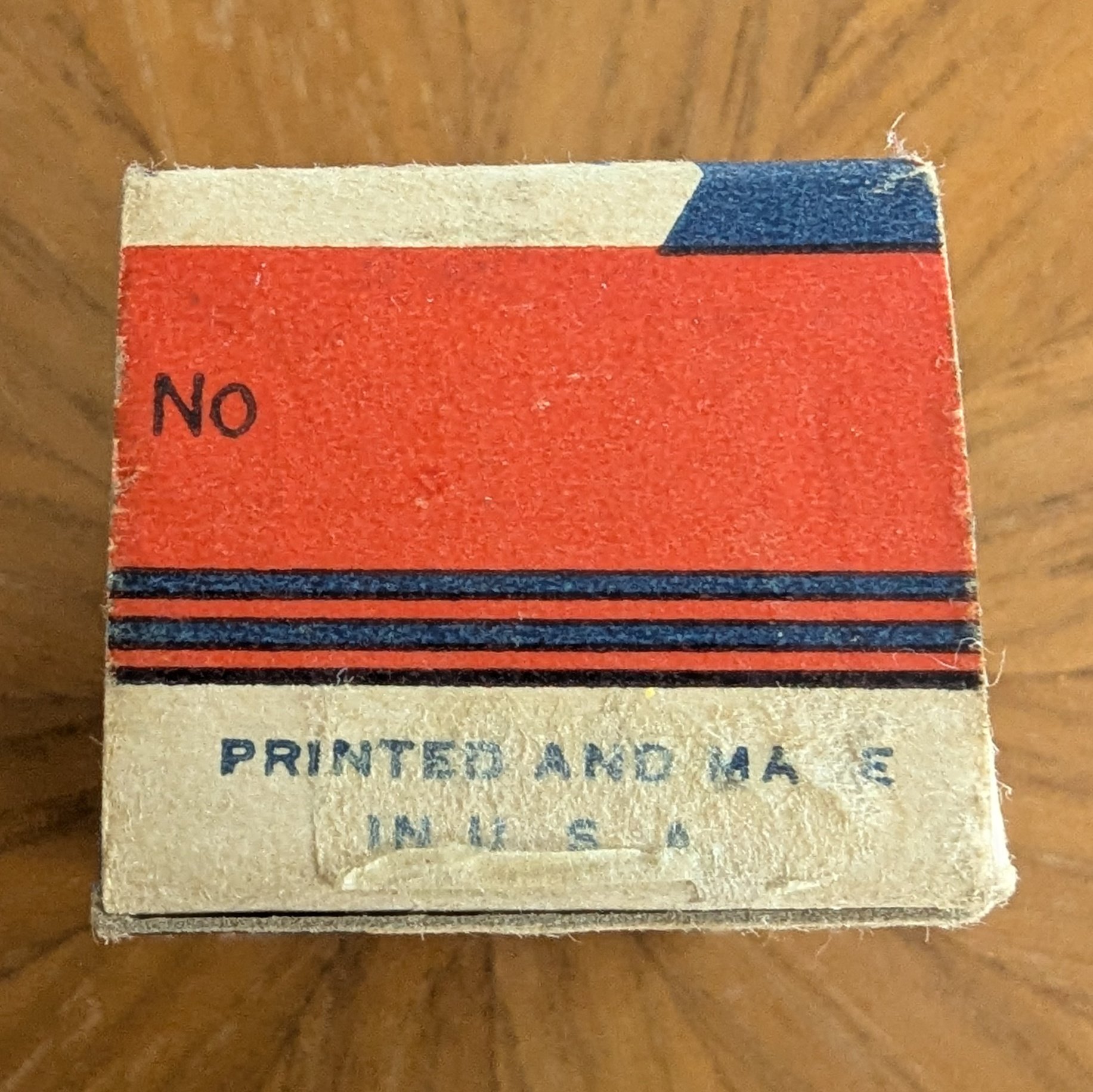
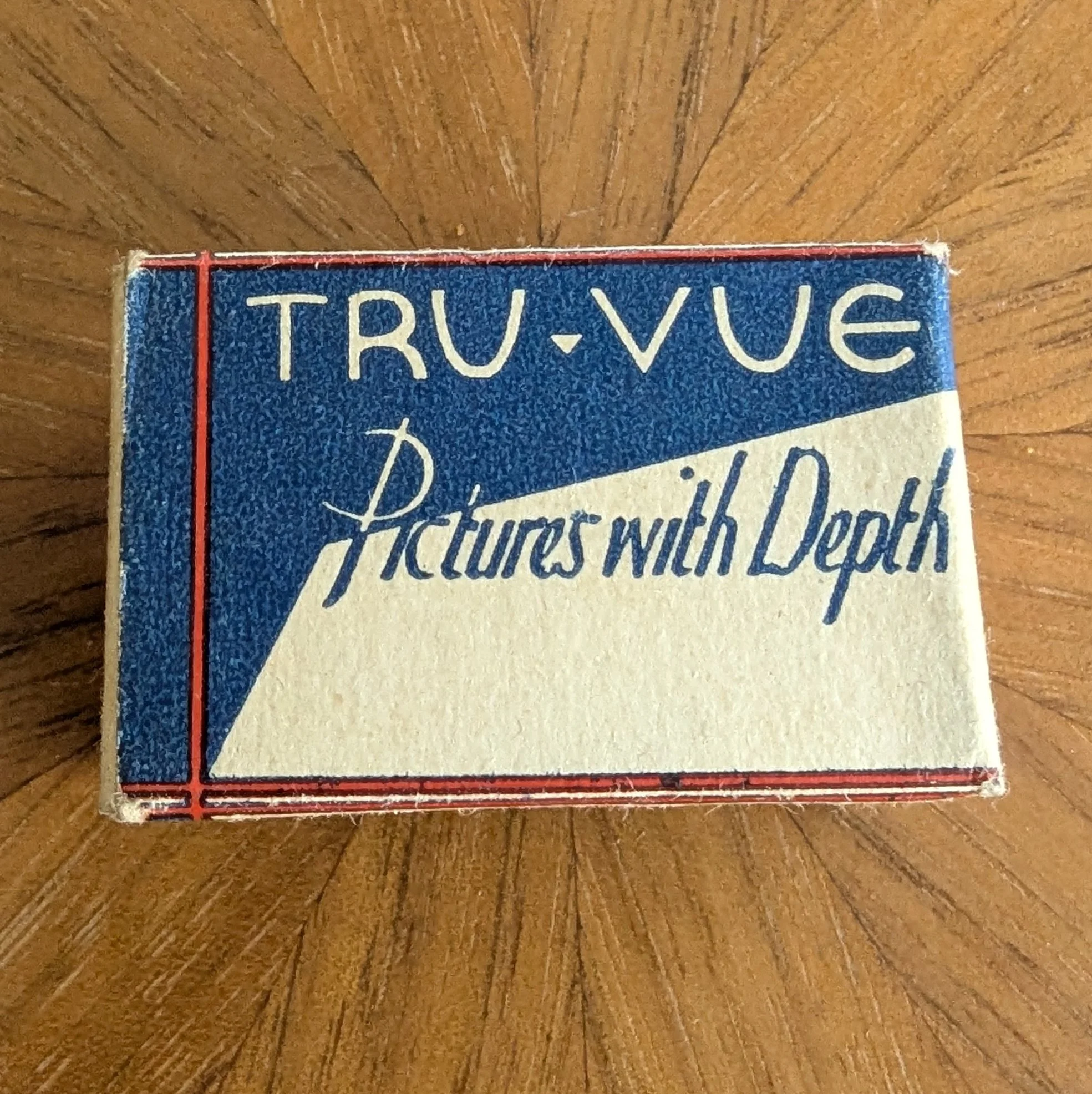
Double Red-flap Blue Box
This is the first Tru-Vue filmstrip box and a must-have for any Tru-Vue collector. It’s the only filmstrip box with TWO red end flaps. One red end flap is marked “Subject” and was used for the film title. It was previously believed that the title was only put in the white space, but we have boxes with titles stamped in the red space. The other red end flap is marked with the abbreviation “No” (for “number”) and was never used for anything. Later blue box designs have only one red end flap marked “No.” These days, this double-red-flap blue filmstrip box is very hard to find in A+ condition, meaning clean and intact with the correct film inside that’s also clean and intact. Below you can see all 6 sides of this first Tru-Vue film box.
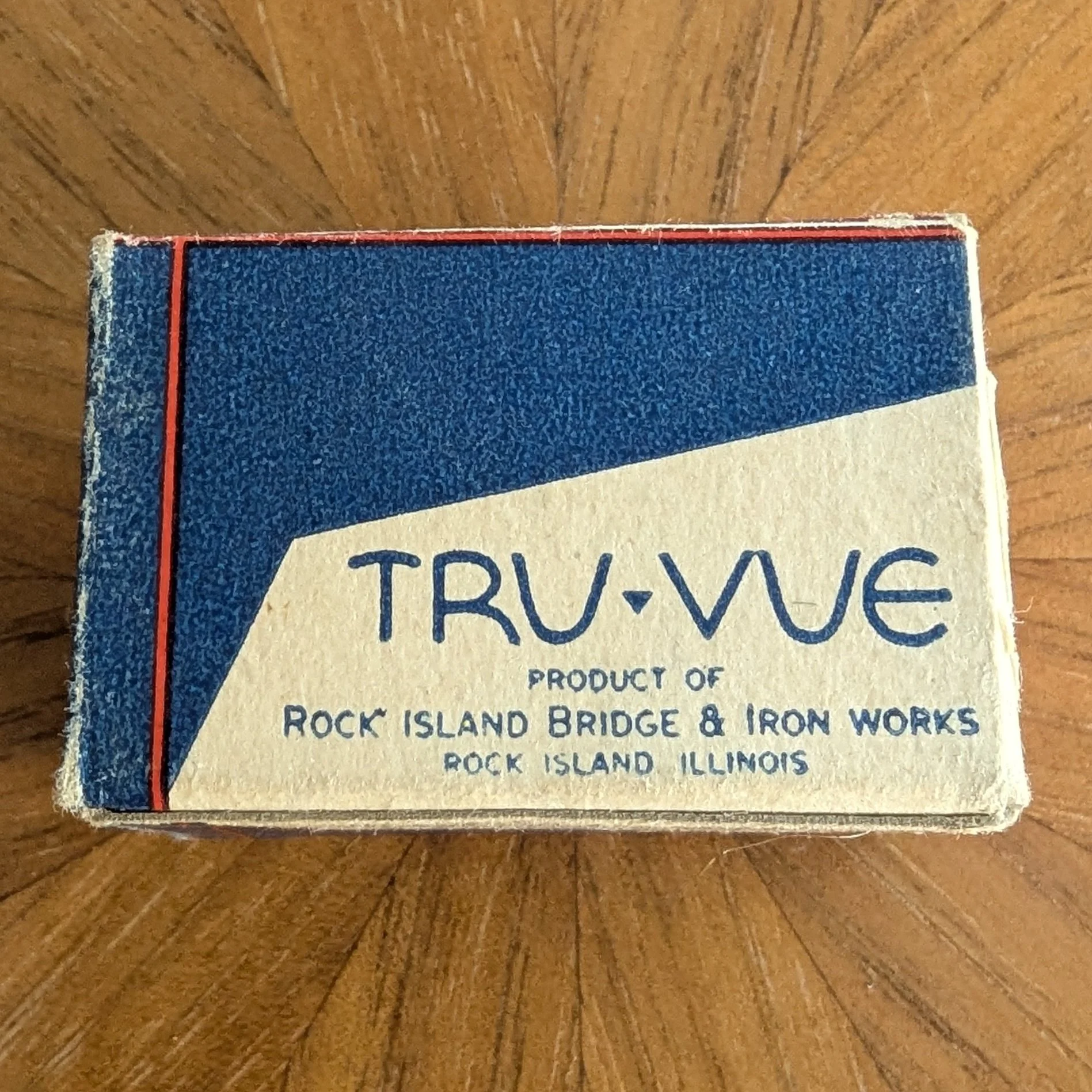
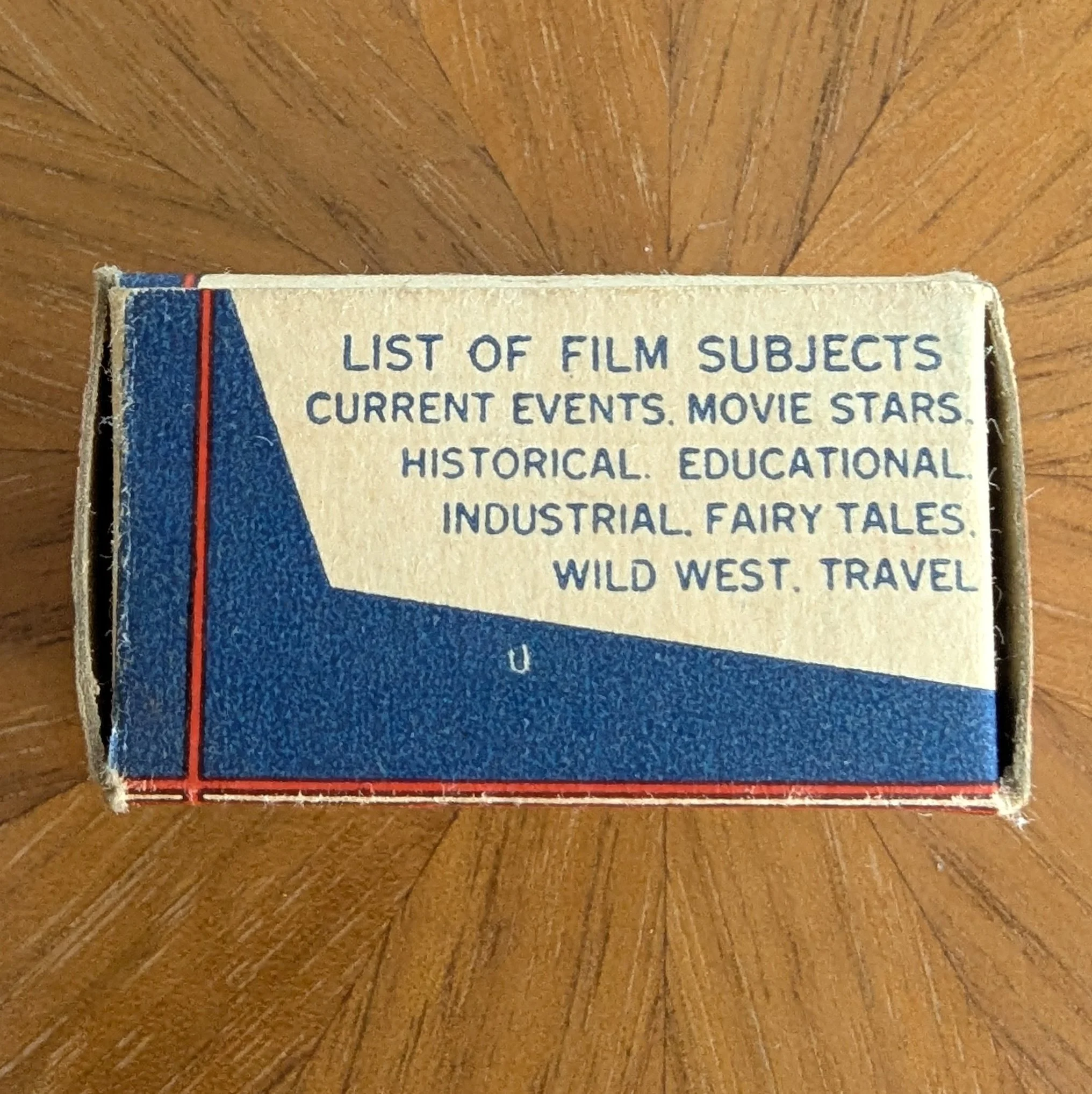
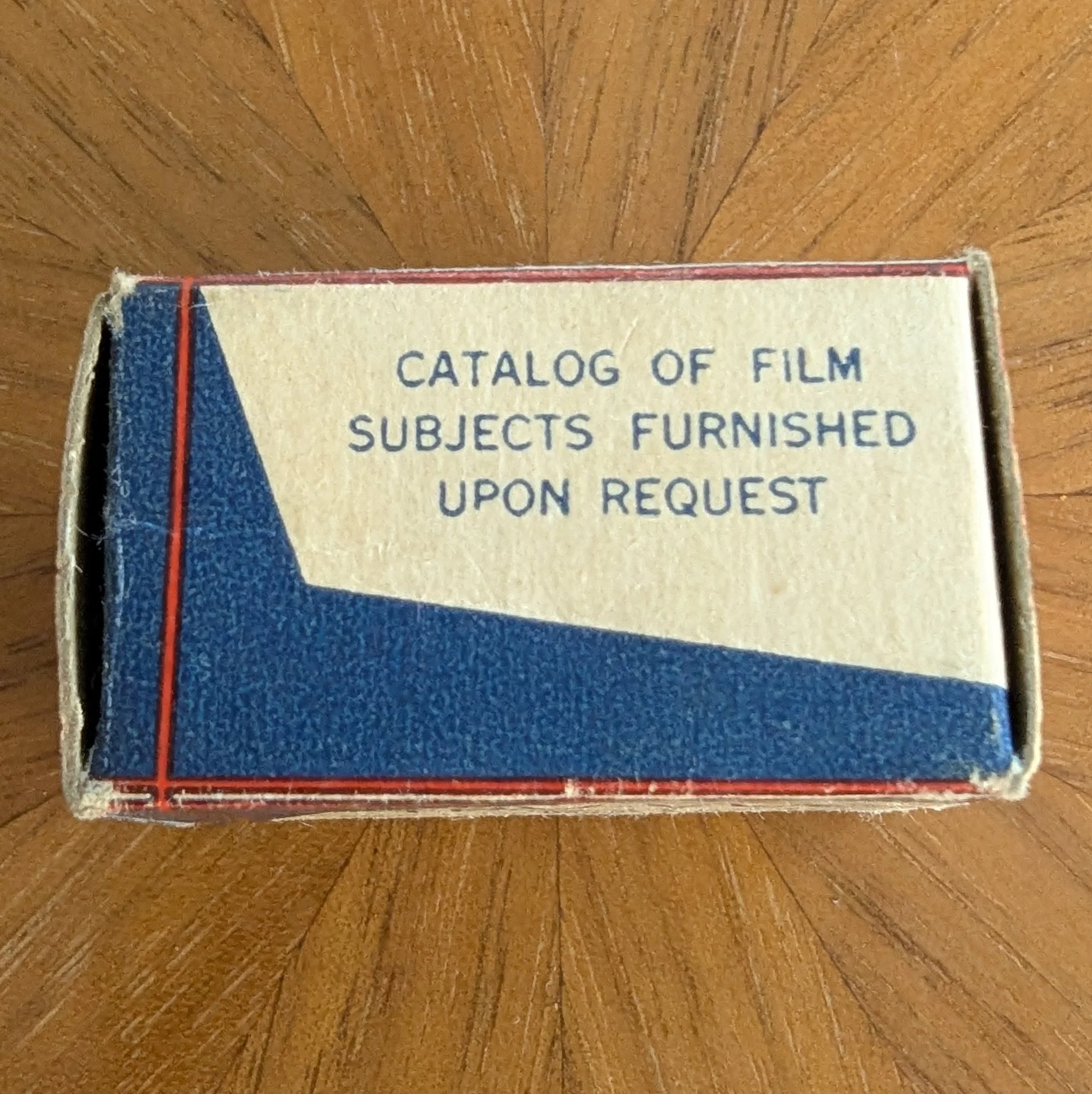
Major & Minor Tru-Vue Filmstrip Box Designs
There are 7 major box design styles. They’re important to know because they can give a significant clue as to the age and value of the filmstrip inside. We consider a design style change to be “major” if multiple sides of the box have undergone noticeable changes. If changes were less detectable or only made to the top flap, we consider that a minor design style change. Here are the 7 major ones we know of:
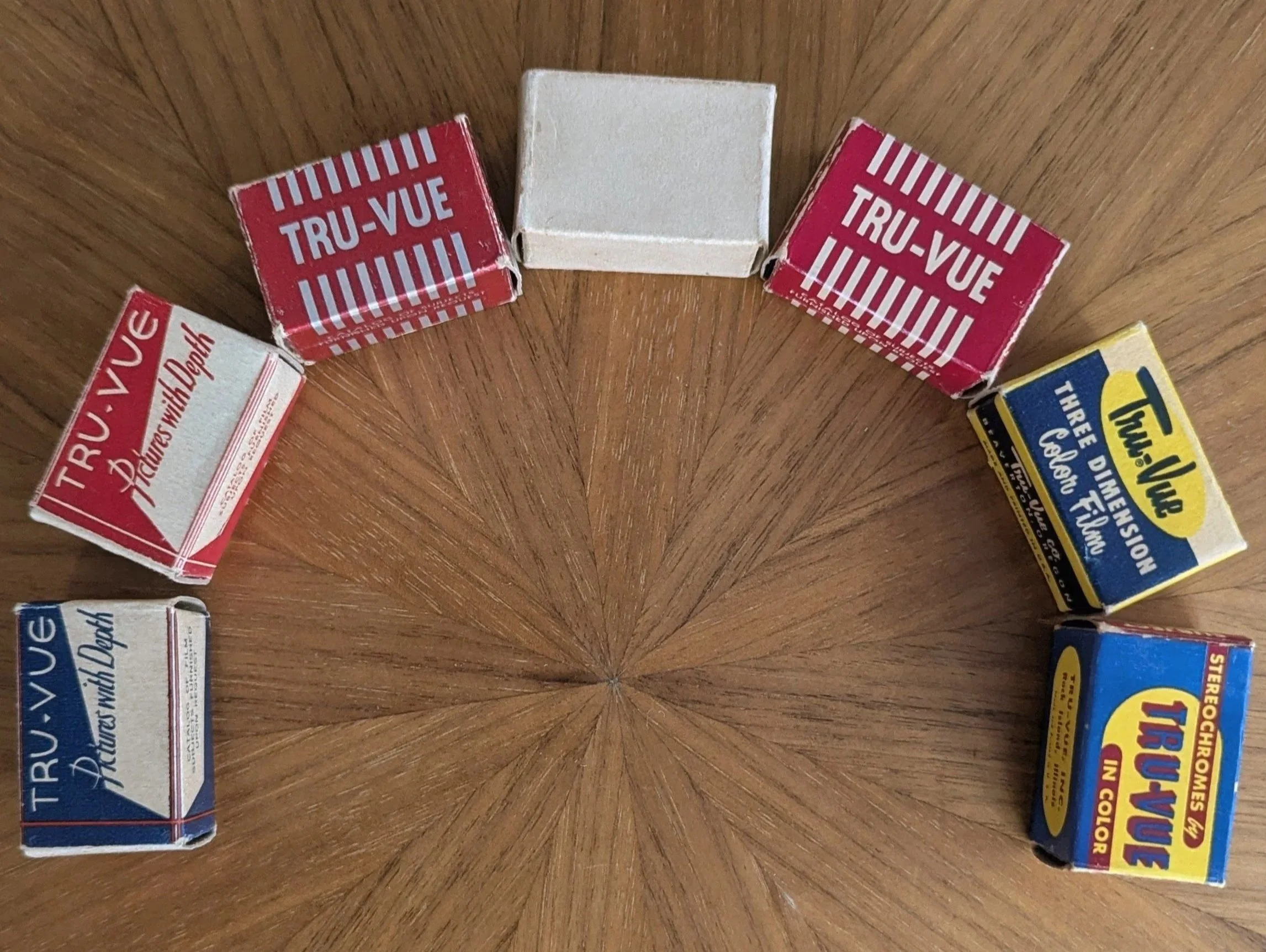
Left to right: 1) Blue Box; 2) Red Box; 3) Silver Piano Box; 4) Plain White Box; 5) White Piano Box; 6) Beaverton Box; 7) Stereochrome (Color) Box
31 End Flaps Showing Major & Minor Tru-Vue Filmstrip Box Changes
Here we show the end flaps of the major designs and include many (but not all) of the minor changes we have in our collection. Minor style changes range from stamped titles to typset titles (and even typed titles done on a typewriter!), changes in font color (black, blue, red), and changes in font style from serif to sans-serif to mixed serif. There are the random cases of italic fonts, end flaps with no information, and boxes that are numbered on one end but not the other (not pictured below).
Box #1. The double red-flap "Blue" Box.
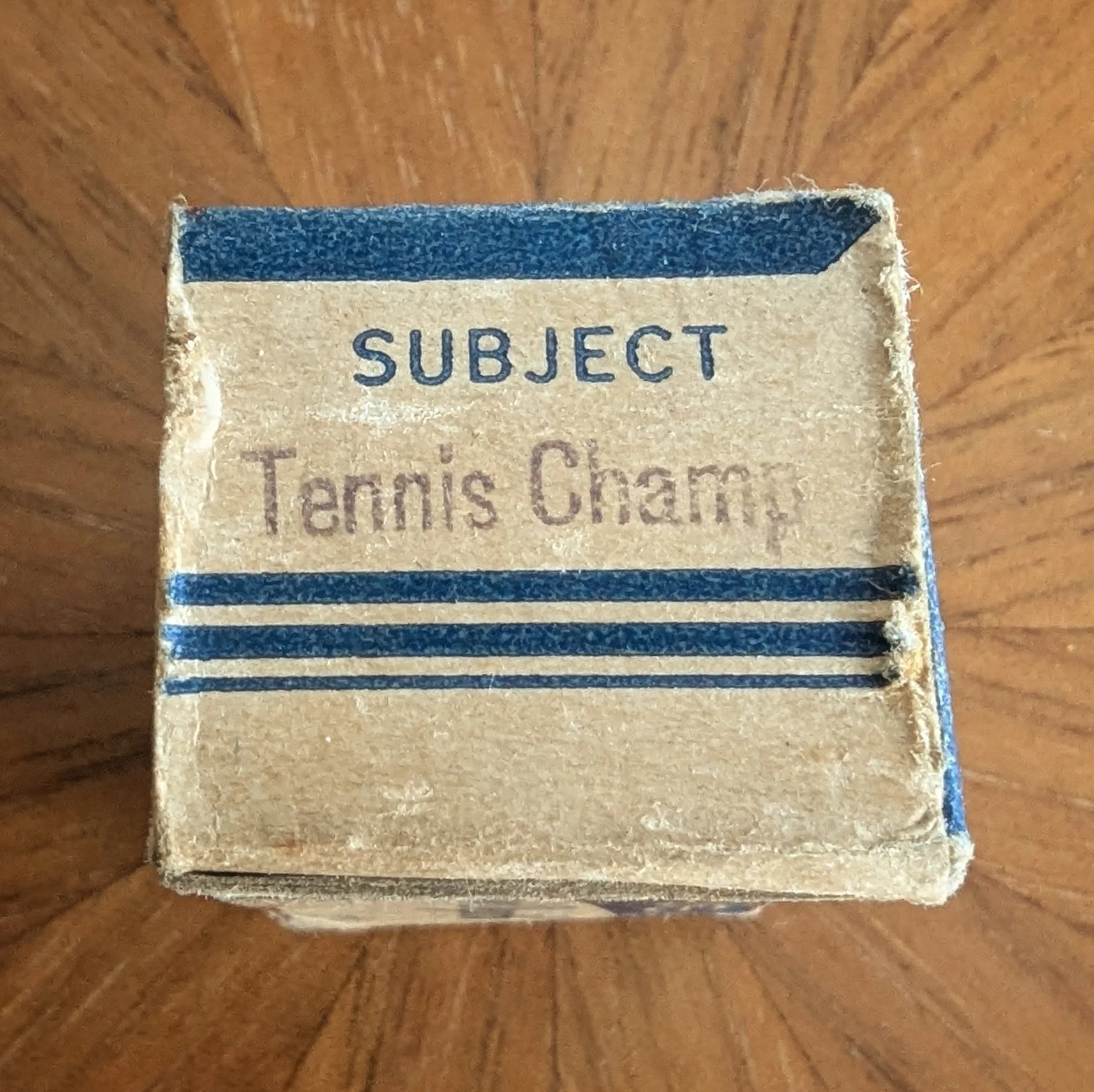
Box #1 (variation) - Red is removed to make more room for film title. Remainder of box is completely the same.
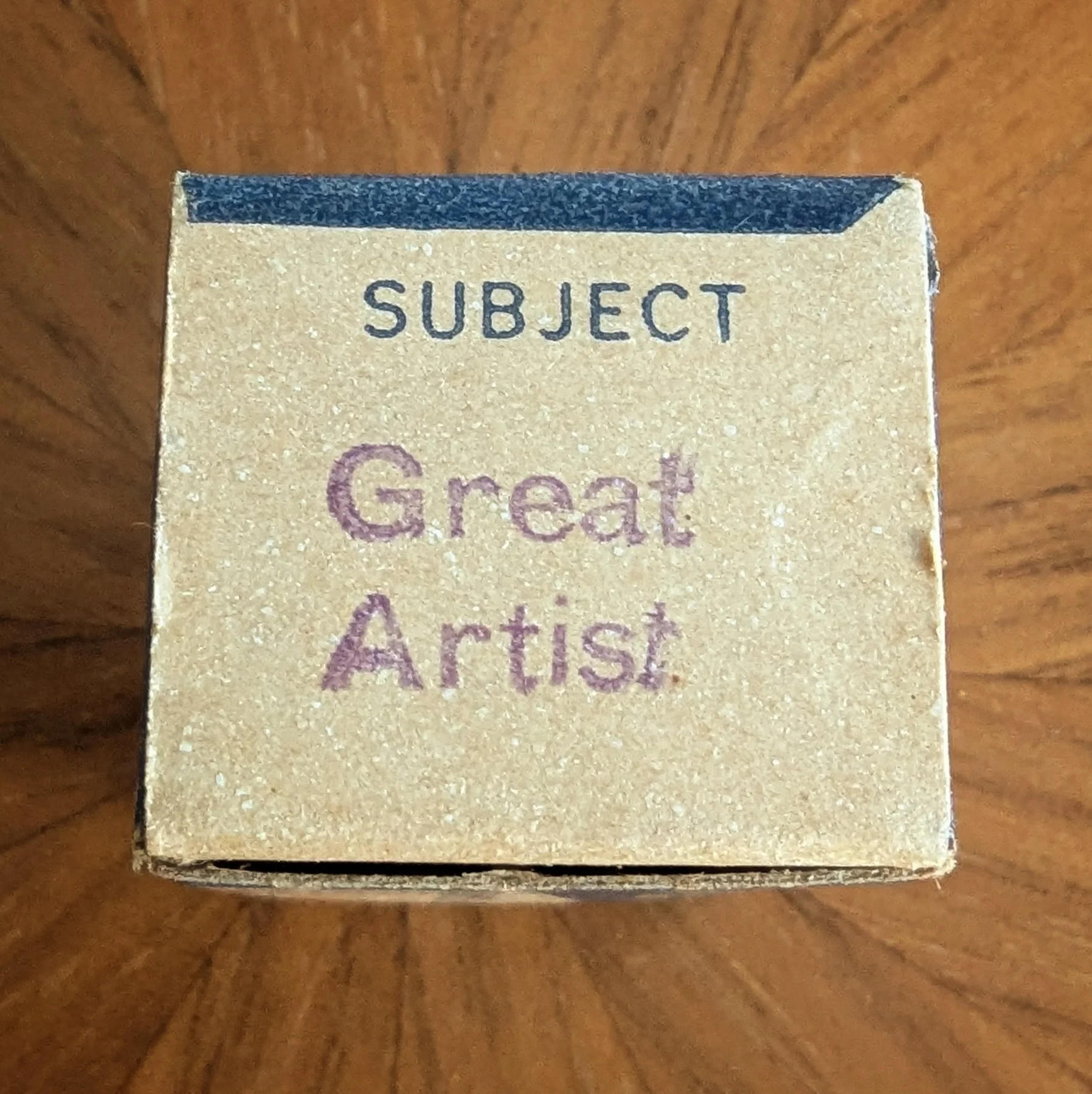
Box #1 (variation). You know what would really open up the space? Getting rid of those pesky blue bars.
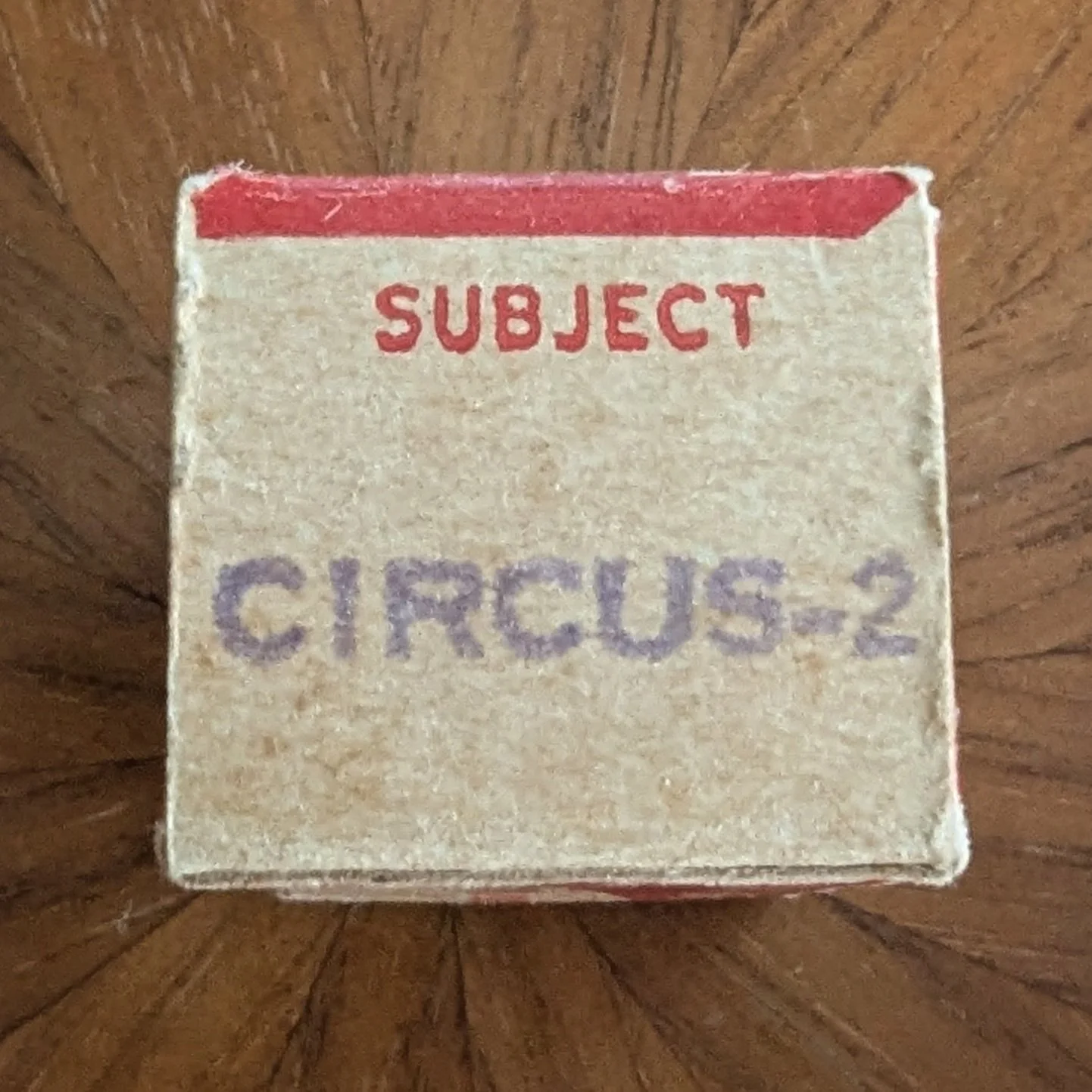
Box #2. The "Red" Box. Color change. Still stamping the titles.
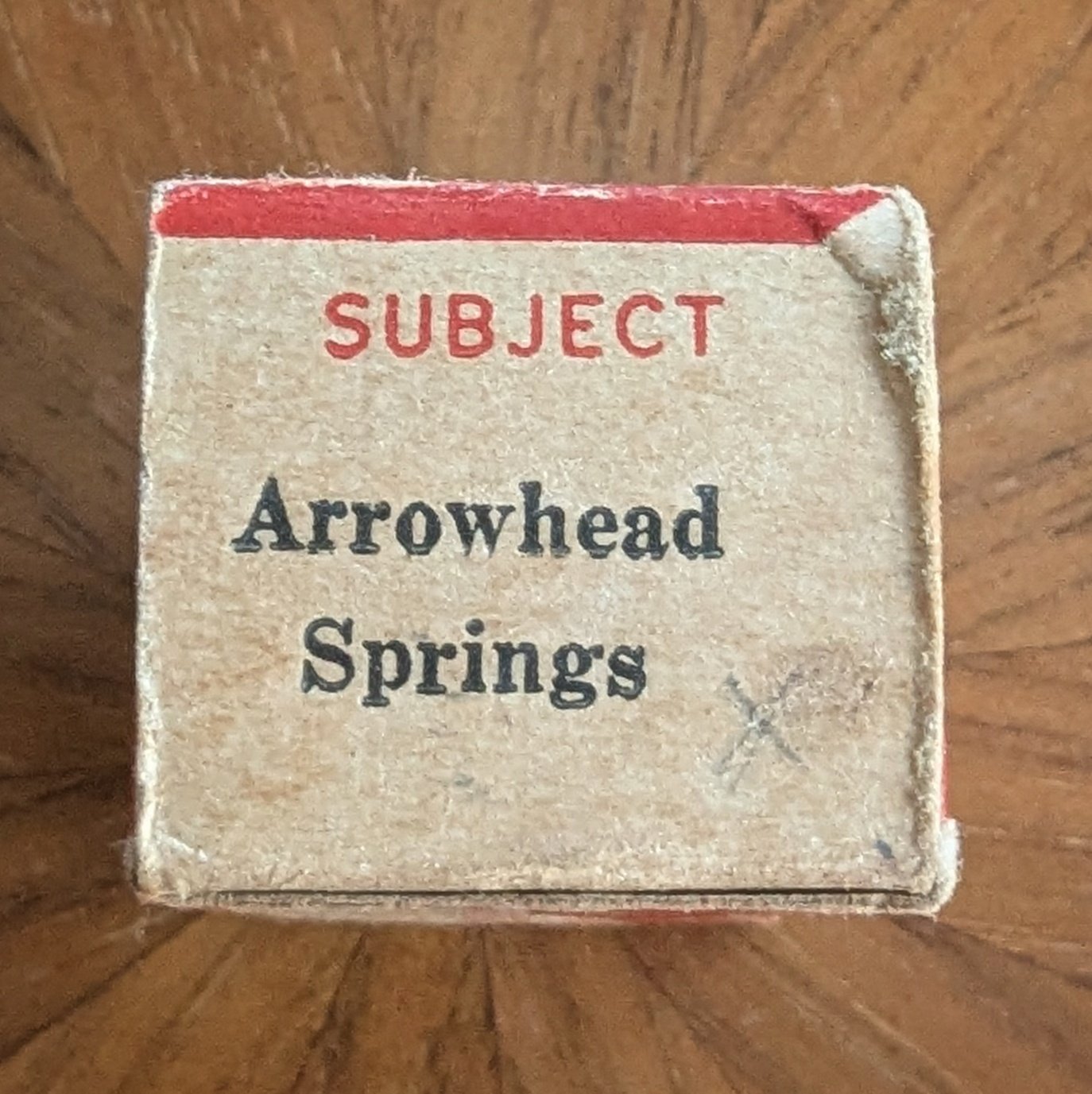
Box #2 (variation). Typeset title in black.
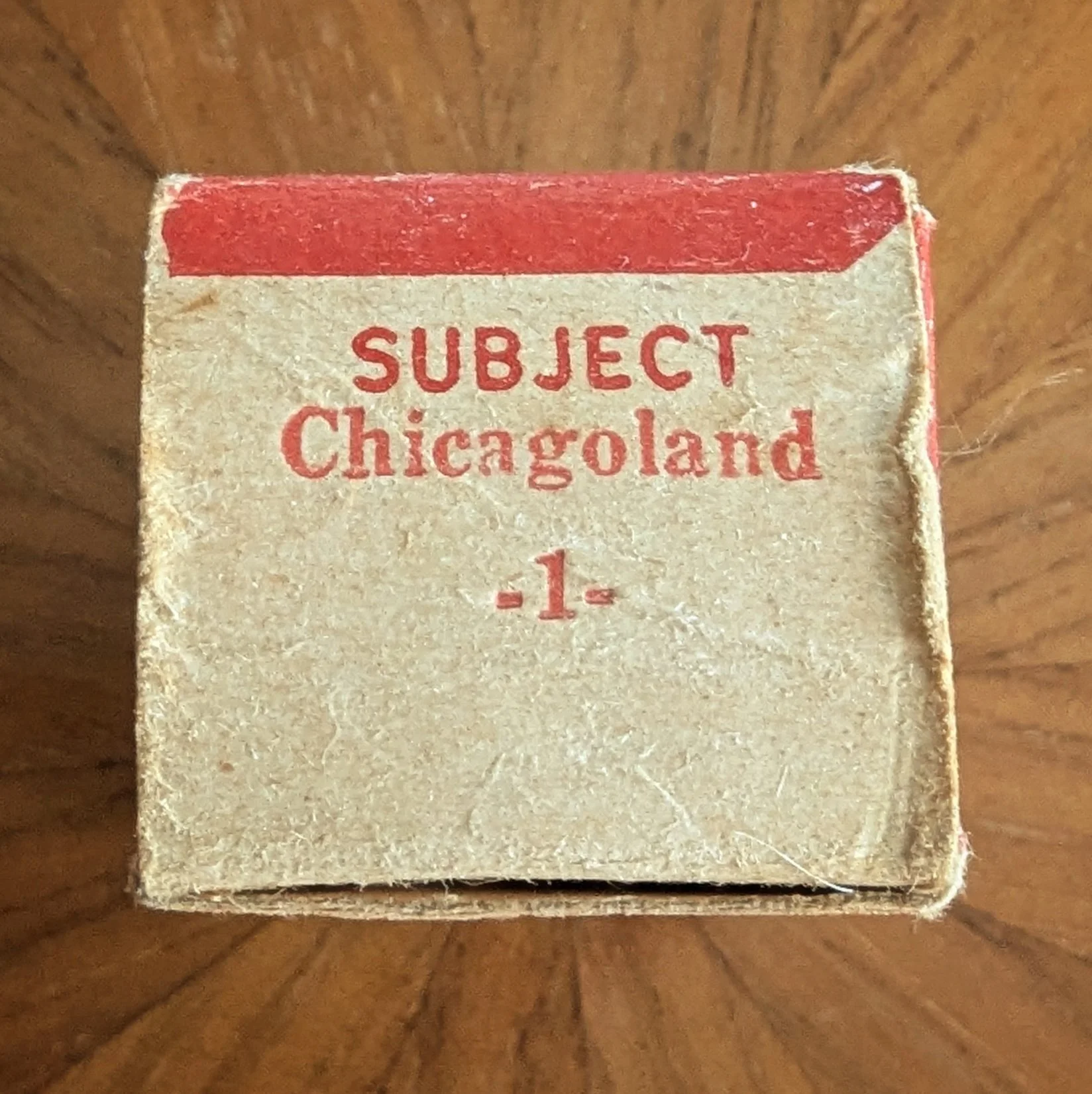
Box #2 (variation) - Title typeset in red.
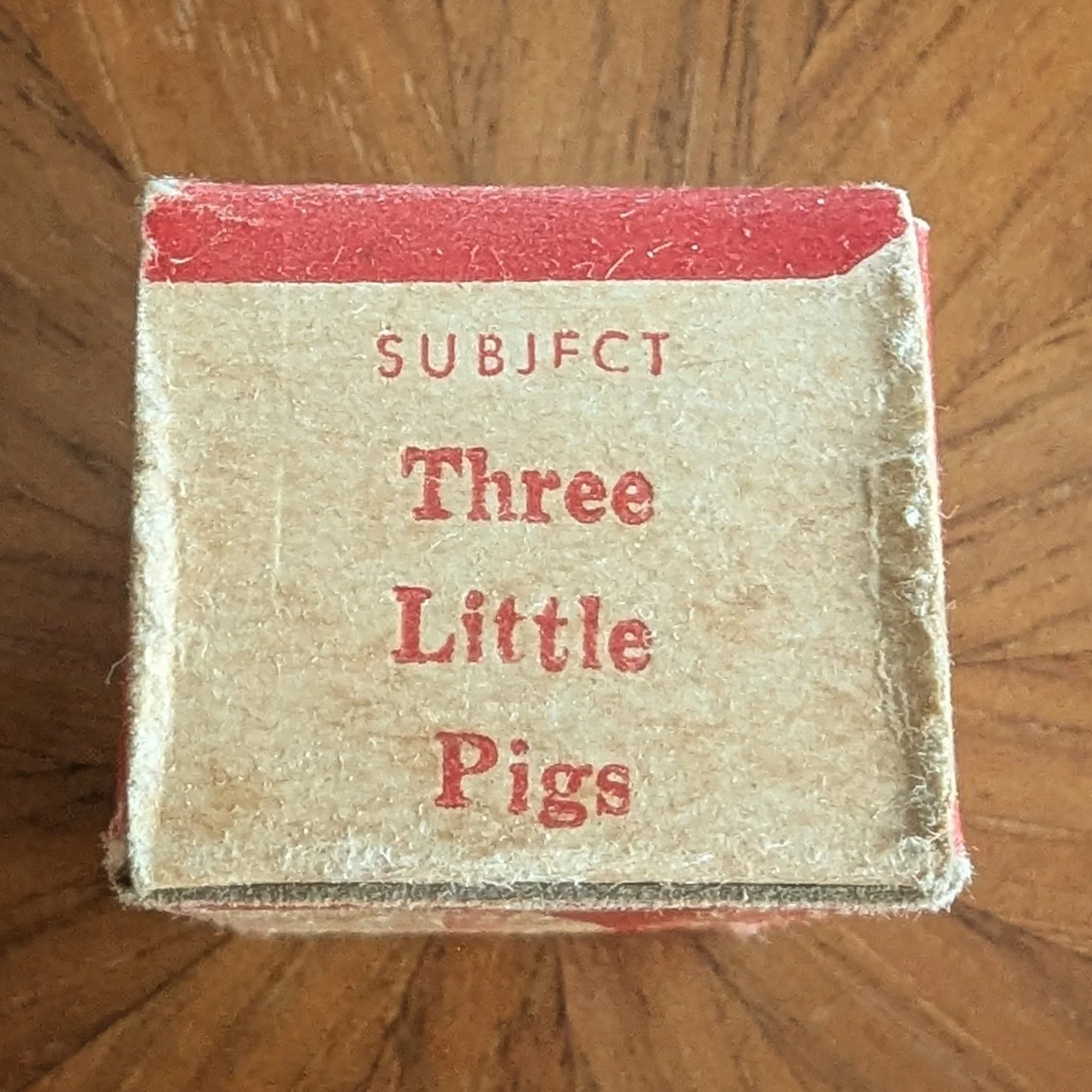
Box #2 (variation). The word "SUBJECT" is smaller.
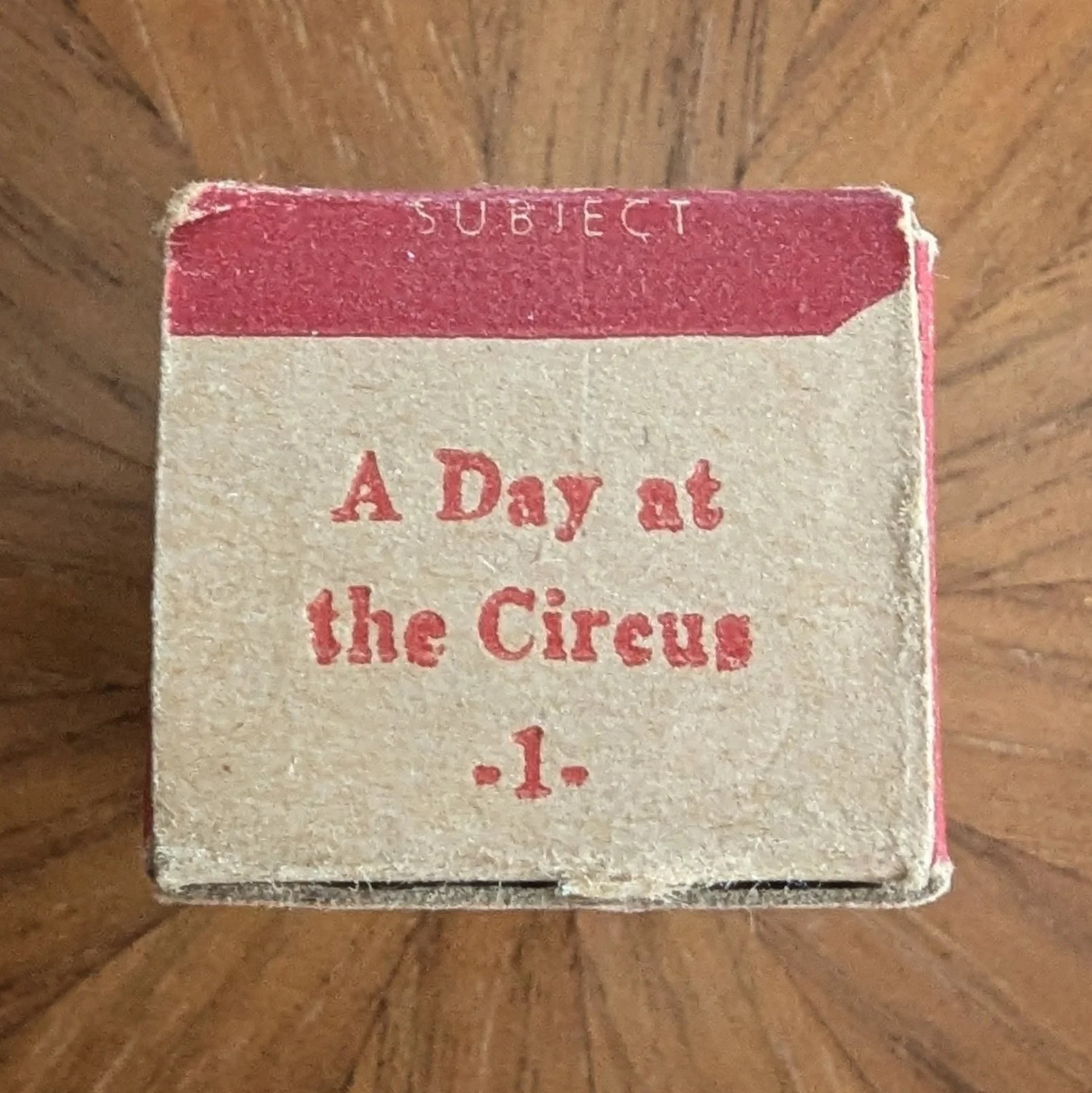
Box #2 (variation). Red area is larger and the word "SUBJECT" is moved into it.
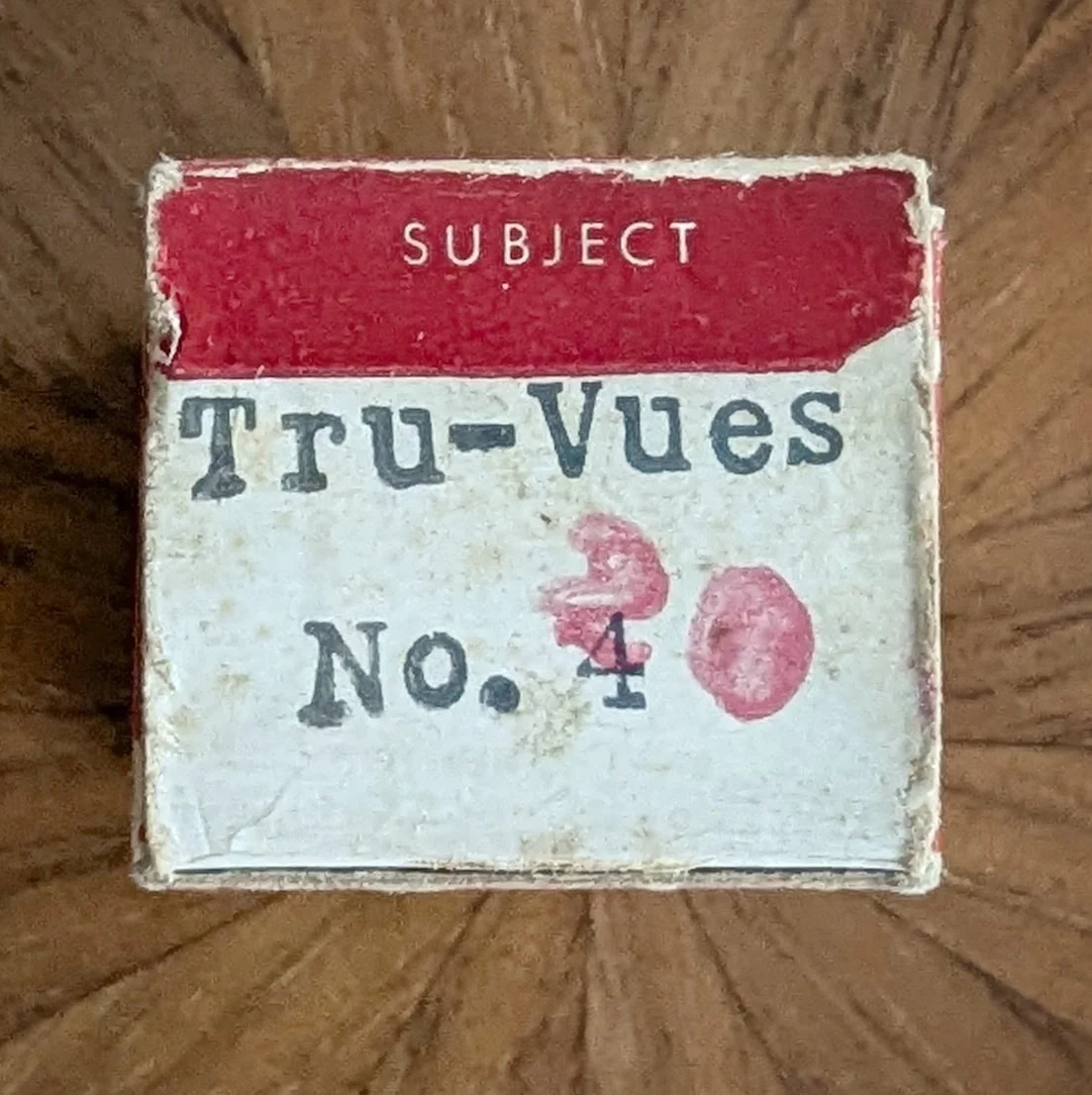
Box #2 (variation). Abandoning the natural buff white box color for bright white. Typewritten title.
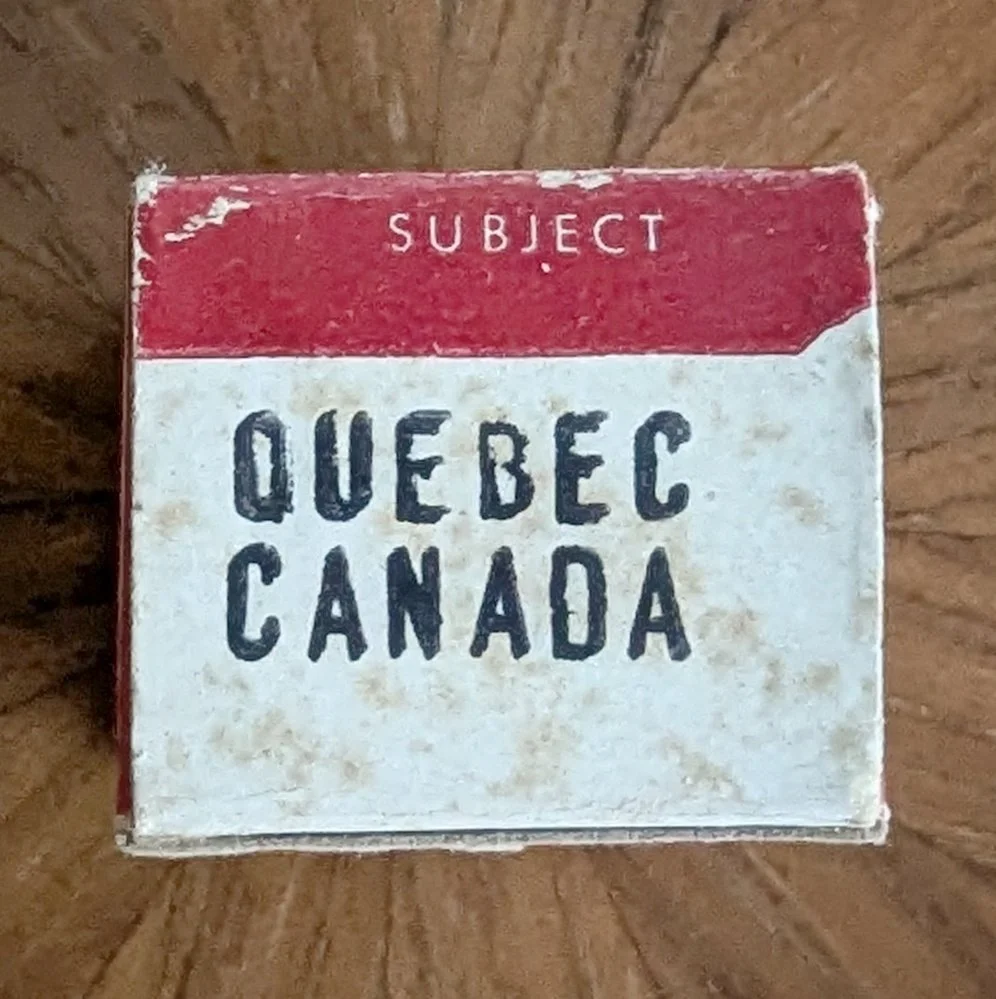
Box #2 (variation). Bright white with stamped title.
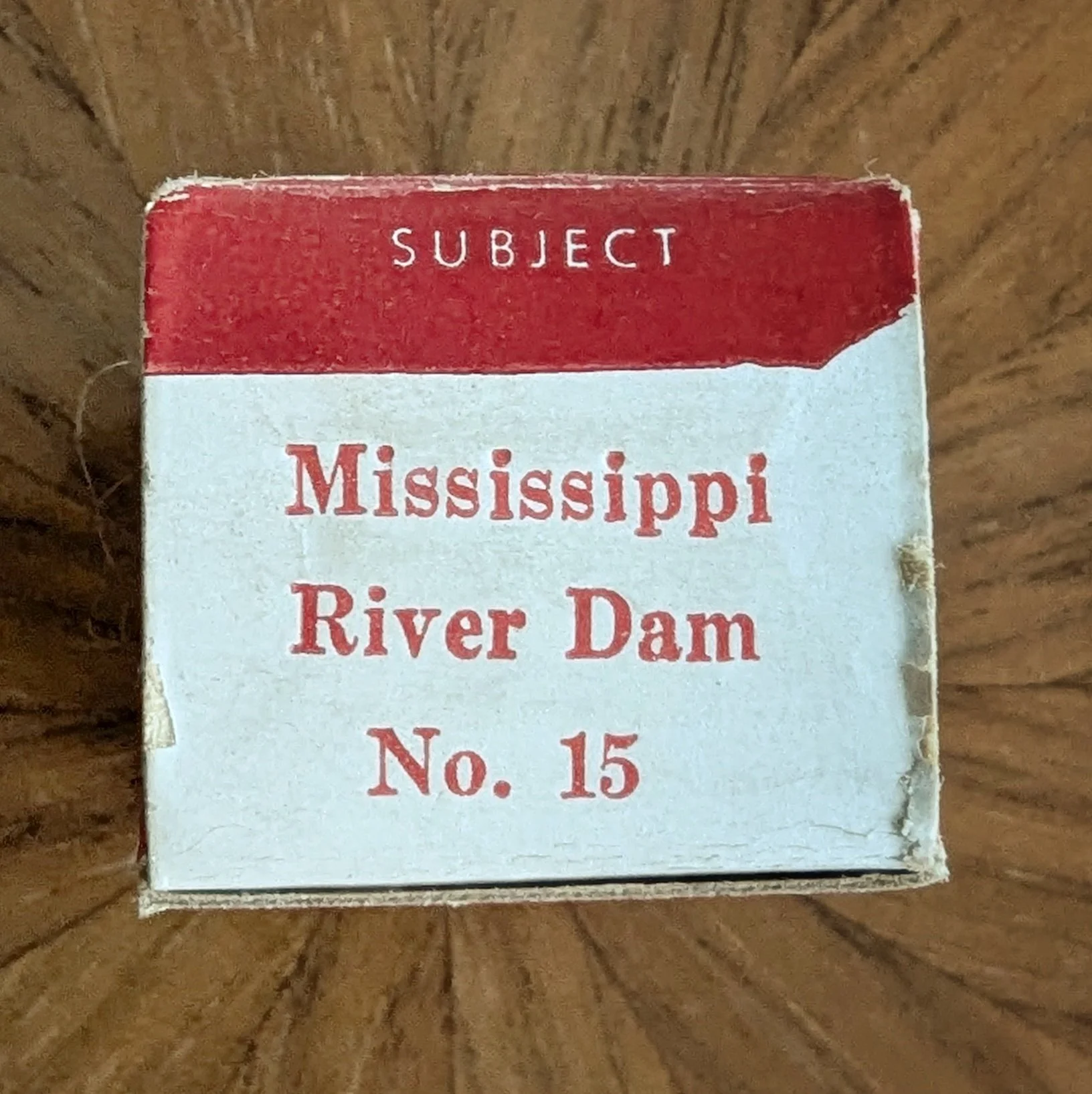
Box #2 (variation). Bright white with title typeset in red.
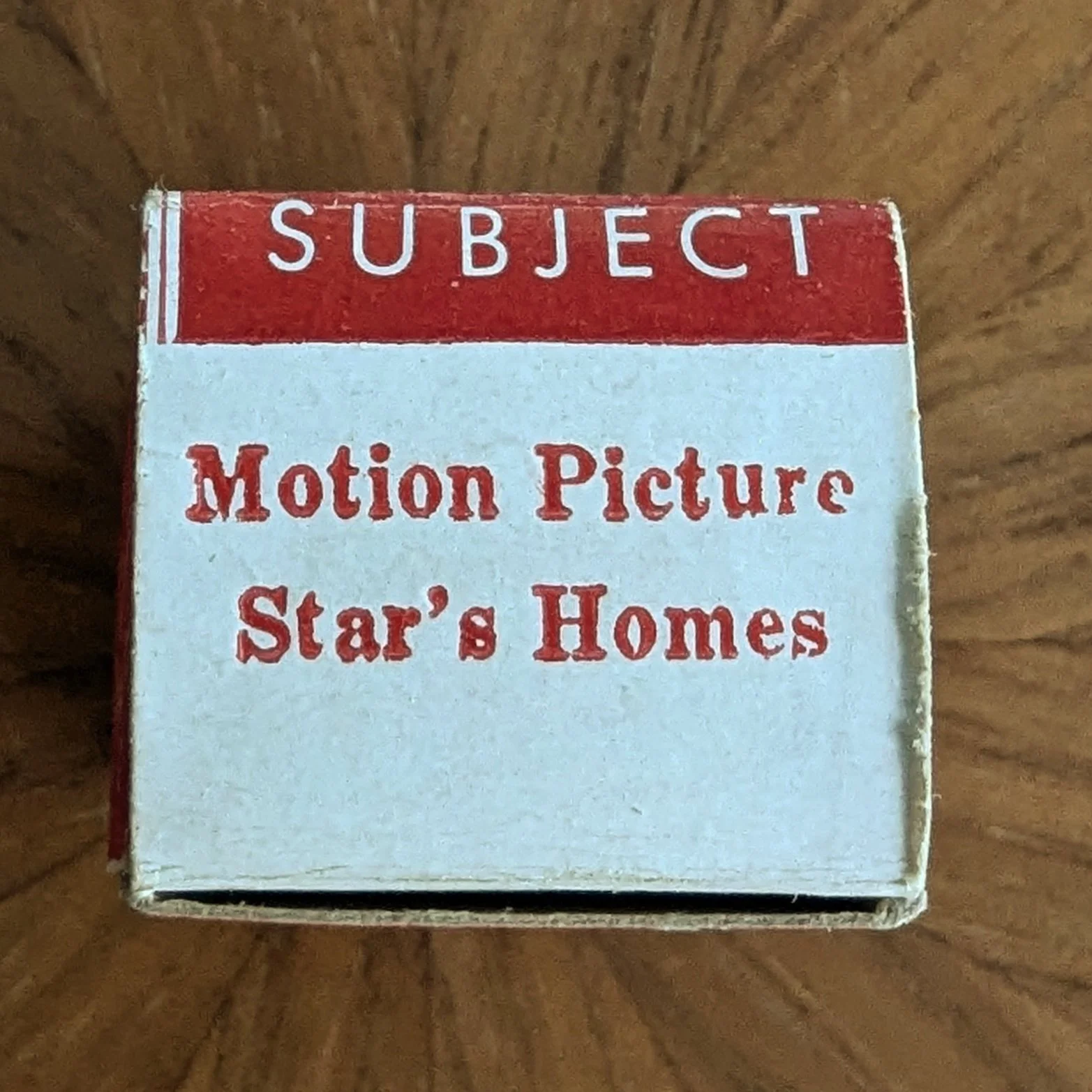
Box #2 (variation). "SUBJECT" in large type. Red typset. First introduction of titling on both end flaps. Made handling of the boxes easier and saved the wear that occurred to the top flap.
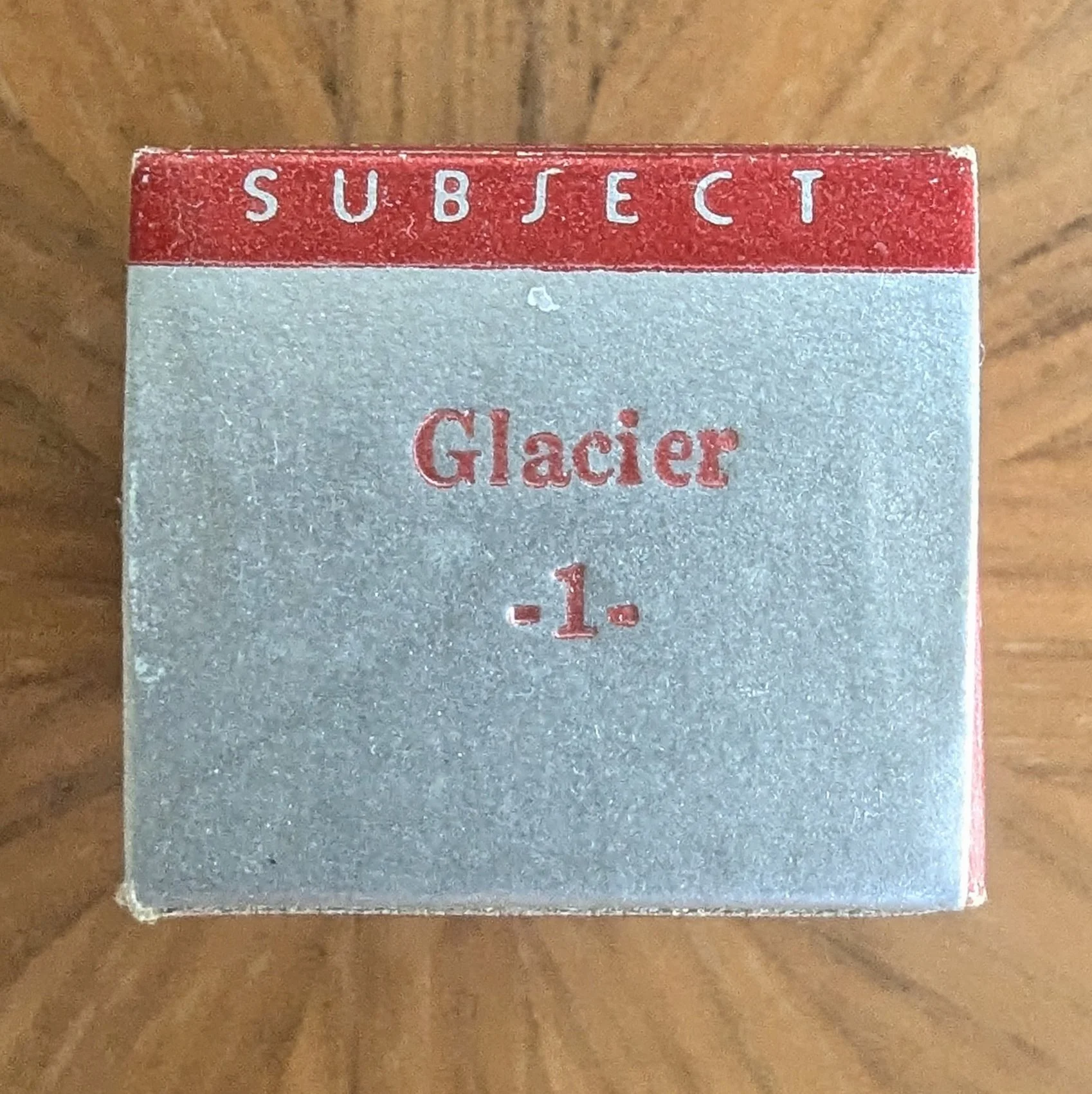
Box #3. Silver piano. Carrying over the red typeset.
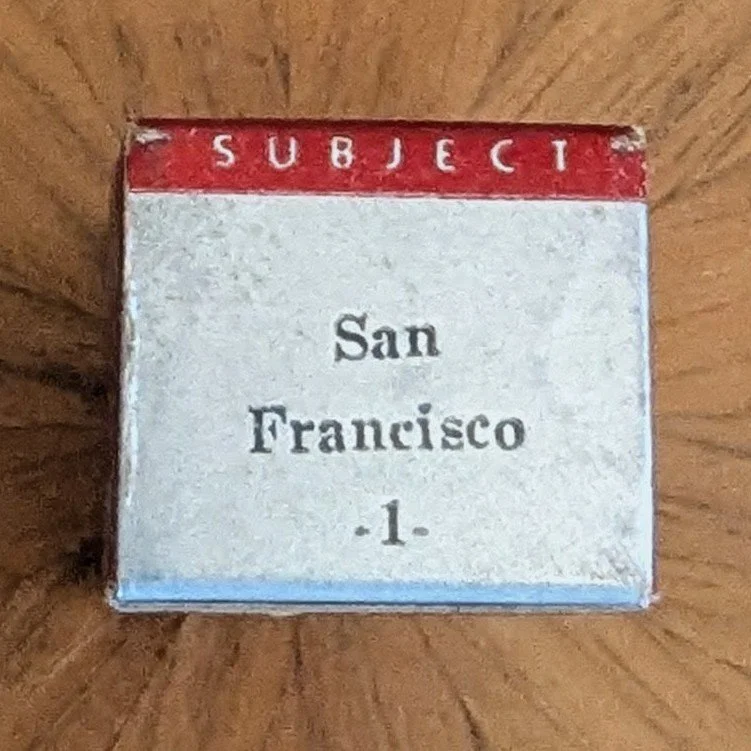
Box #3 (variation). Silver piano with black type but no number.
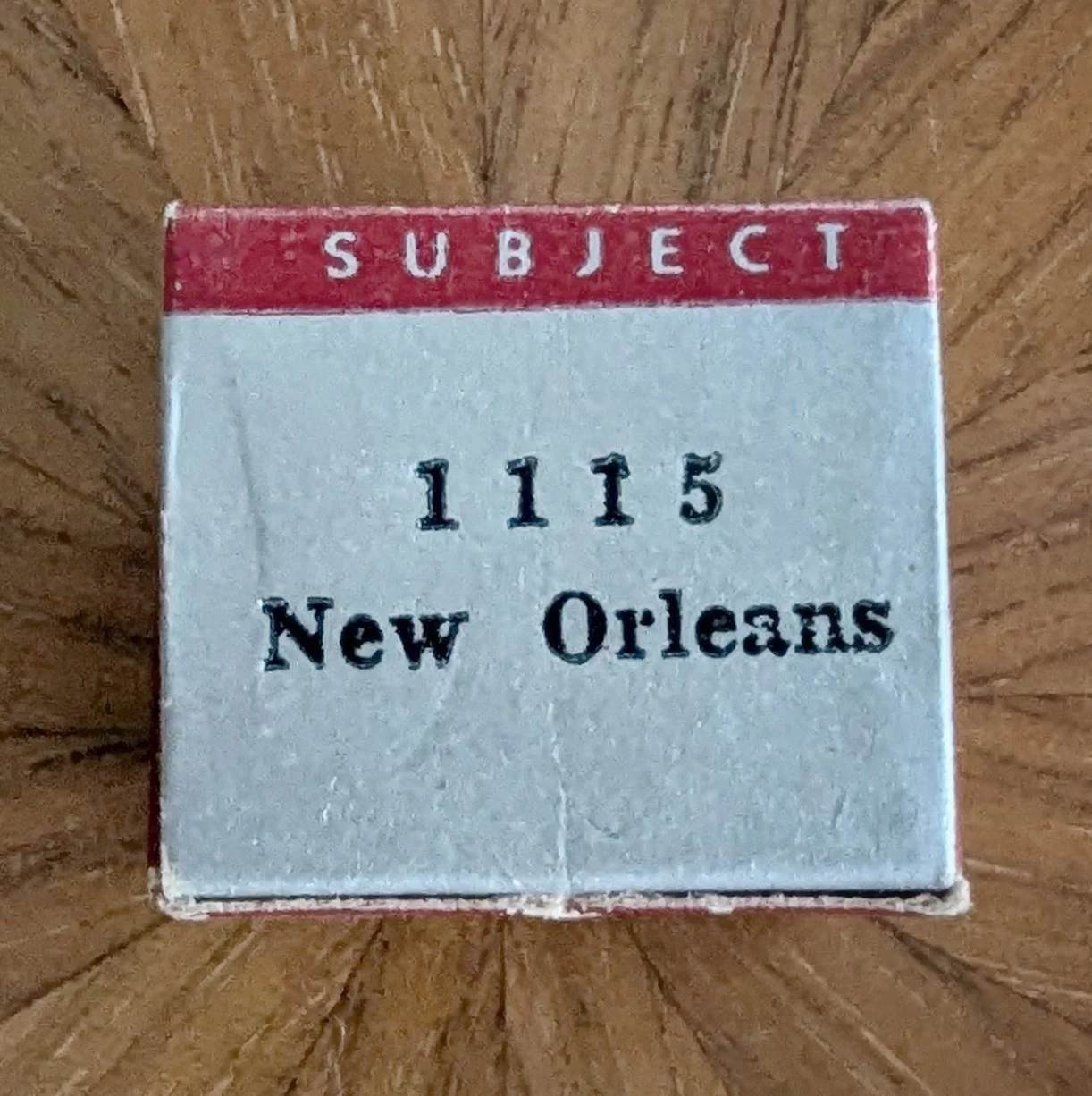
Box #3 (variation). Introduction of numbering. Most common version of Box #3.
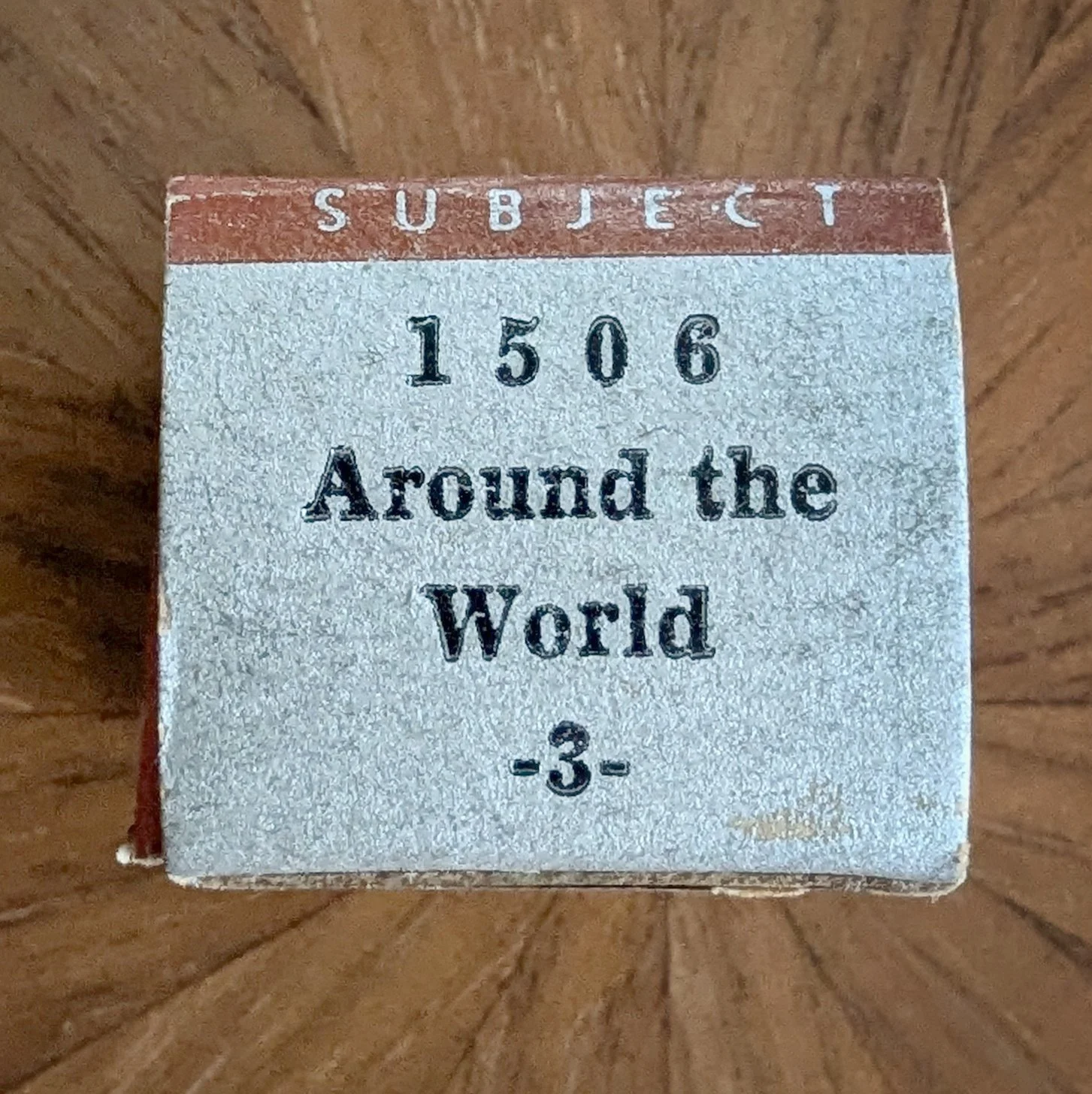
Box #3 (variation). A version of the silver piano box where the red is more orange-ish, and the texture is rougher.
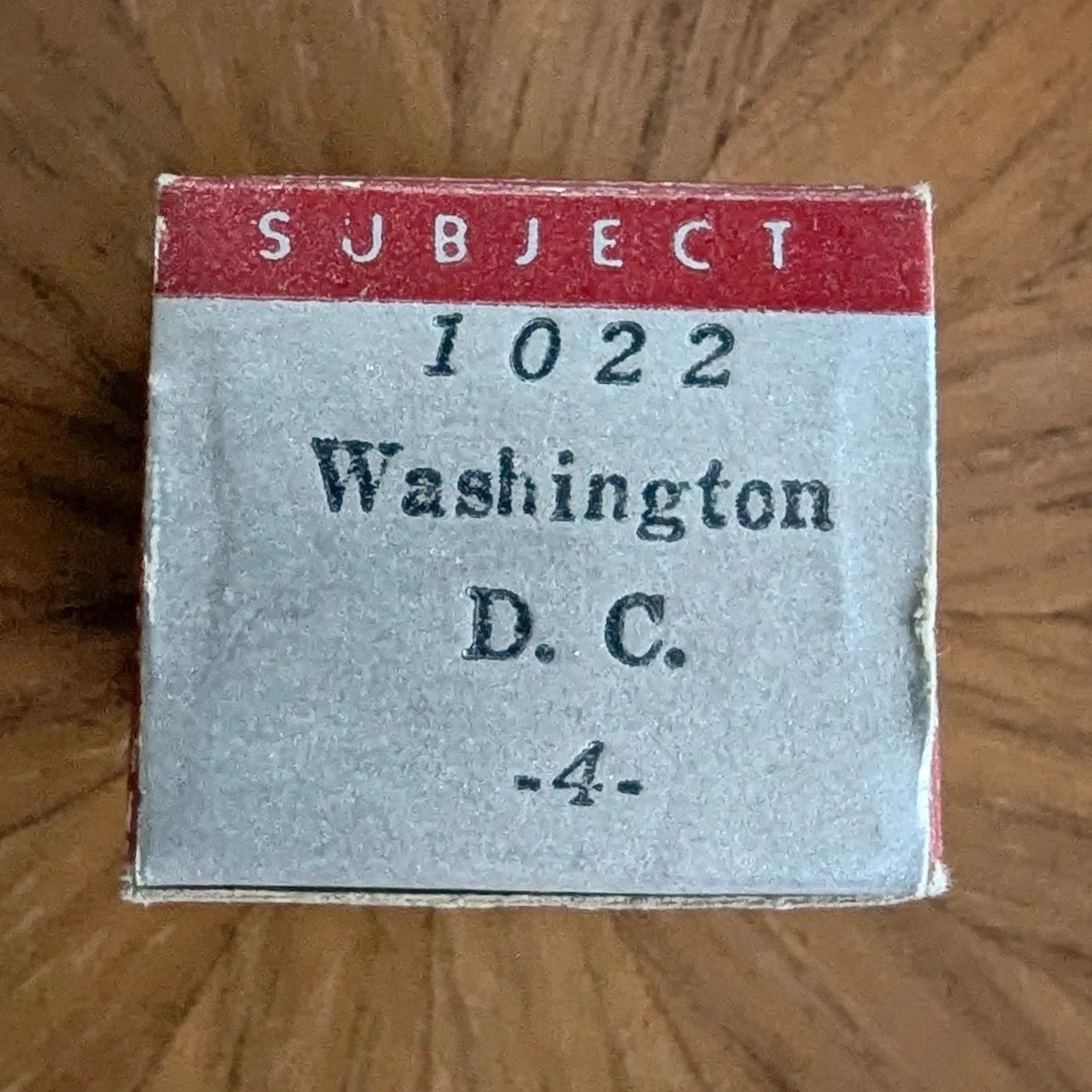
Box #3 (variation). Film number and series number in italic.
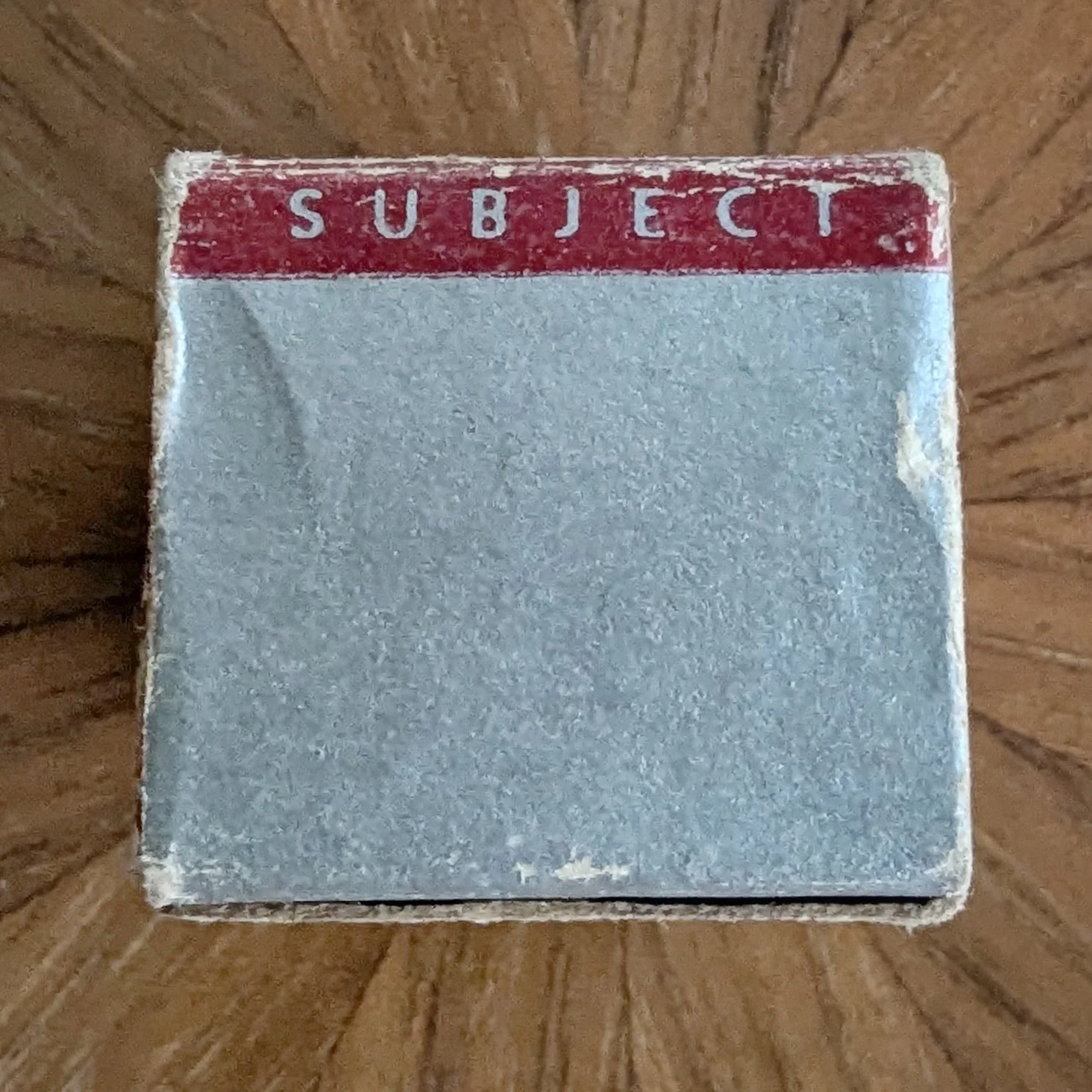
Box #3 (variation). No title.
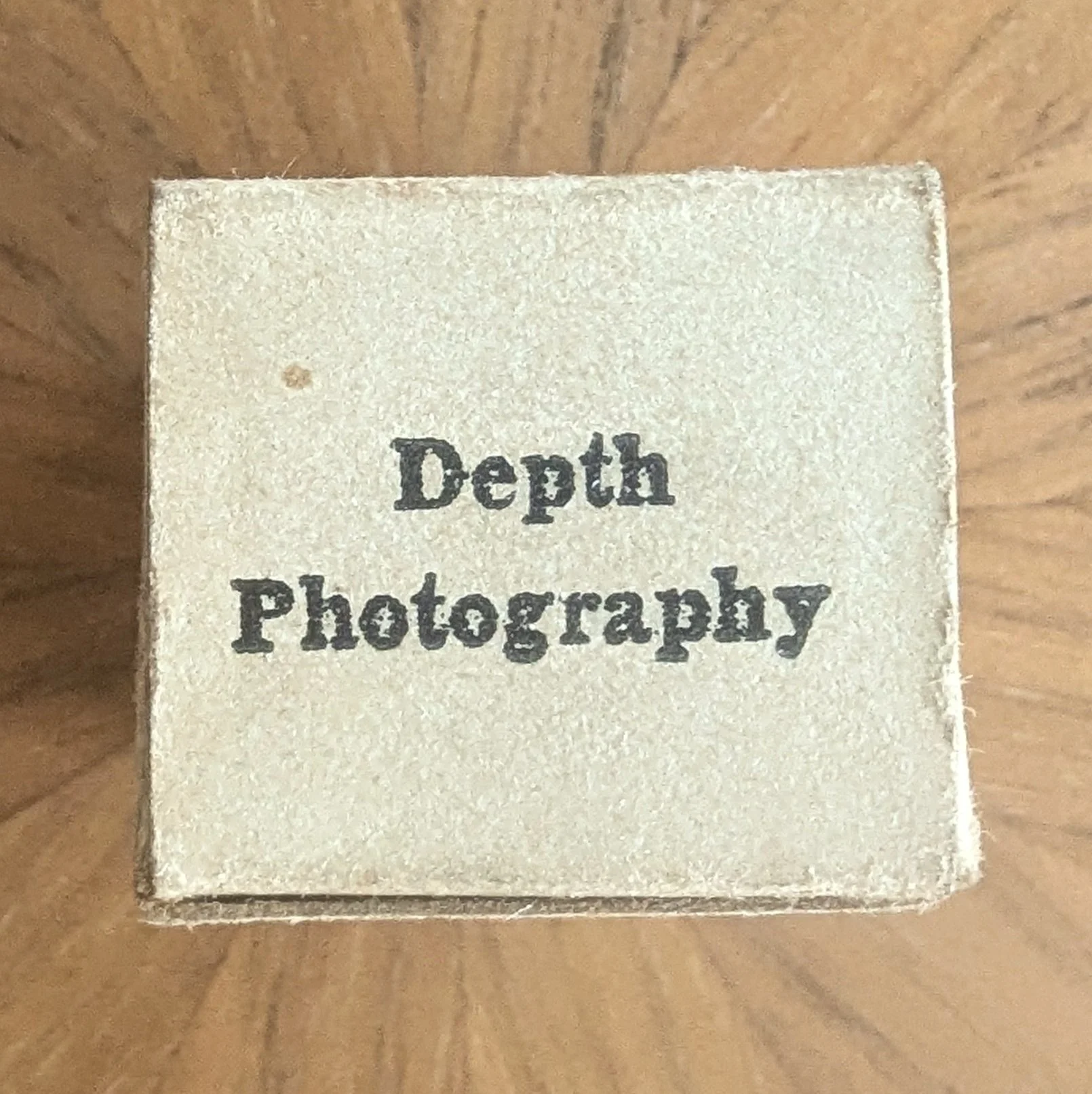
Box #4. Natural all-white box.
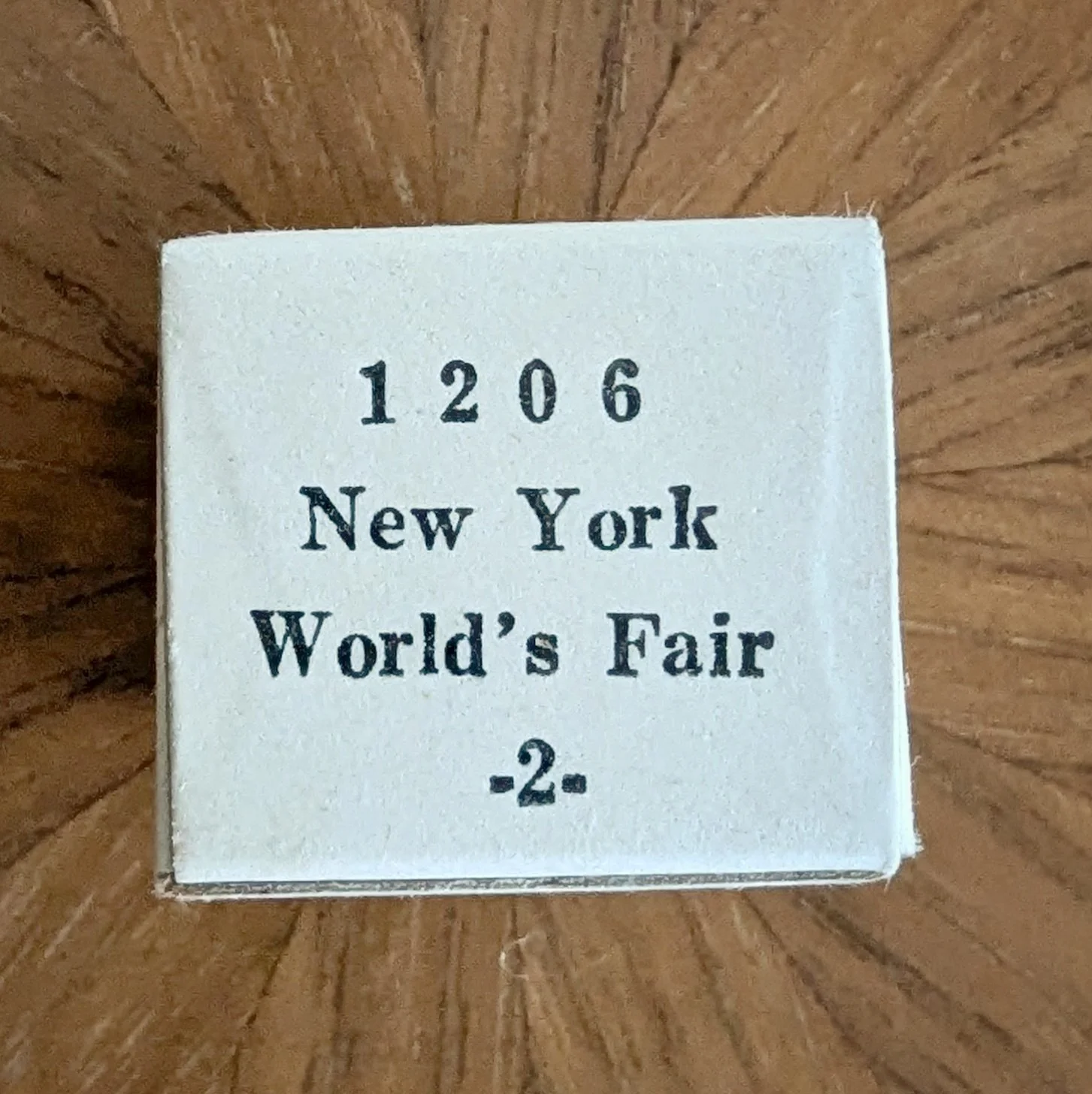
Box #4 (variation). Bright all-white box.
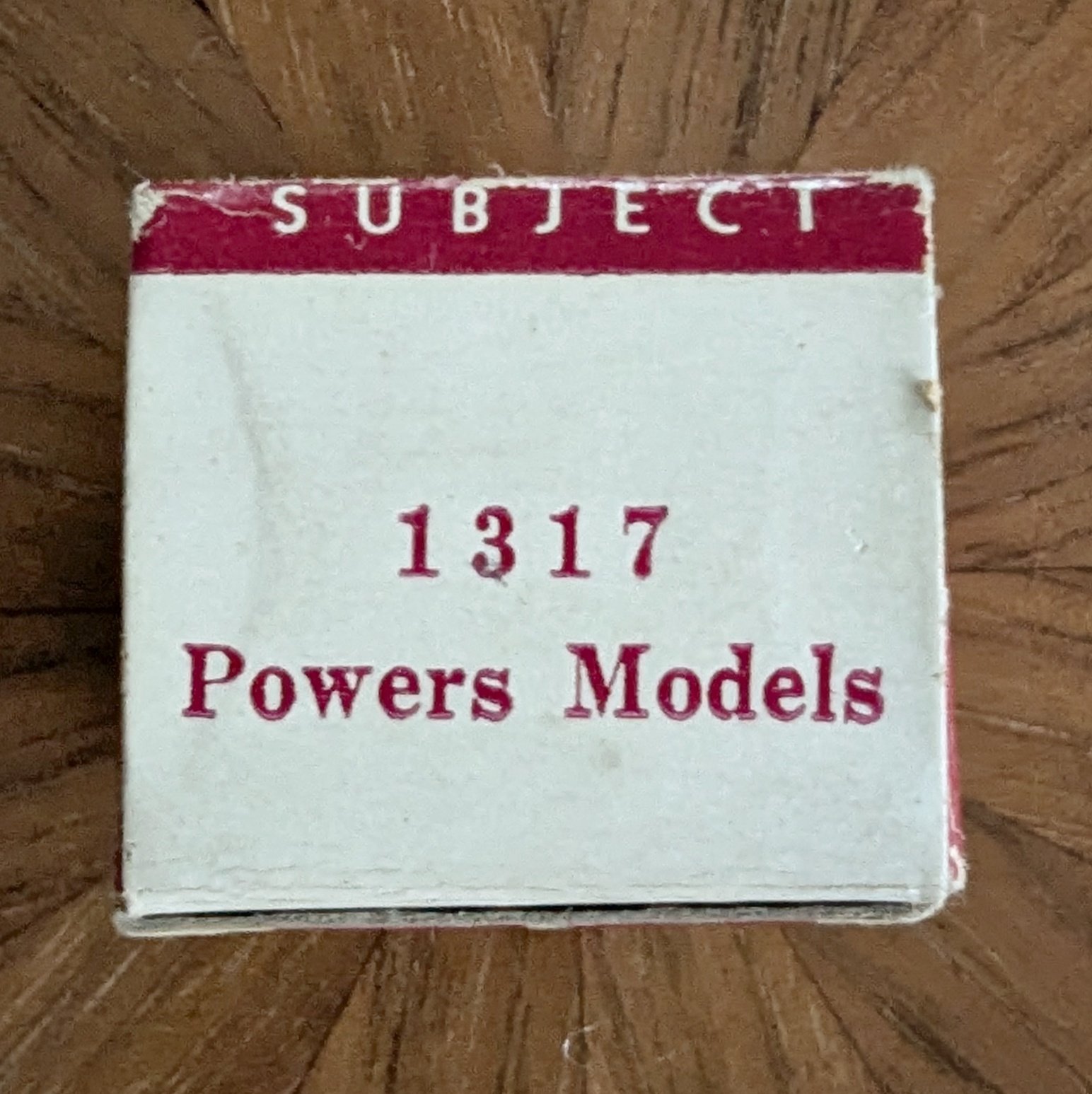
Box #5. White piano box. Red typset. Most common version of Box #5.
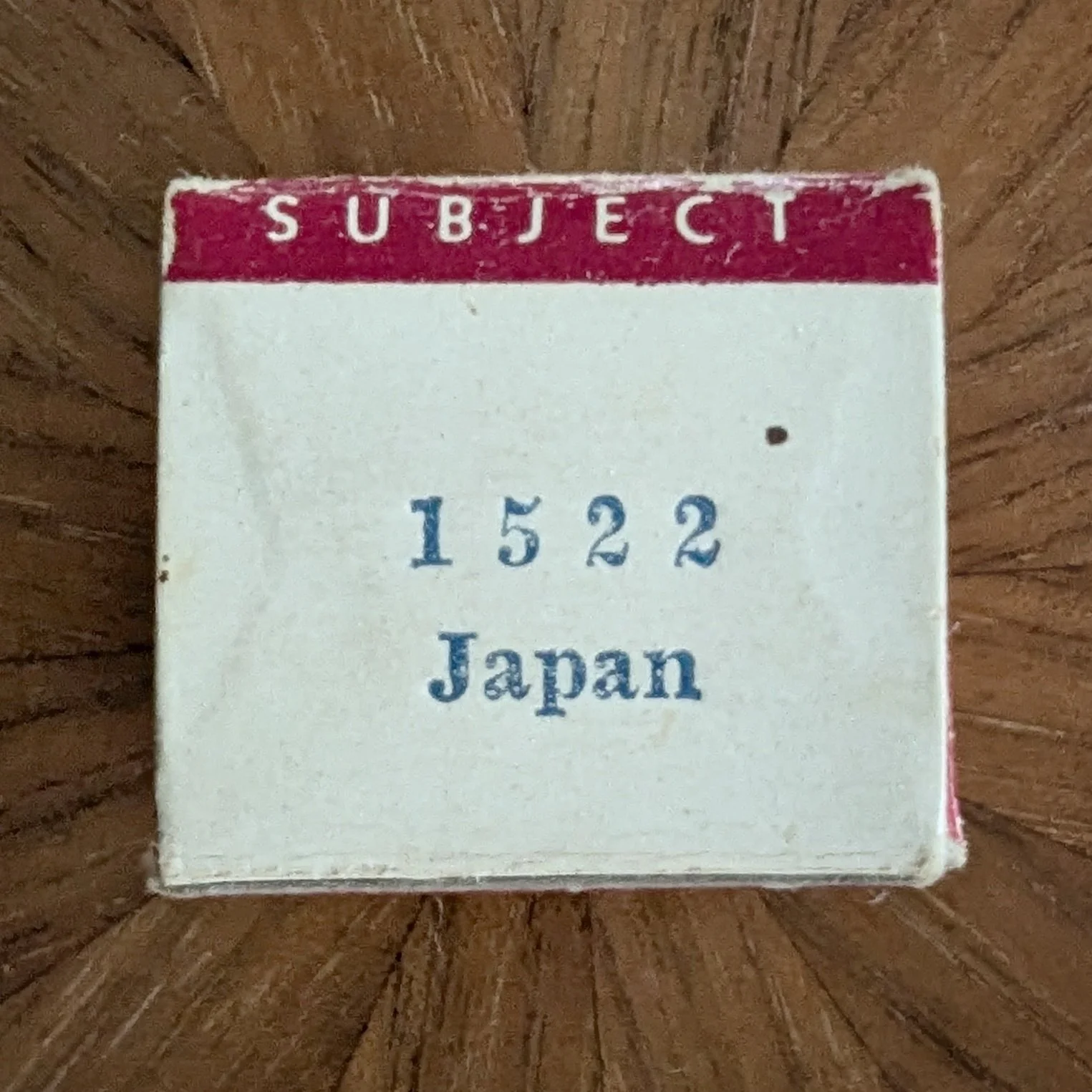
Box #5 (variation). Blue typeset.
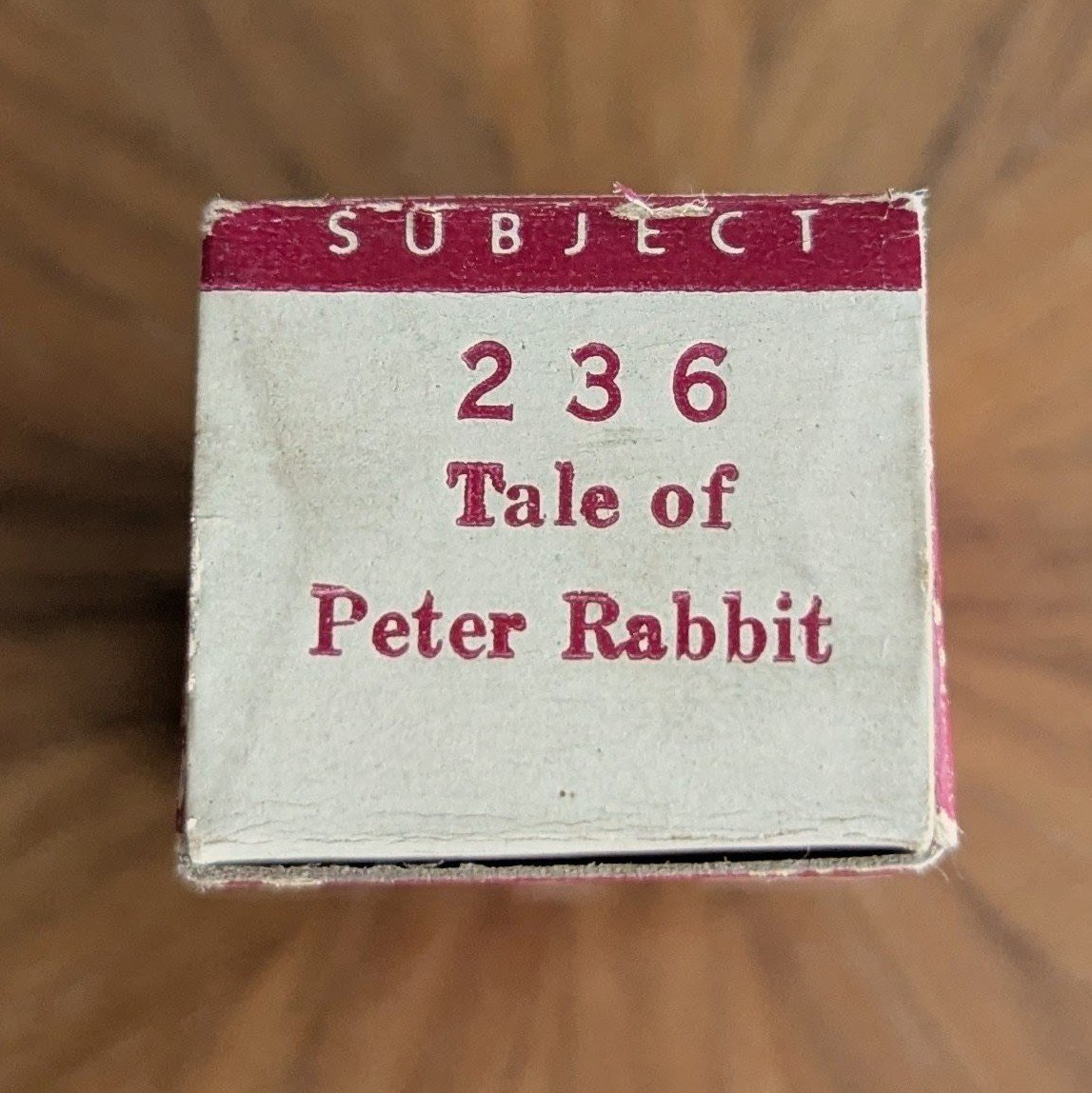
Box #5 (variation). Mixed serif, red type. Sans-serif number with serif title.
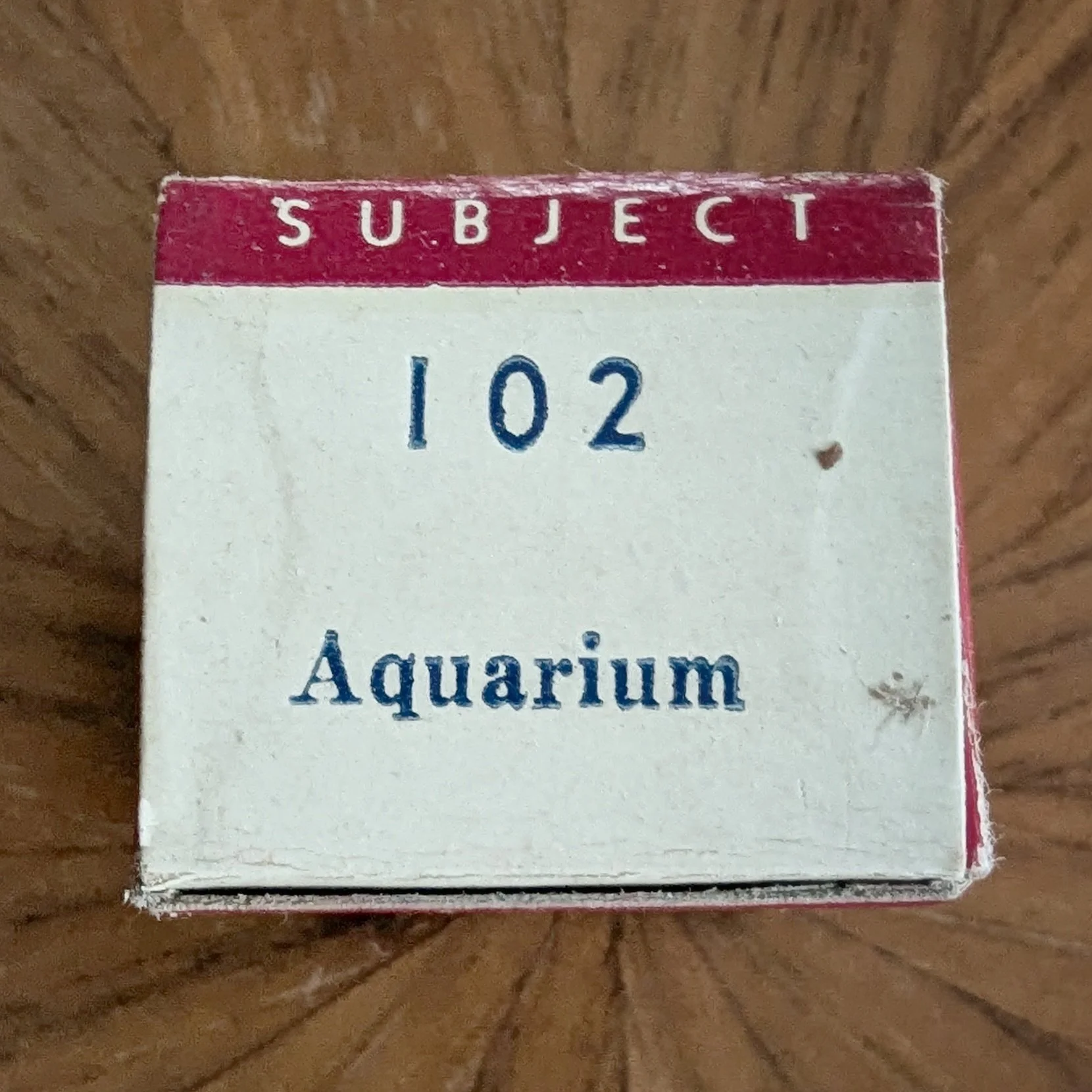
Box #5 (variation). Mixed serif, blue type. Sans-serif number with serif title.
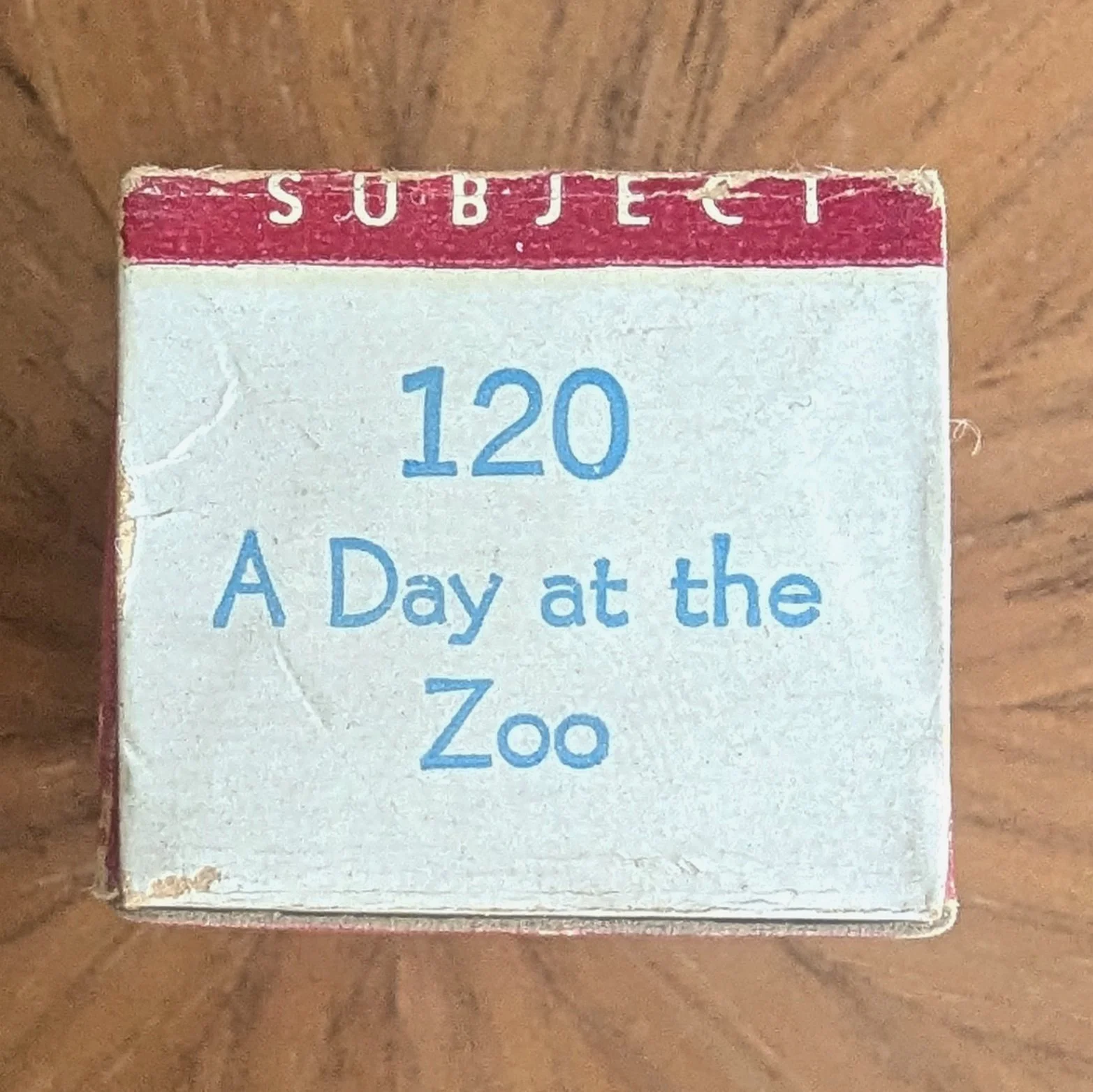
Box #5 (variation). All sans-serif. Blue typeset. Both the number and title are sans-serif but note the different style of the "1" from the previous sans-serif "1".
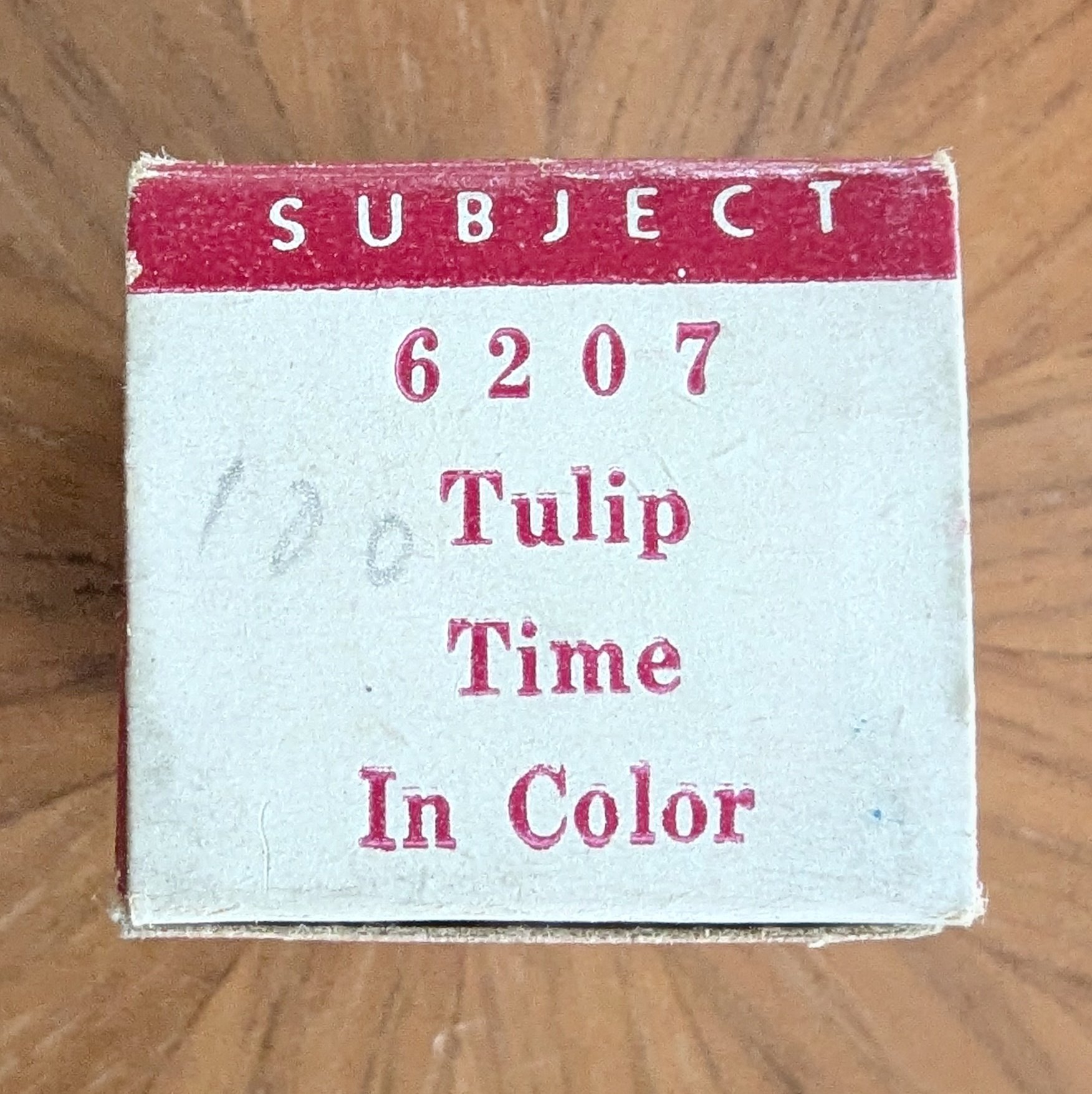
Box #5 (variation). "In Color" added to the flap for use with new color filmstrips.
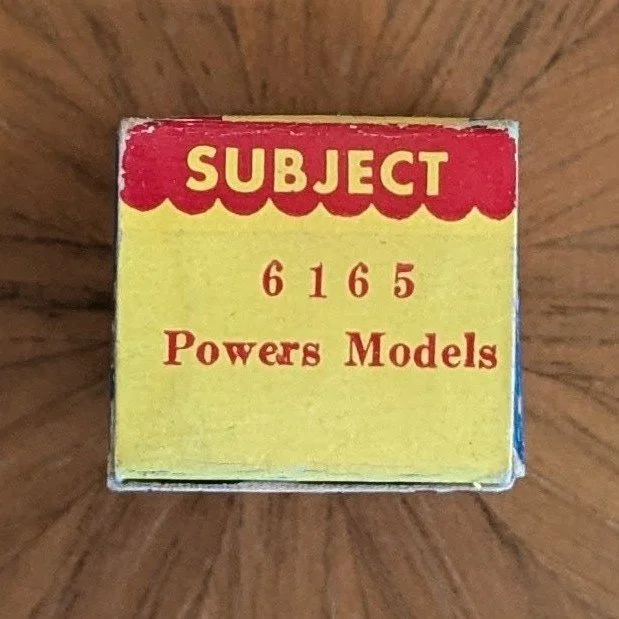
Box #6. Stereochrome color film box with red serif type.
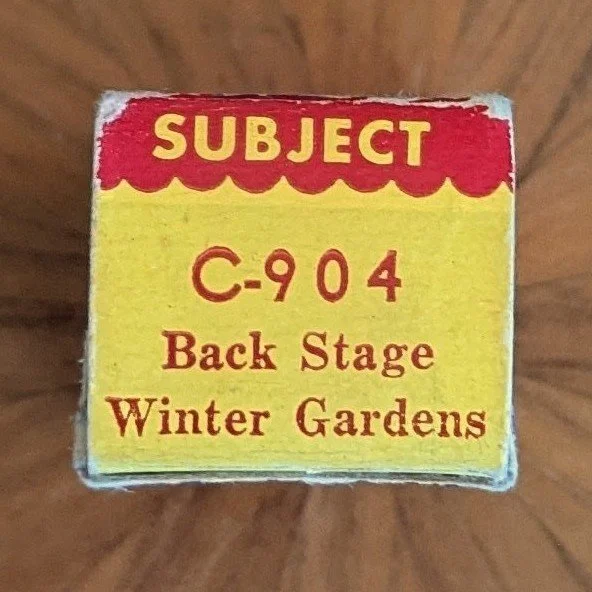
Box #6 (variation). Type is still red but with mixed serif. Title is still serif but number is sans-serif.
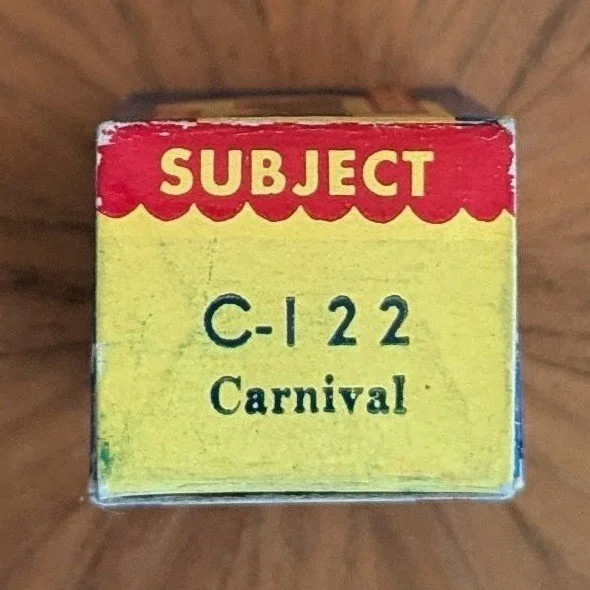
Box #6 (variation). Mixed serif type in blue.
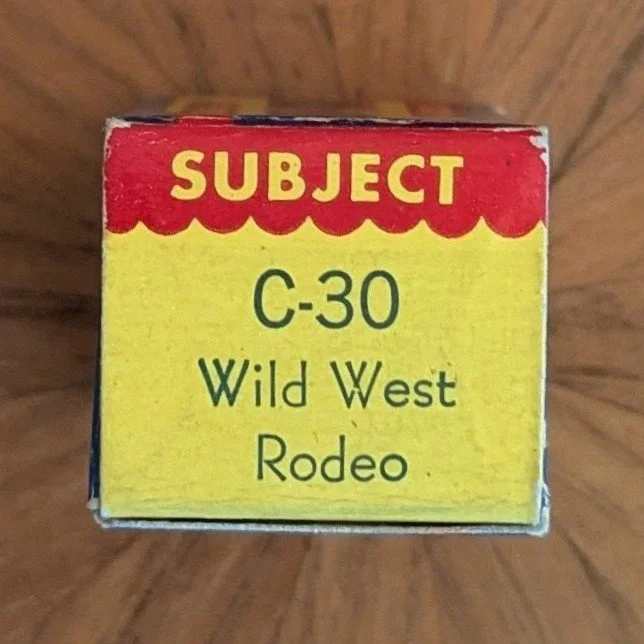
Box #6 (variation). All sans-serif type in blue.
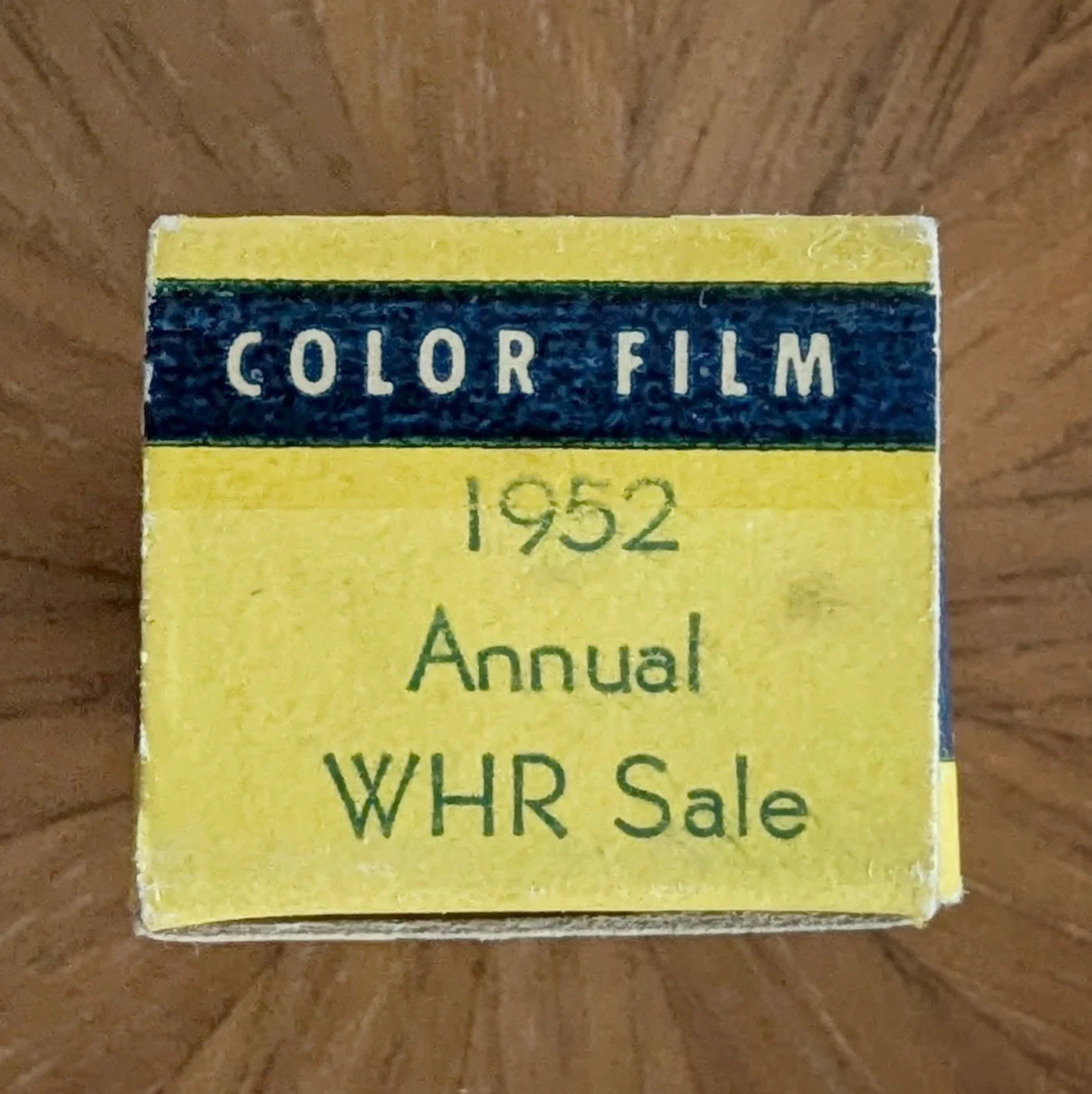
Box #7. Beaverton Box. Used for a short time after Tru-Vue sale to Sawyer's.
Early, Unnumbered Tru-Vue Filmstrips
The earliest Tru-Vue filmstrips were unnumbered and can be found in the early blue and early red boxes. Eventually, some of those early film subjects would get a catalog number and remain part of the Tru-Vue library for years. Examples are Animals of the World, Around the World, Arrowhead Springs, Boston, Catalina Island, Budapest, Haiti, Death Valley, Hollywood, Land of the Buccaneers, Los Angeles, New York City, Passion Play, Philadelphia, Pikes Peak, Sally Rand, San Francisco, and Yellowstone. Those film subjects are some of the first ones in the Tru-Vue catalog, as early as 1933-36, and continued to be produced and sold many years later, although sometimes with different images.
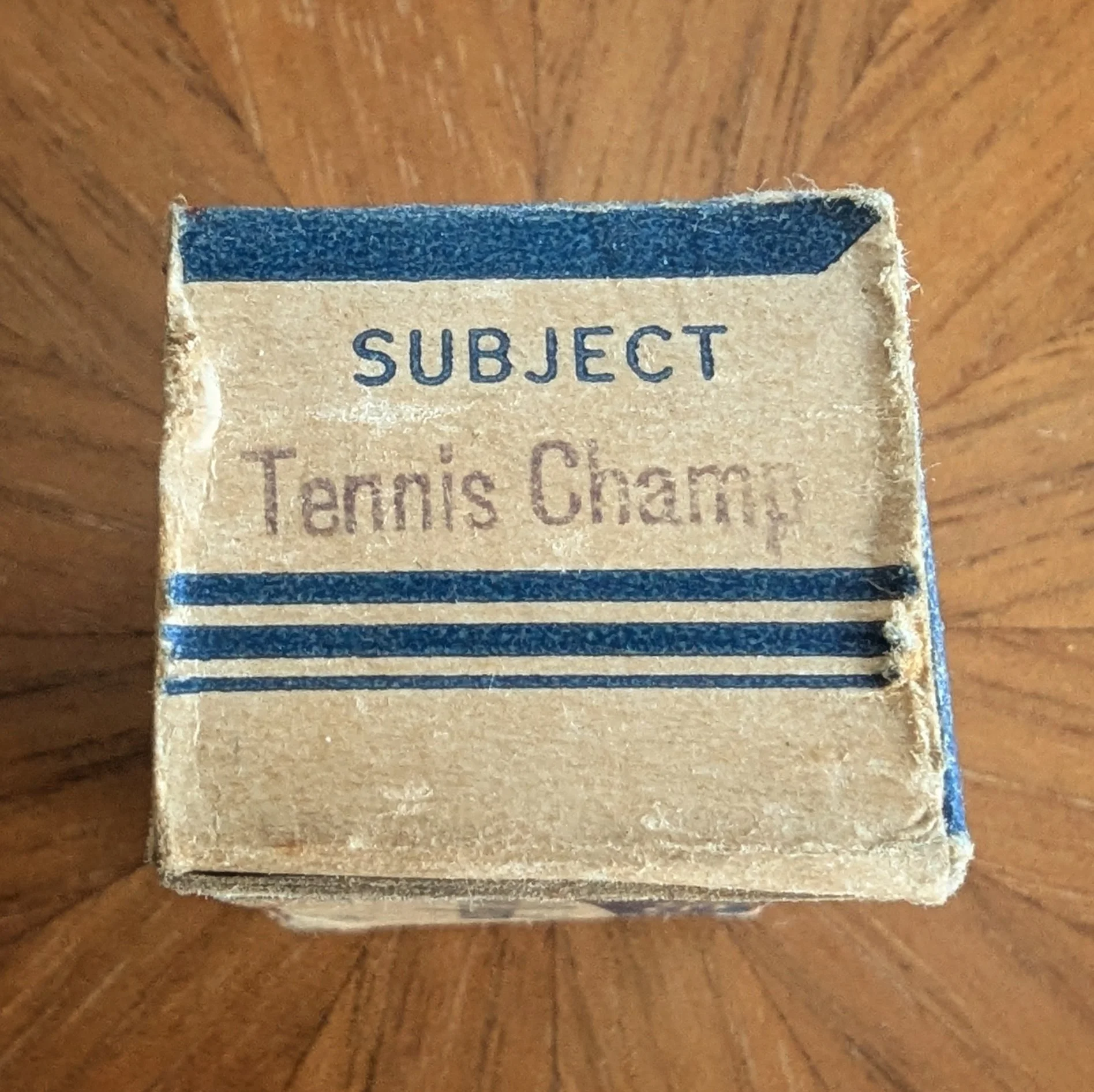
But some early film subjects stopped being produced after a few years and never became part of the official Tru-Vue numbered catalog. Examples are 1893 Chicago World’s Fair, A Little Bit of O’ Heaven, California Pacific Exposition, Century of Progress World’s Fair, Dam #15, Fashions of 1933, Great Artist, 1933 Tennis Championship, and Tru-Vues from Everywhere. Those, and a few others, were never assigned catalog numbers and can’t be found in the later box designs. We share scenes from all of those farther down on this page.
All of them (the ones that received a catalog number and the short-lived ones that didn’t) can be either hard-to-find or positively rare to come across in clean, complete condition. A higher value is typically placed on those that were discontinued, but even the film subjects that continued in production can be collectible if found in an early blue or red box, since the images may be different from the later versions.
A Bit about the Filmstrip Frames
Opening Frames
Start — some Tru-Vue filmstrips begin with an edge labeled “Start”. It’s not a stereo pair. We find them in some of the earliest filmstrips and in almost all of the last ones produced, but many do not have this.
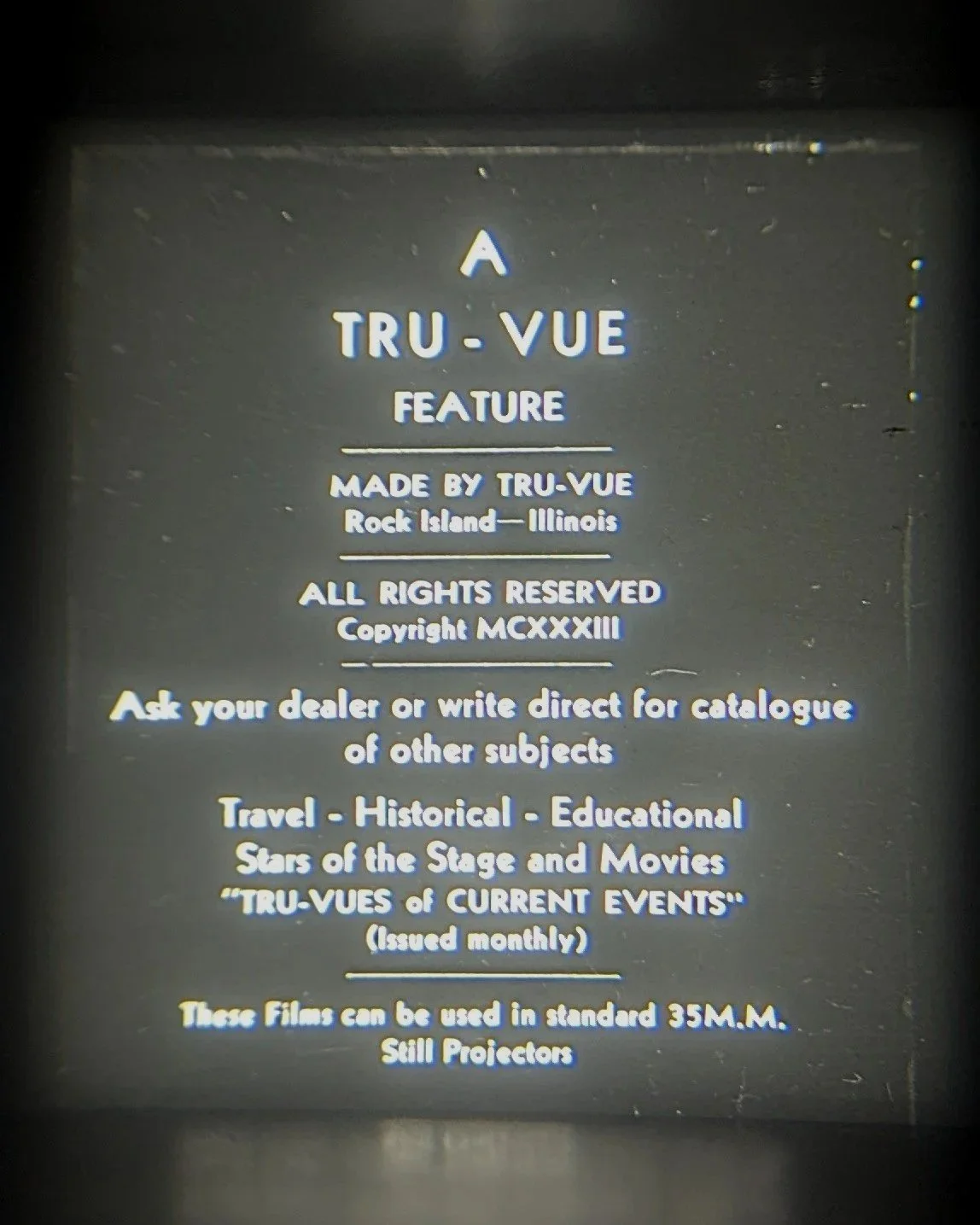
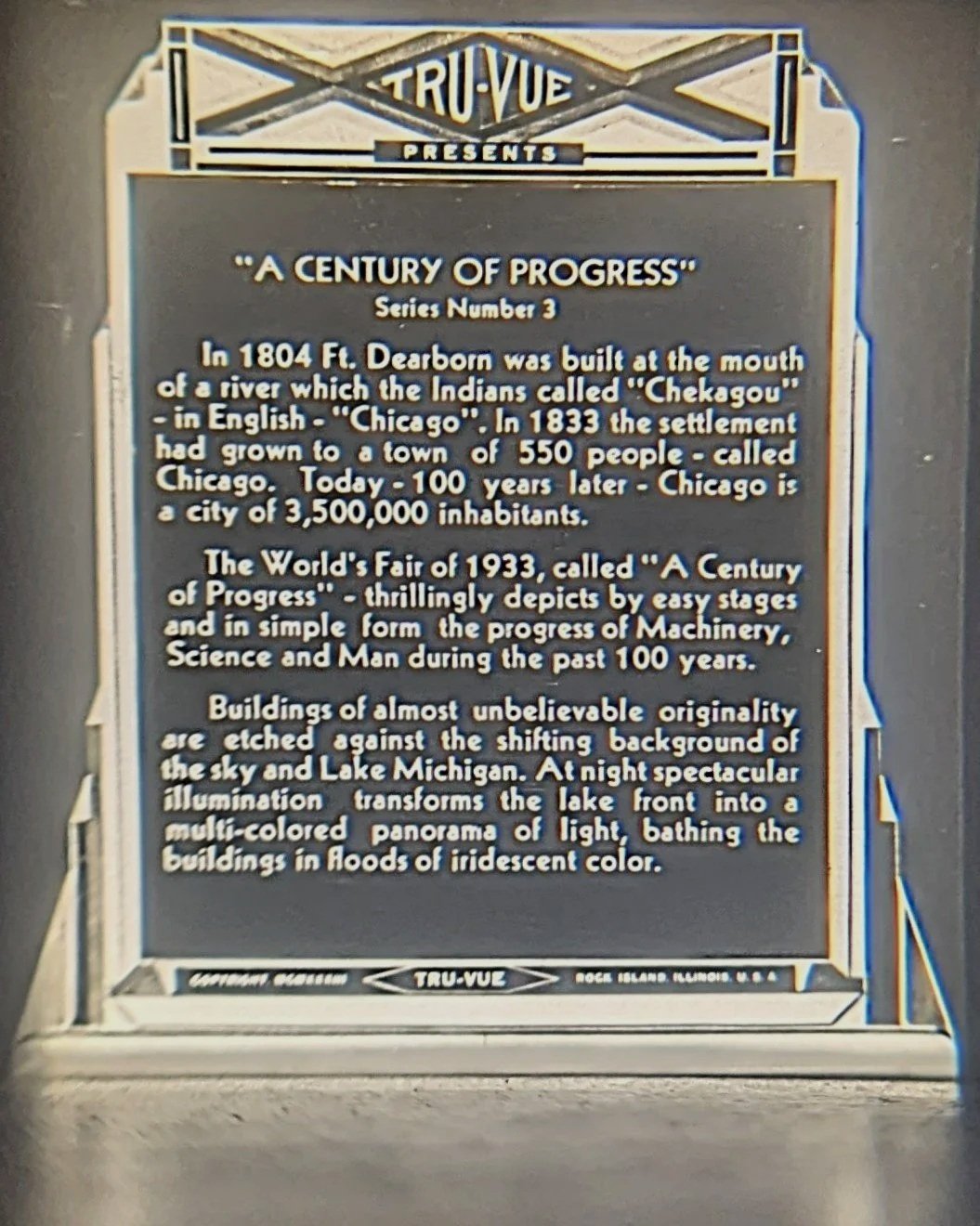
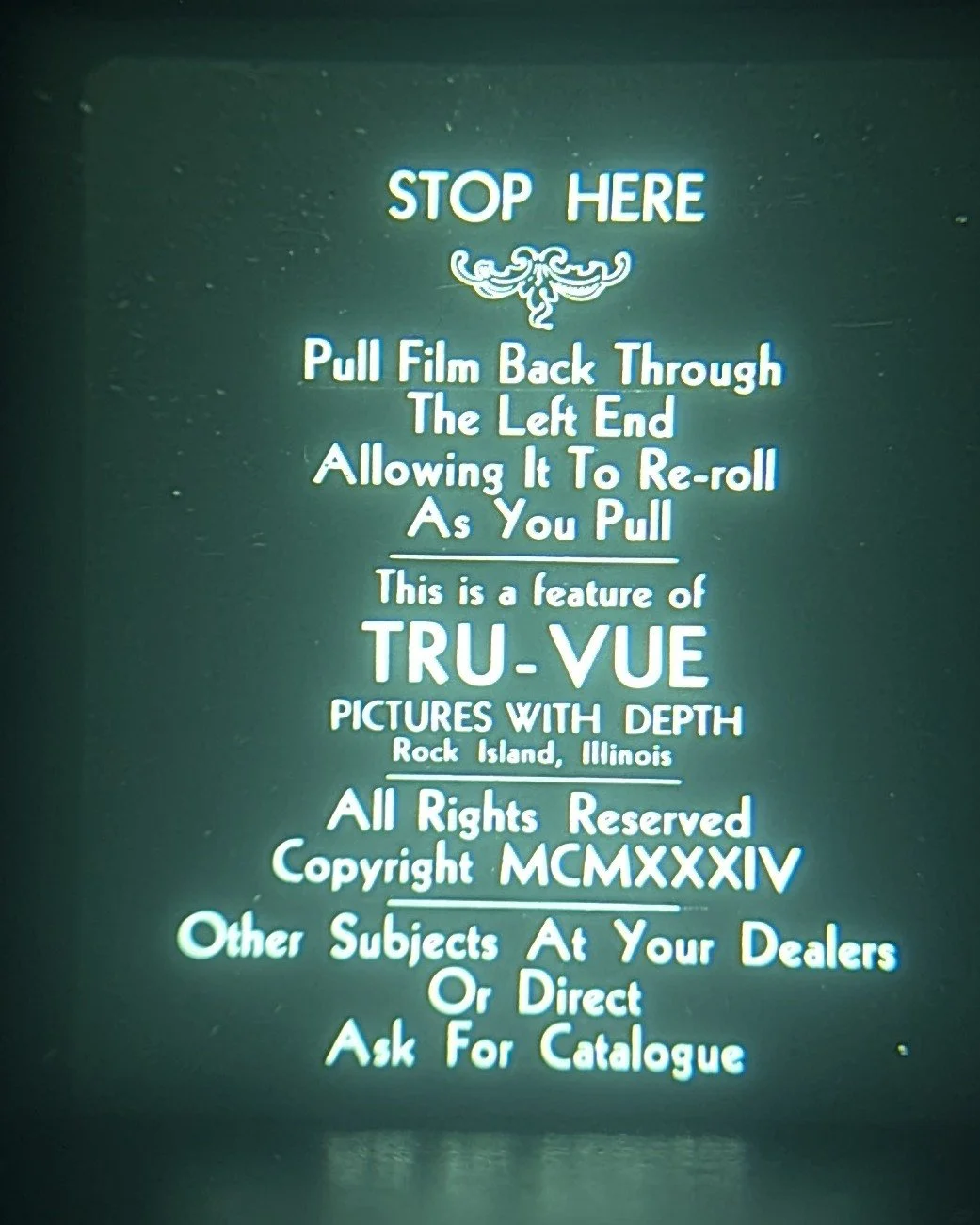
Title — the title of the filmstrip (which can be worded differently than the box title) is the first stereo pair on the filmstrip. This title frame has the Tru-Vue name and can contain a 1- or 2-paragraph description of the film, photographer information, editor information or just the film title. The text on this frame could have a plain, black background, or it could be overlaying an image and appear to float in 3D when viewed through the stereoscope. We enjoy seeing the variety of title frame designs Tru-Vue came up with over the years.
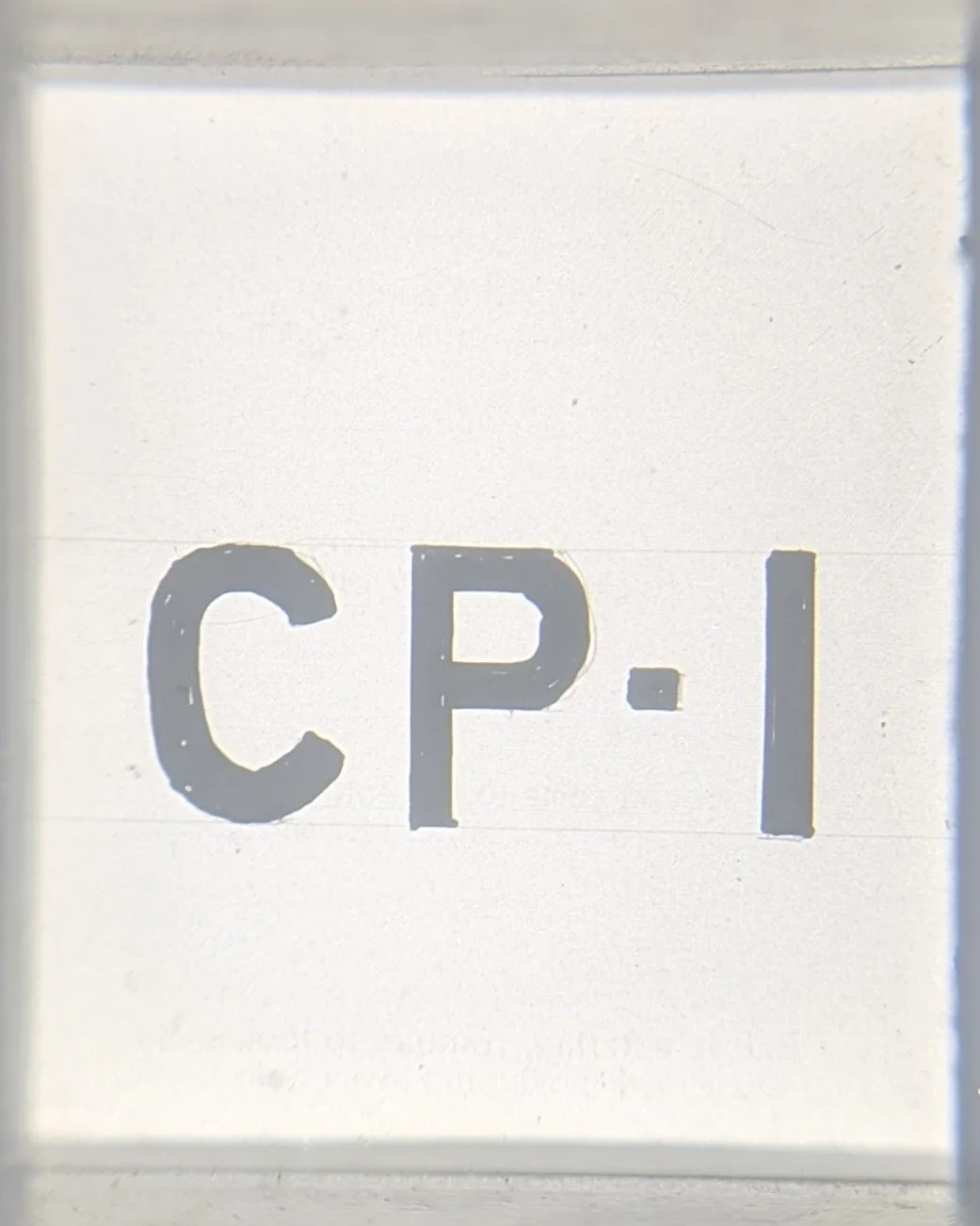
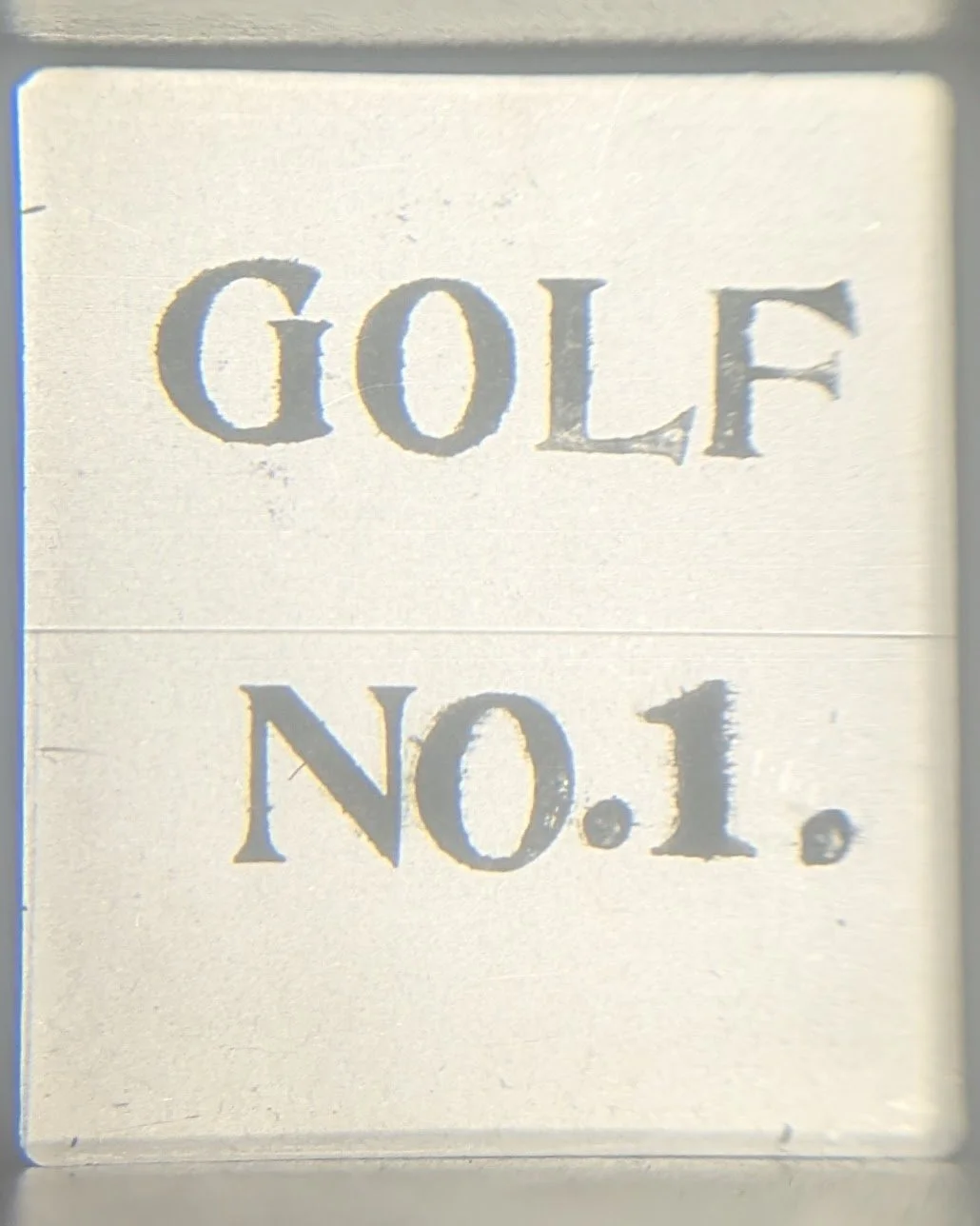
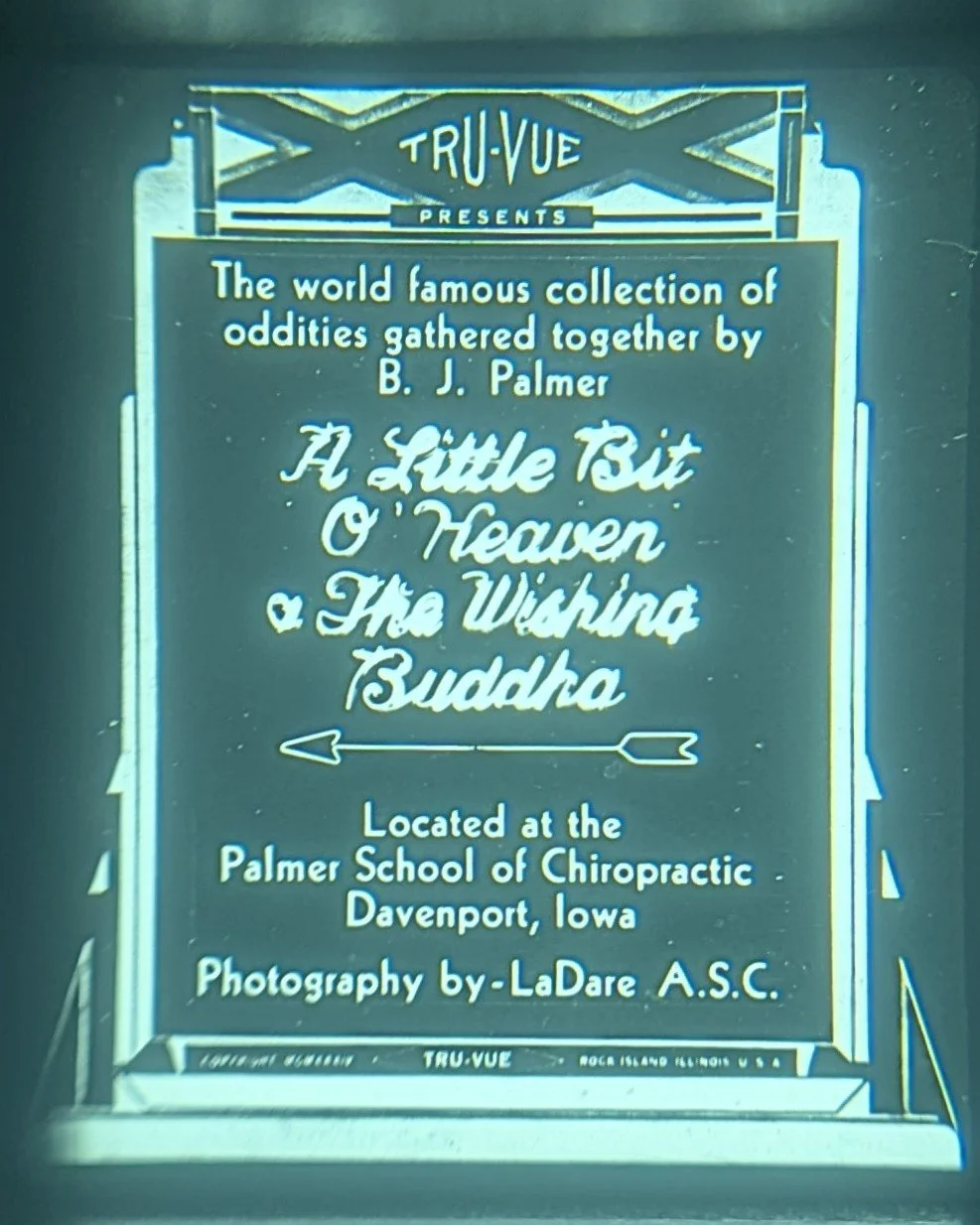
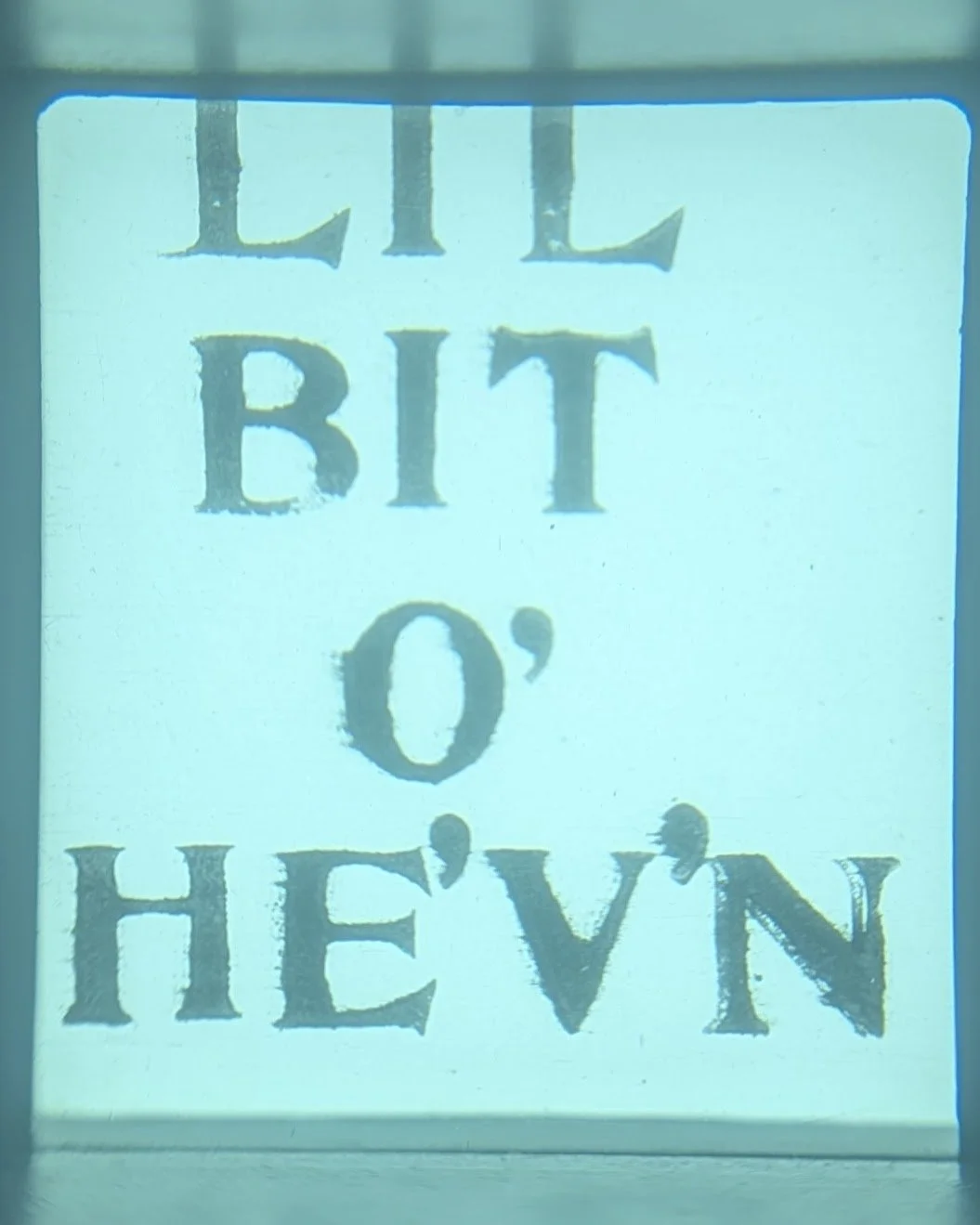
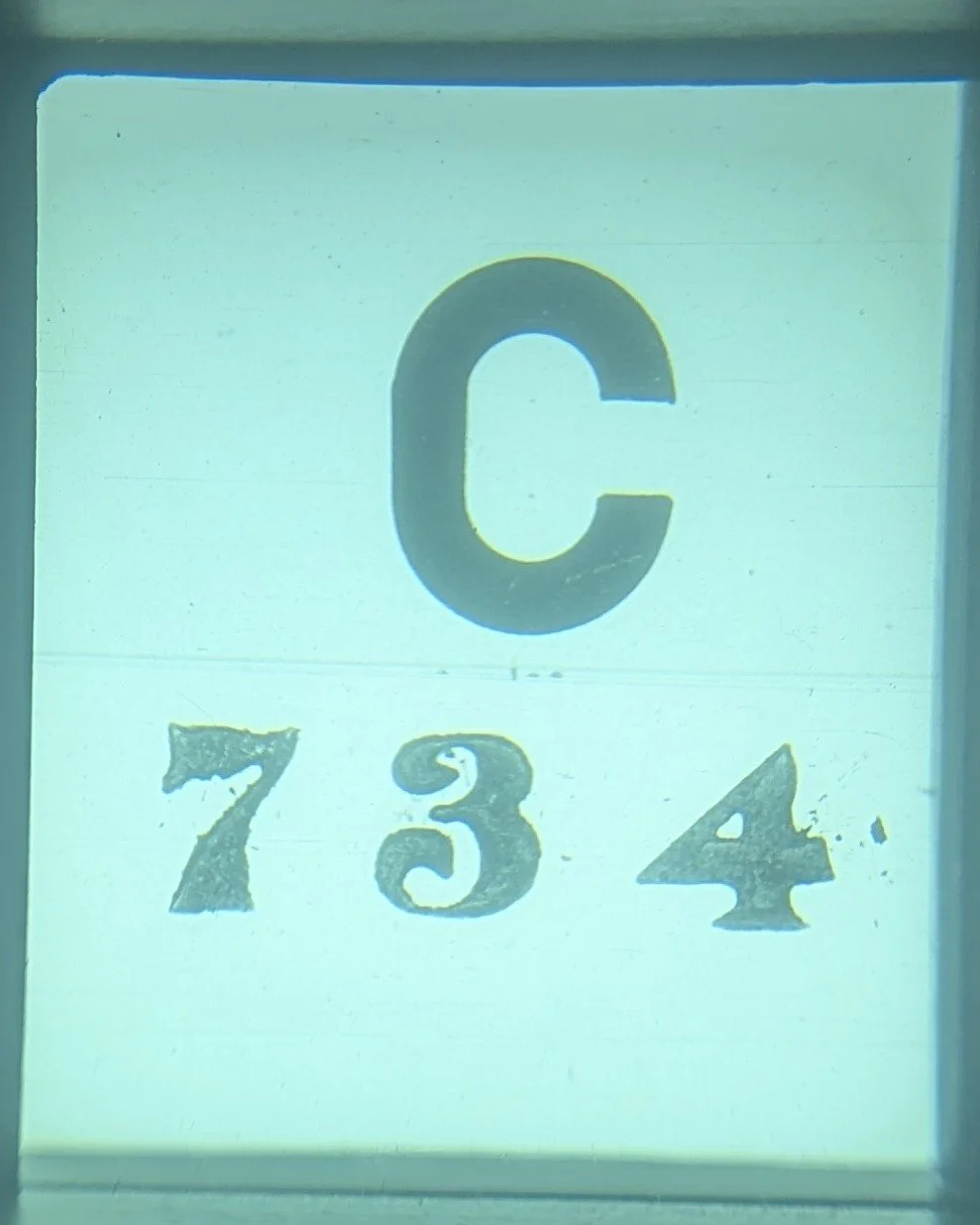
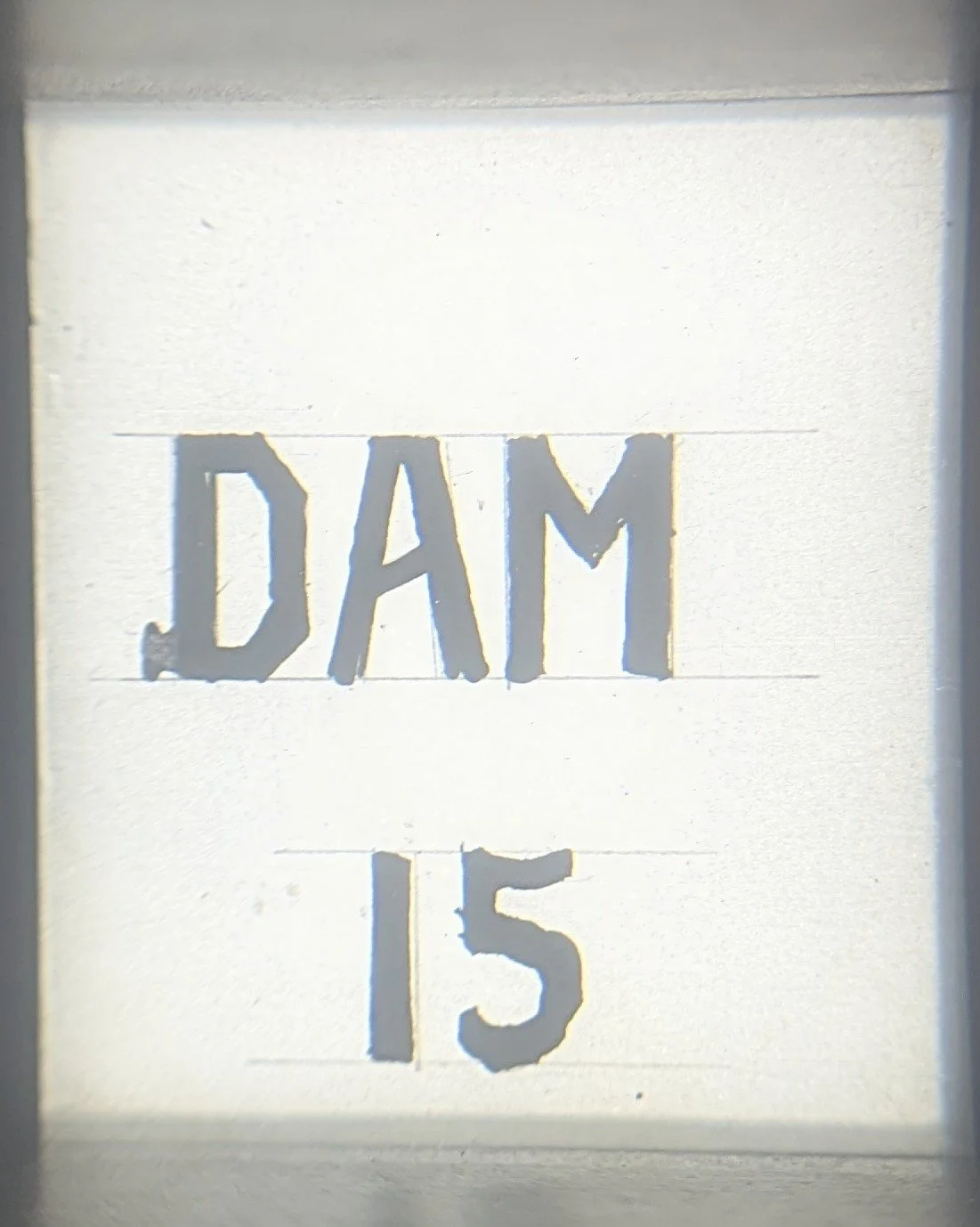
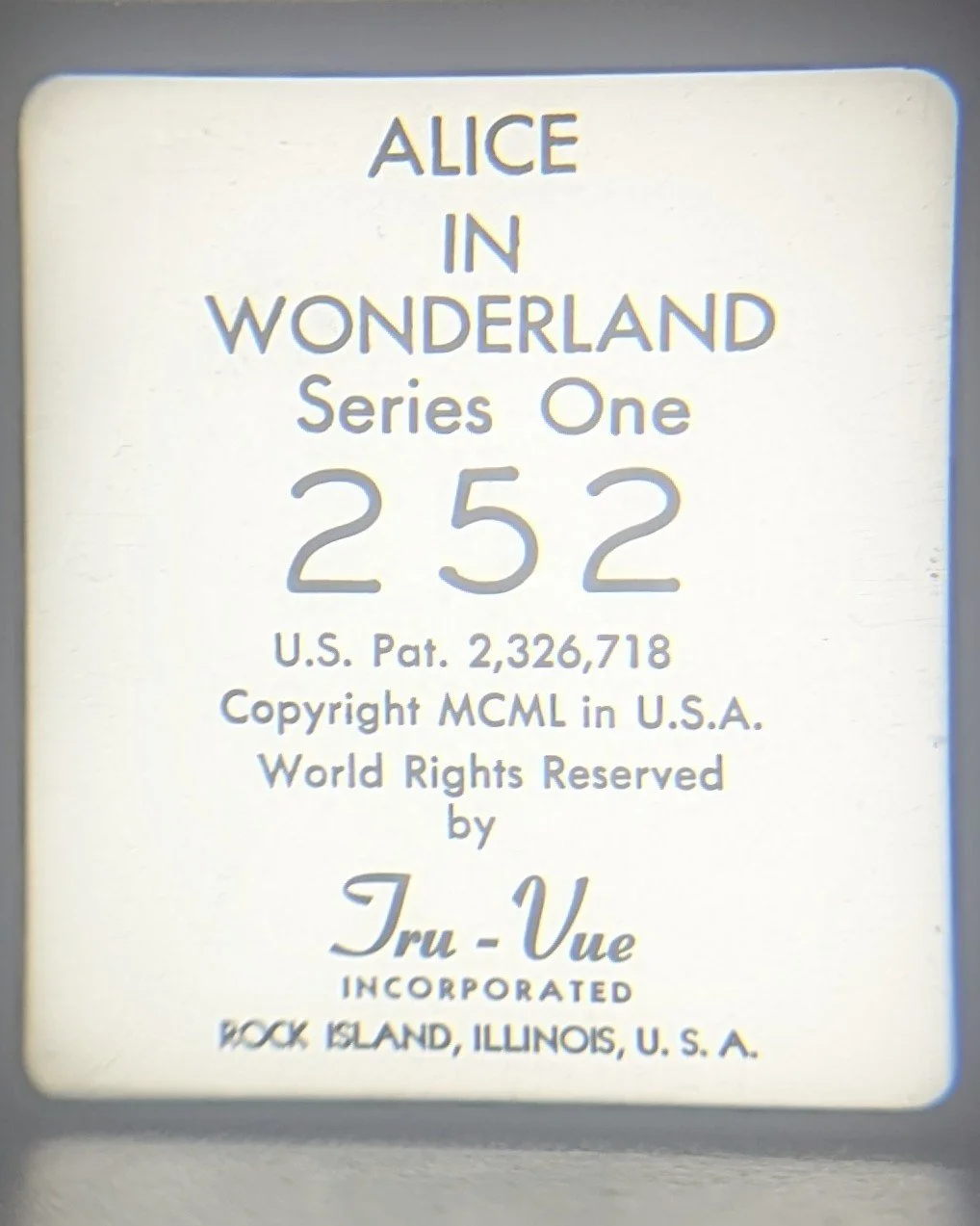
ID — immediately following the Title frame, many (not all) Tru-vue filmstrips have a single, non-stereo clear frame. In early films, this frame typically contained a very abbreviated, 1- or 2-word version of the film title and was sometimes handwritten. In later films, this frame was more formatted and, in addition to the film title, would have the catalog number, the Tru-Vue logo, patent numbers, and copyright information. For lack of a better term, we call this the ID frame.
Closing Frames
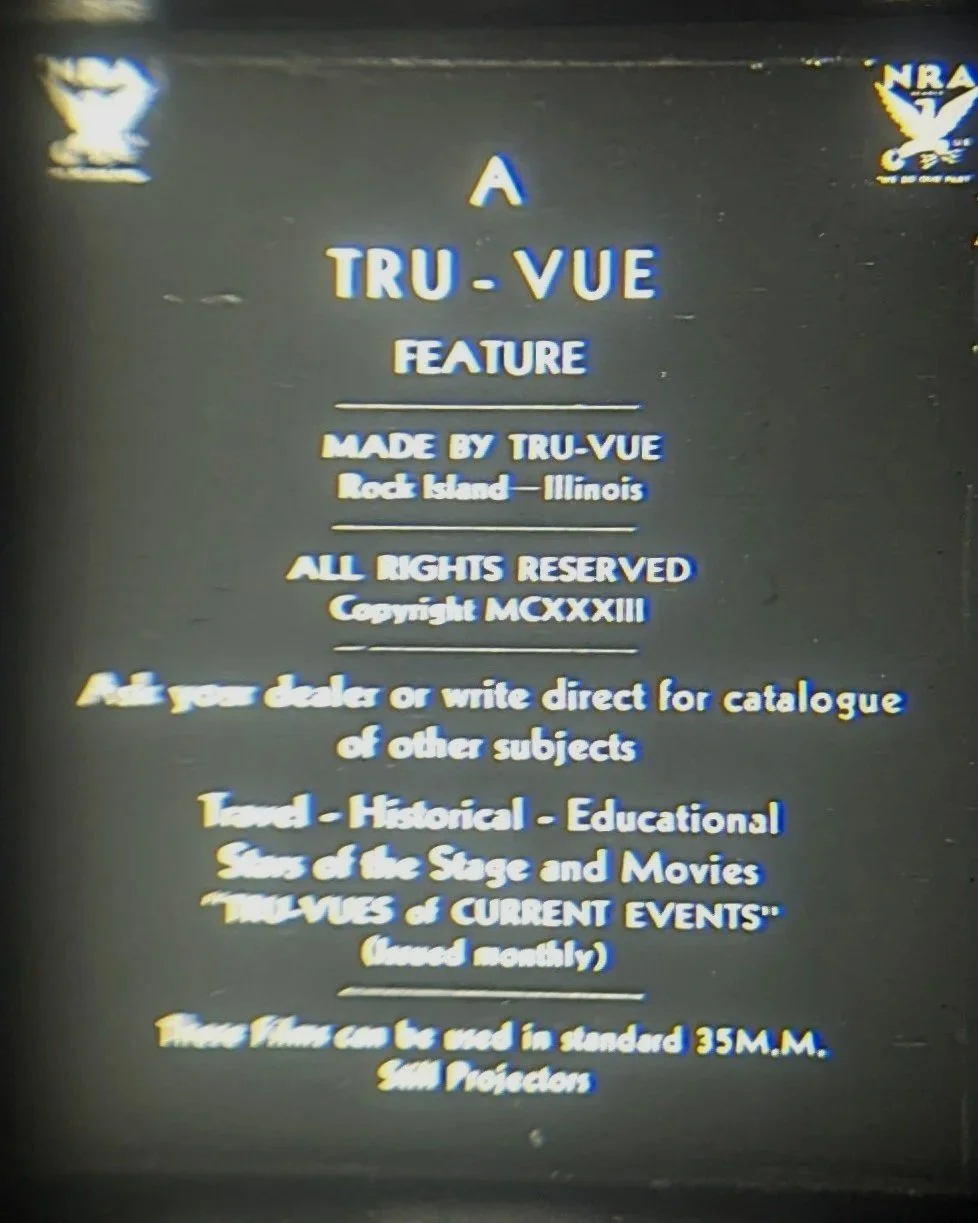
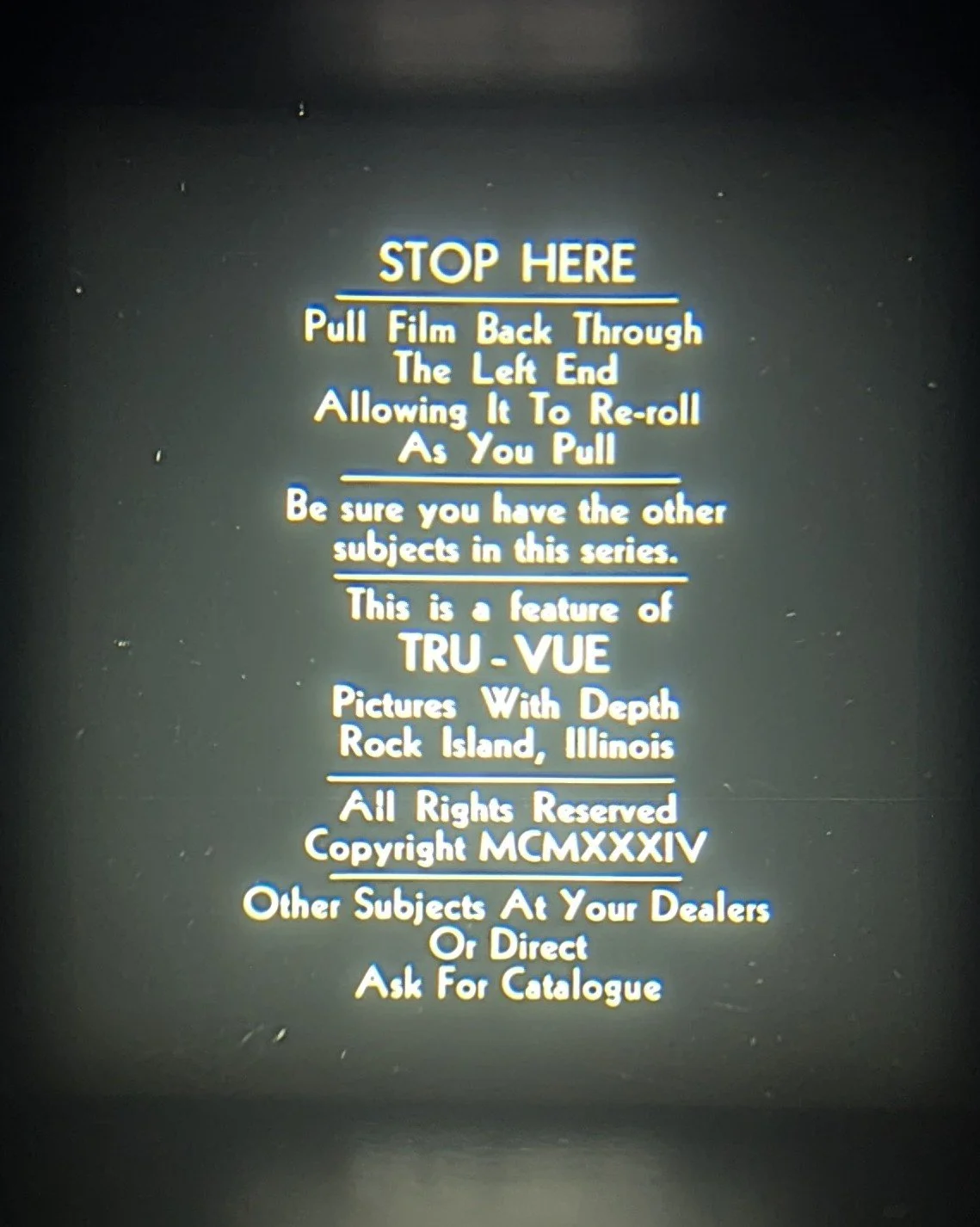
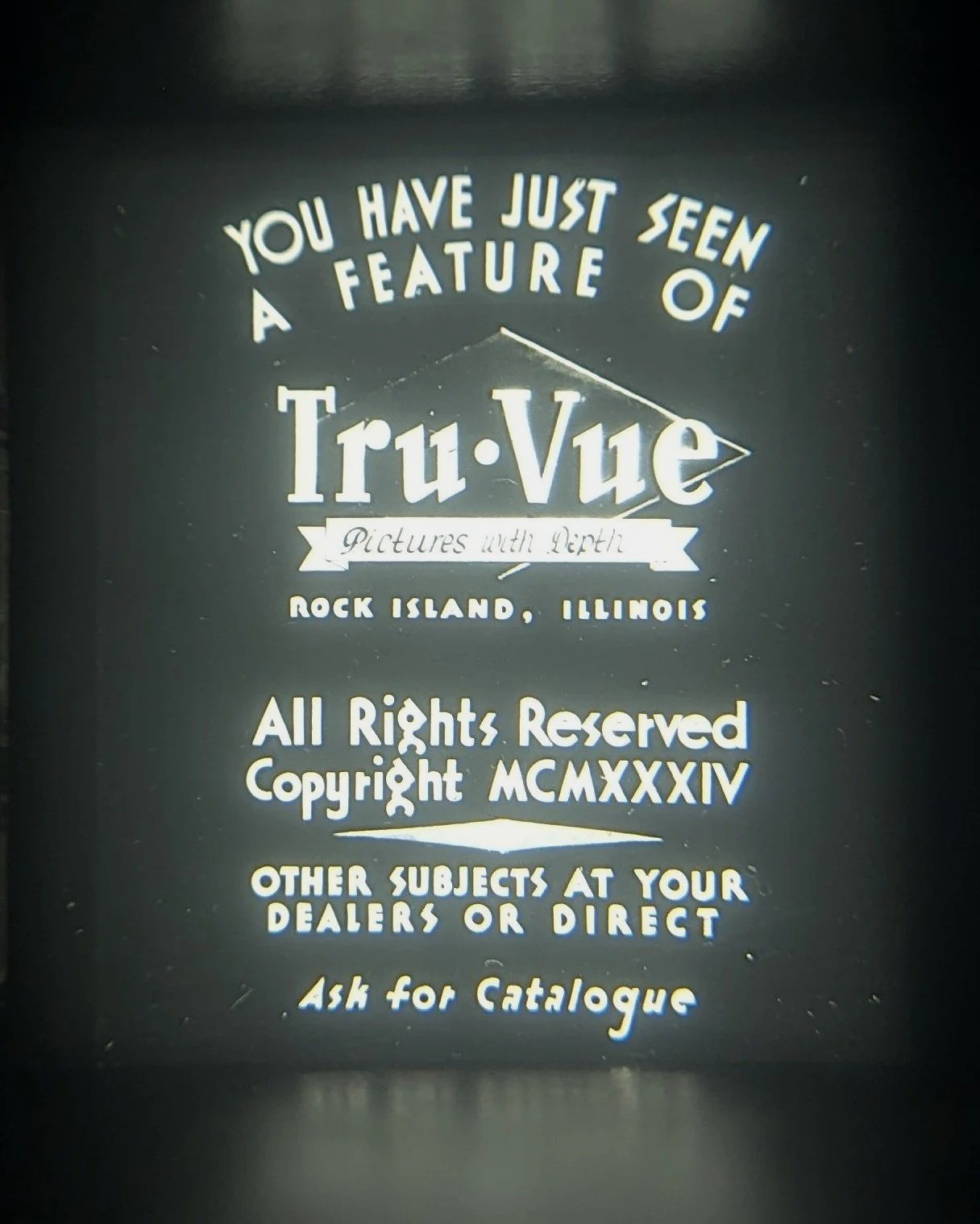
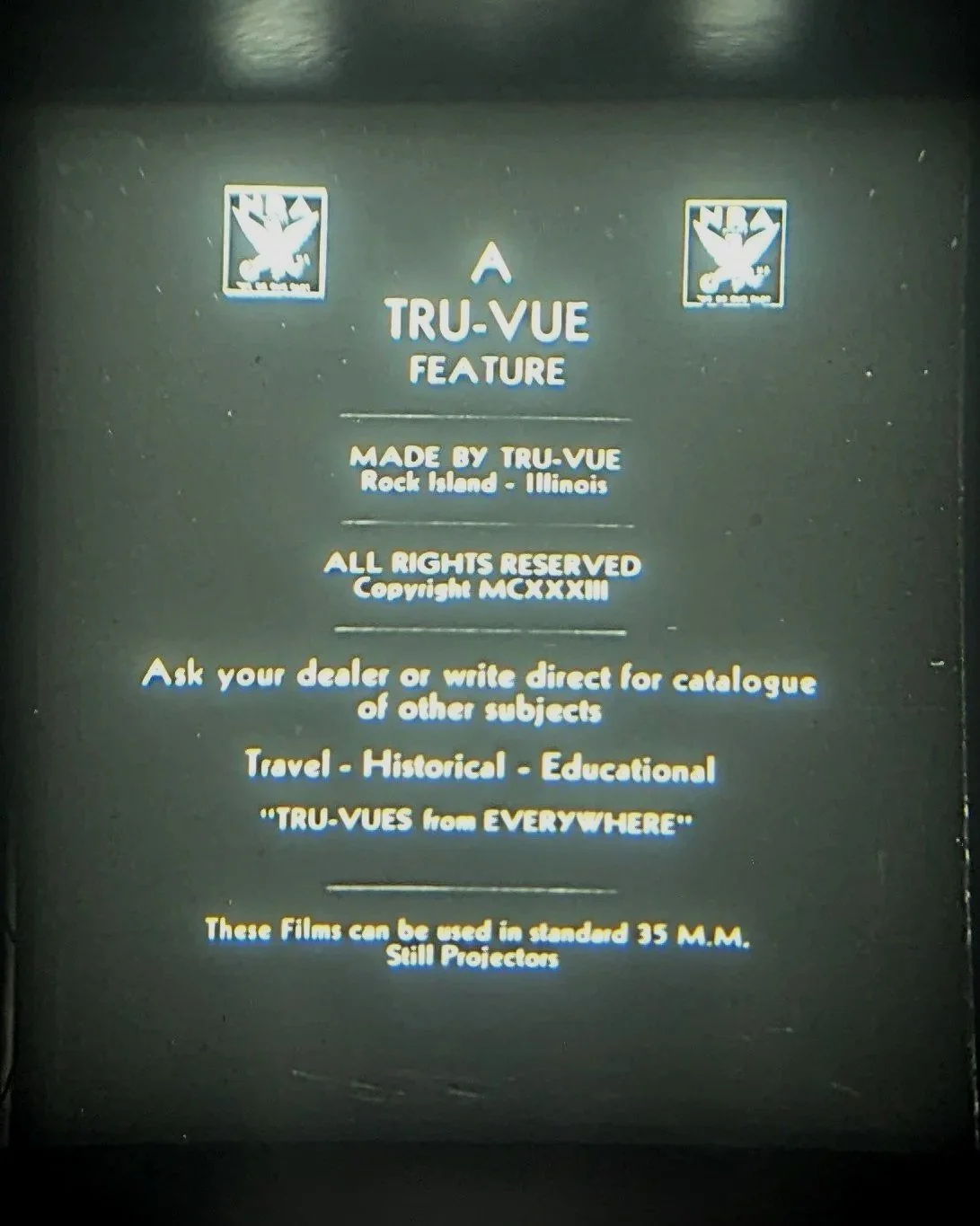
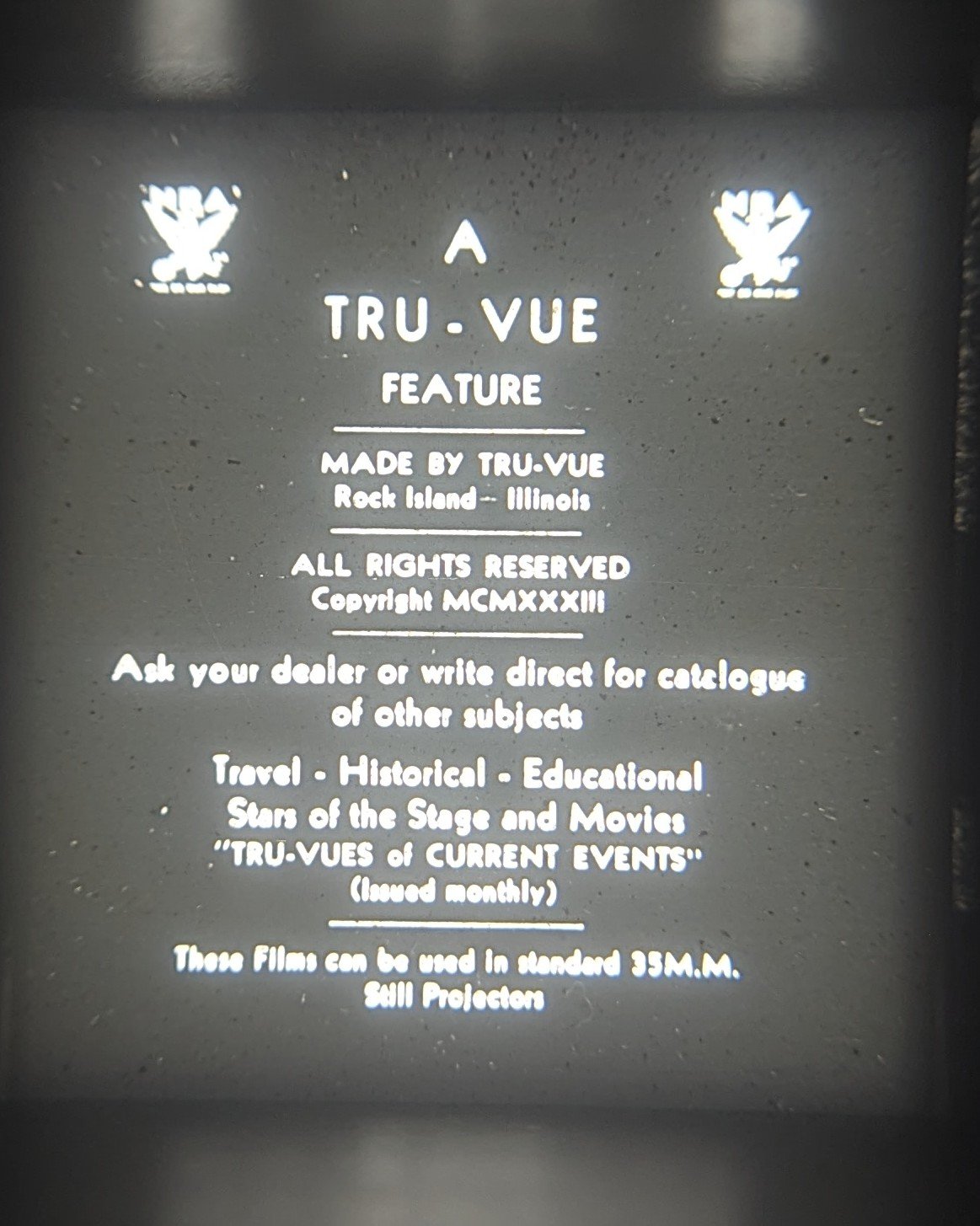
End “Credits” — Tru-Vue filmstrips end with a stereo pair containing logos, copyrights, and sales messaging to entice you to come back for more. Some of the early films have the NRA Blue Eagle membership logo with the slogan “we do our part” on this frame. NRA stood for the National Recovery Administration (1933-1935). Some film studios displayed the NRA logo to show they were complying with fair labor codes, while others were said to have displayed it only as forced government propaganda.
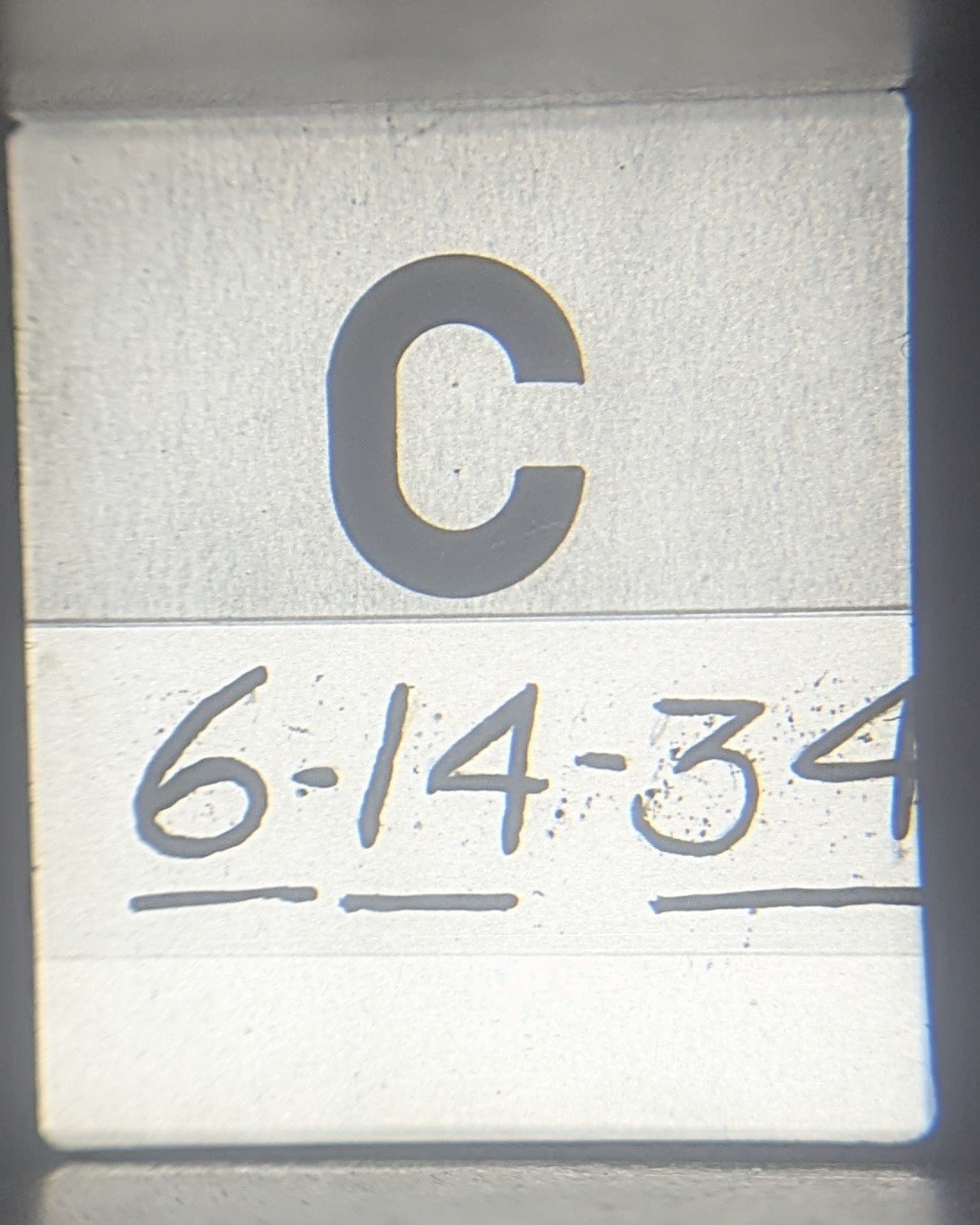
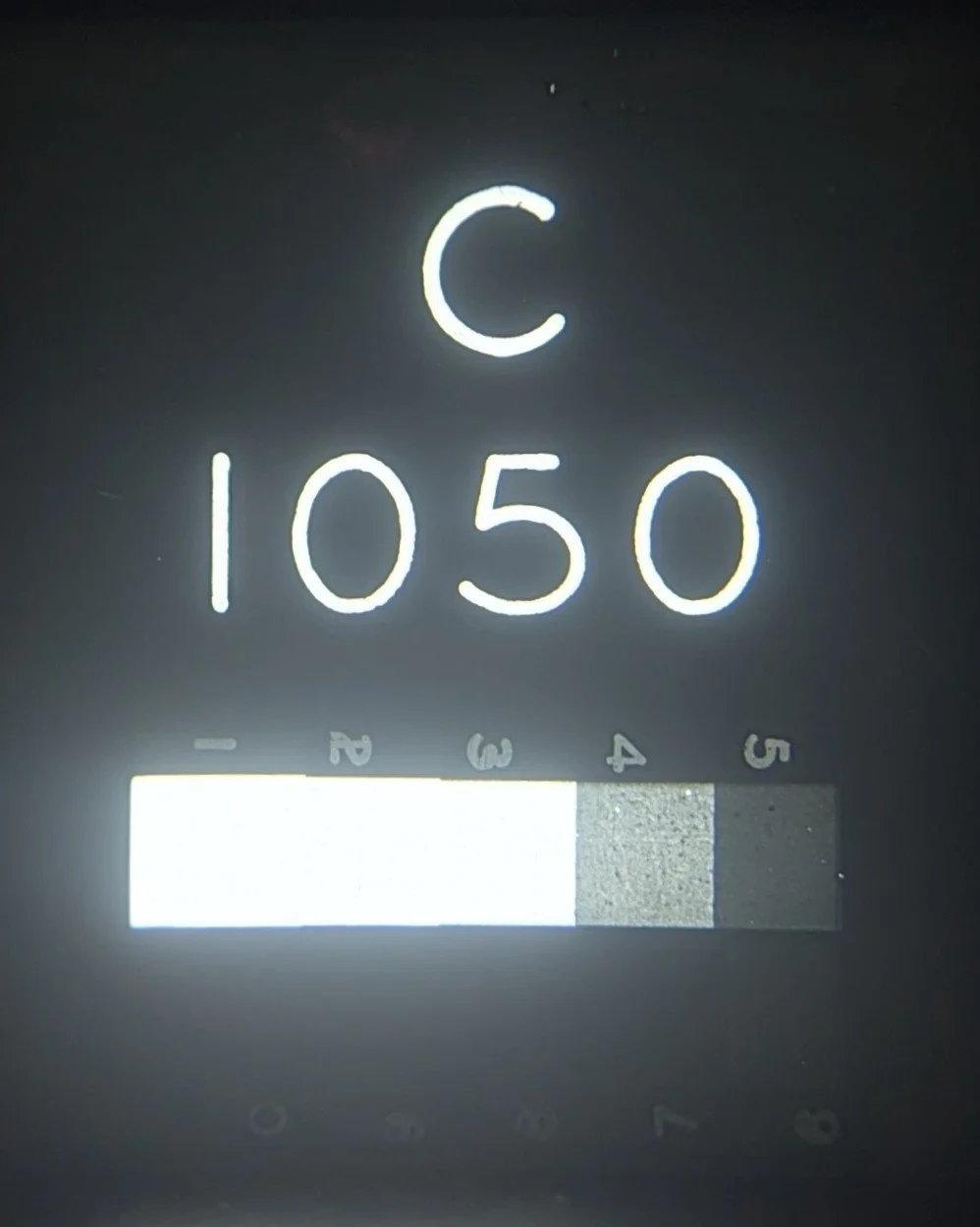
Production Information — This is a single, non-stereo frame that typically has a clear background and contains a production date and/or letter. This date refers to the production of the filmstrip, not the images on it. Not all filmstrips have this frame.
In our examples below, we share any opening and closing frames as well as a few single-image frames (non-stereo) from the filmstrip.
Early Unnumbered Filmstrip: Marvels of Plastic Photography

1931, Extremely Rare
This Tru-Vue film is so old that it was made before the Tru-Vue brand arrived in Rock Island. The 1931 copyright date precedes the 1933 date of what were thought to be Tru-Vue’s first films. There is no reference to Rock Island on the film’s title or end frames, as is the case with other Tru-Vue films, and we have not found this film listed in any previously published Tru-Vue film lists. The film, along with the Reel-Vue viewer it was found in, was made in nearby Chicago. We do not know what the box would have looked like or if there even was a box for it.
Photographer: None listed
Edited by: None listed
Production date: None listed
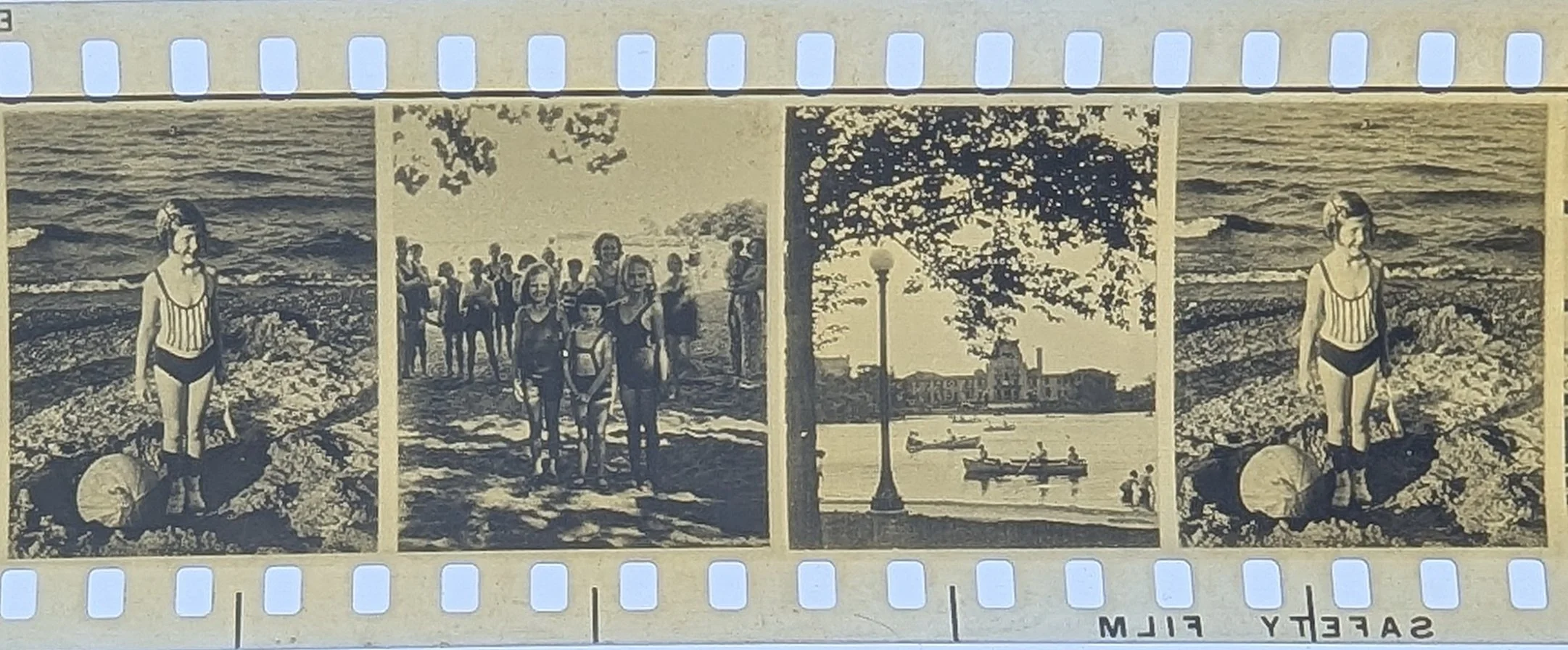
Frames from the Tru-Vue filmstrip "Marvels of Plastic Photography"
Early Unnumbered Filmstrip: 1893 Chicago World's Fair
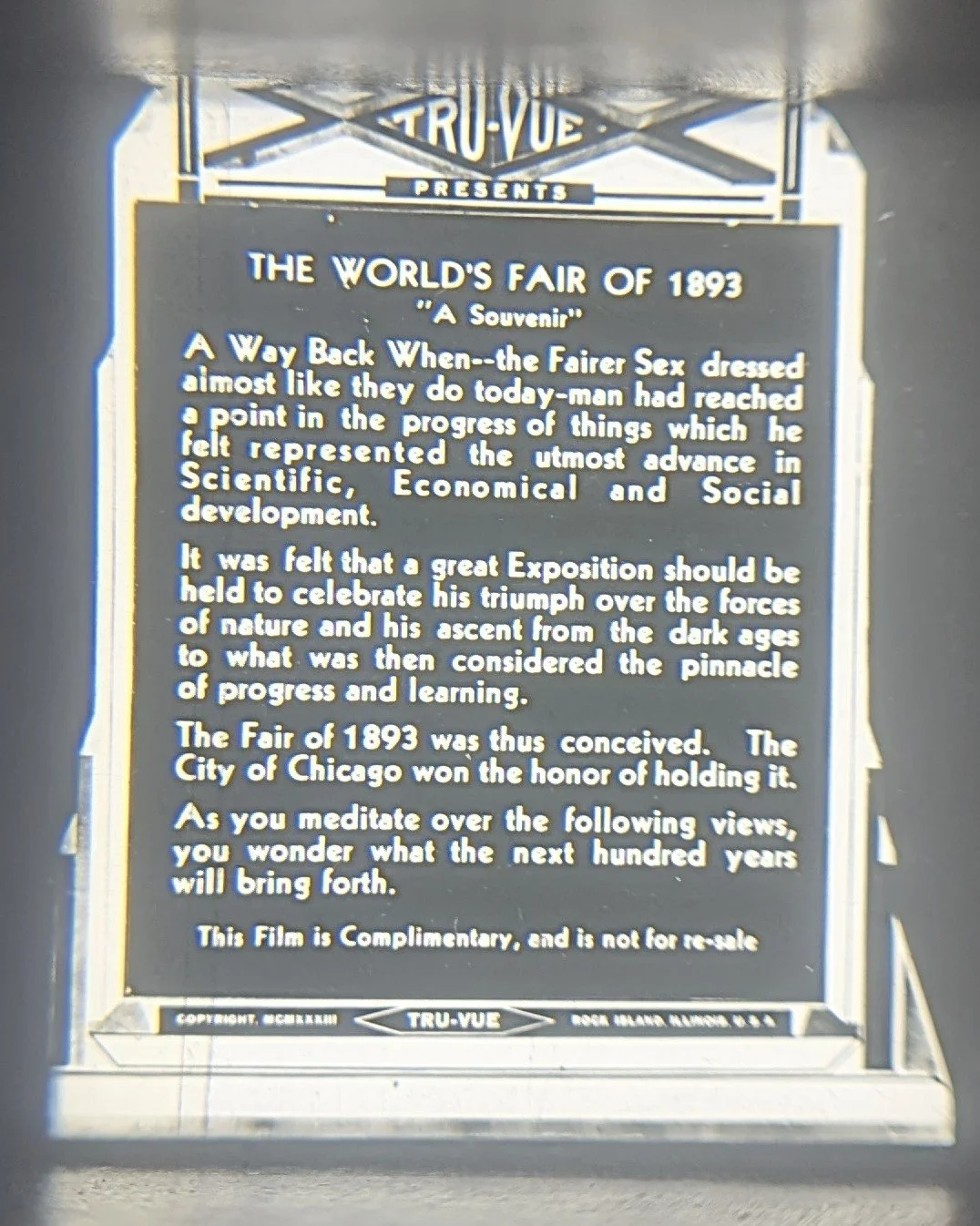
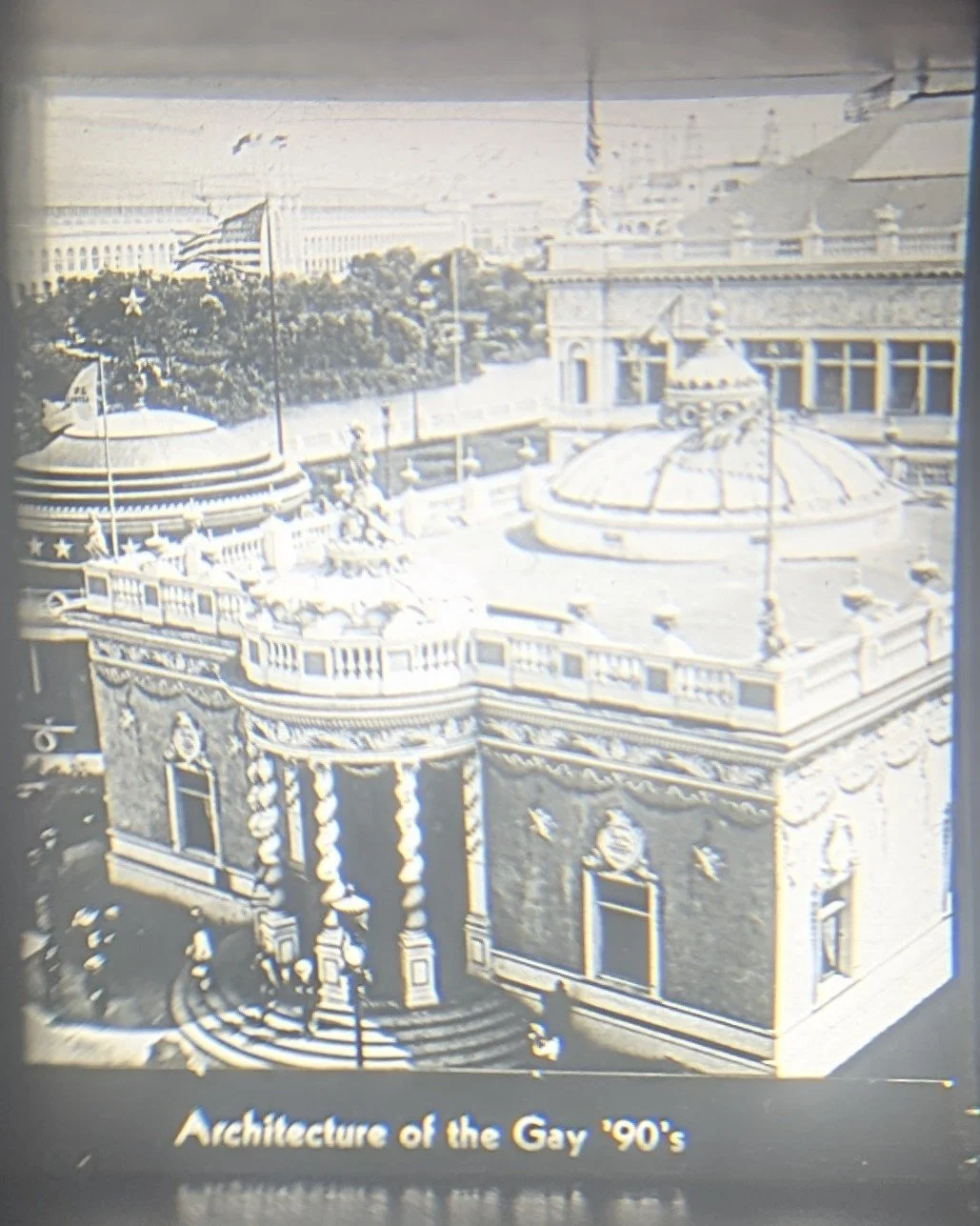
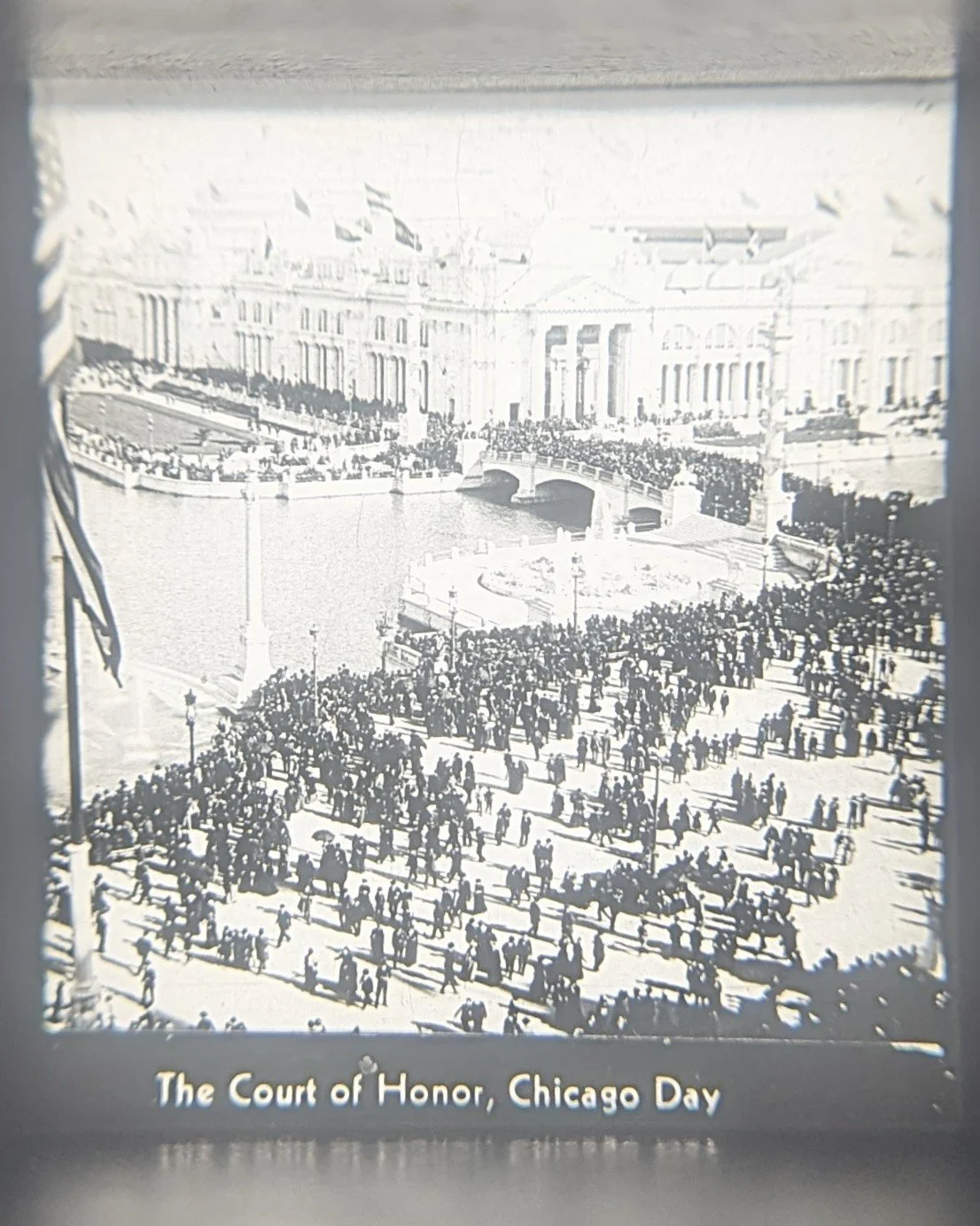
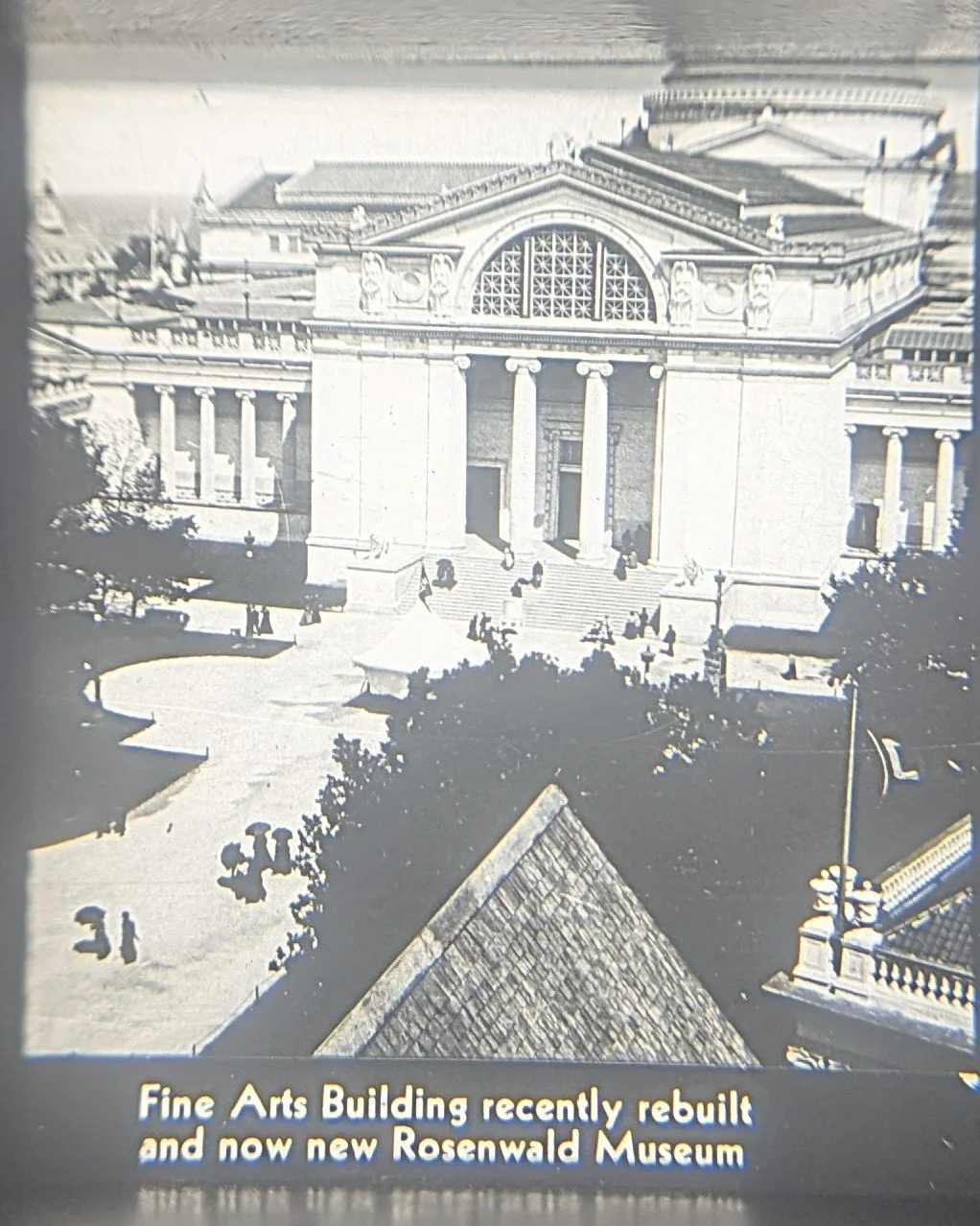
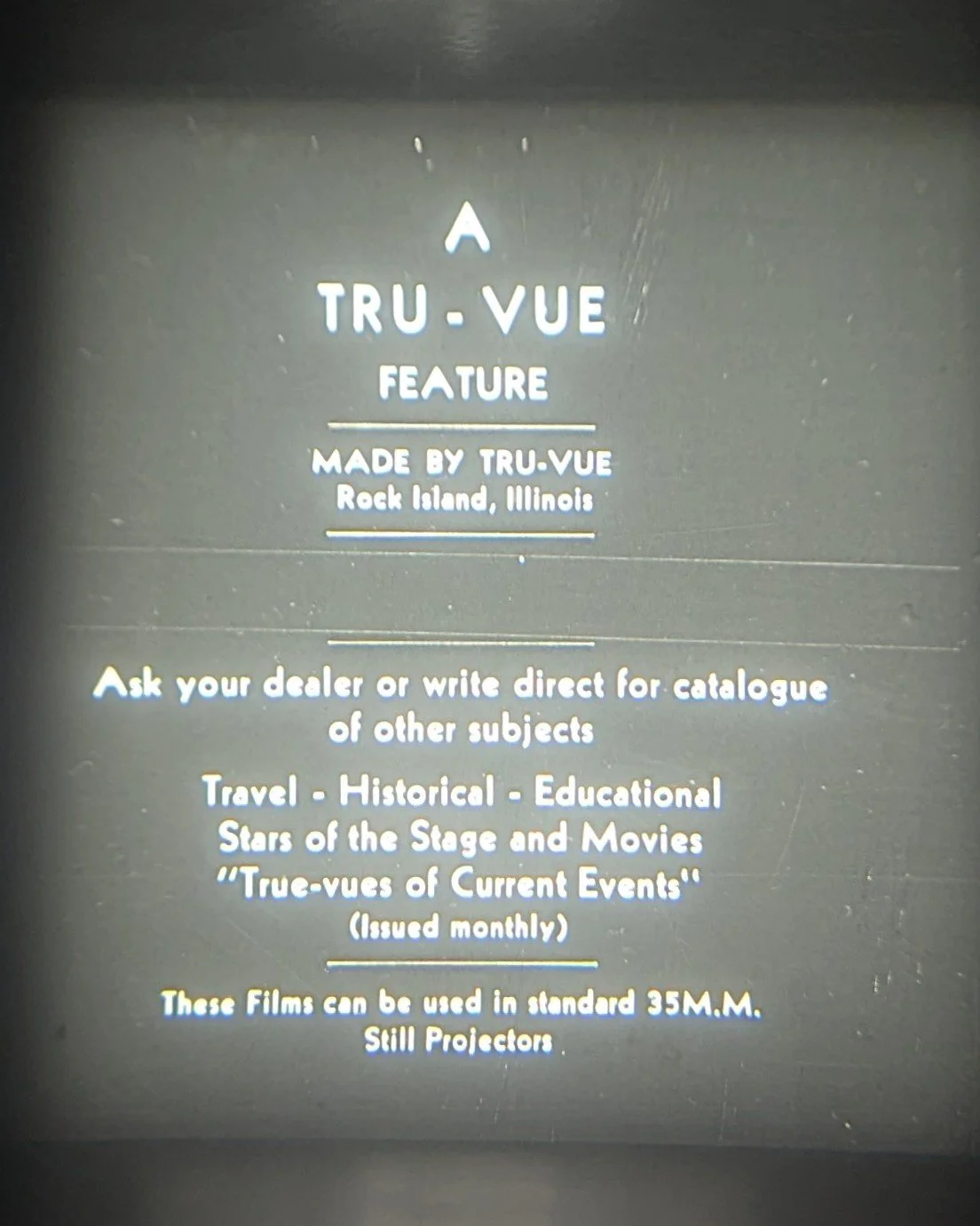
This fair occurred 40 years before Tru-Vue existed and served as the backdrop for Erik Larsen’s book “The Devil in the White City.” We don’t know how many of these filmstrips were made, but a note on the title frame states, “This film is complimentary and not for resale.” No photographer is listed nor any reference made to where the photos were obtained. No production date for the filmstrip is listed, but the most likely production year is 1933 or 1934. Photos include The Court of Honor, Chicago Day, Architecture of the Gay ‘90s, and the Palace of Fine Arts Building, which was the only one of the “White City” buildings to be built with a more permanent structure and still stands today as the Museum of Science and Industry (also known as the Rosenwald Museum).
Photographer: None listed
Edited by: None listed
Production date: None listed
Early Unnumbered Series: Century of Progress World’s Fair
1933-34, Chicago, Illinois
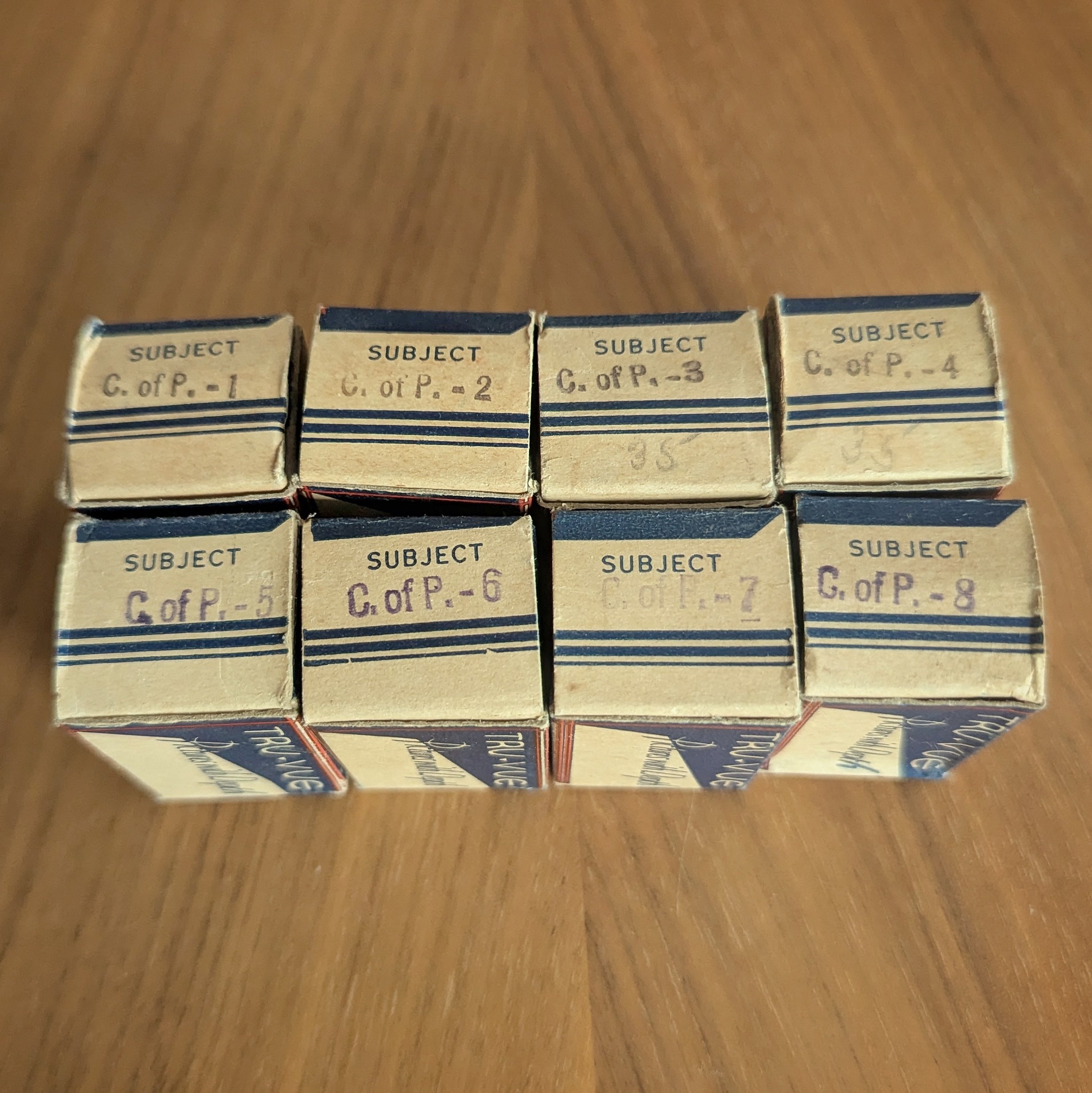
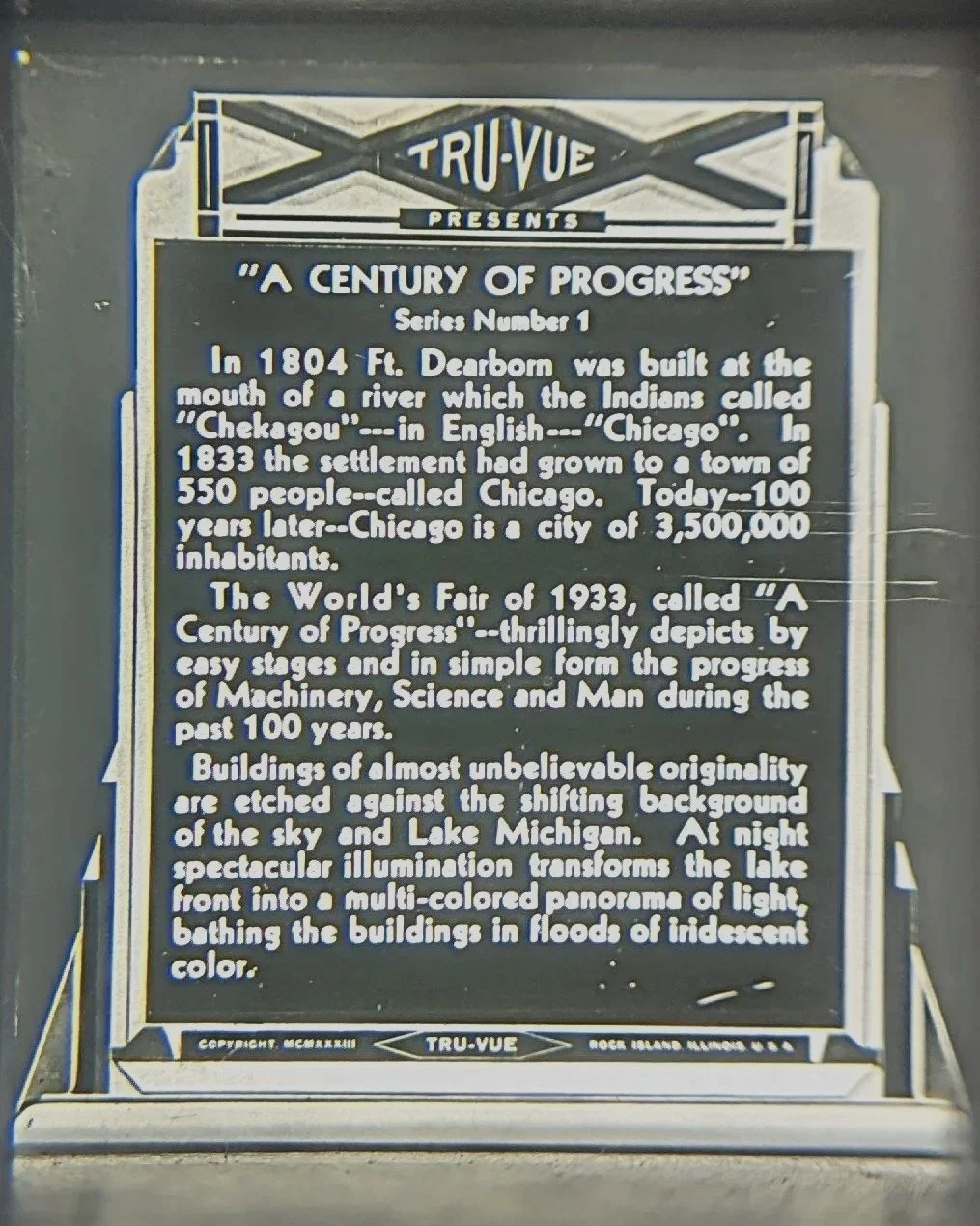
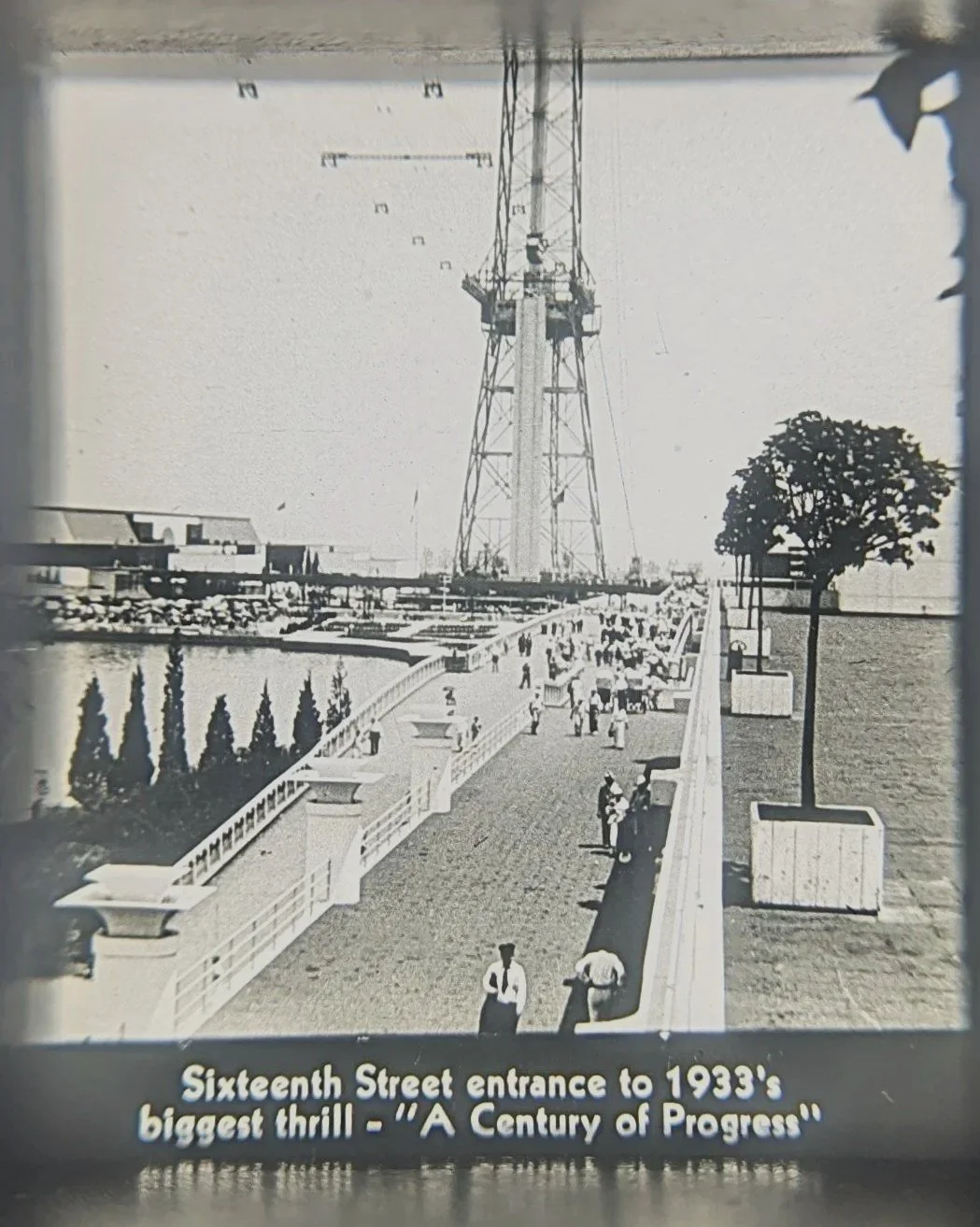
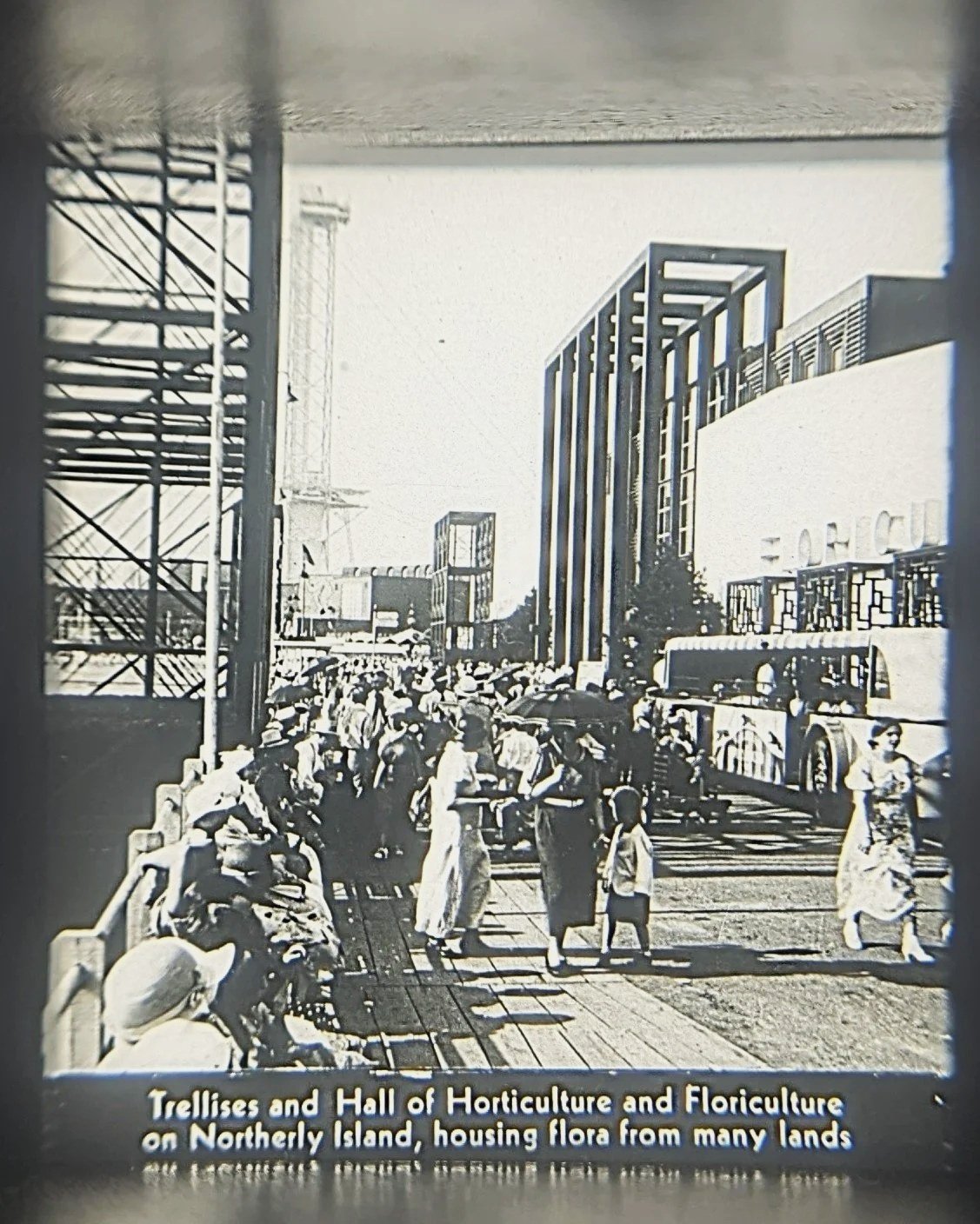
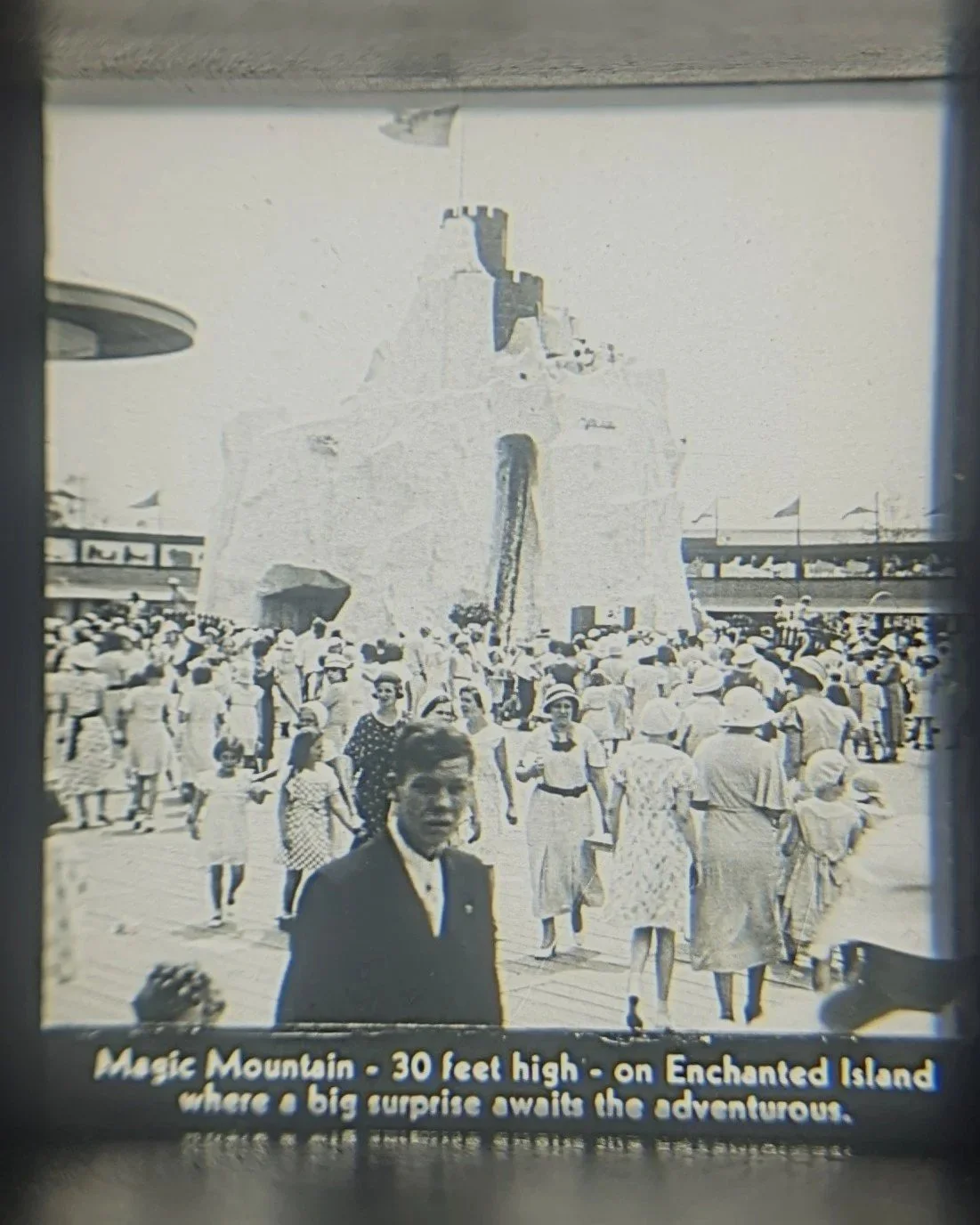
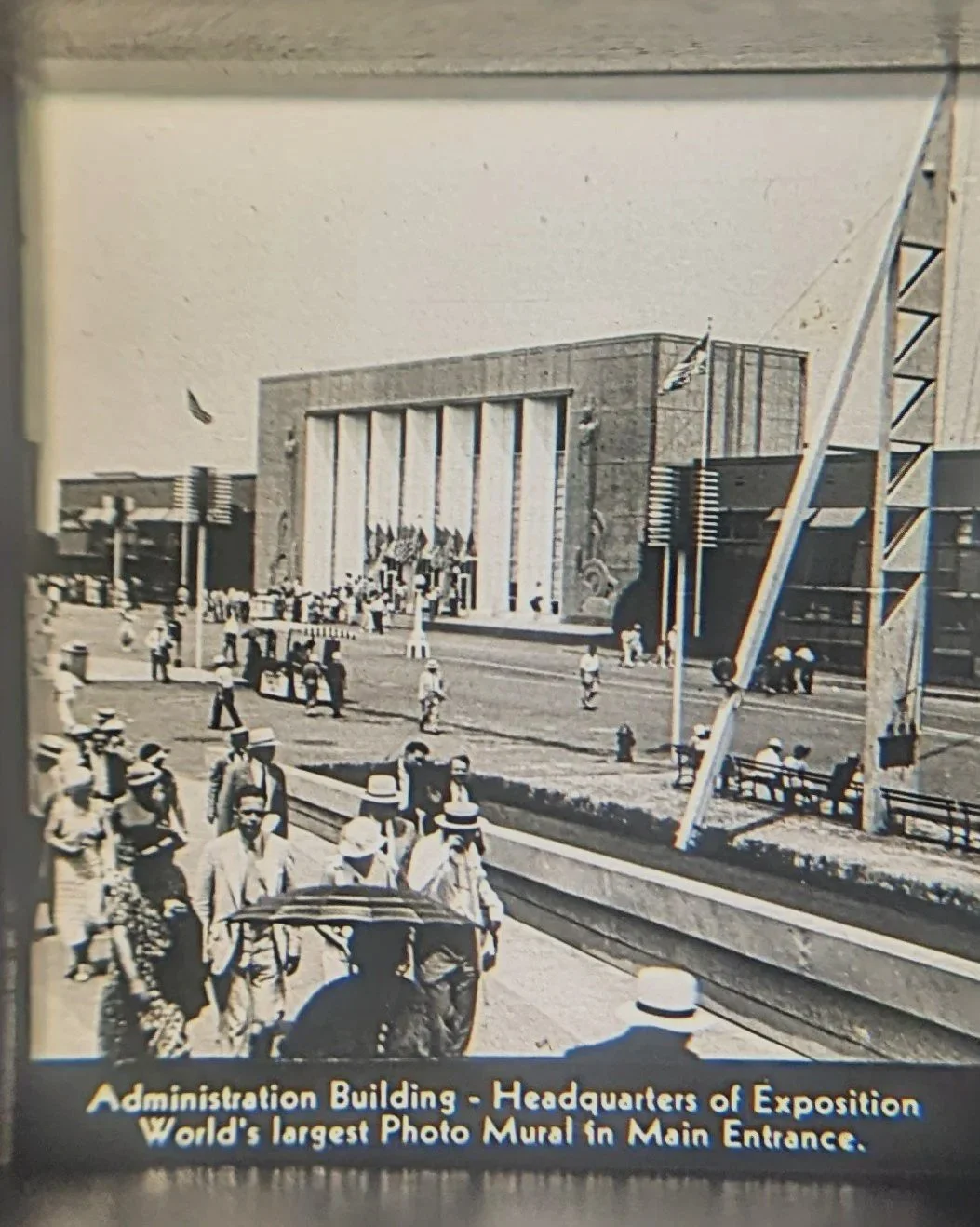
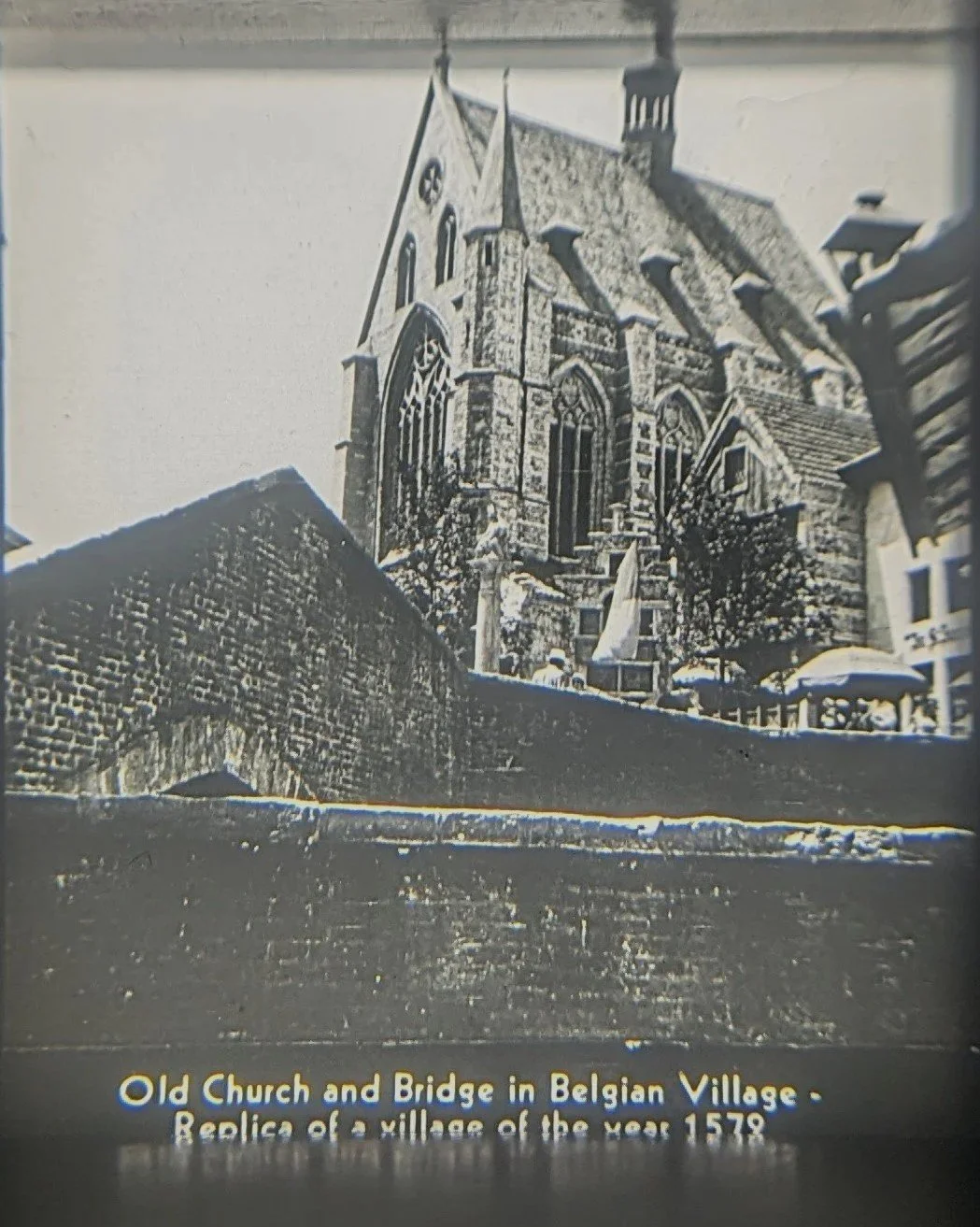
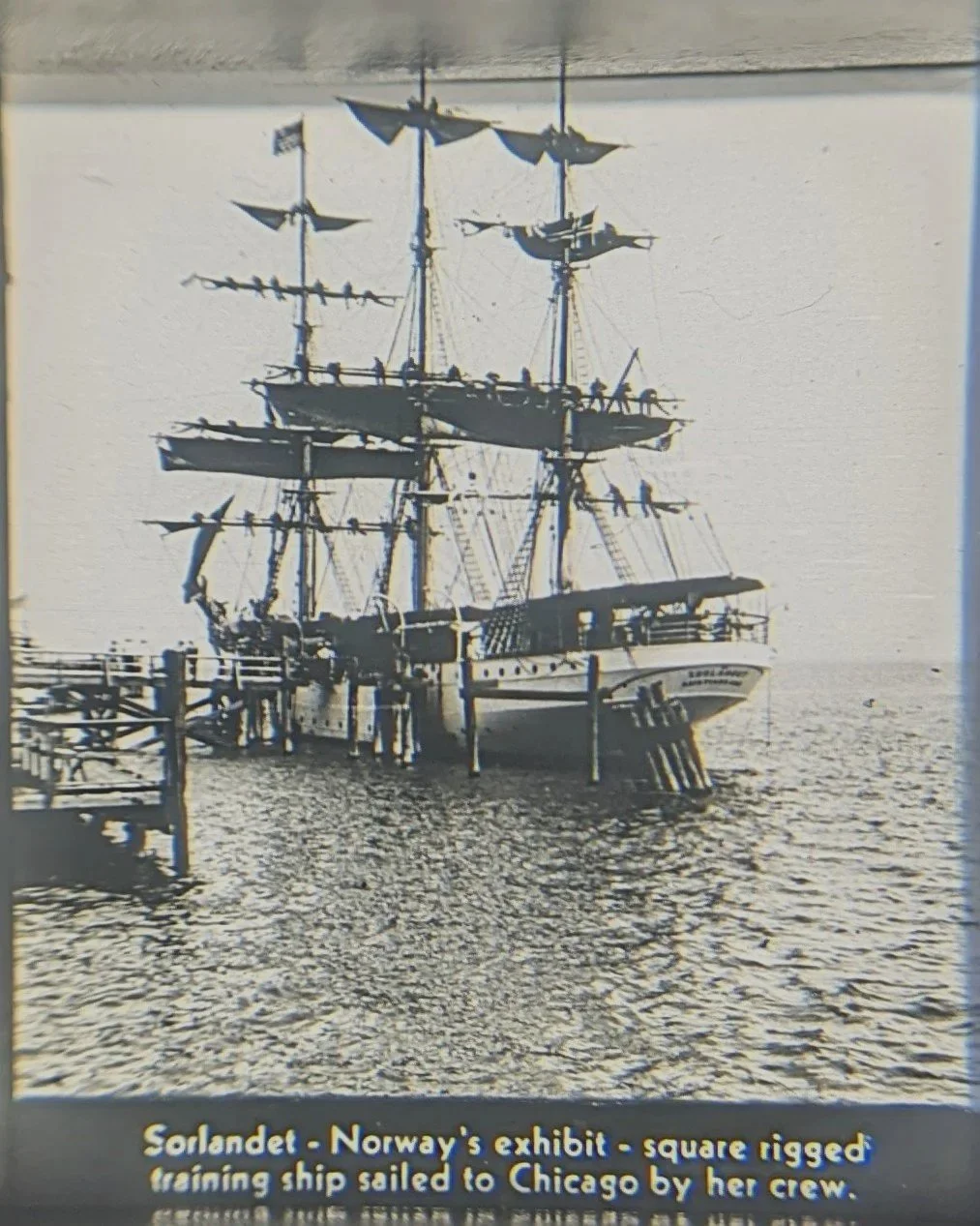
Tru-Vue made their big debut at the 1933 Century of Progress World’s Fair that was held in nearby Chicago. They would eventually produce ten filmstrips covering the fair. First, they produced four films covering the overall fair buildings and attractions, and two films covering one attraction in particular, Sally Rand. They marketed these six films to the public as early as September 1933. The last four fair films were produced in 1934, when the fair continued; these four are harder to find. The Century of Progress films can only be found in early blue and early red boxes. However, Sally Rand films continued to be produced throughout Tru-Vue’s existence and can be found in a number of box styles.
Photographer: None listed
Edited by: None listed
Production date: None listed
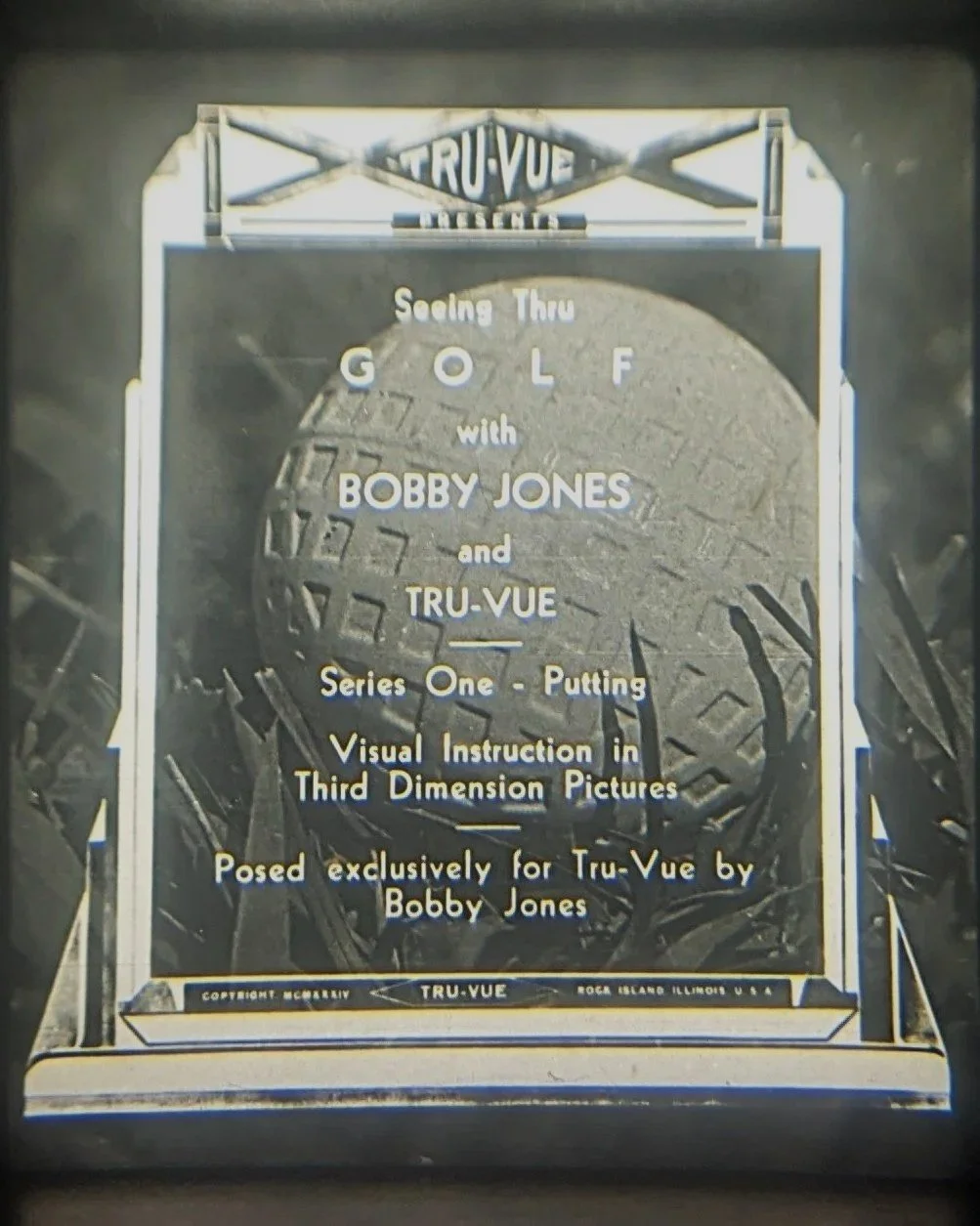
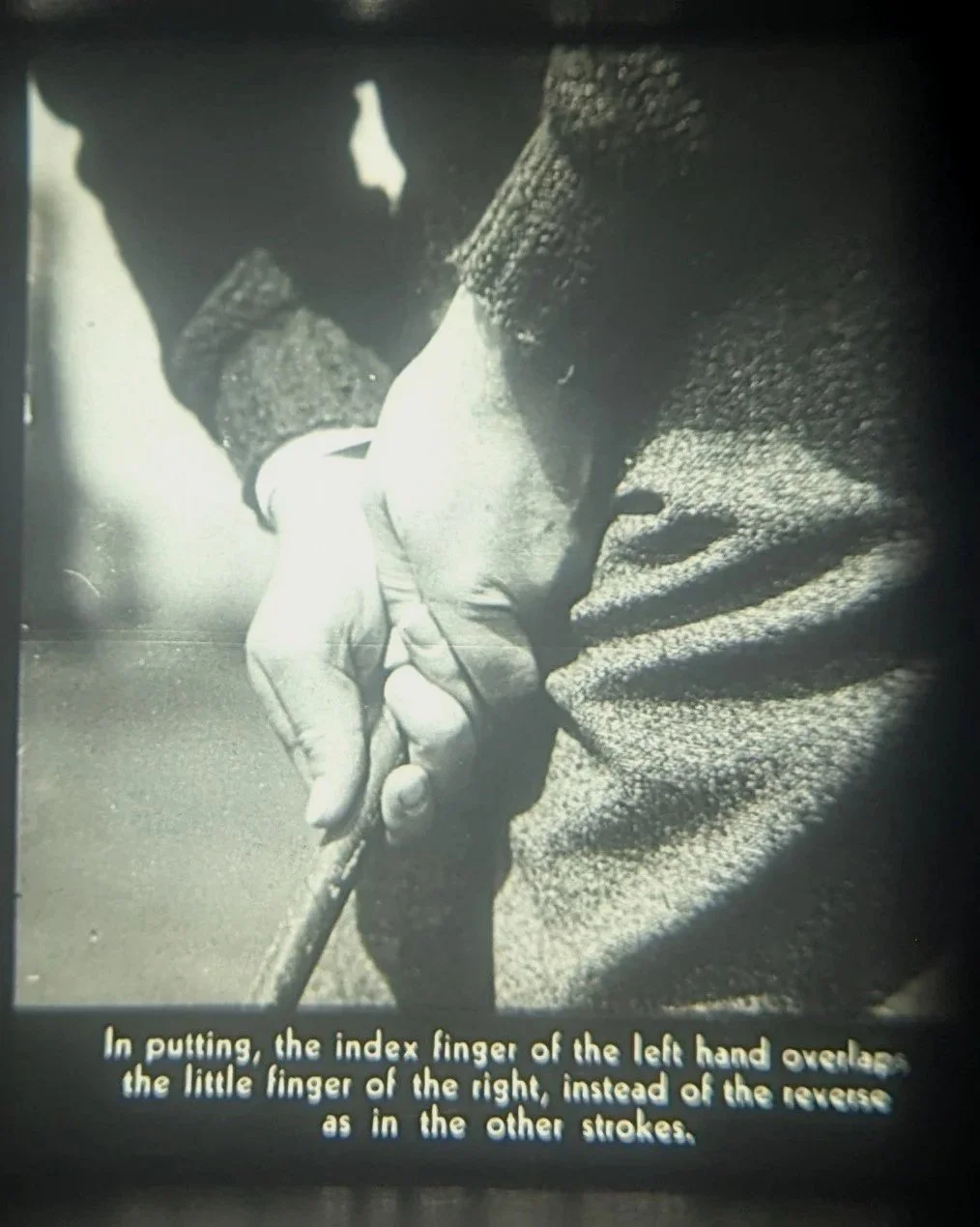
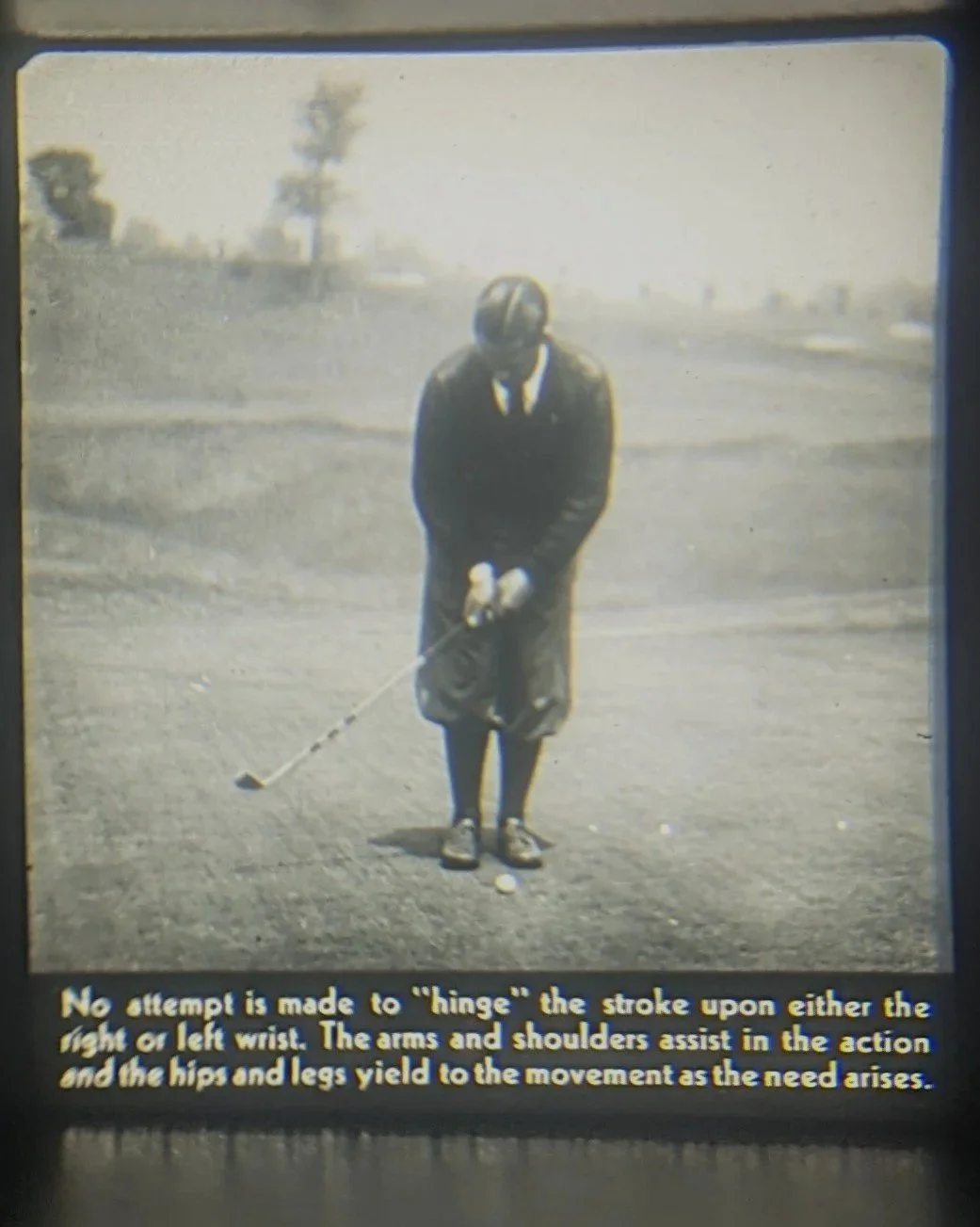
Early Unnumbered Series: Bobby Jones Golf Films
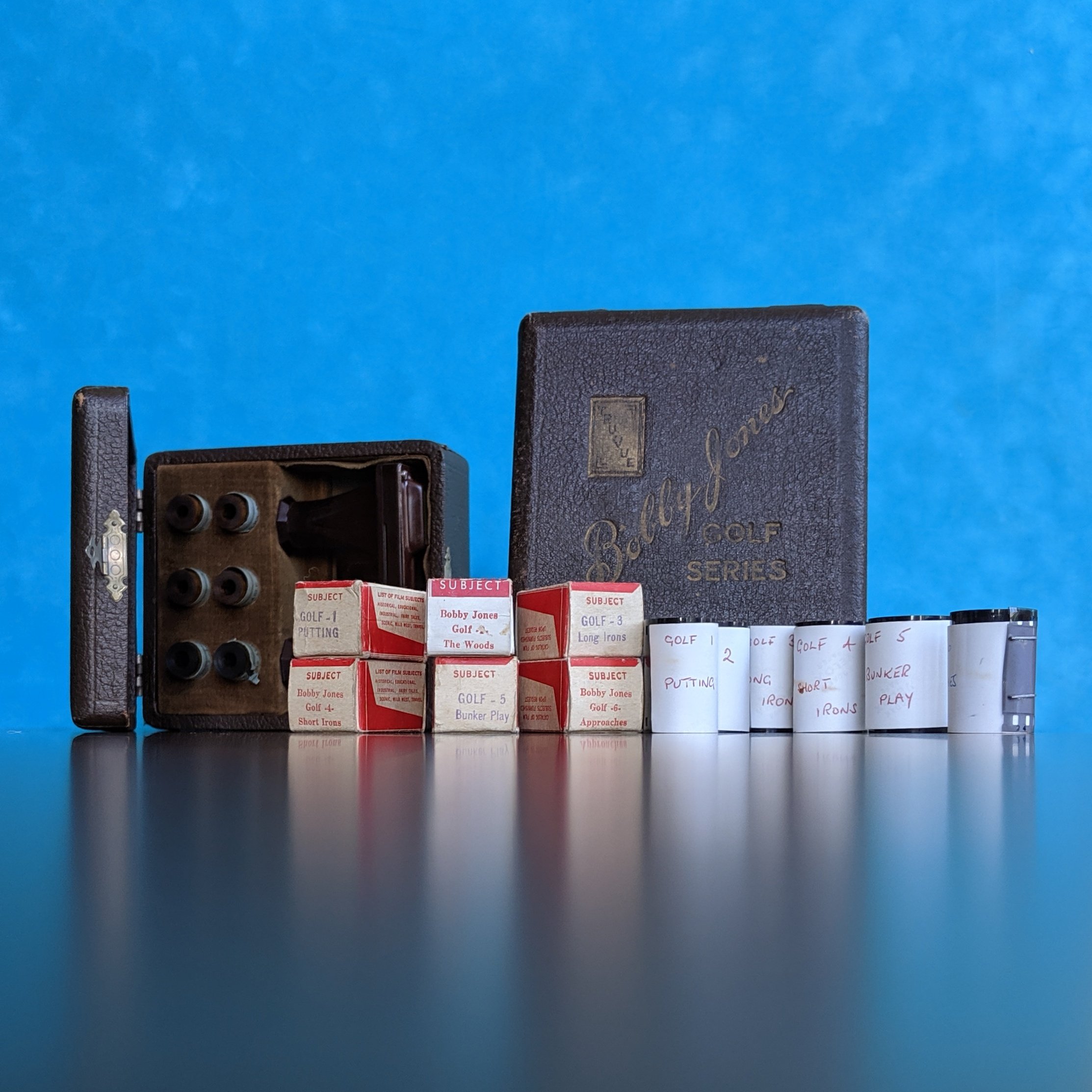
1934, Golf Instruction in 3D
Tru-Vue issued a special set of instructional golf filmstrips featuring golf legend Bobby Jones. They designed a special leatherette case with a velvet-covered insert. The insert had holes designed to hold the six individual film rolls without using film boxes. A complete set (the case, all six films with their blue wrappers, the viewer, and the film title insert underneath the veiwer) is rare. At auctions, Tru-Vue collectors often have to compete with sports collectors. The filmstrips were also released individually in early red boxes.
Photographer: None listed
Edited by: None listed
Production date: Various 1934 dates
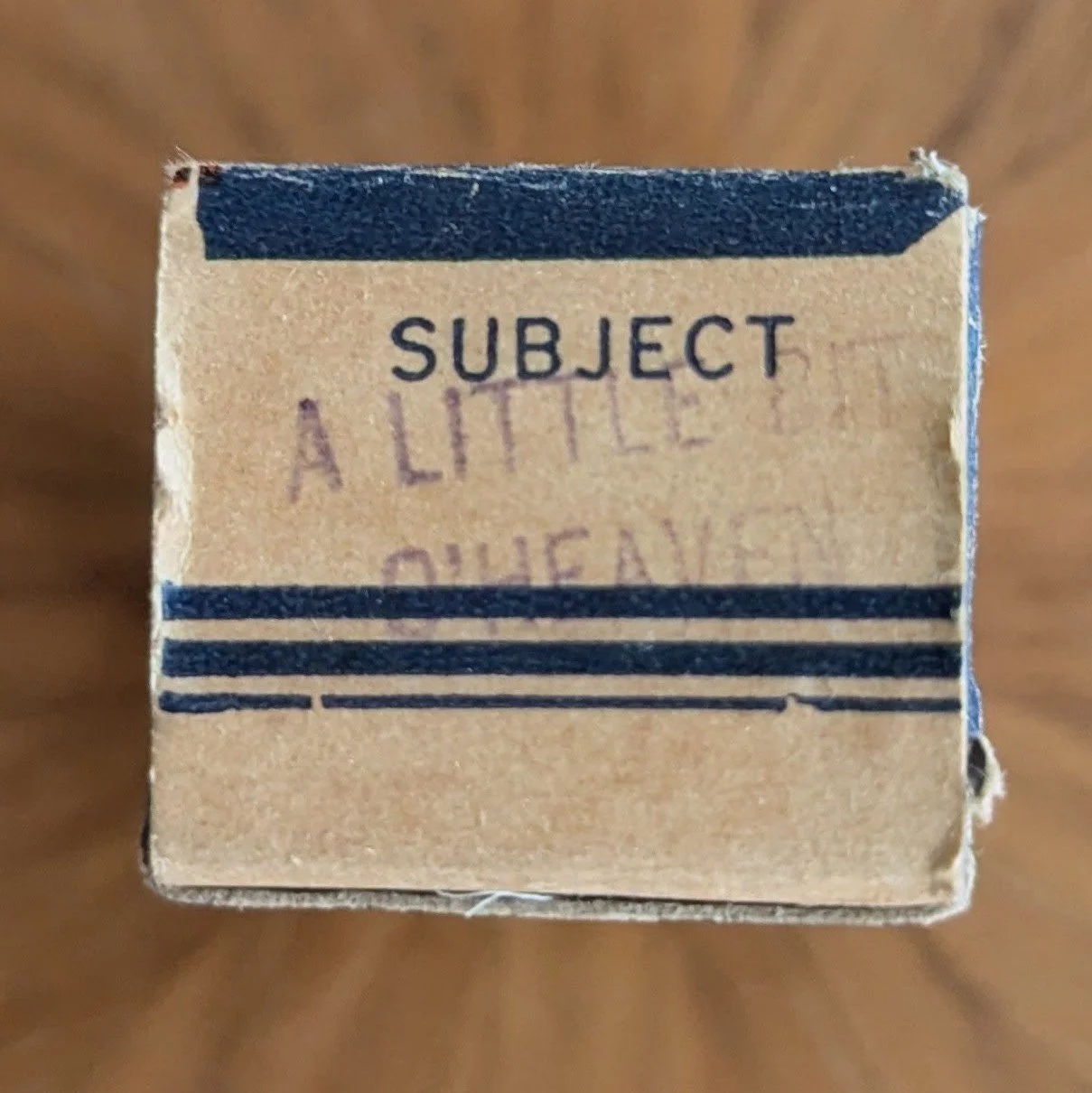
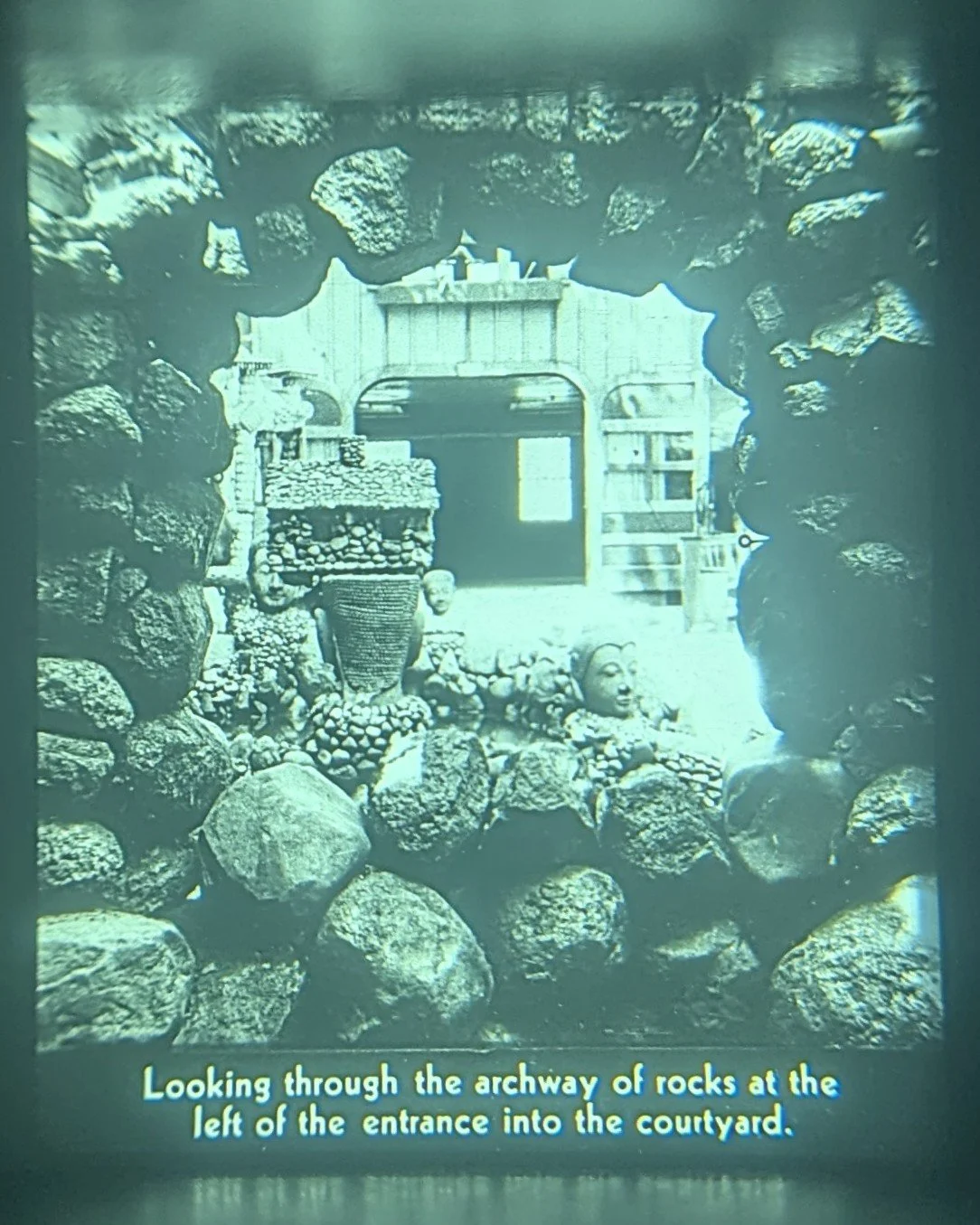
Early Unnumbered Series: A Little Bit of O’Heaven & The Wishing Buddha
An Interesting Iowa Attraction
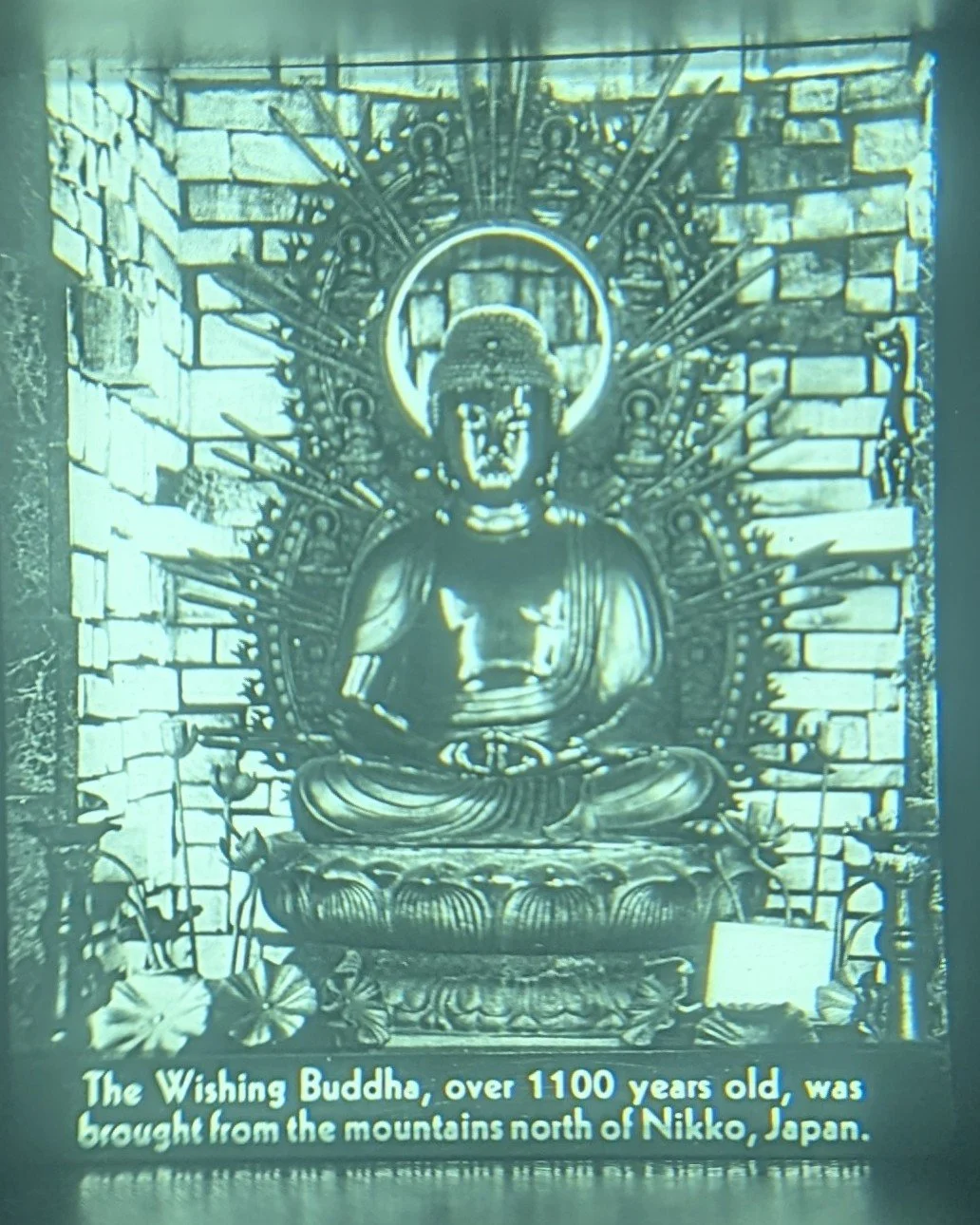
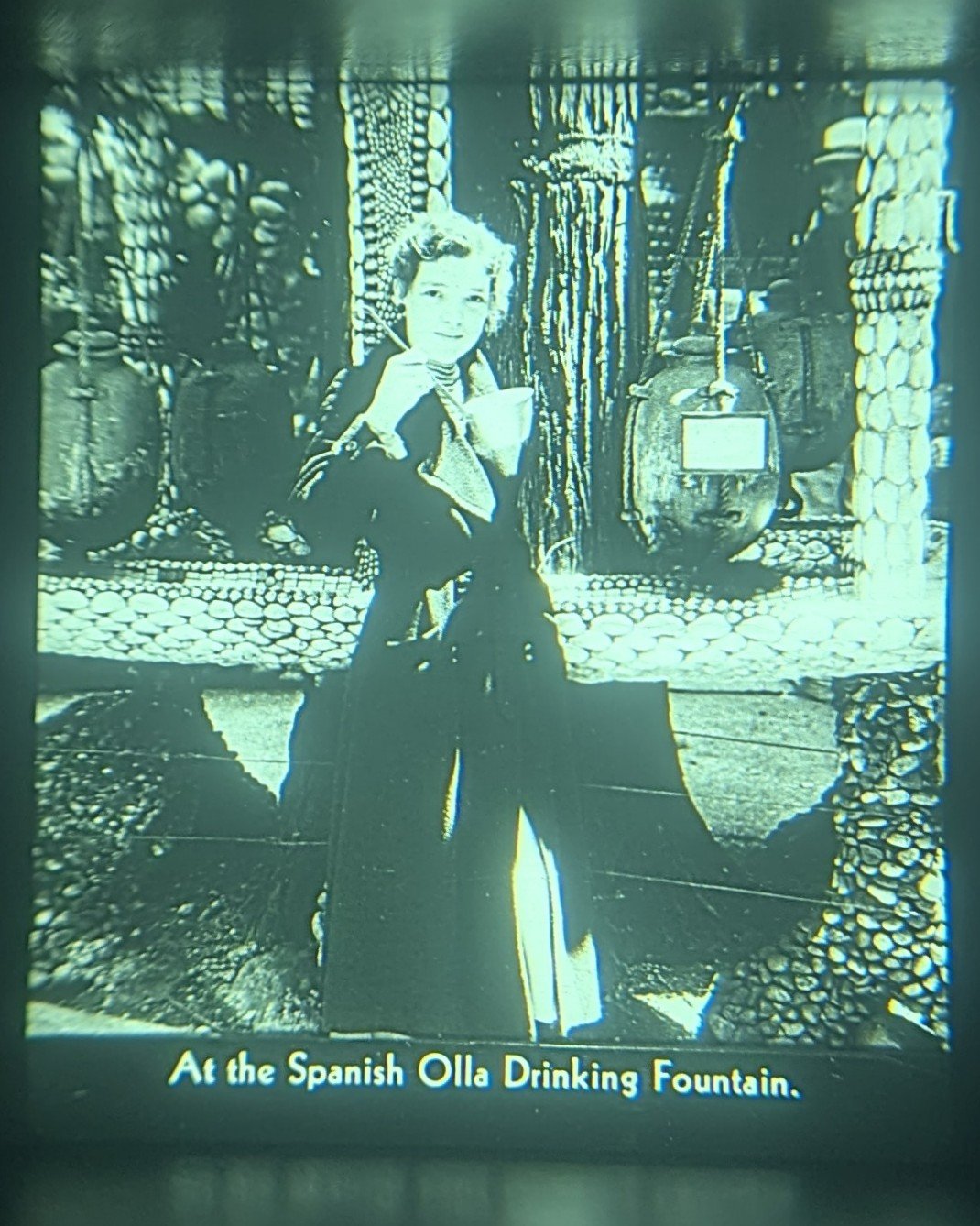
This filmstrip is not at all what we thought it would be about! It documents the oddities collected by chiropractic pioneer B. J. Palmer, including the main attraction: a 3-ton Buddha statue. The title "A Little Bit O’ Heaven" refers to the garden area Palmer set up for the ancient 10-foot bronze statue called “The Wishing Buddha.” The site opened to the public in 1928 and closed in 1979.
Photographer: LaDare A.S.C.
Edited by: None listed
Production date: 1934
Early Unnumbered Series: California Pacific International Exposition
1935-36, San Diego, California
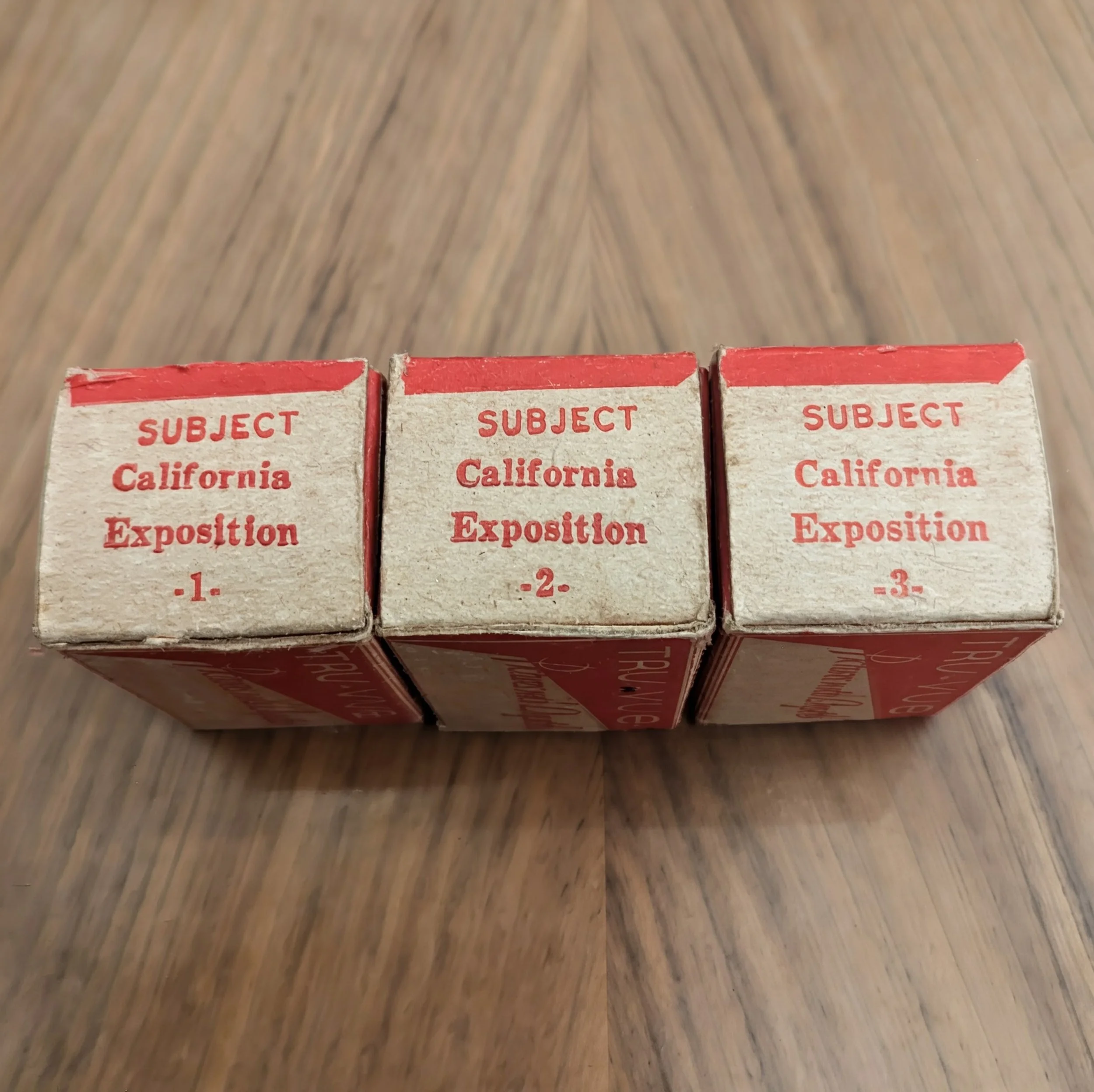
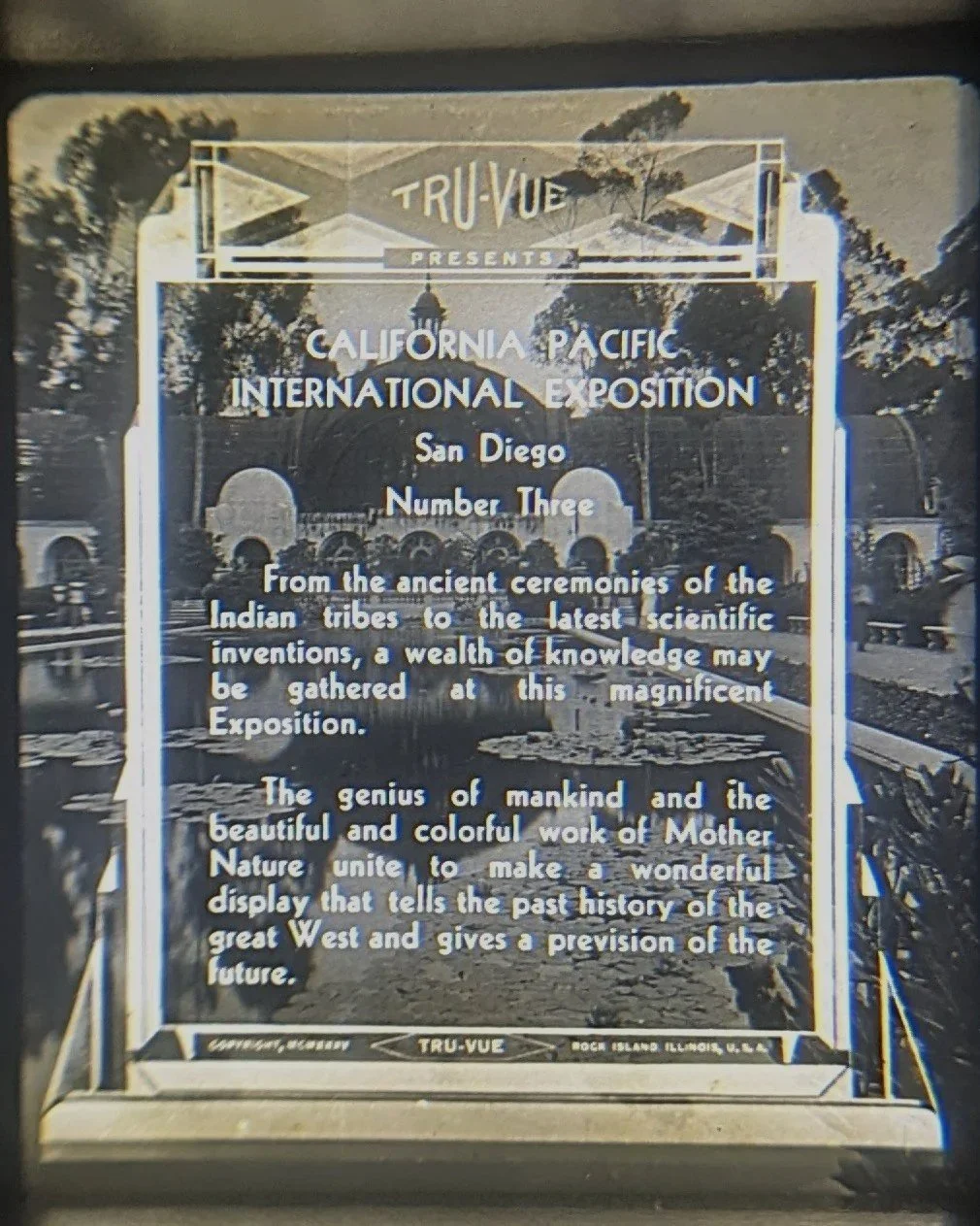
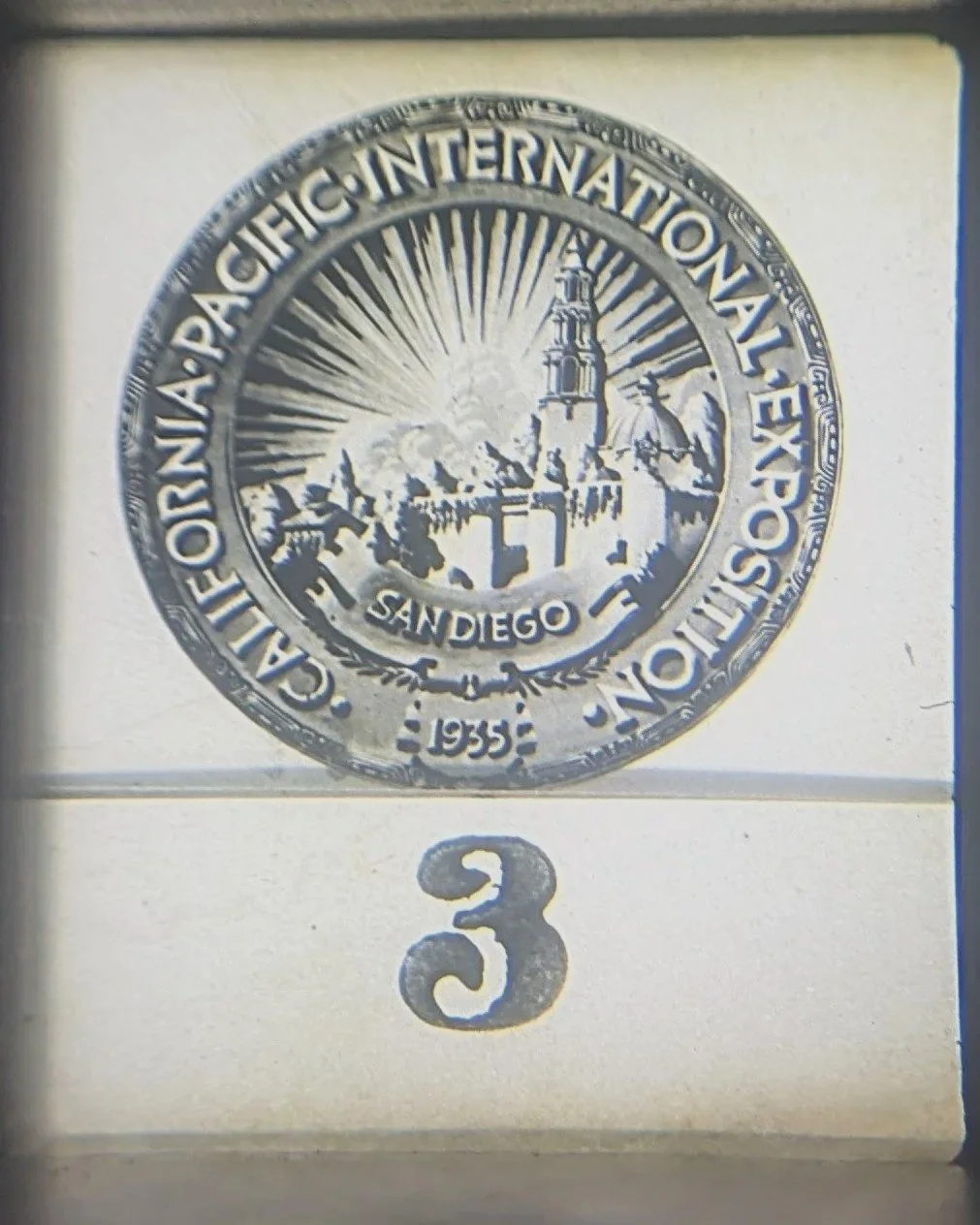
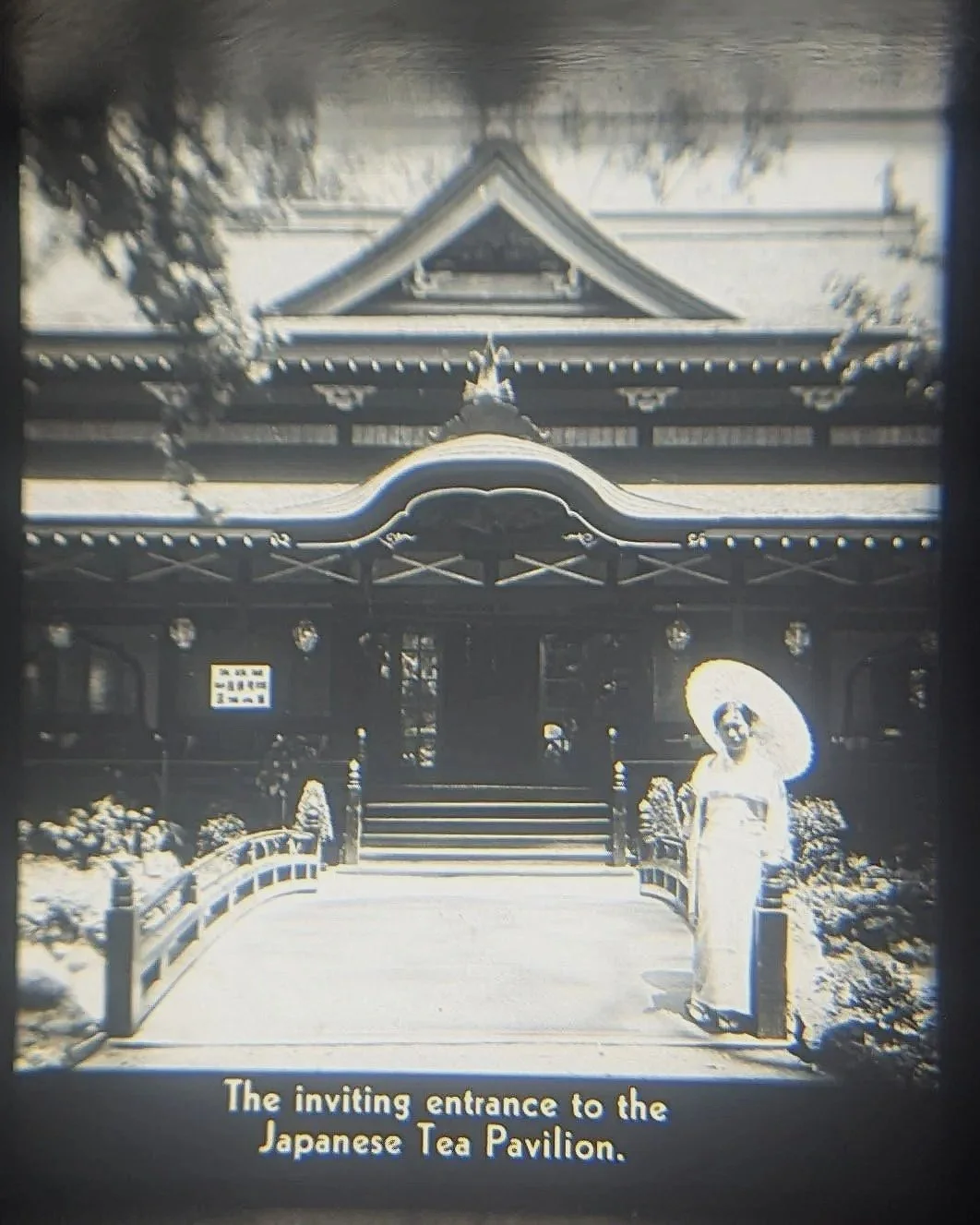
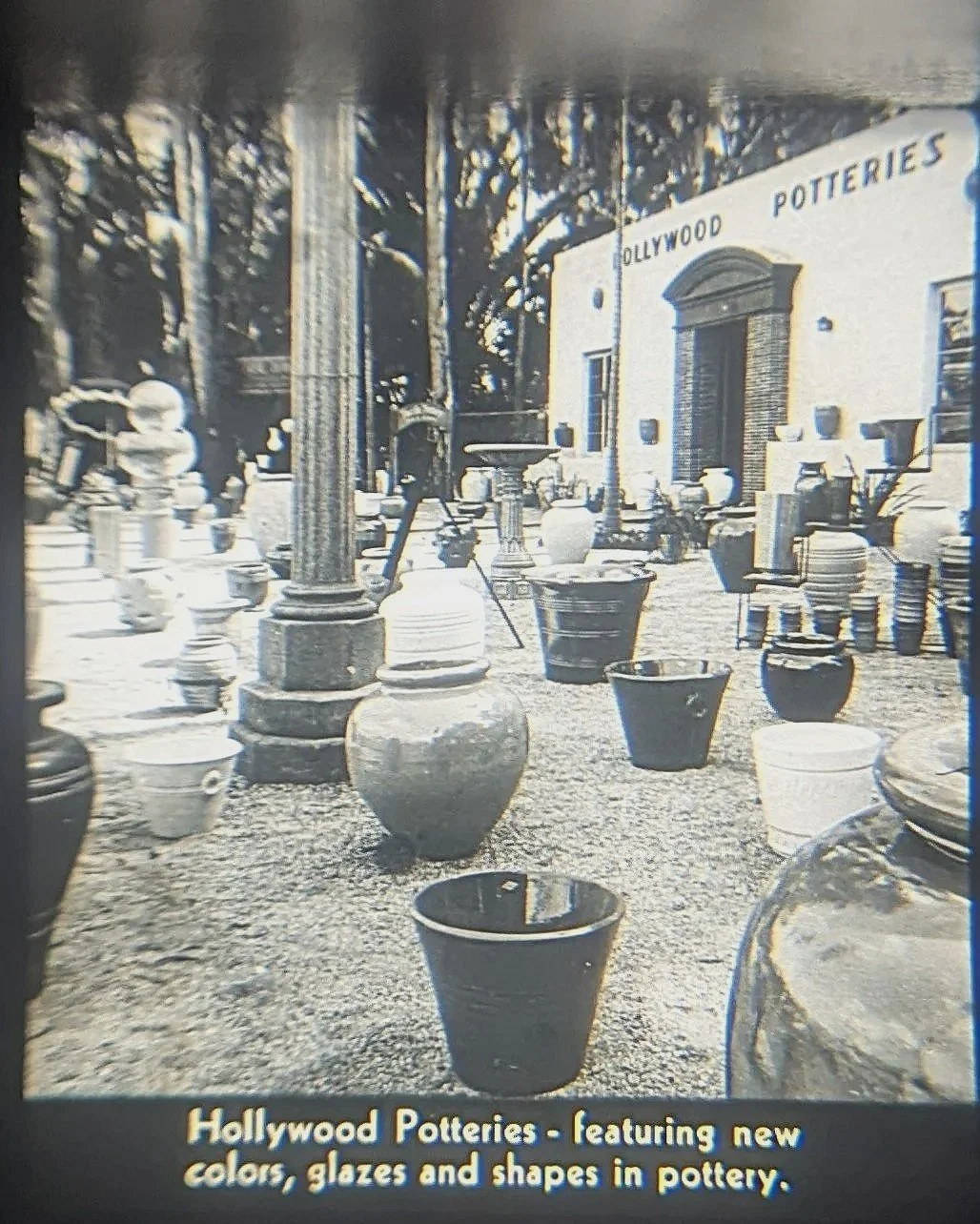
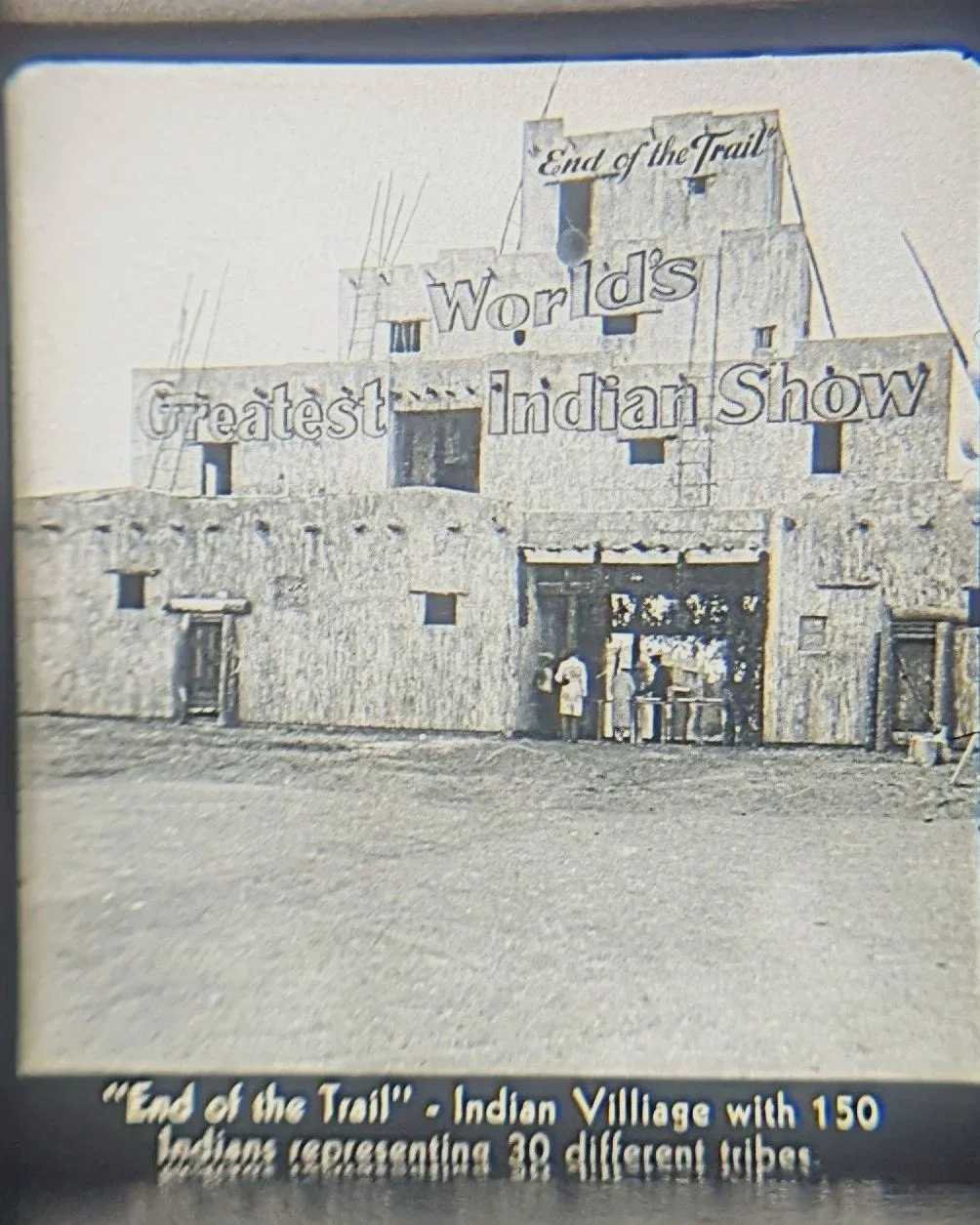
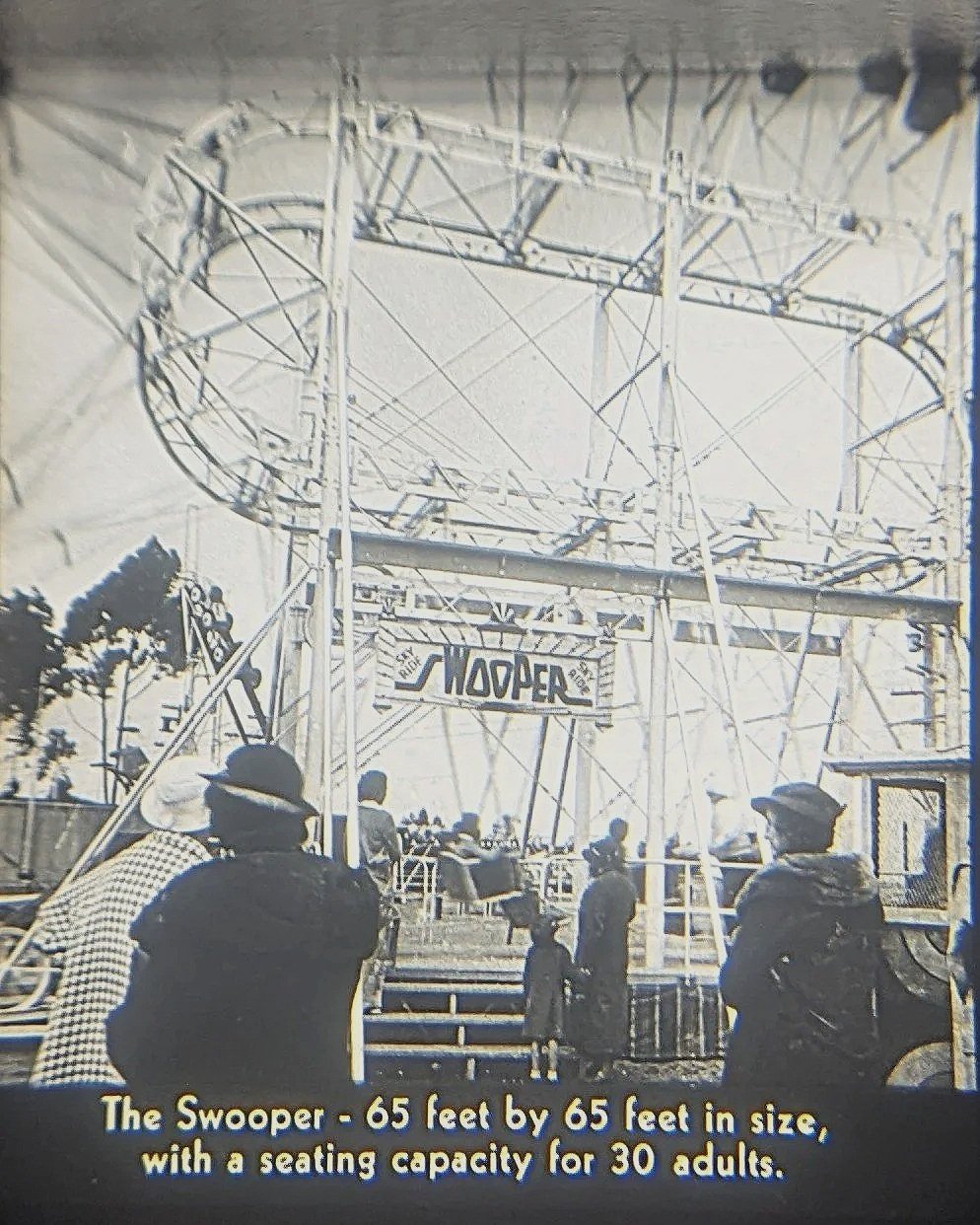
Right as the Century of Progress World’s fair was closing, an entrepreneur in San Diego, Frank Drugan, had the idea of repurposing some of those exhibits and hosting an international fair down in San Diego, utilizing buildings on Balboa Island that were left over from their 1915 exposition almost 20 years earlier. The event was pulled together in 10 months, launched in 1935, and was so successful that it ran again in 1936. We have the set of 3 filmstrips in early red and early blue boxes. The blue boxes have the title “Cal Pac Expo.”
Early Unnumbered Series: Figure Studies
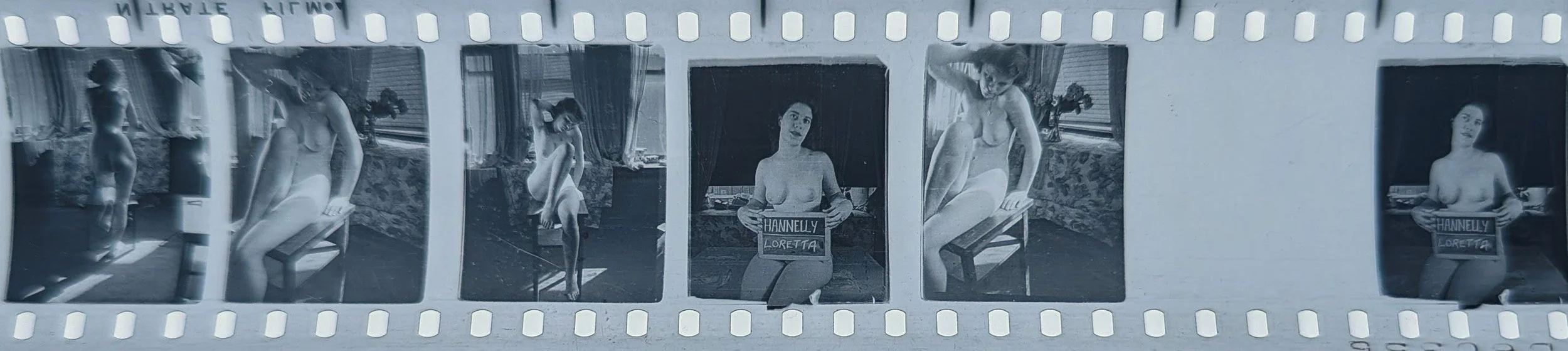
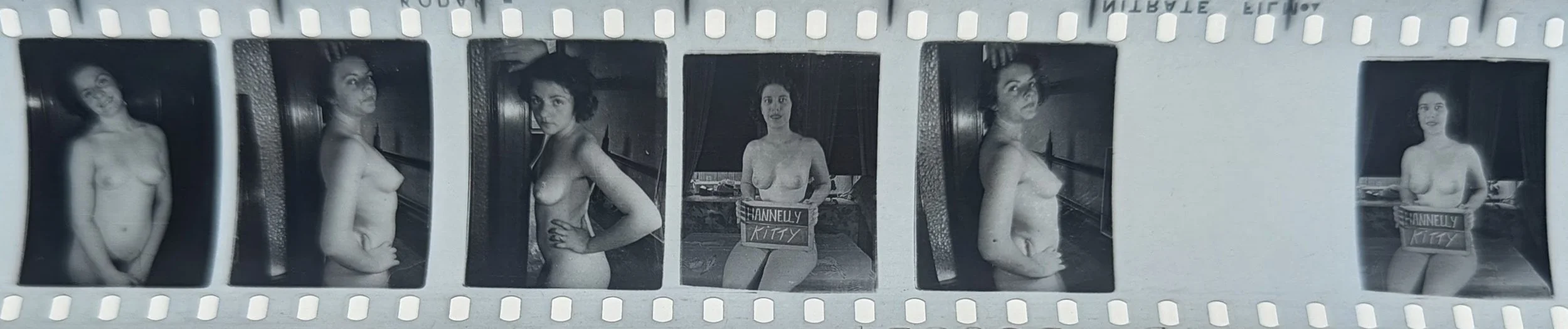
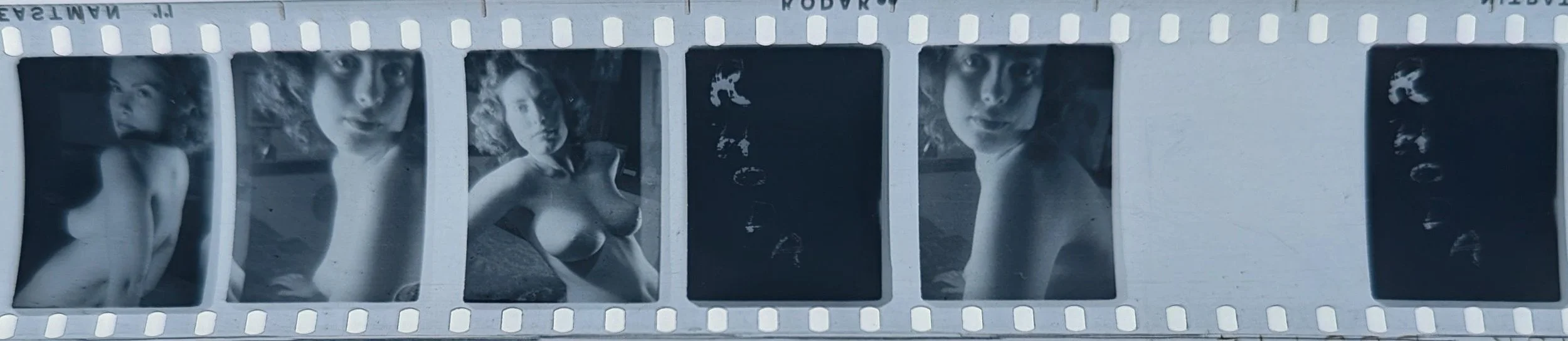
Nitrate instead of safety film. No Tru-Vue branding. And naked women … excuse us, “figure studies”. What’s going on here? In the Tru-Vue section of John Waldsmith’s book, “Stereo Views - An Illustrated History & Price Guide,” there’s a list of Figure Studies filmstrips attributed to Clarence Romrell, a Tru-Vue employee, and a list of others by unknown photographers. We’ve heard rumors of Tru-Vue employees doing “after-hours” work to produce nude filmstrips. What you see below are examples from our collection of the types of 35mm stereo filmstrips that could be purchased in the back of men’s magazines in the 1930s/40s. We do not attribute them to Romrell or Tru-Vue, but can attest that several of them came into our possession packaged with streamlined Tru-Vue viewers.
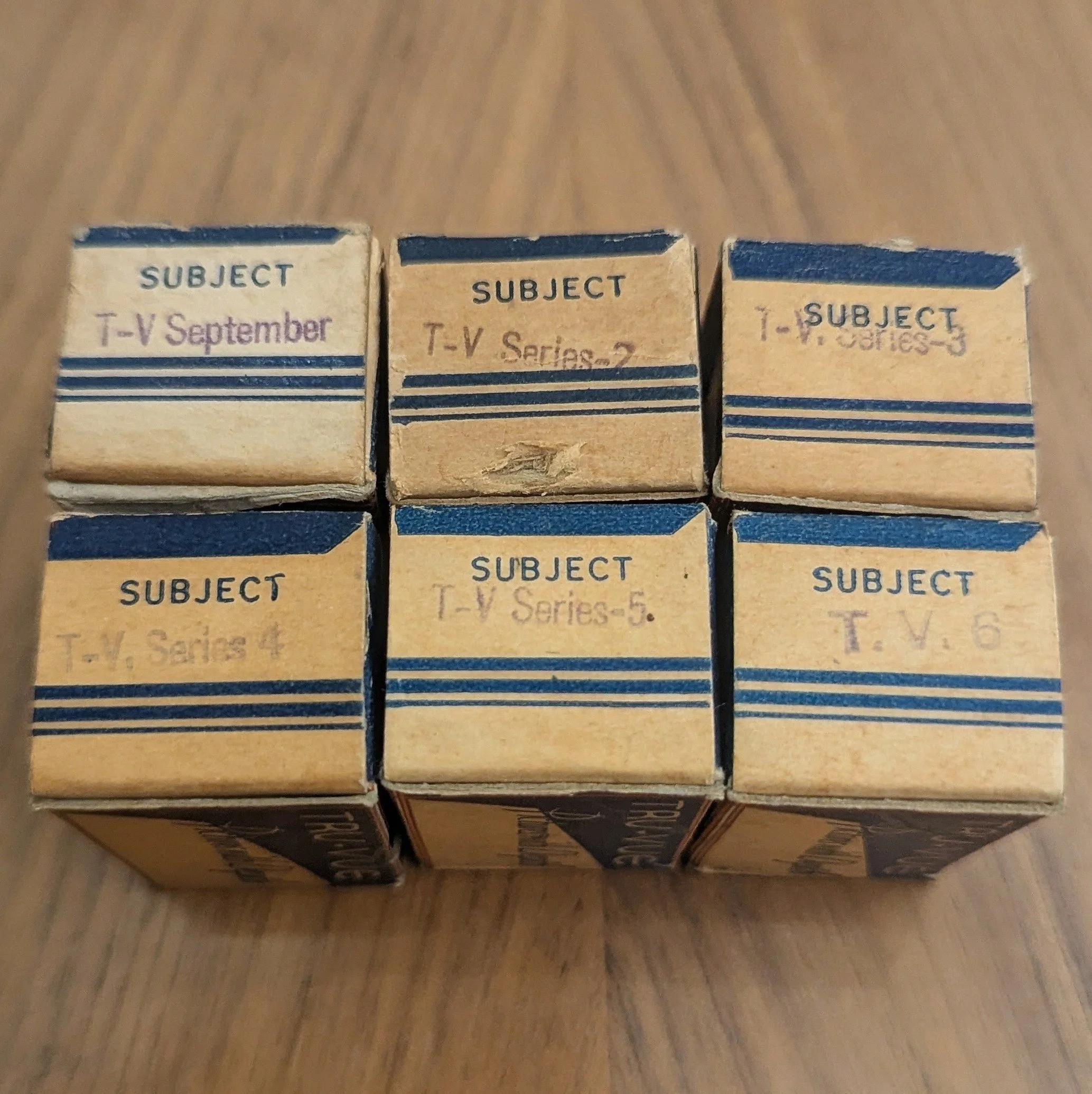
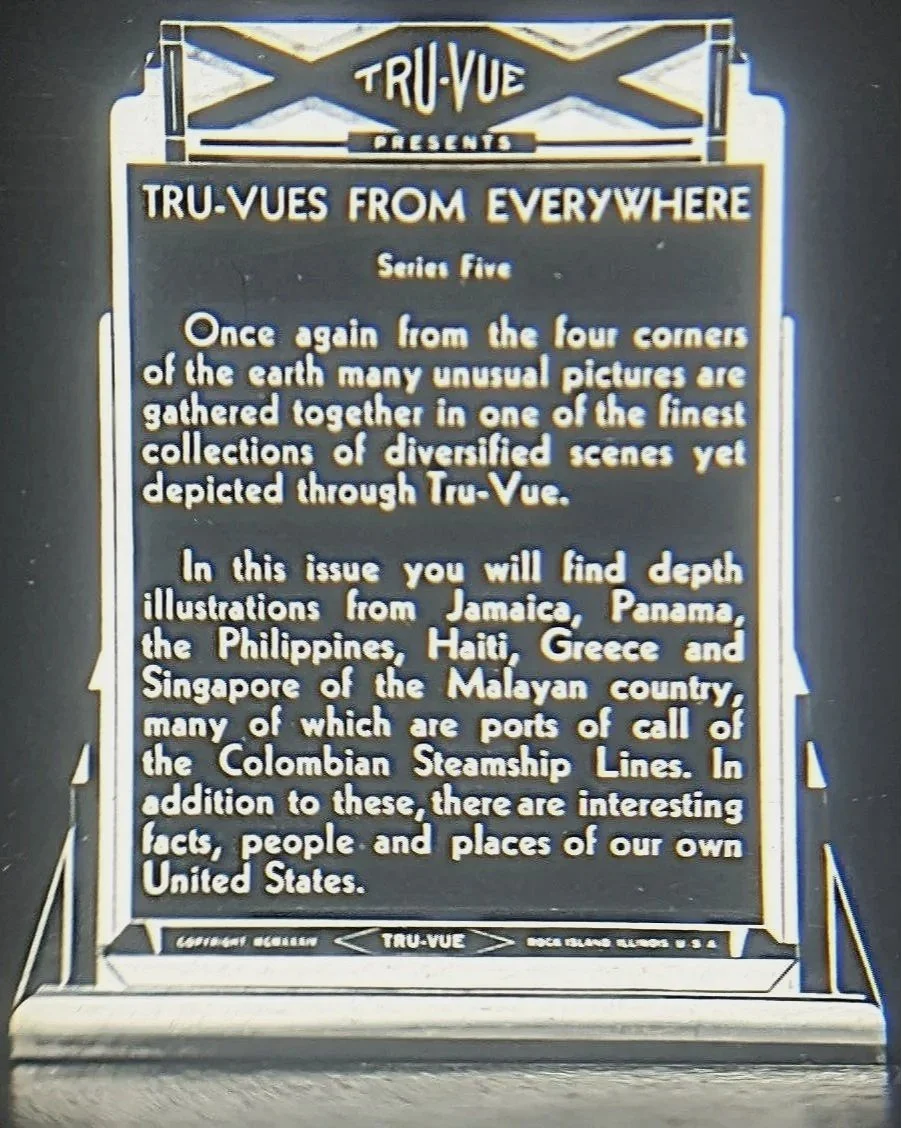
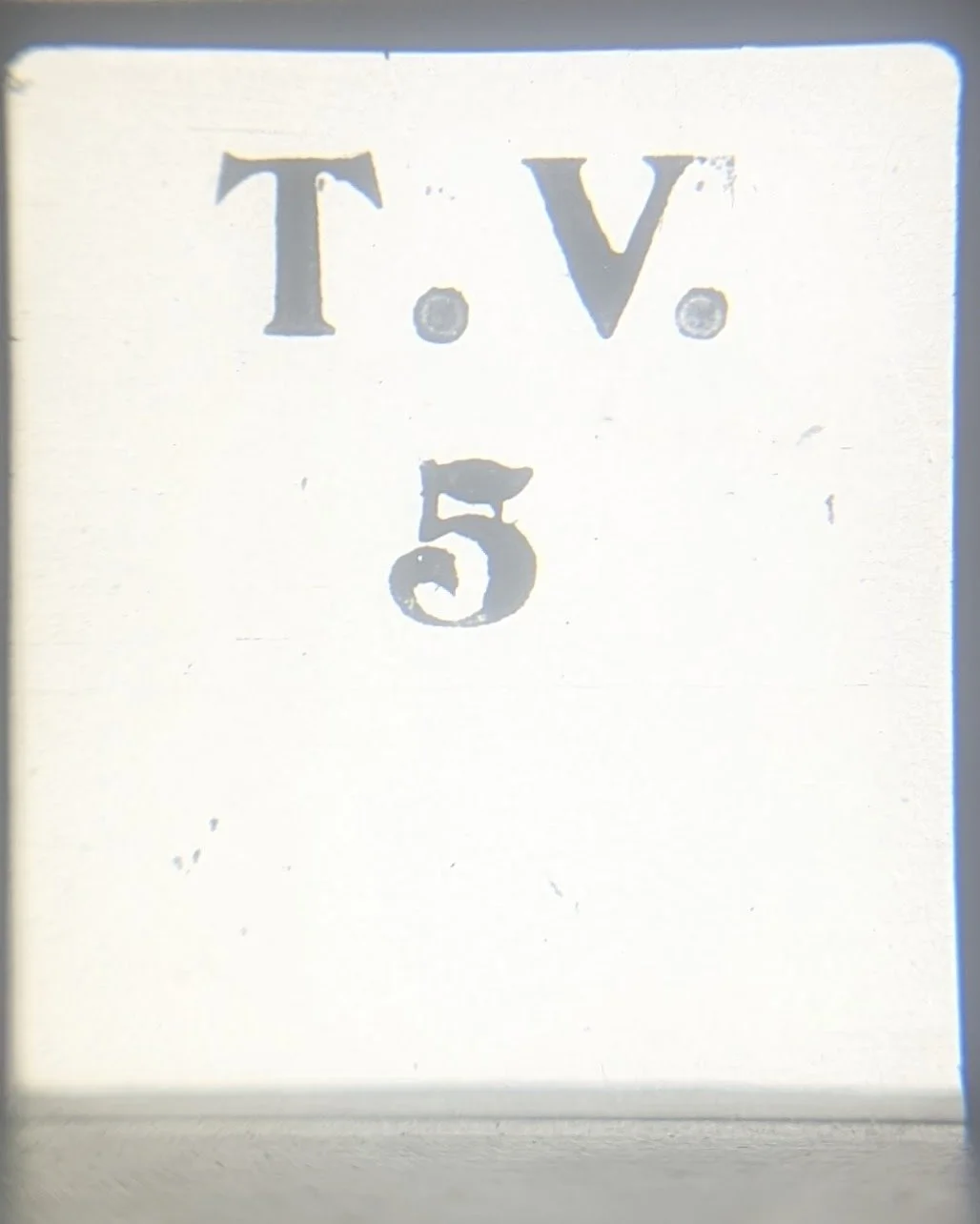
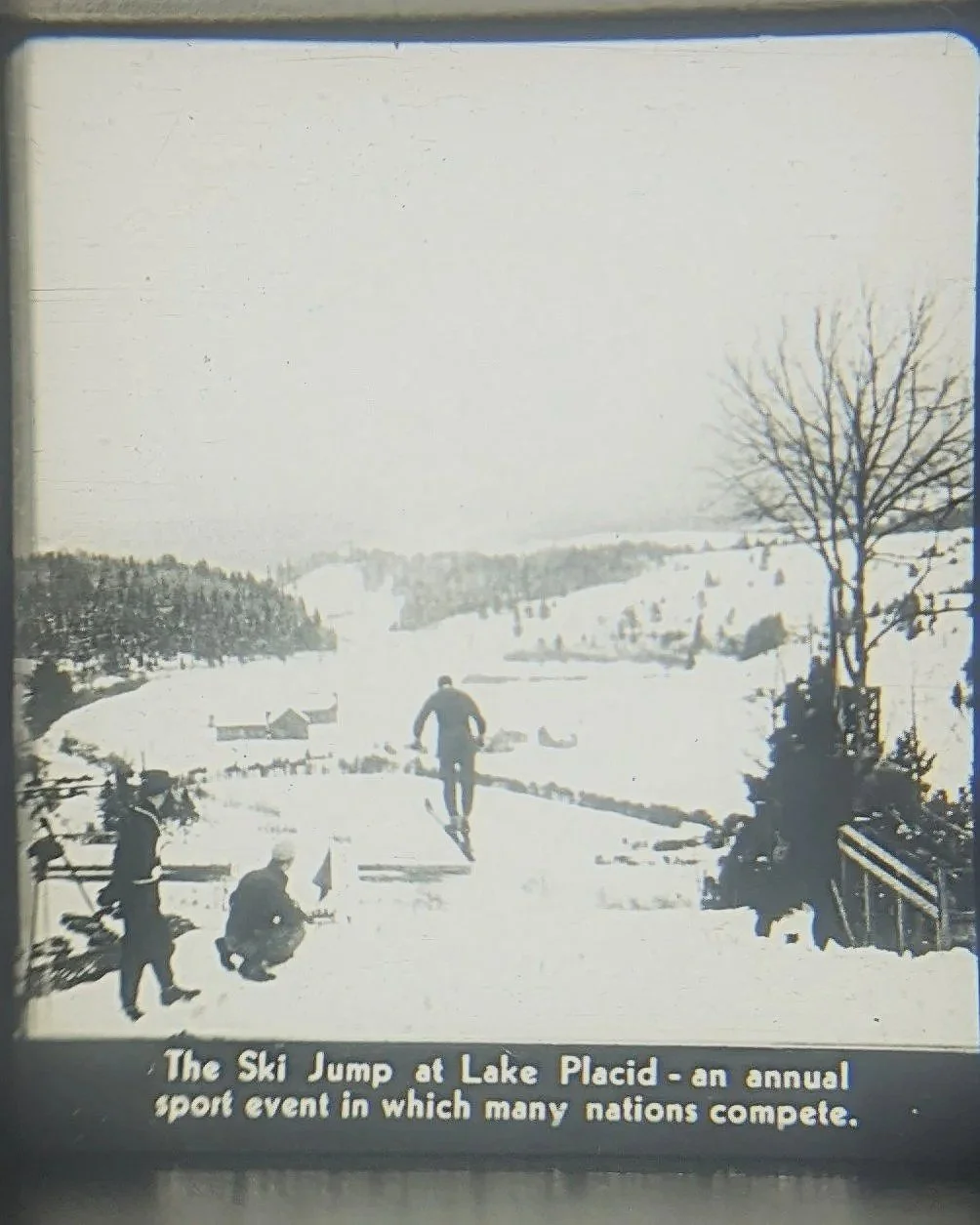
Early Unnumbered Series: Tru-Vues from Everywhere
A Subscription Idea
Originally marketed as “Tru-Vues of Current Events”, these filmstrips were intended to be issued monthly like a magazine. Photos include Dolores Del Rio in her dressing room, Sally Rand, the rear ends of Rae dancing girls backstage at the Orpheum, the Mineral Wells Canyon fire in Los Angeles, th 1933 UCLA football line-up, Marconi & his wife with Francis Lederer, Navy Day in San Pedro, the Boston wharf fire, Charles Chaplin broadcasting over CBS, the closing of Century of Progress 1933 run, and the end of prohibition.
Photographer: None listed
Edited by: J. H. Bennett
Production date: Various 1933 & 1934 dates
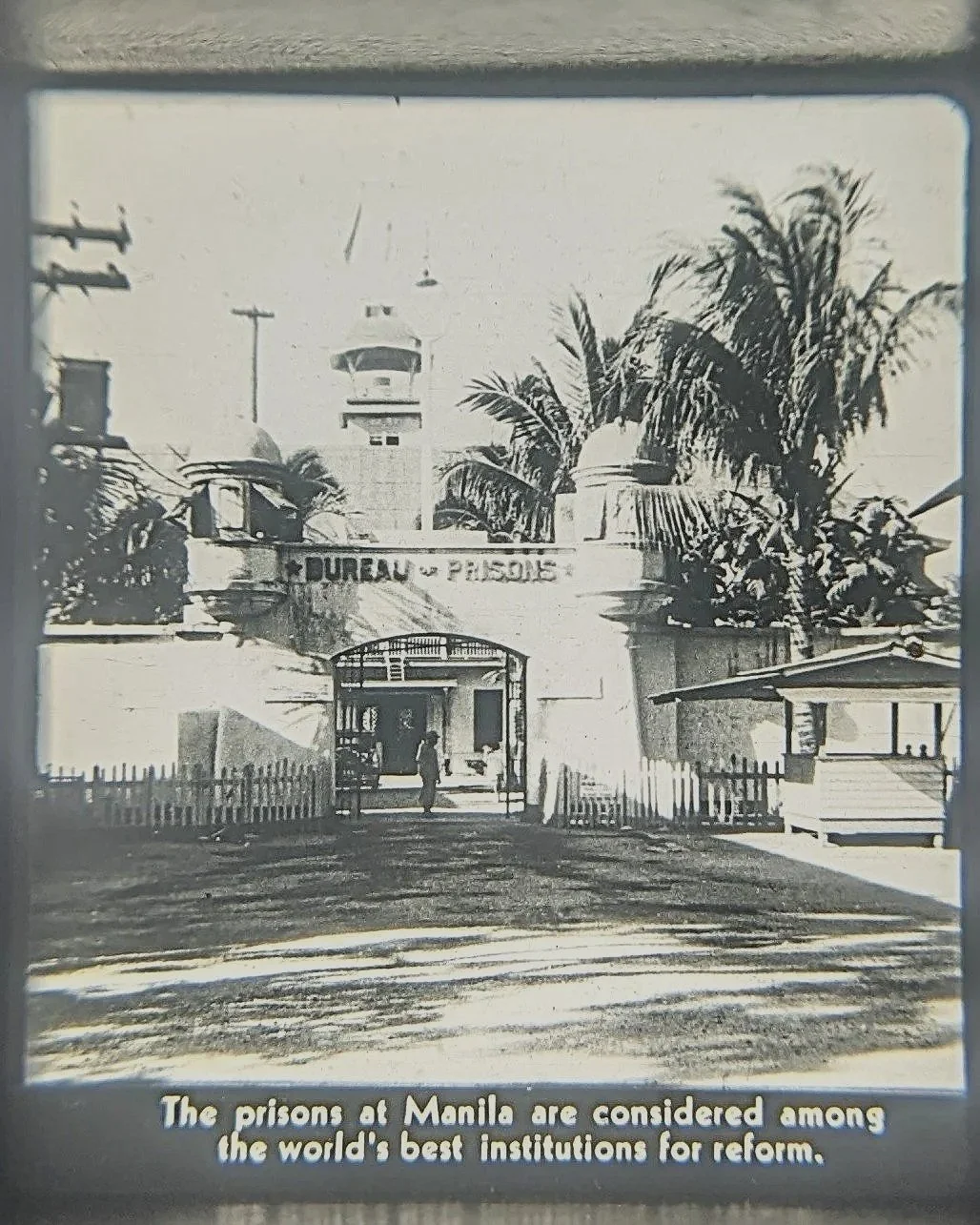
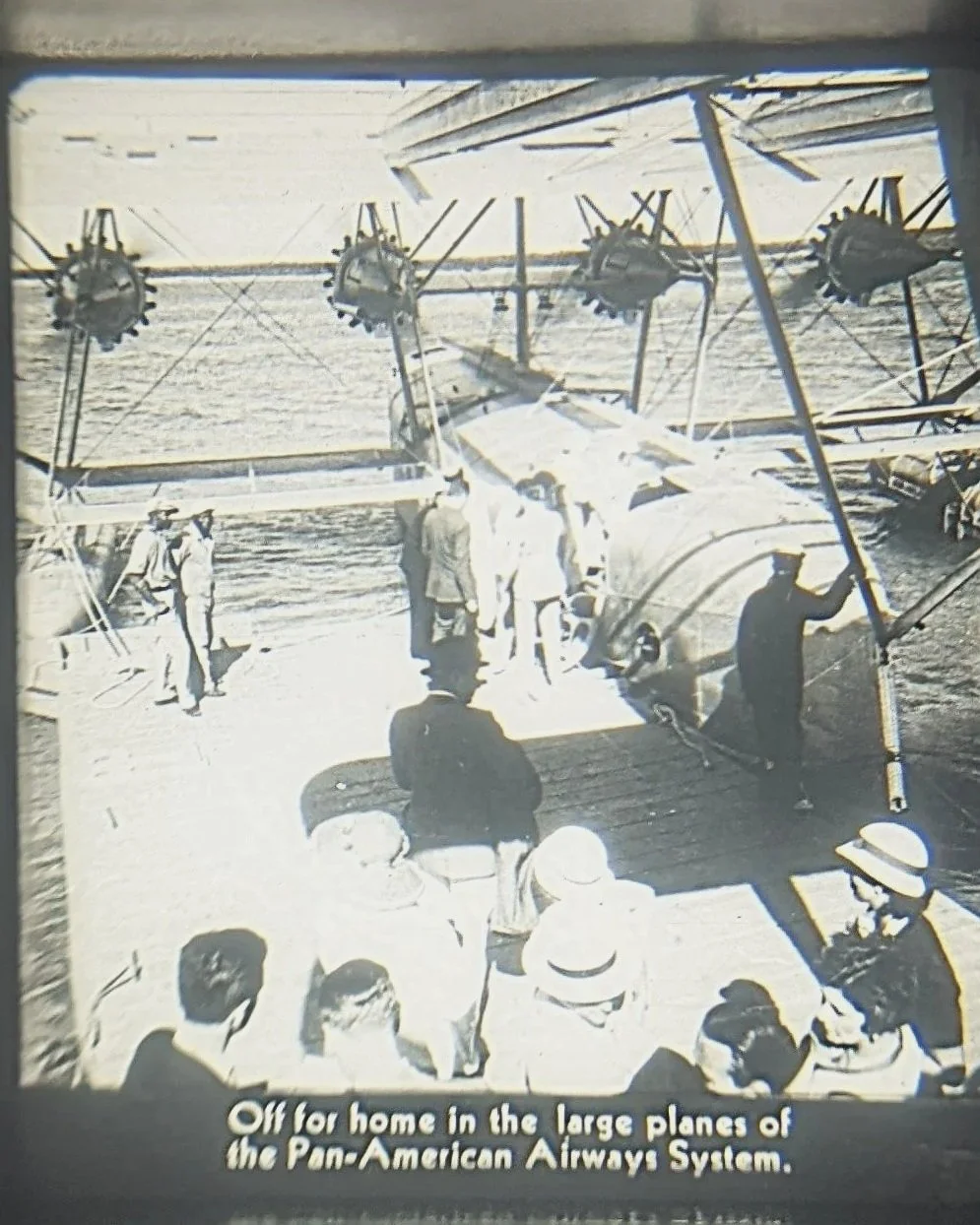
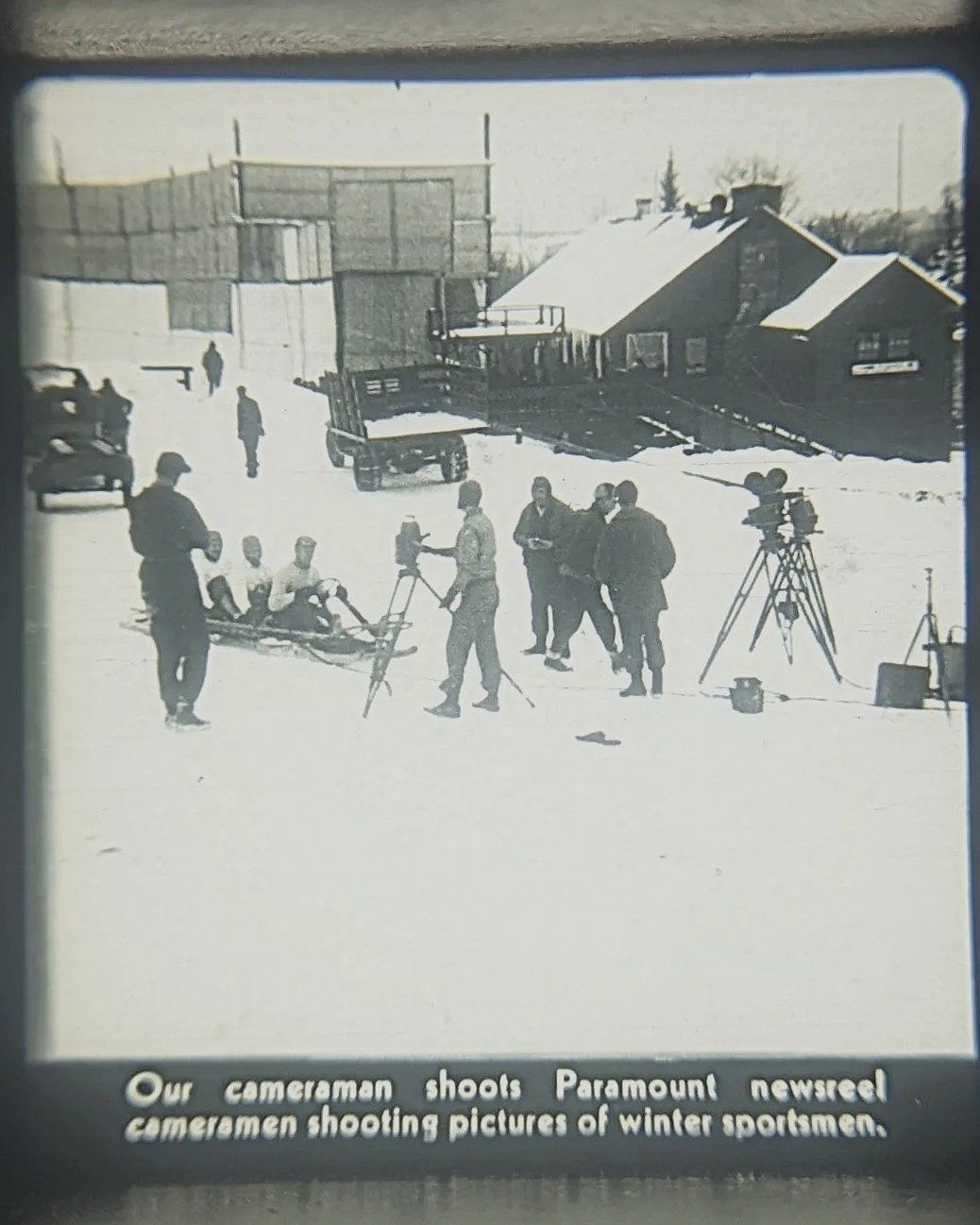
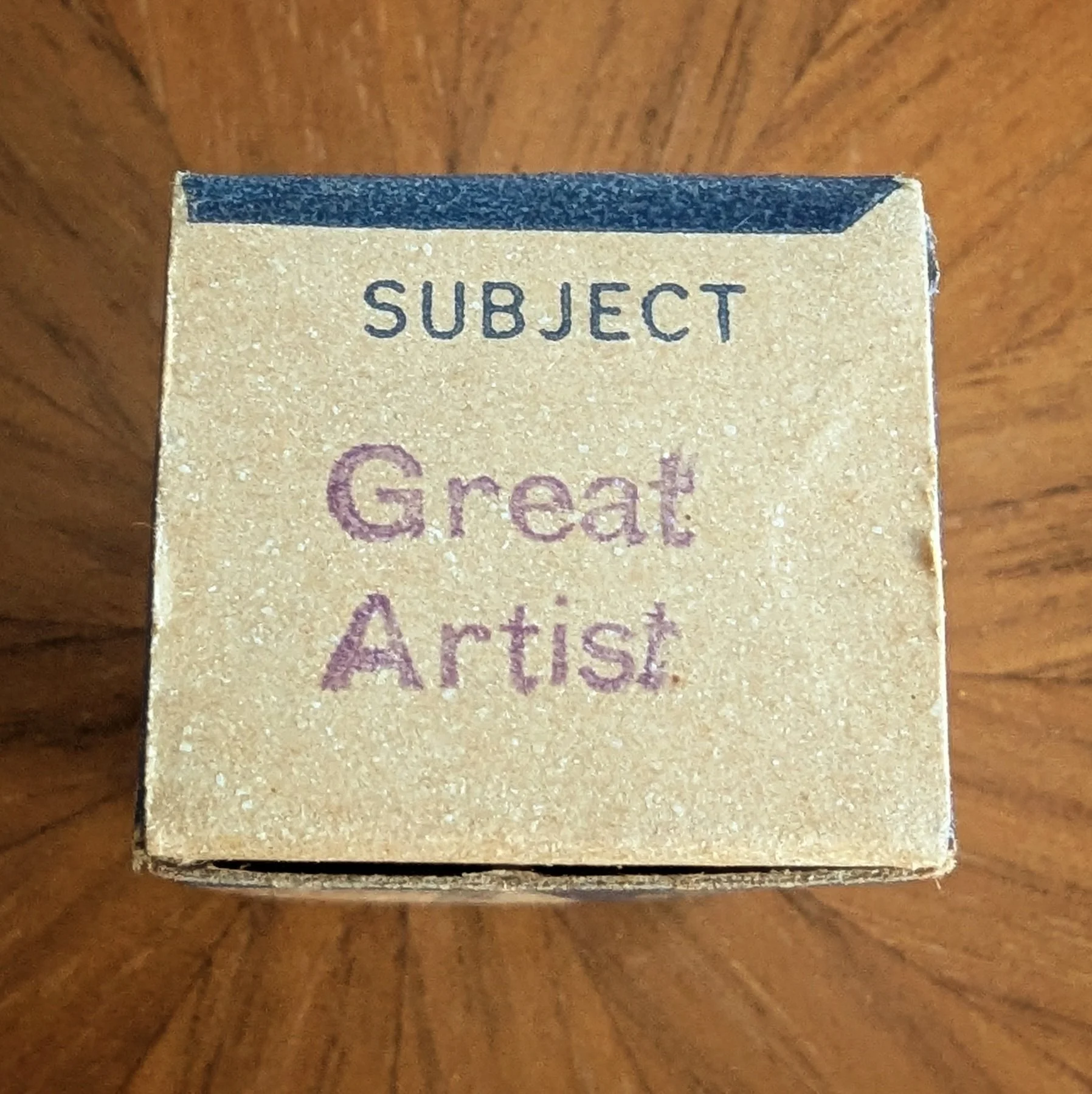
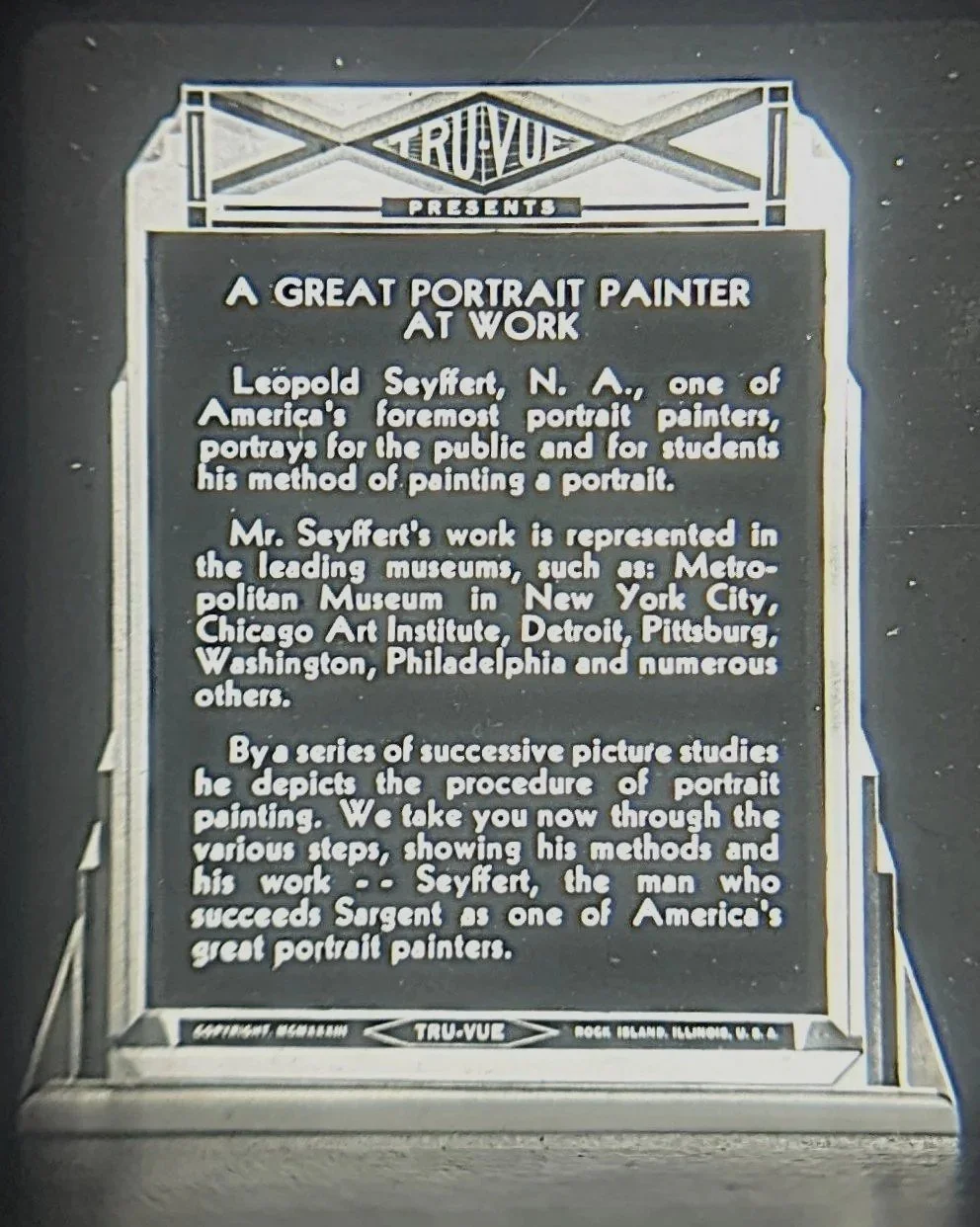
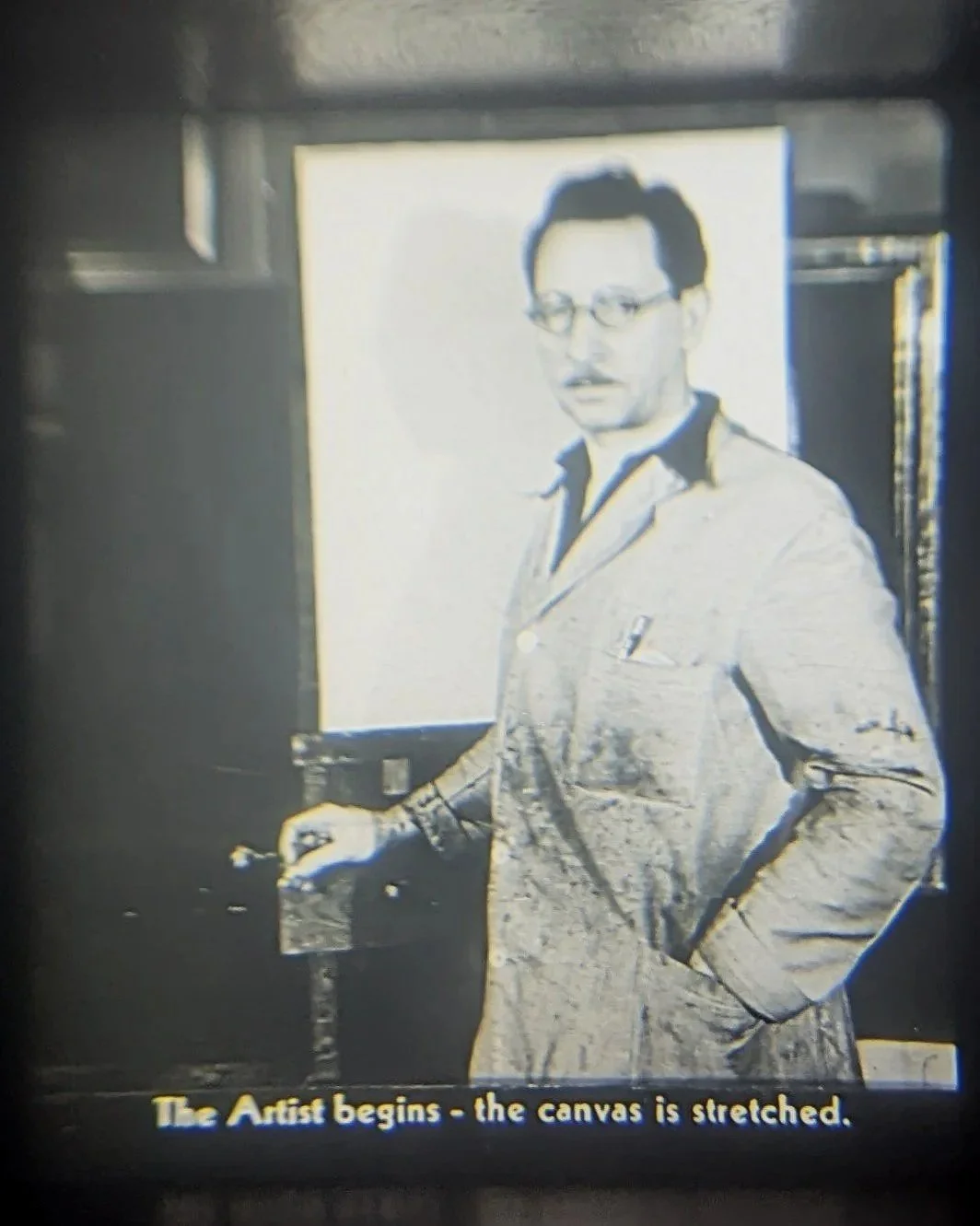
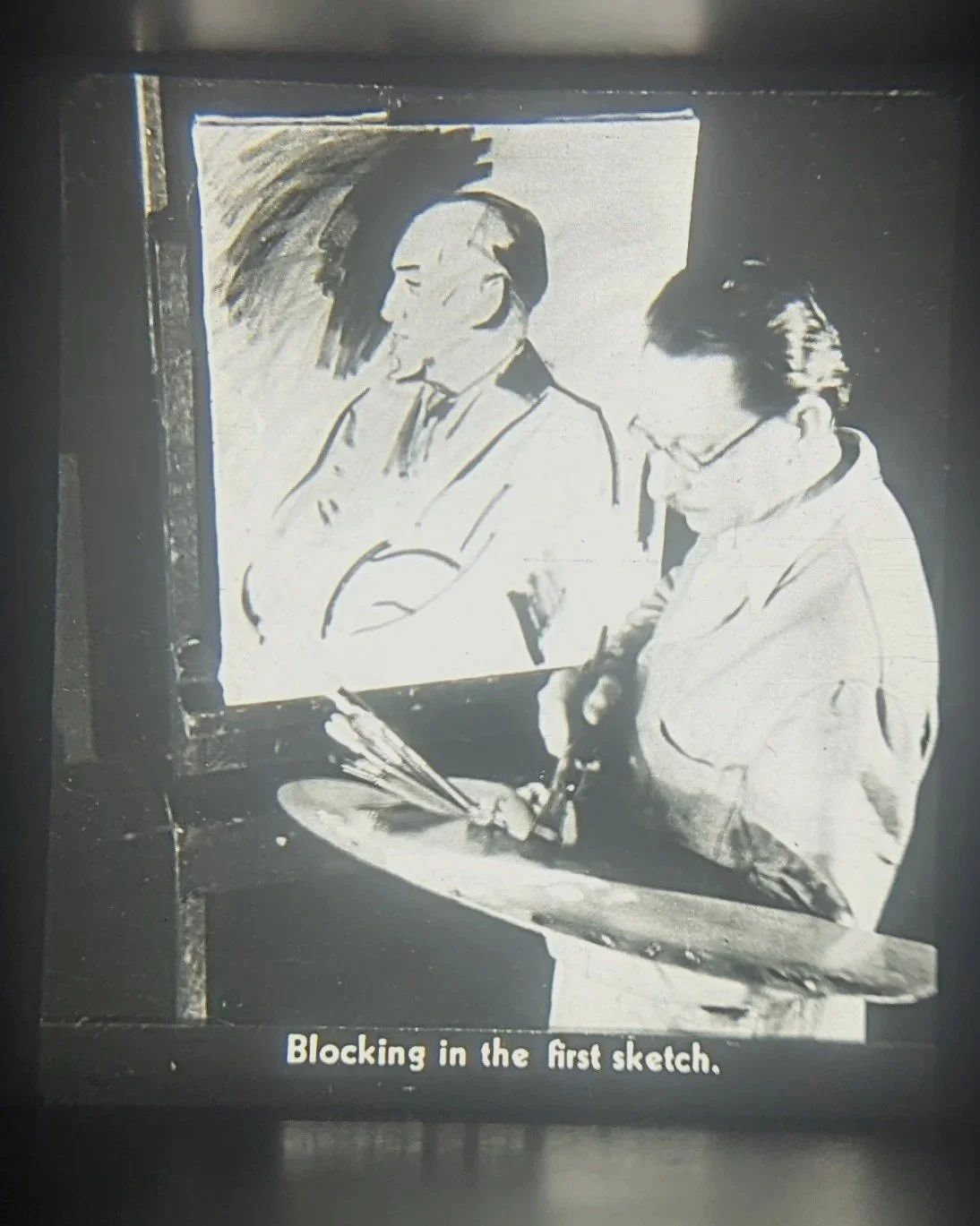
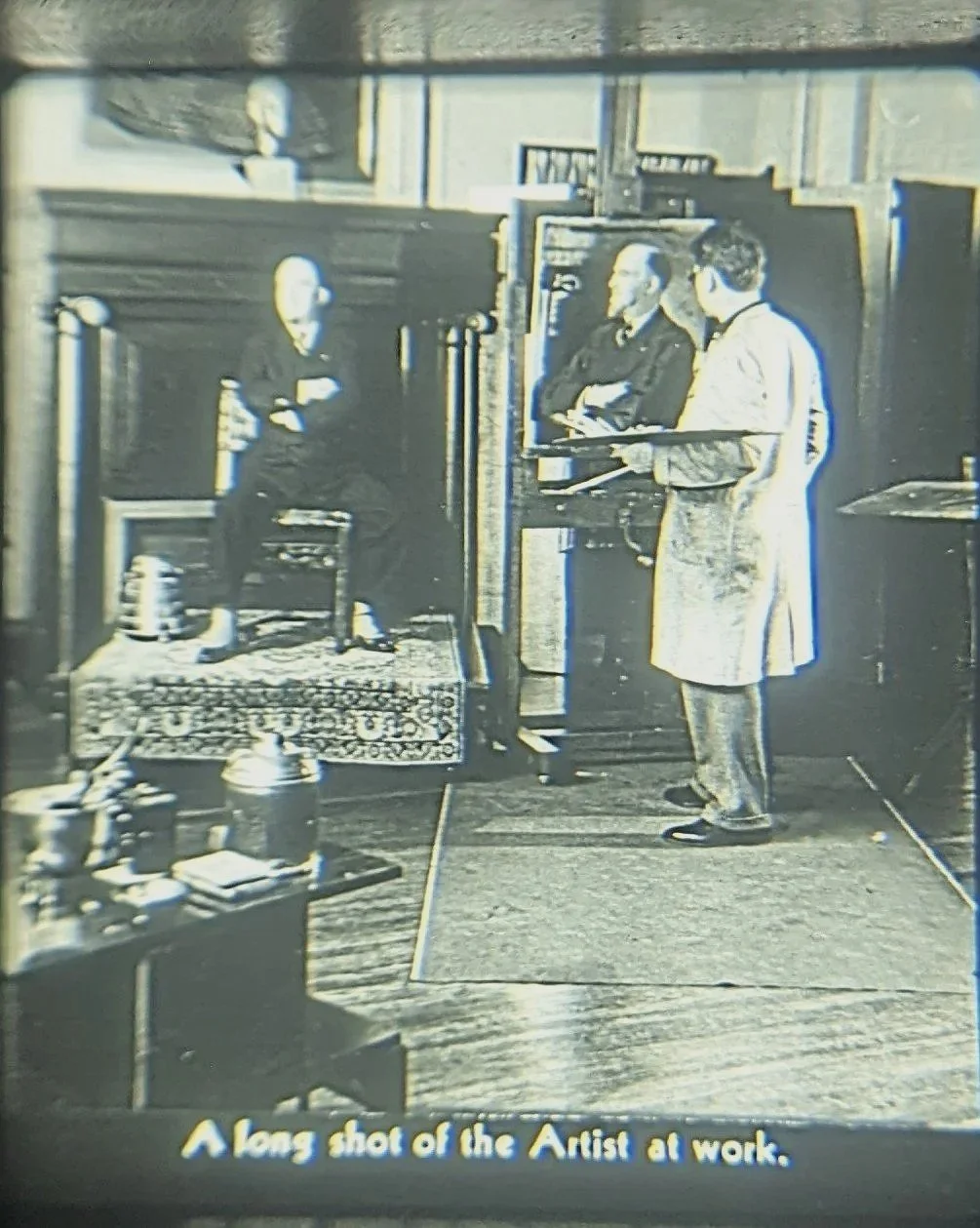
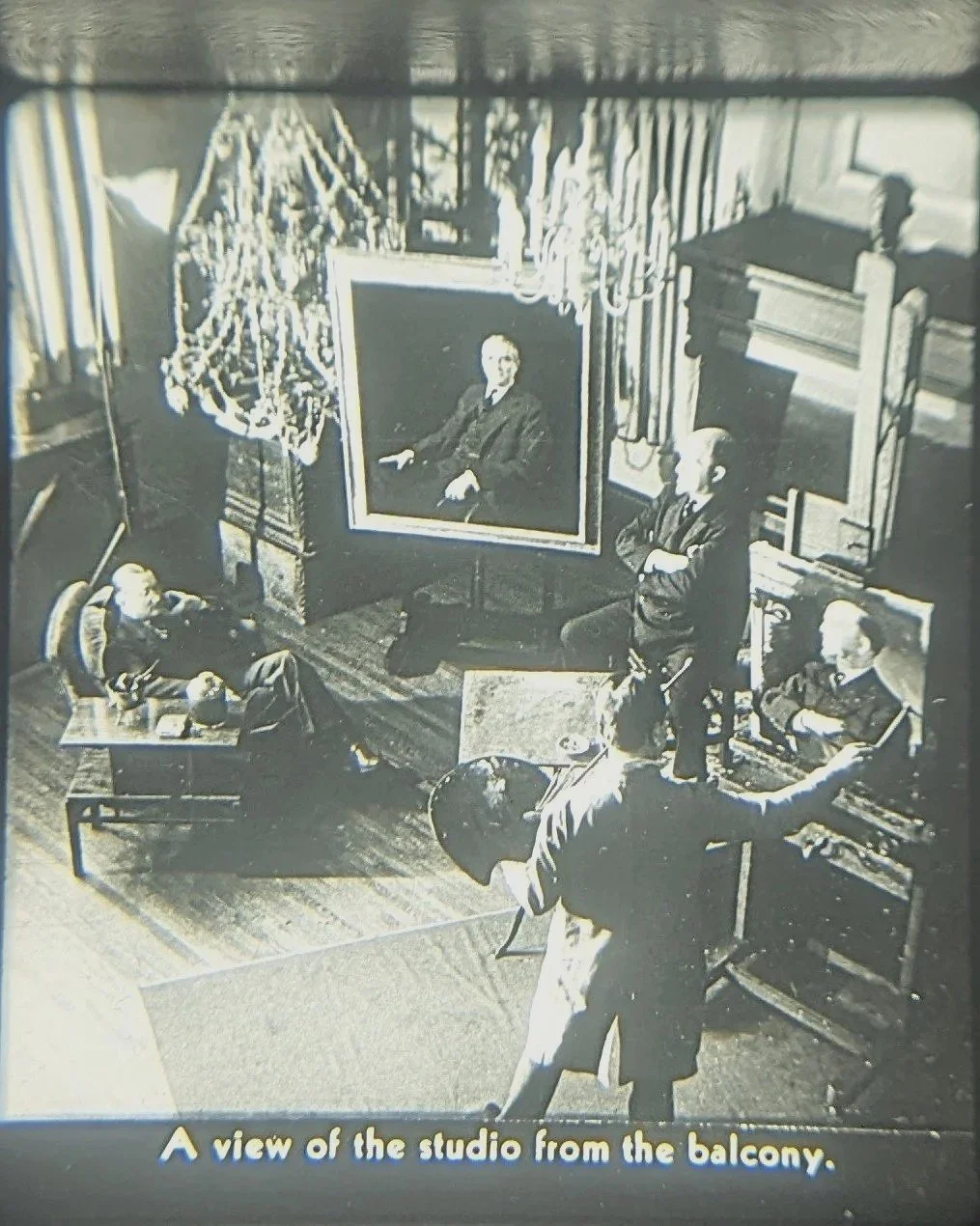
Early Unnumbered Filmstrip: A Great Portrait Painter at Work
Leopold Gould Seyffert
This filmstrip takes a behind-the-scenes look at Leopold Seyffert painting a sitting subject in his home art studio.
Photographer: None listed
Edited by: None listed
Production date: 2-27-34
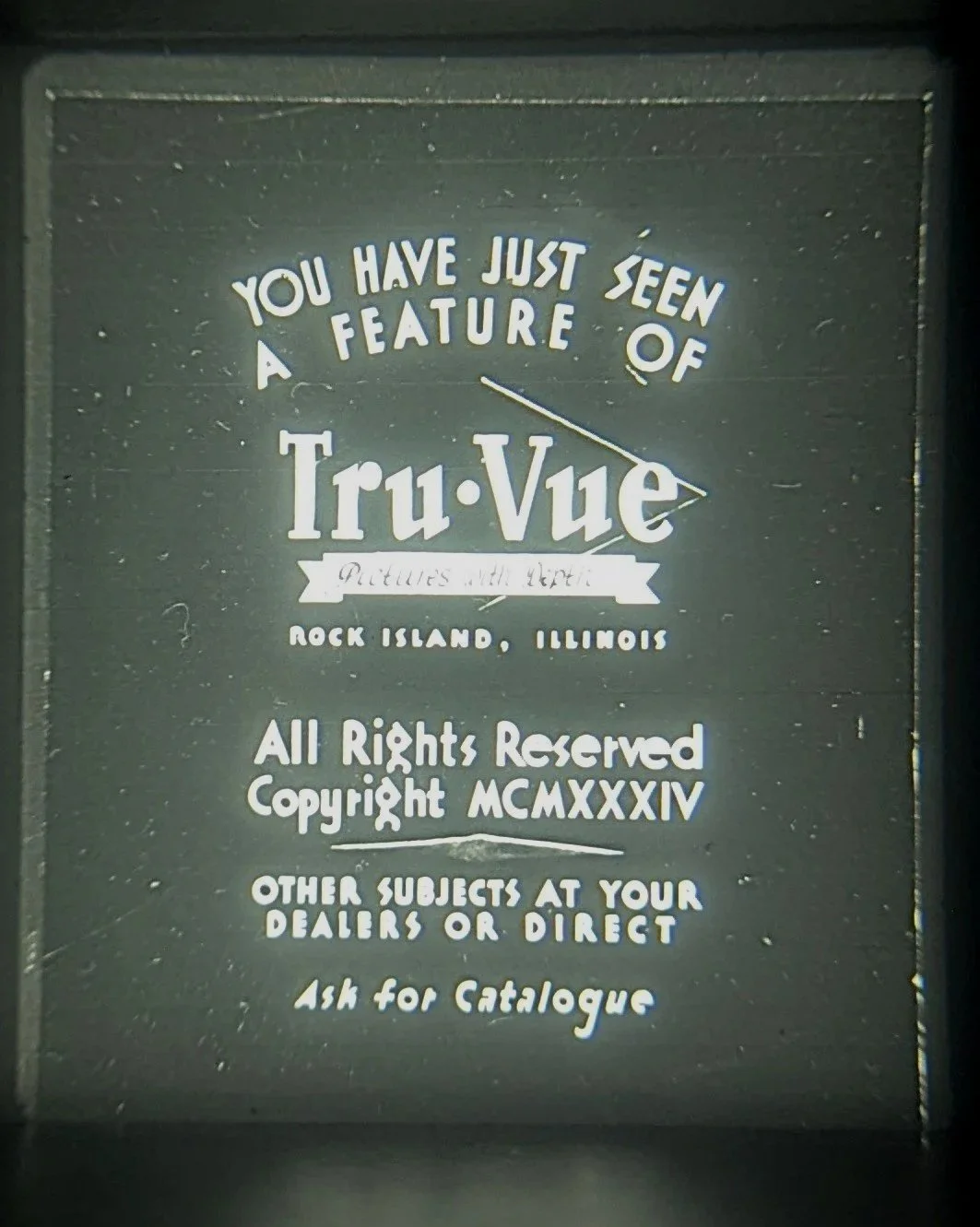
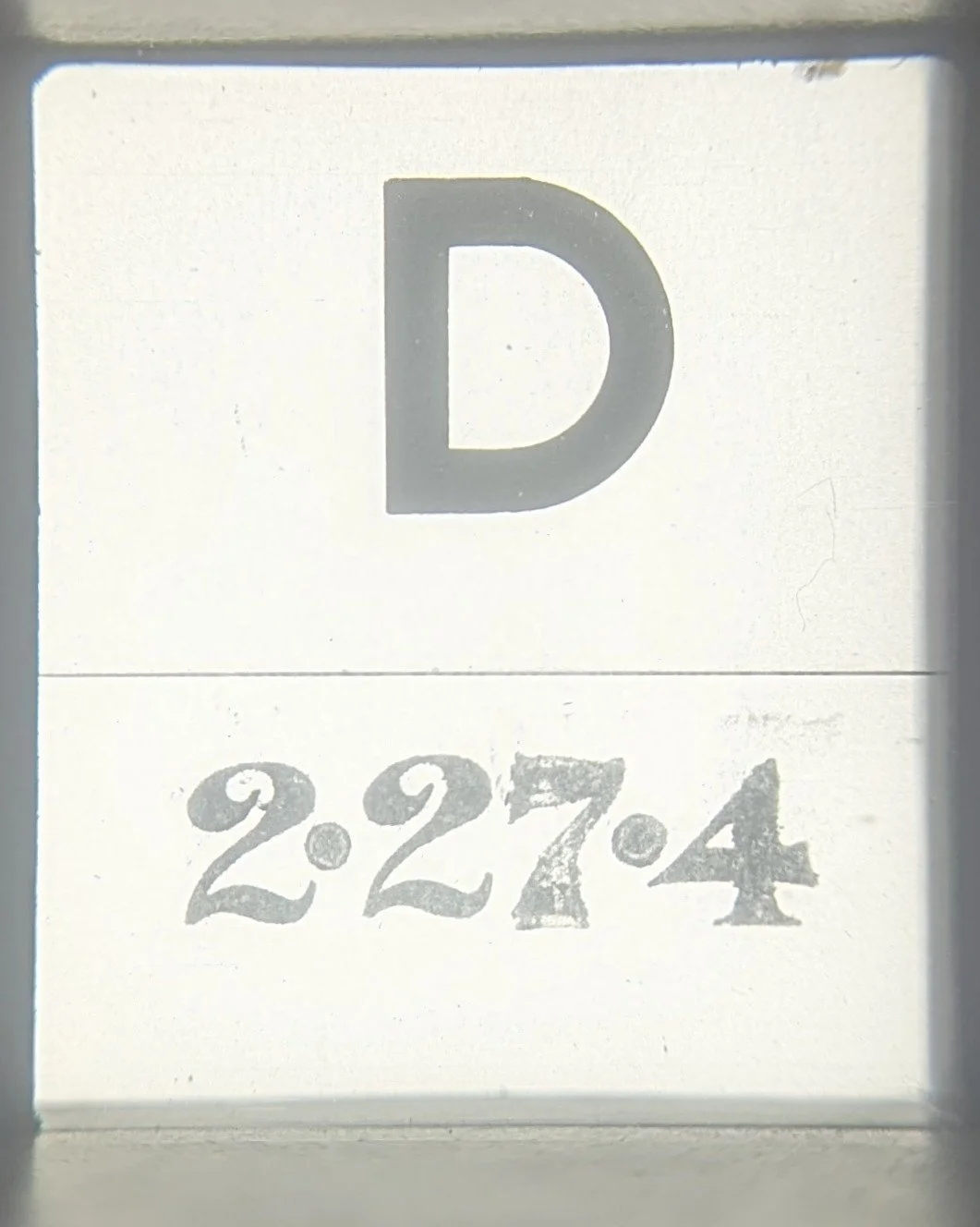
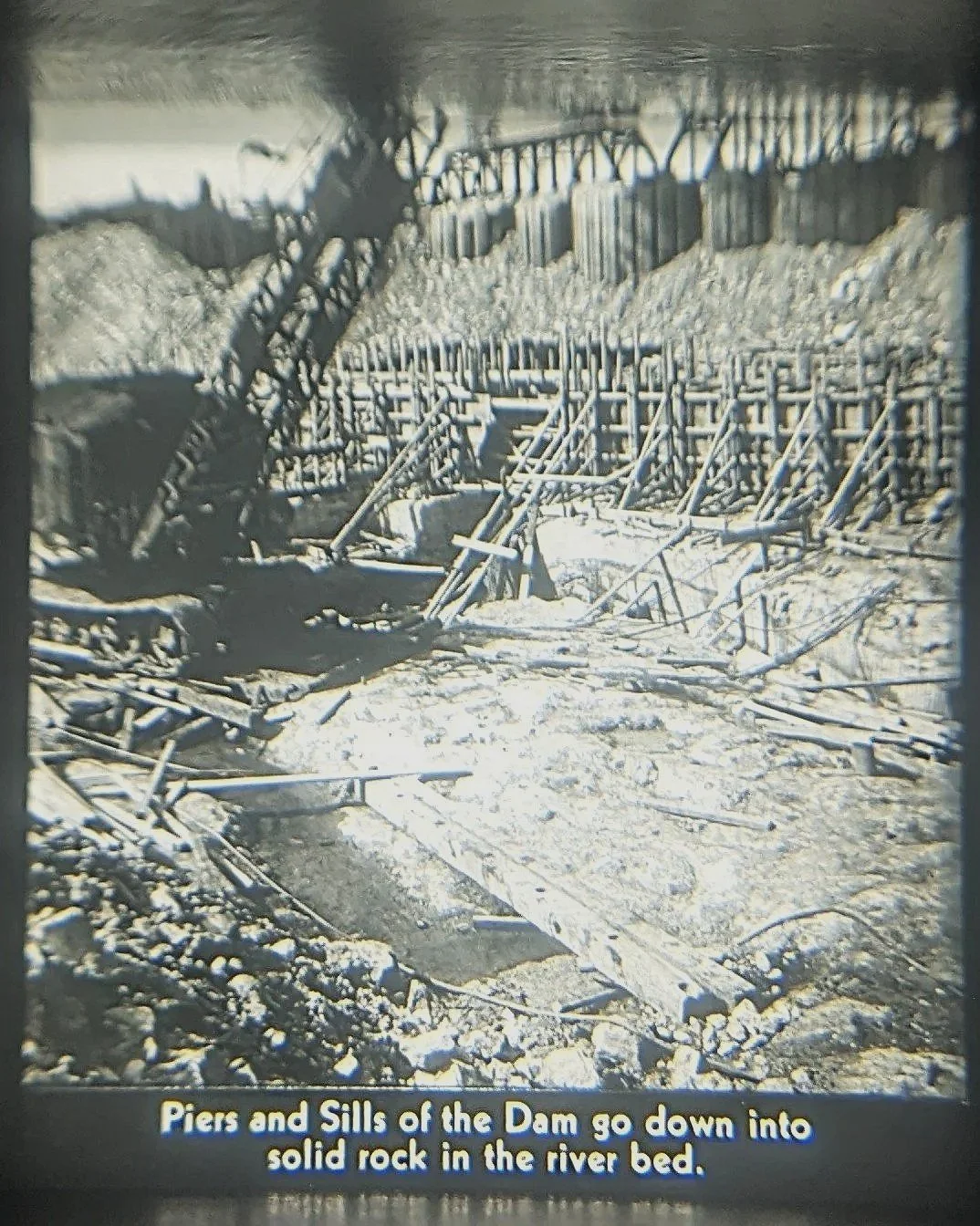
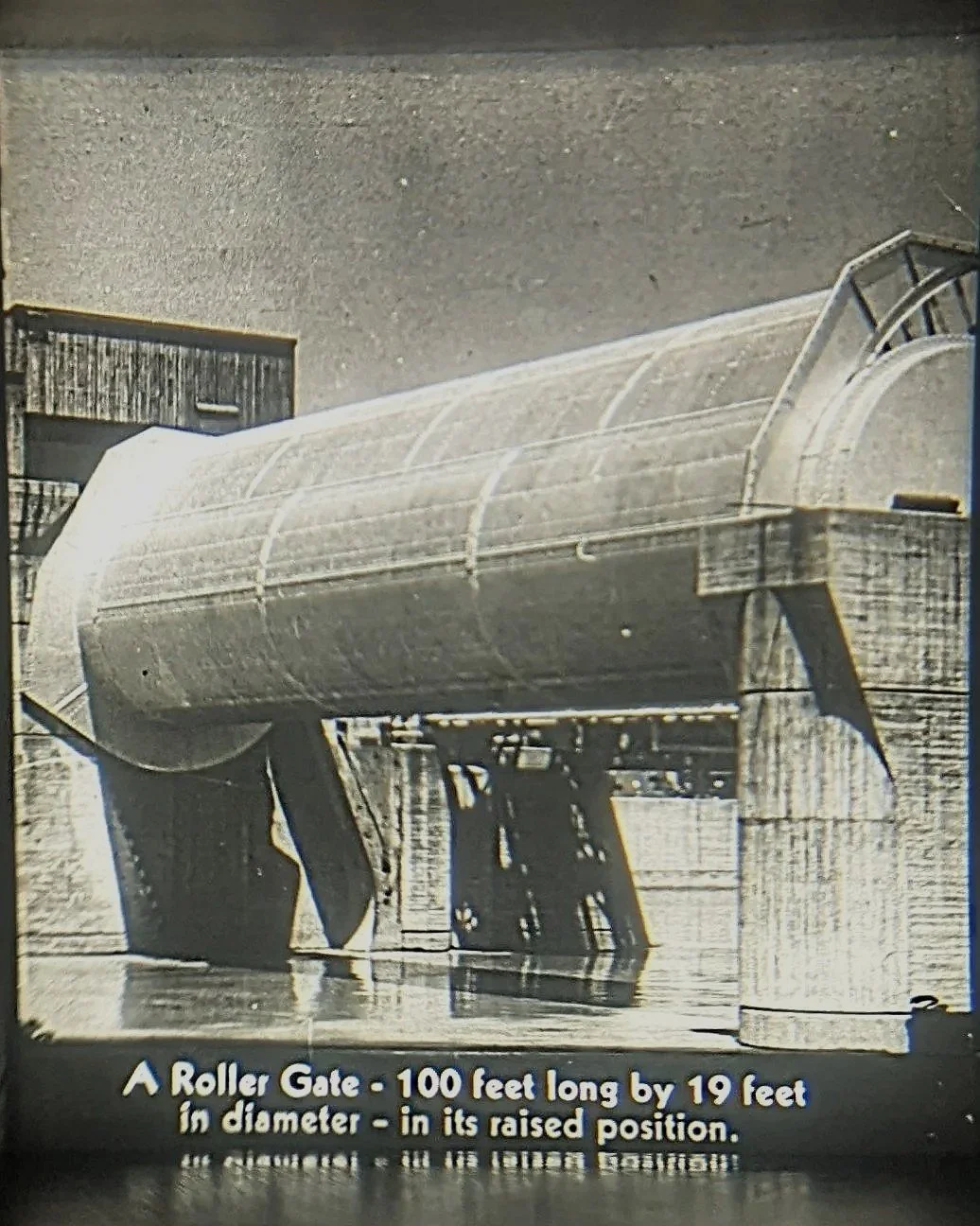
Early Unnumbered Filmstrip: Upper Mississippi River Nine Foot Channel Improvement
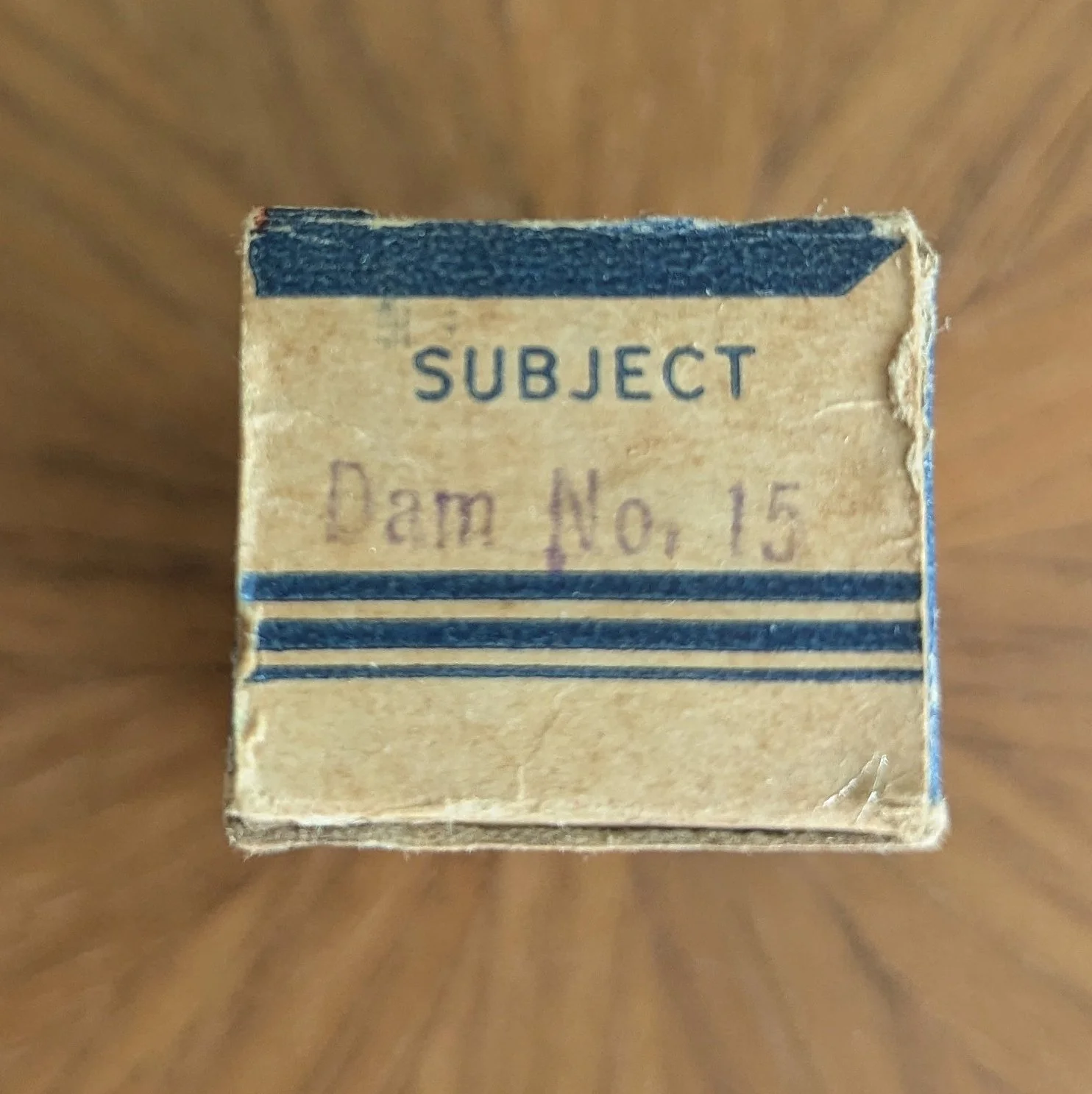
Dam No. 15
Lock and Dam No. 15, completed in 1934, was one of the pivotal structures on the Mississippi River designed to help improve navigation. It was a focal point for one of Tru-Vue’s earliest films, showcasing the construction and operation of this critical infrastructure. It was a great example of the educational potential that Tru-Vue filmstrips offered.
Photographer: None listed
Edited by: None listed
Production date: None listed

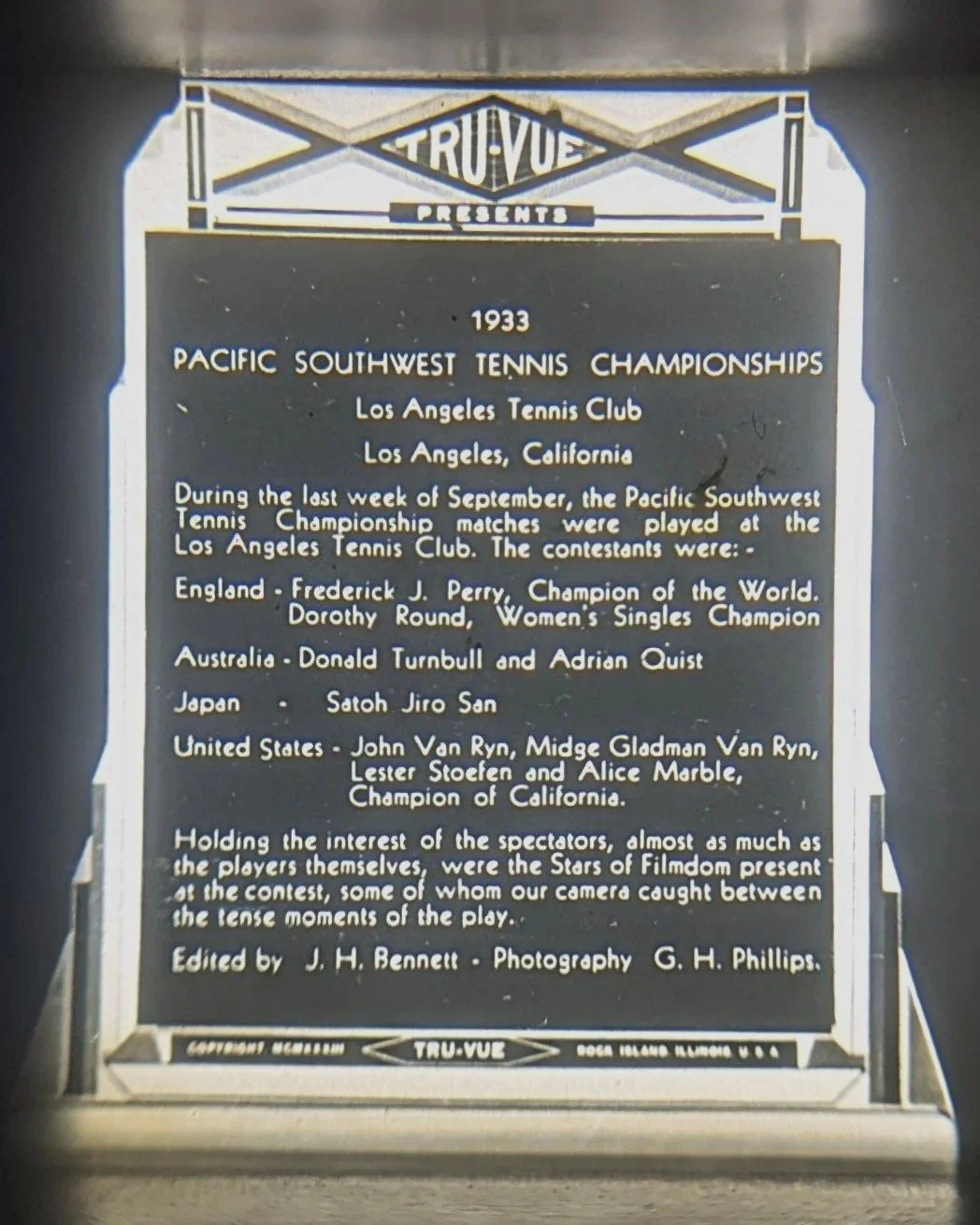
Early Unnumbered Filmstrip: 1933 Pacific Southwest Tennis Championship
Los Angeles Tennis Club, California
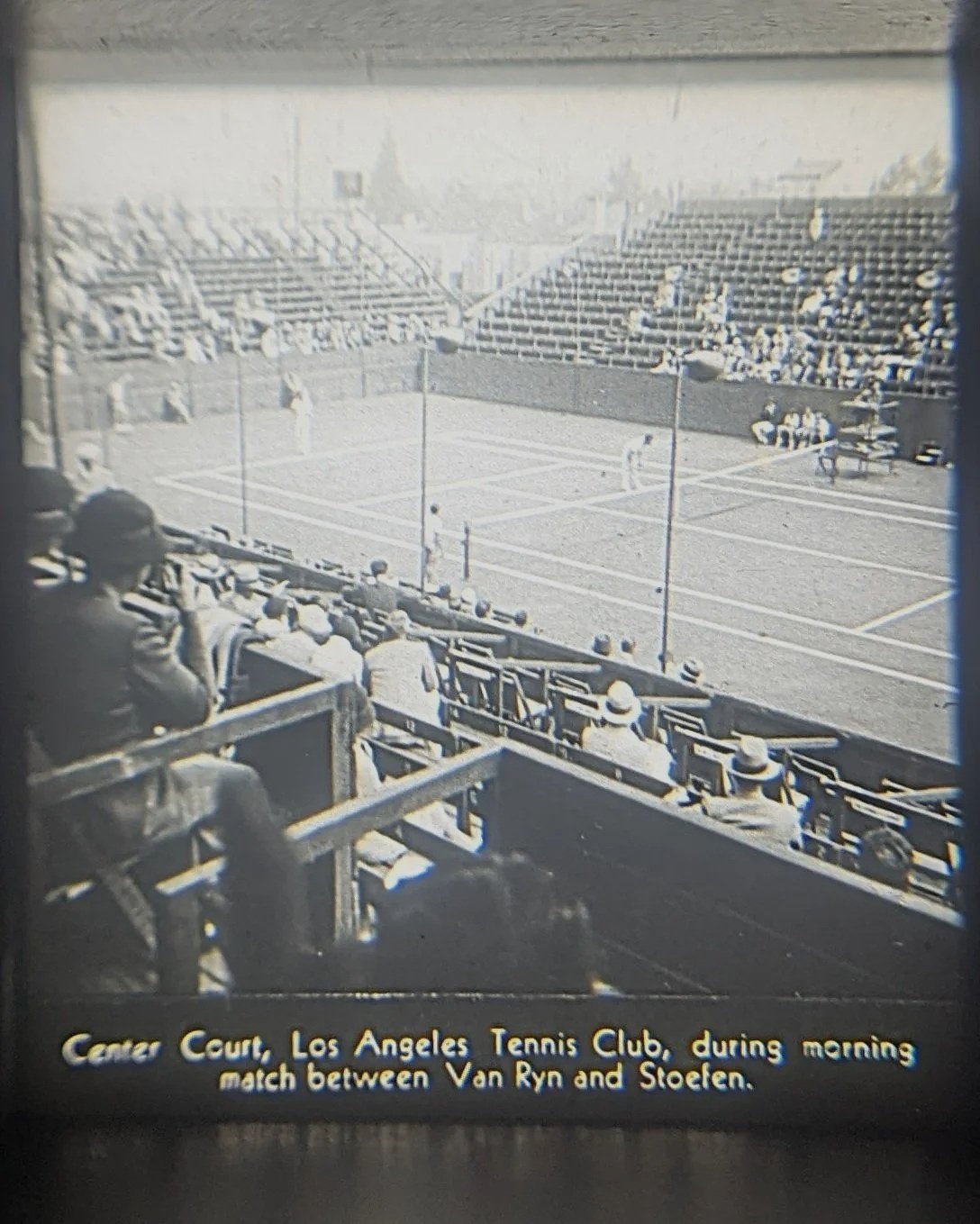
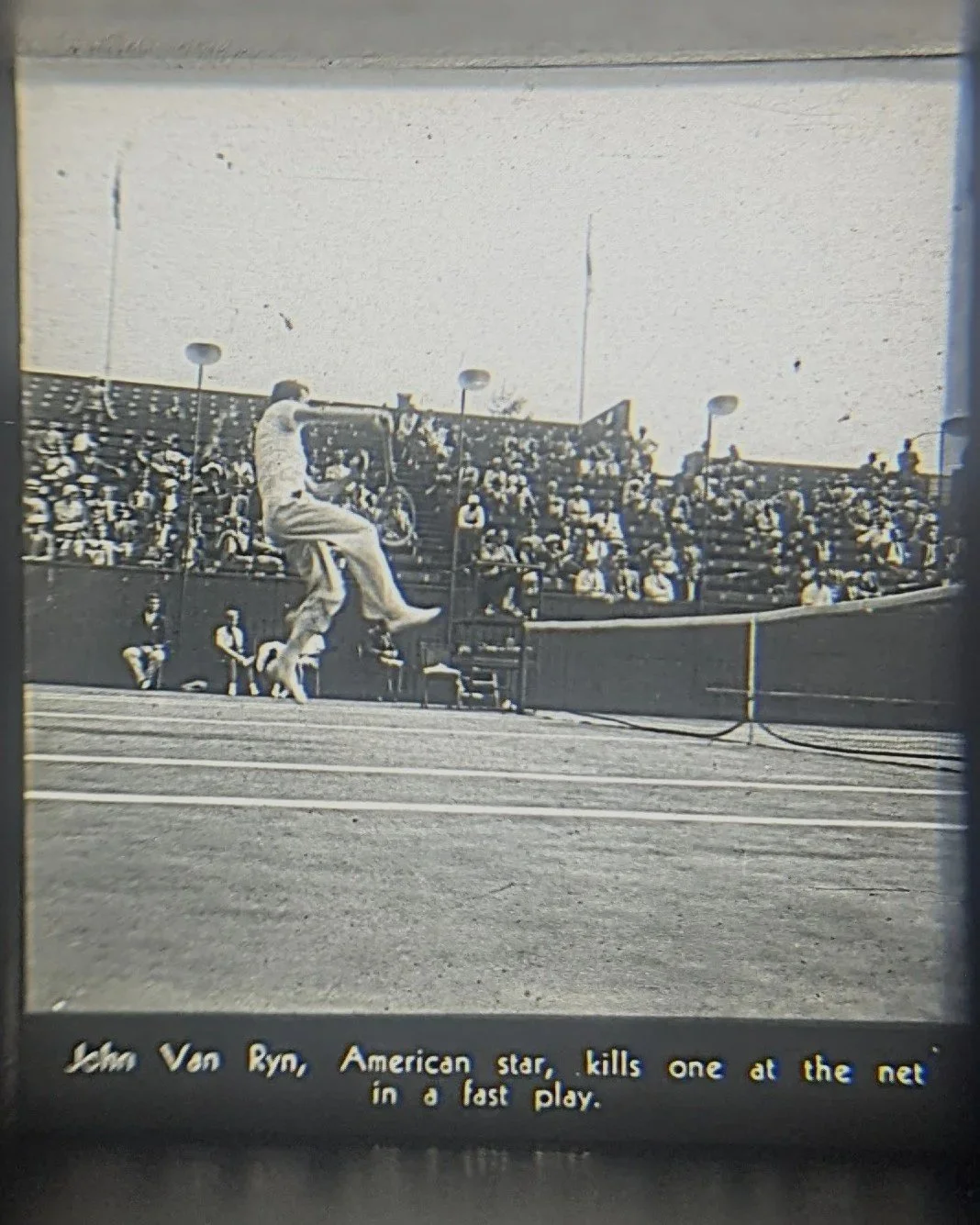
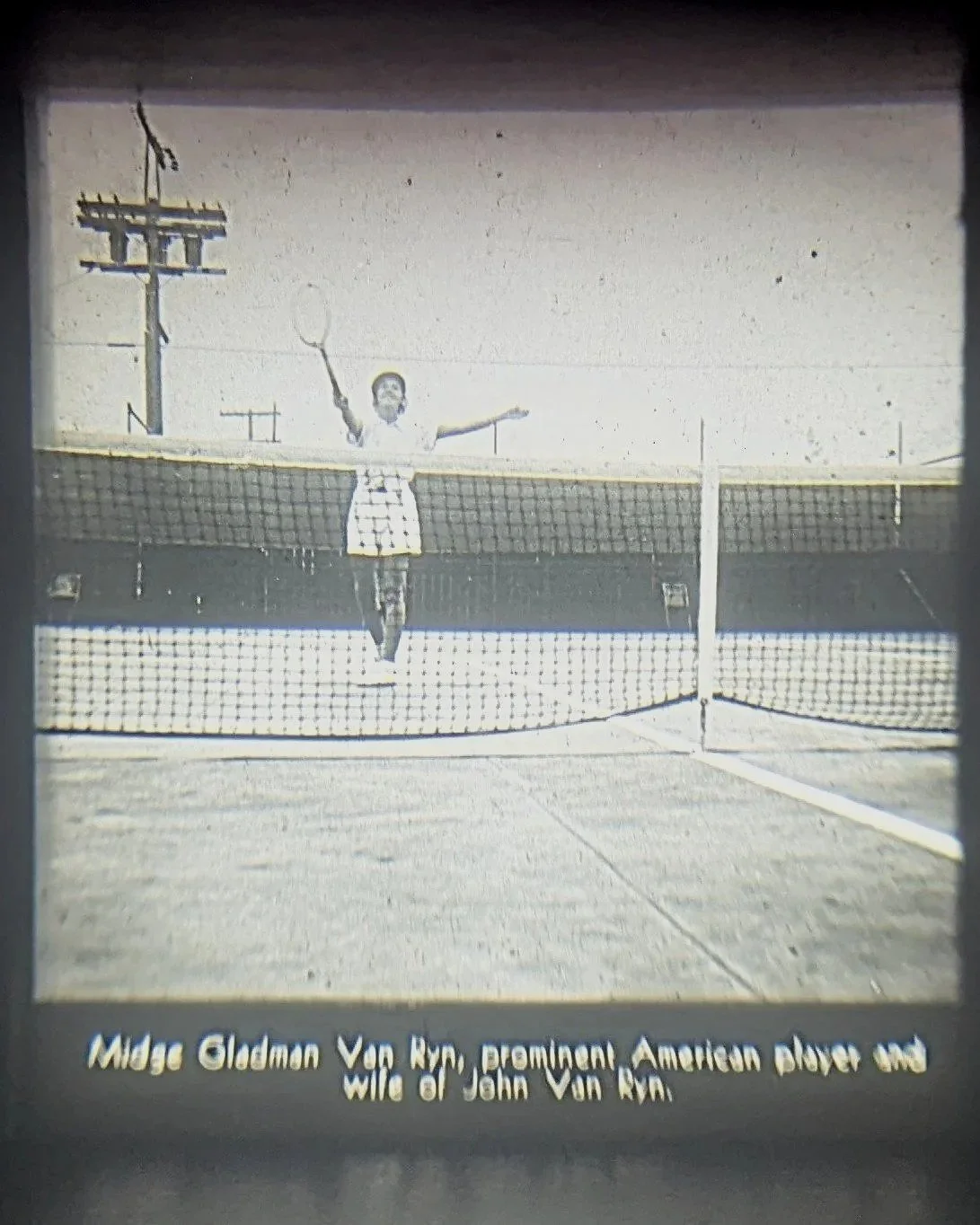
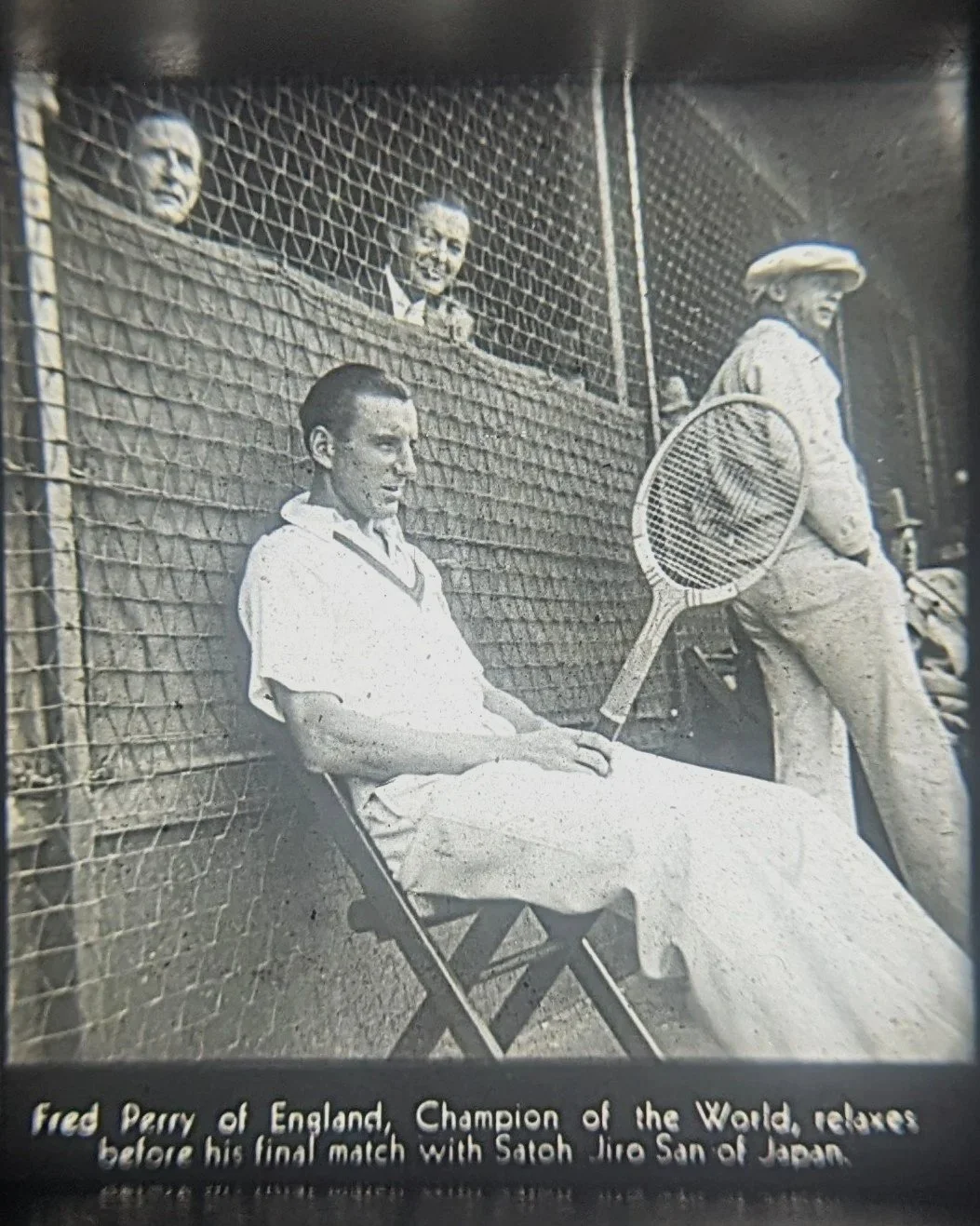
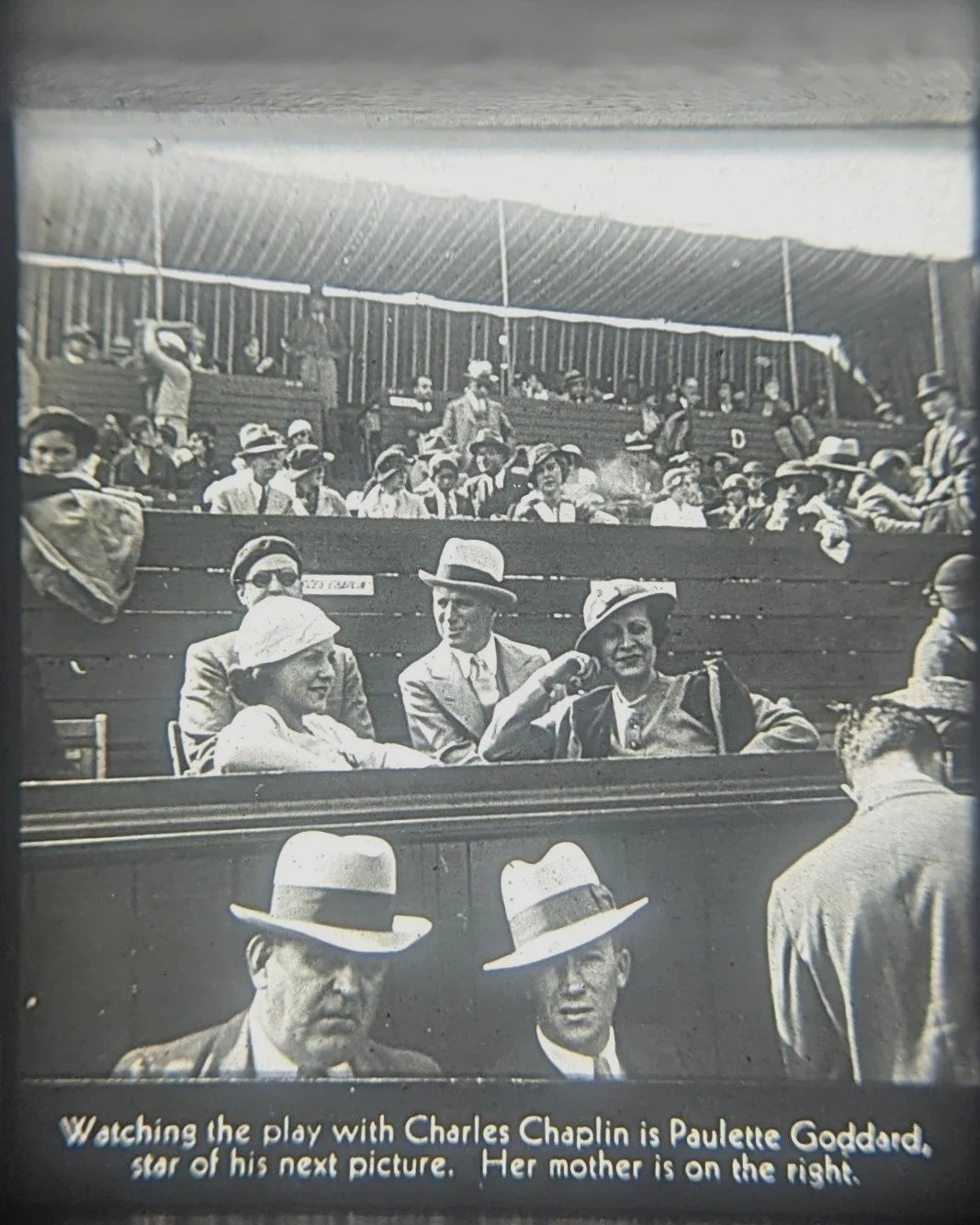
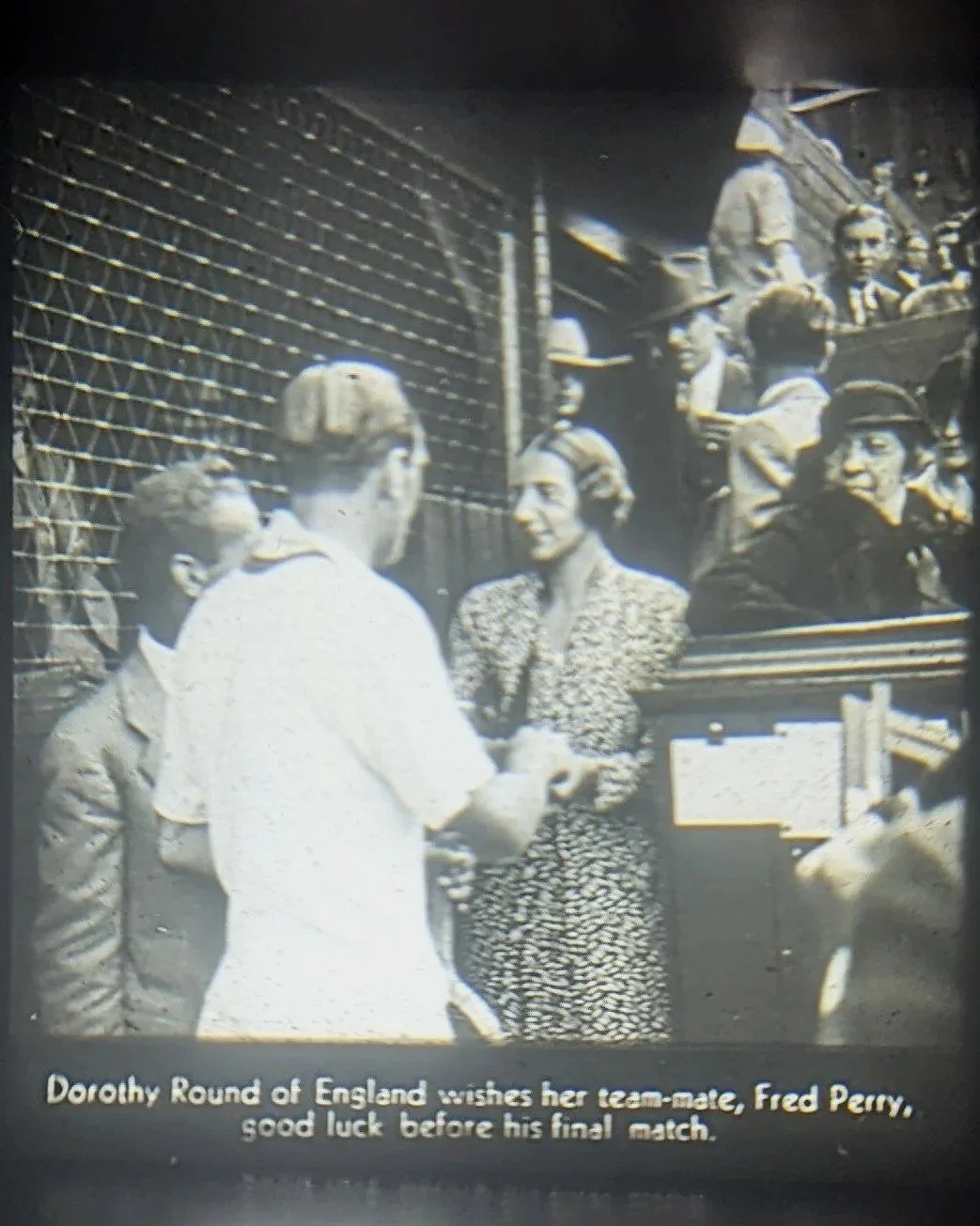
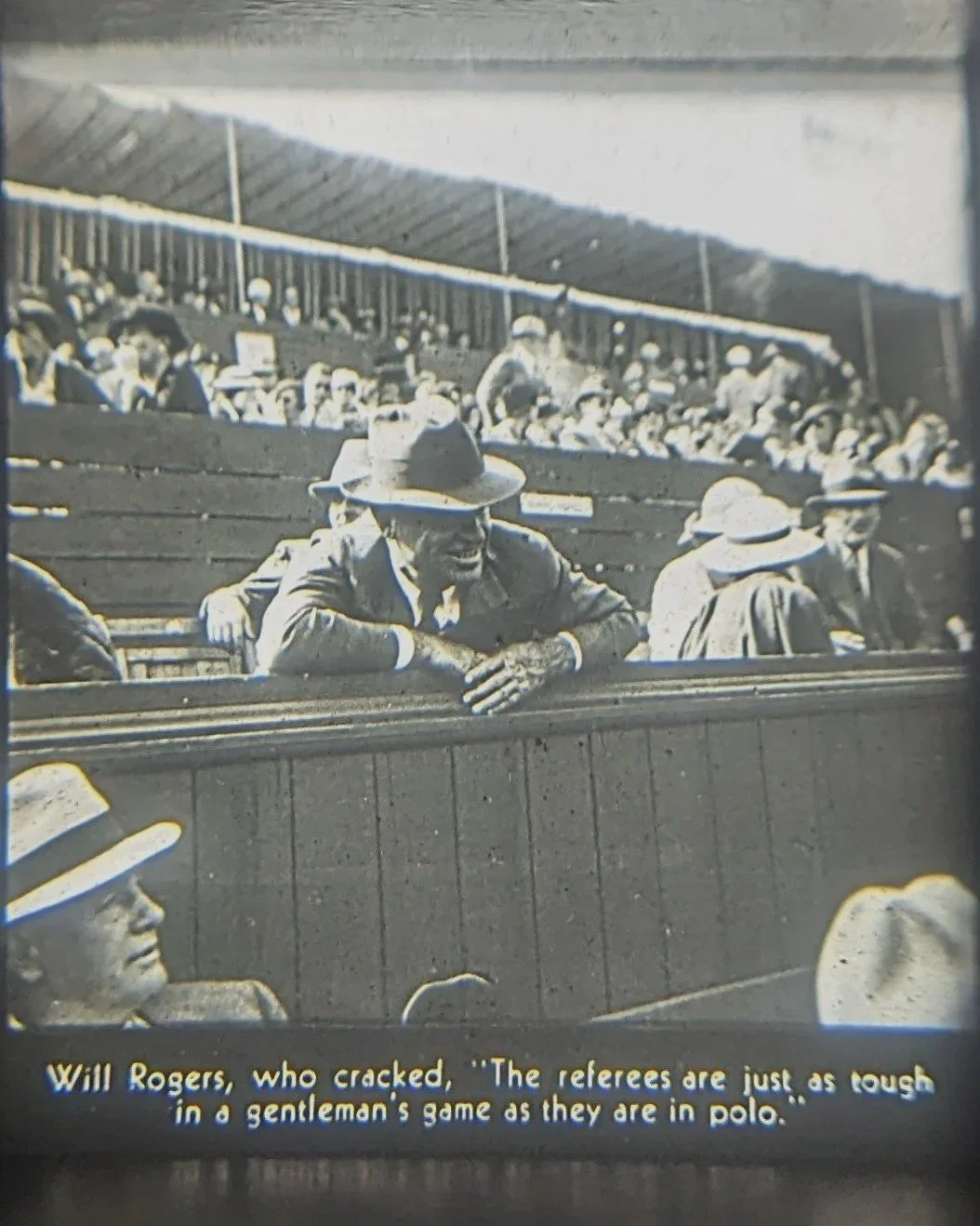
The Pacific Southwest Championships started in 1927. It would later be known as the Los Angeles Open and would run until 2012. It was held in Los Angeles, California at the Los Angeles Tennis Club (LATC). This filmstrip covers the event in 1933. U.S. competitors were Lester Stoefen, Alice Marble, John van Ryn, and his wife, Midge Gladman. There’s a great action shot of Van Ryn as well as spectator shots of Charlie Chaplin, Paulette Goddard, Will Rogers, Harold Lloyd, Josef von Sternberg, Gloria Swanson, and Lori Wilson.
Photography: G. H. Phillips
Edited by: J. H. Bennett
Production date: None listed
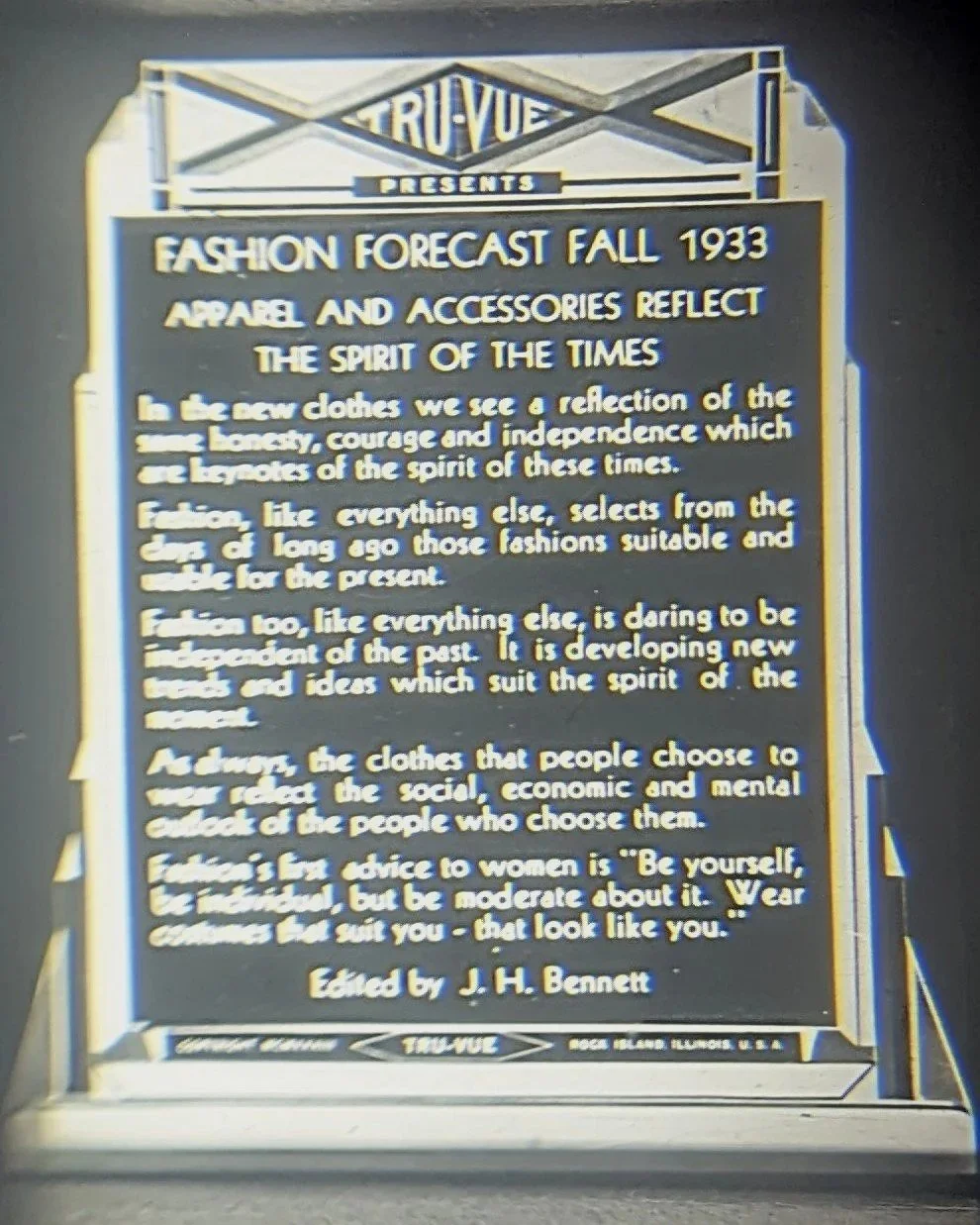
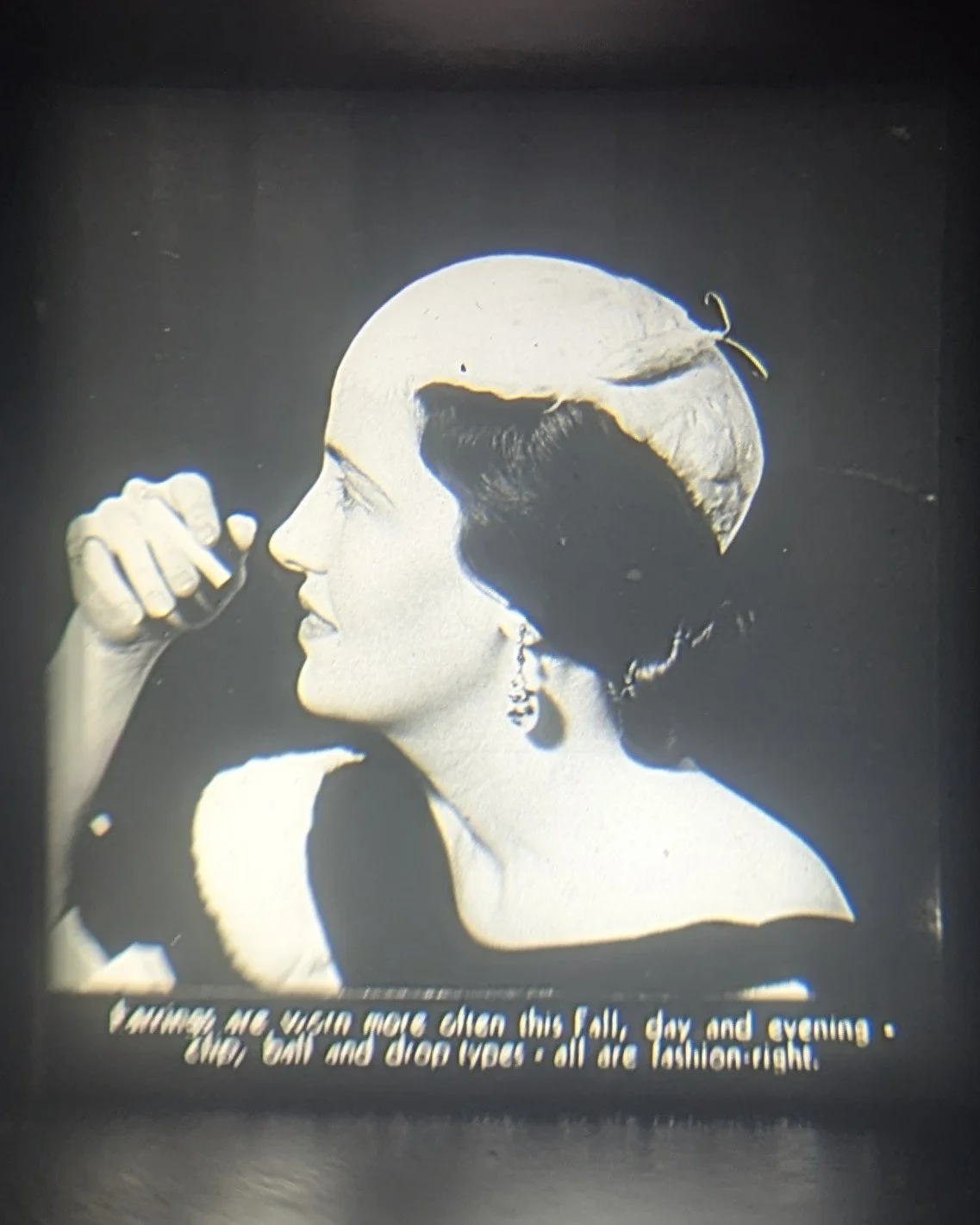
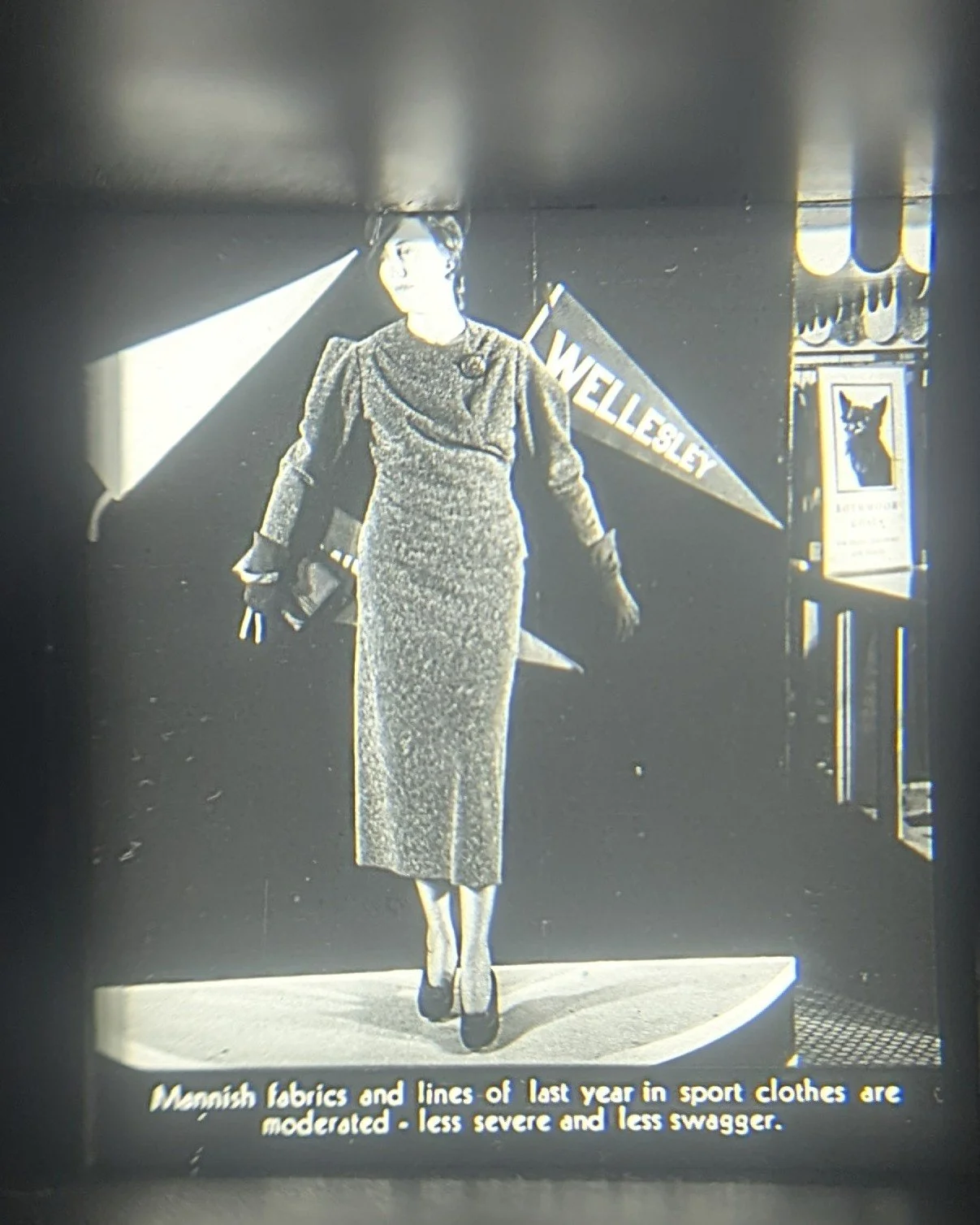
Early Unnumbered Filmstrip: Fashion Forecast Fall 1933
This filmstrip is all about the women’s apparel, accessories, and fashion styles that were must-haves for the Fall of 1933. We learn that earrings — clip, ball, and drop styles — were appropriate for day and evening, and pins, brooches, and tailored bags were all the rage.
Photographer: None listed
Edited by: J. H. Bennett
Production date: 10-31-1933
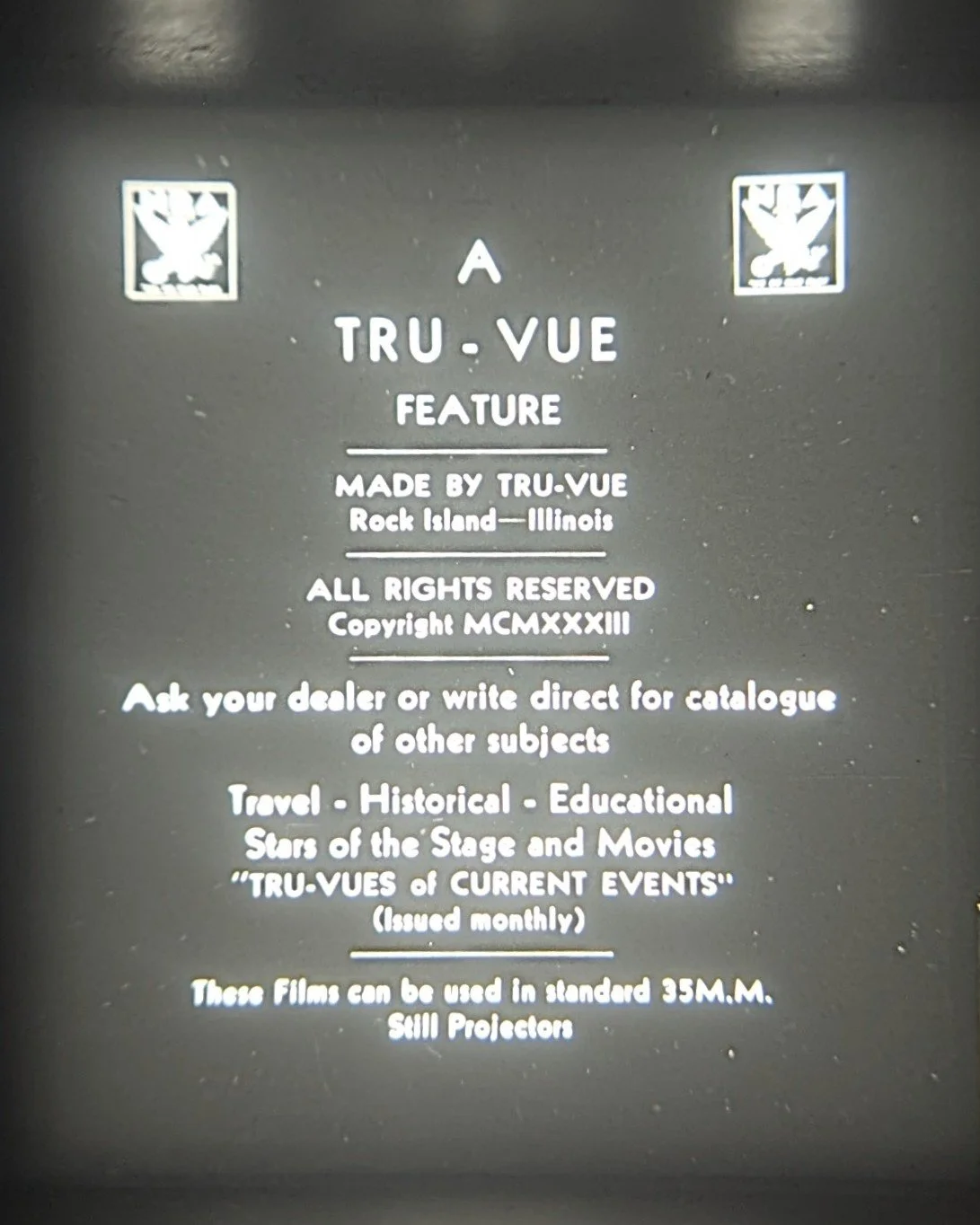
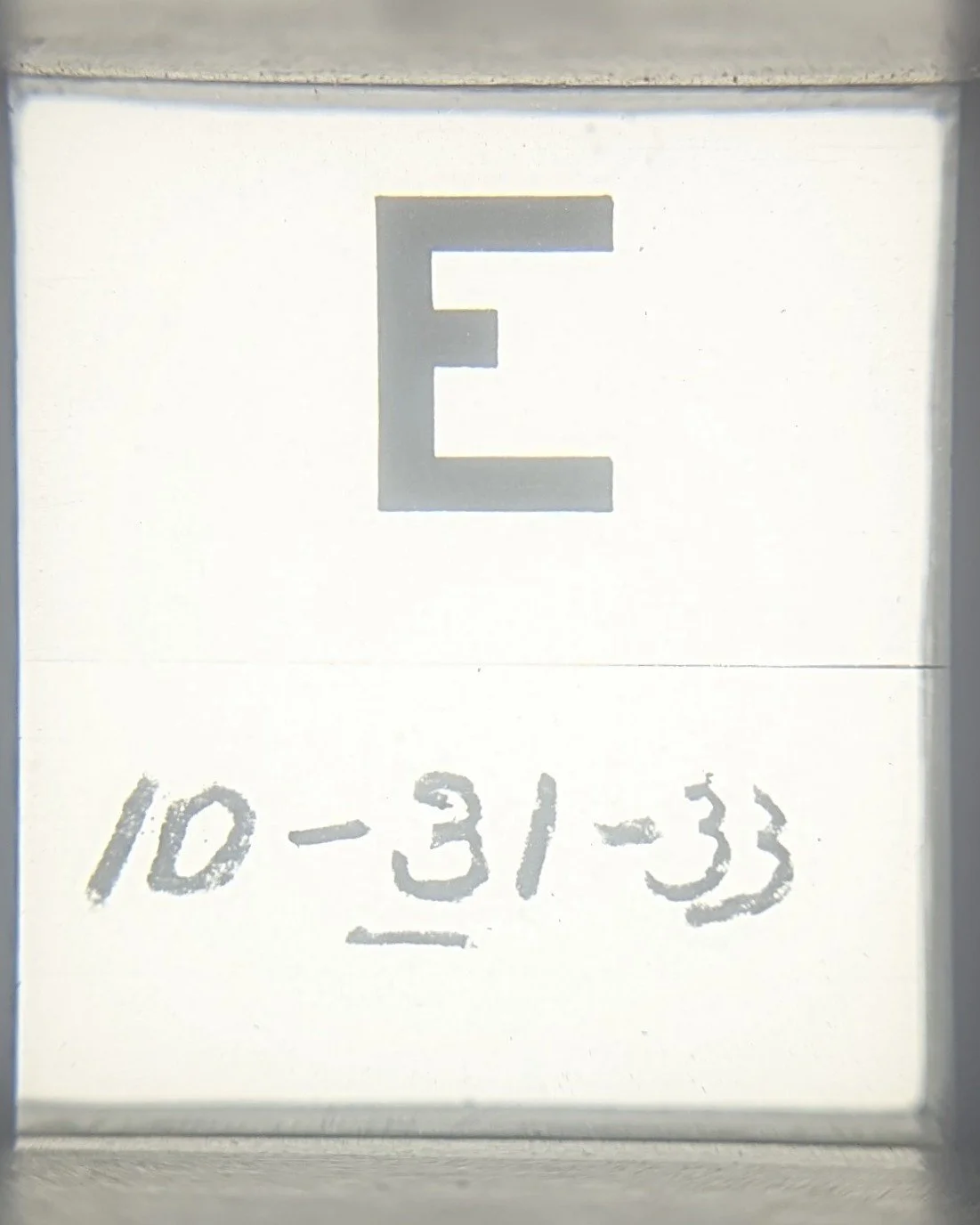
Depth Photography
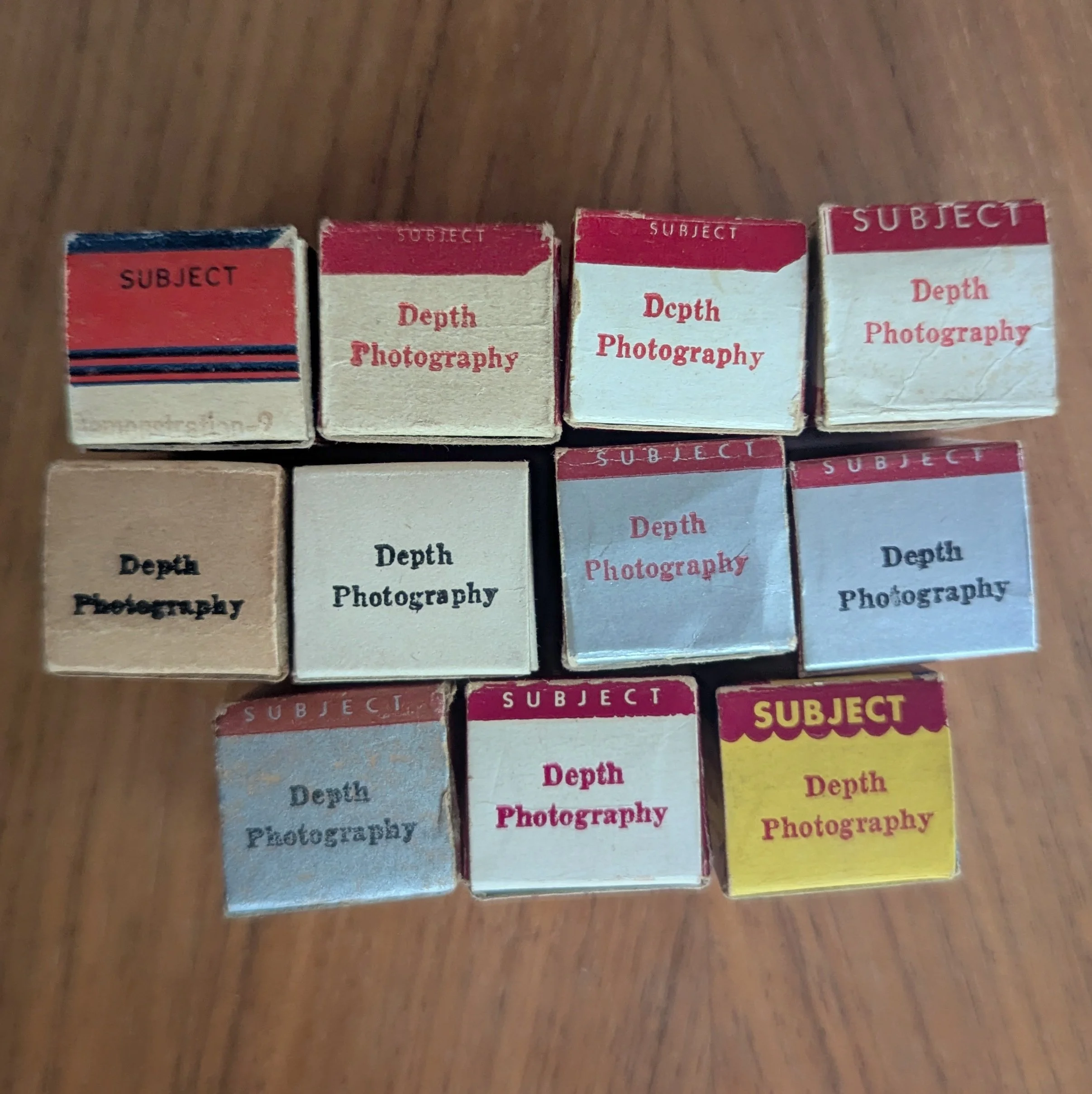
Enduring Across Box Styles
As a collector, a fun challenge is to find a single film subject in as many different box styles as possible. It’s a challenge because many early, blue-box film subjects were discontinued. One of the early film subjects that continued to be produced across Tru-Vue’s existence is Depth Photography. Unlike other films that continued in production, this one never received a number. It serves as a general “demonstration” film showing examples of 3D photography, and was practically a giveaway. In fact, it’s probably considered the least collectible because it’s so common. But don’t discount this filmstrip so quickly — its images varied over the years, it was produced in color, and the earliest ones are rare and valuable when found in the earliest red-flap blue box labeled “Demonstration.” The photo above shows the Depth Photography film in six of the seven major box styles, as well as several minor box design variations.
Hard-to-Find, Later Films
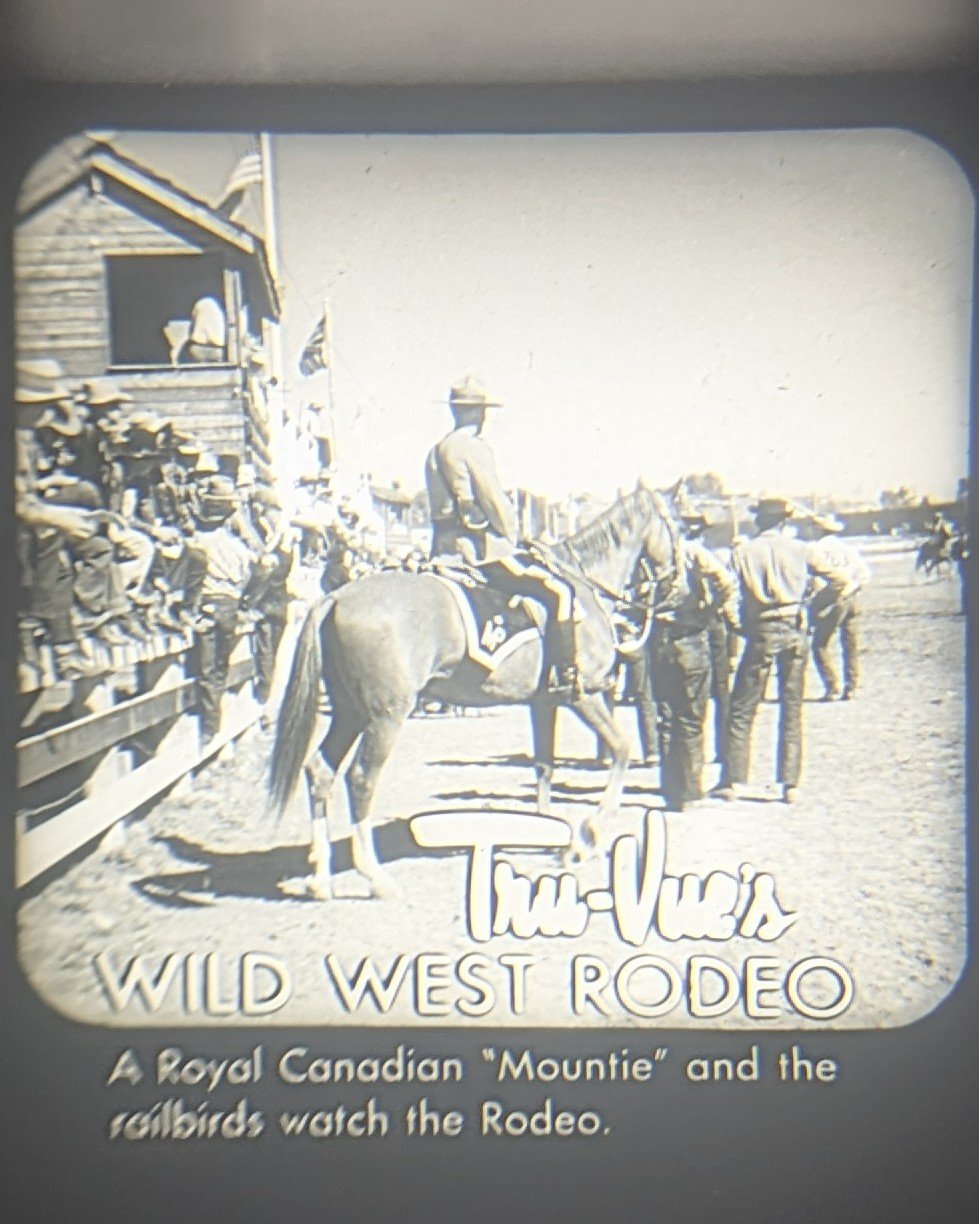
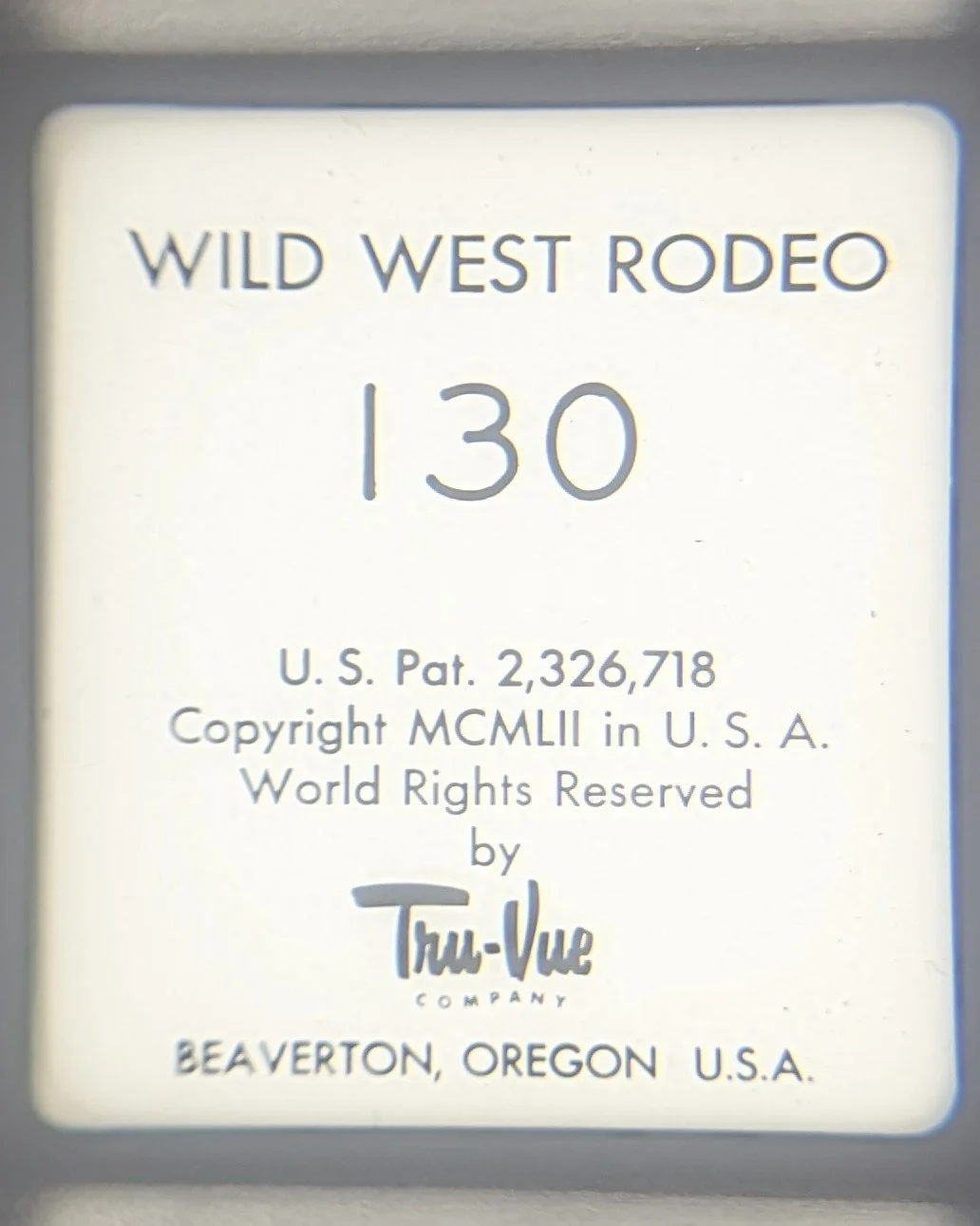
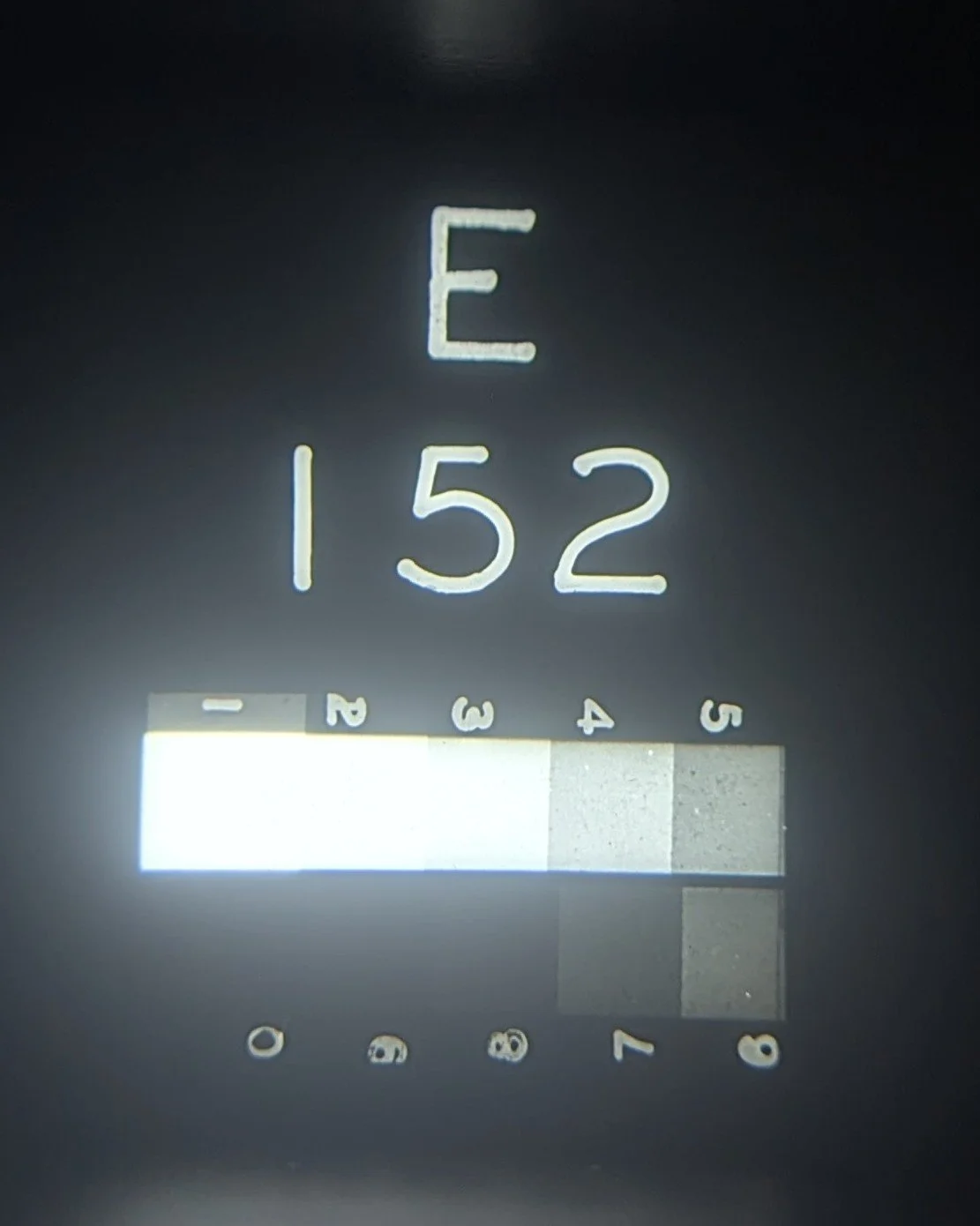
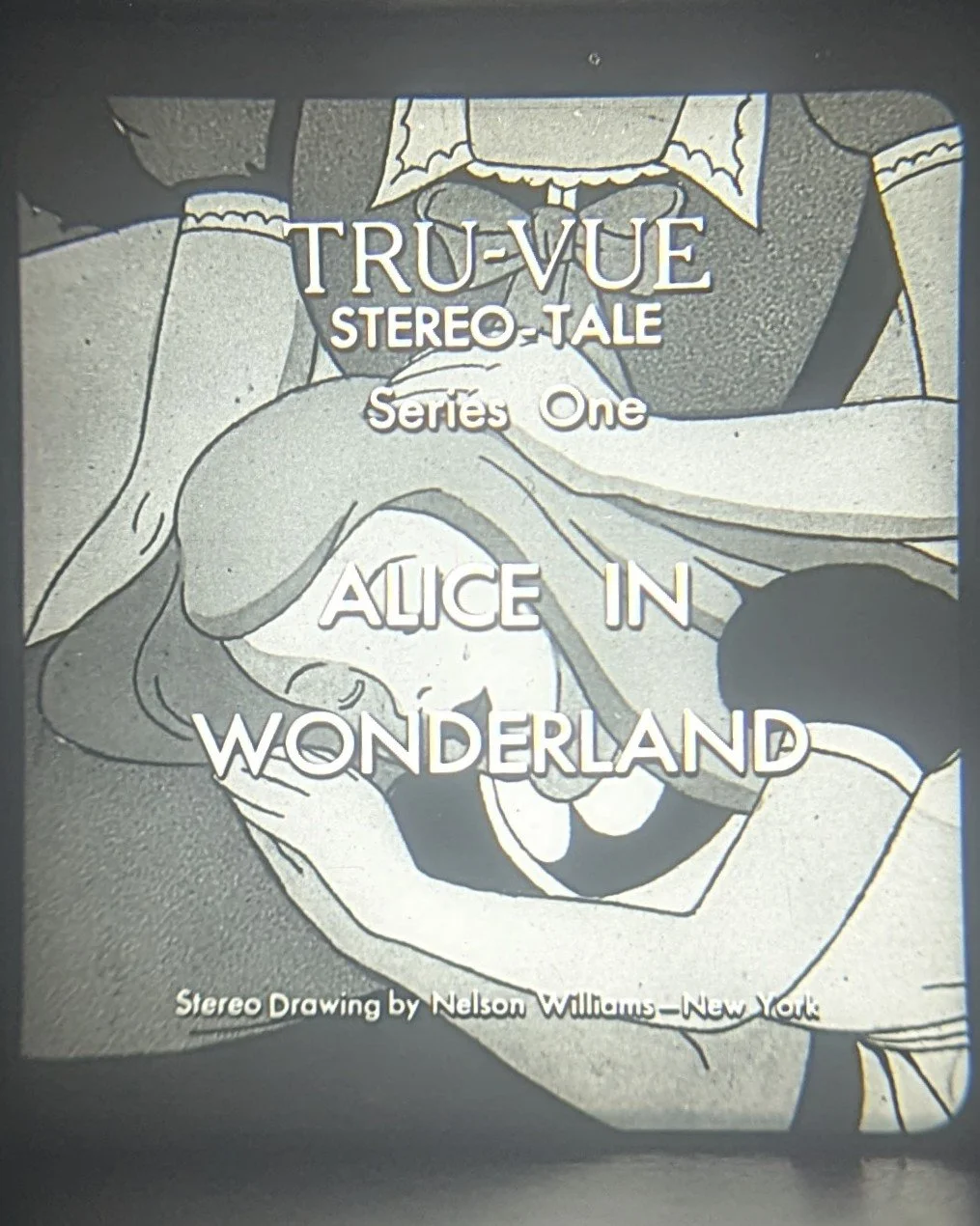
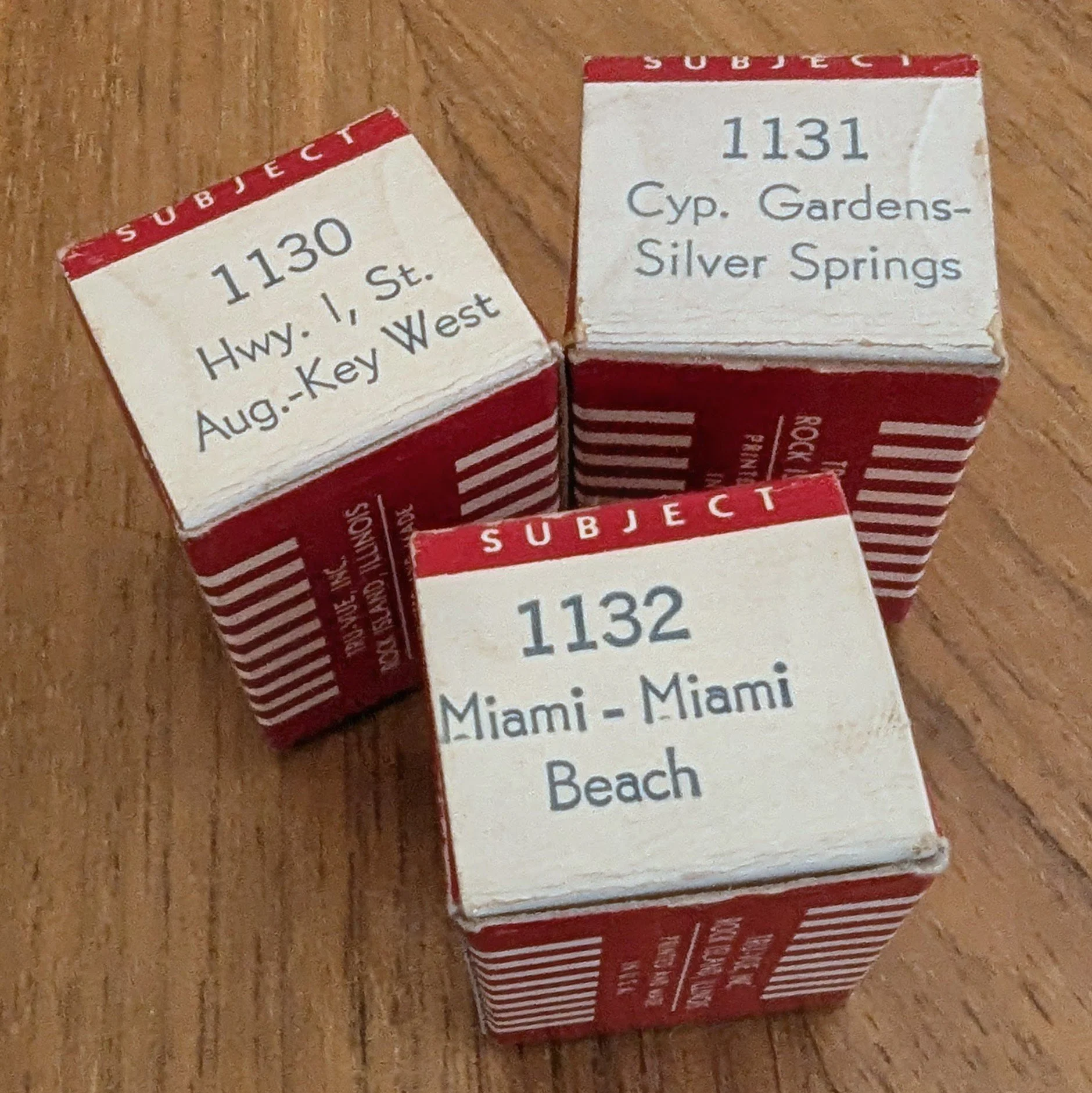
Some black & white Tru-Vue films didn’t appear until later in the company’s life and can only be found in the white piano boxes, in particular, those boxes with blue, sans-serif type. In addition, because they were produced after 1950 when Tru-Vue shortened their filmstrips, these new additions to their catalog had only 10 frames instead of 14. They also reissued a few of their earlier films with 10 frames instead of 14 and completist-type collectors like to have both versions. In the three examples below, the ID frame is now more formatted and shows a patent number. If the production date is late enough, this frame will show the new, post-sale location of Beaverton, Oregon. At the end, there’s no longer a “credits” style stereo end frame, just the production information frame with a calibration key.
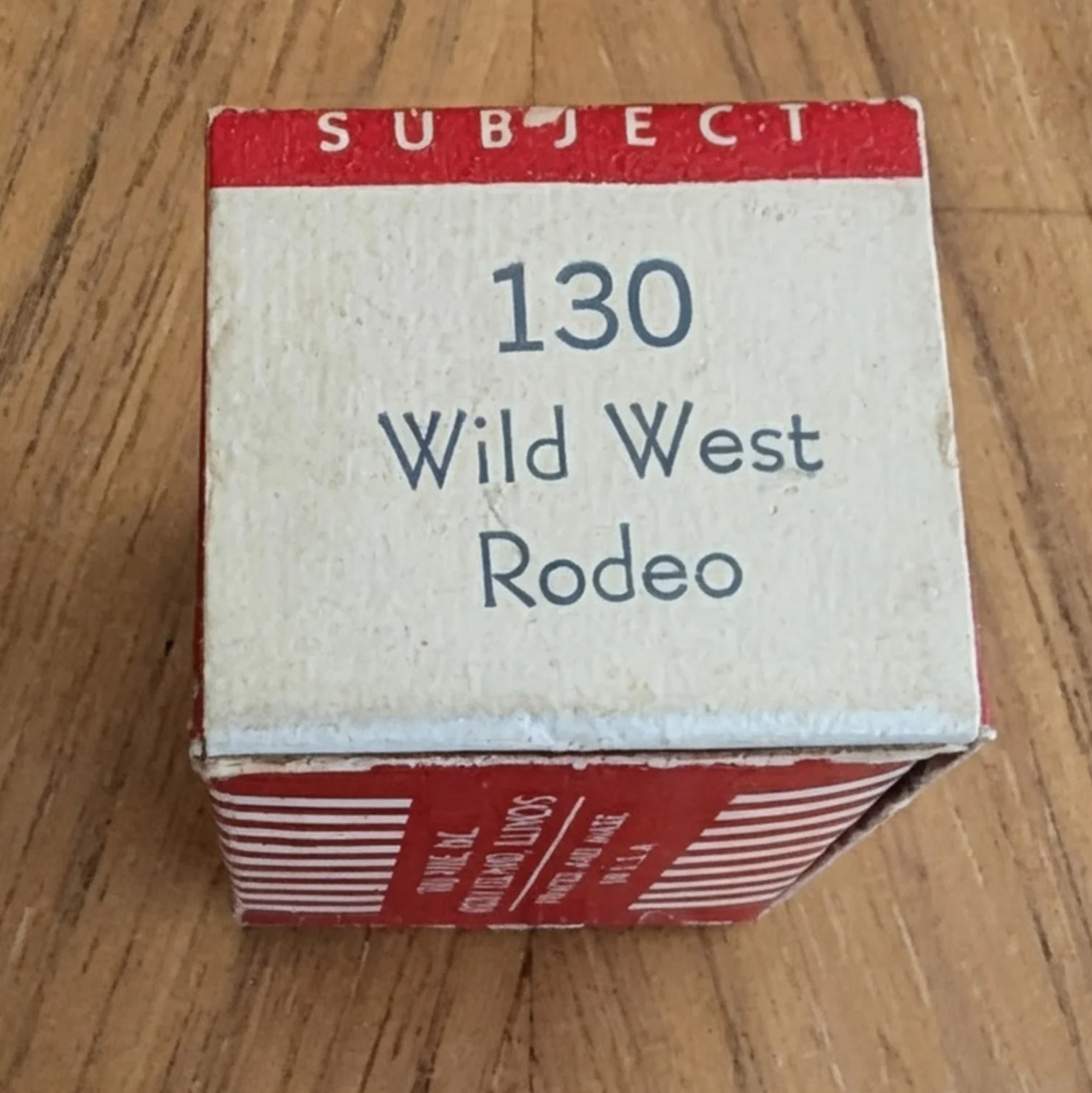
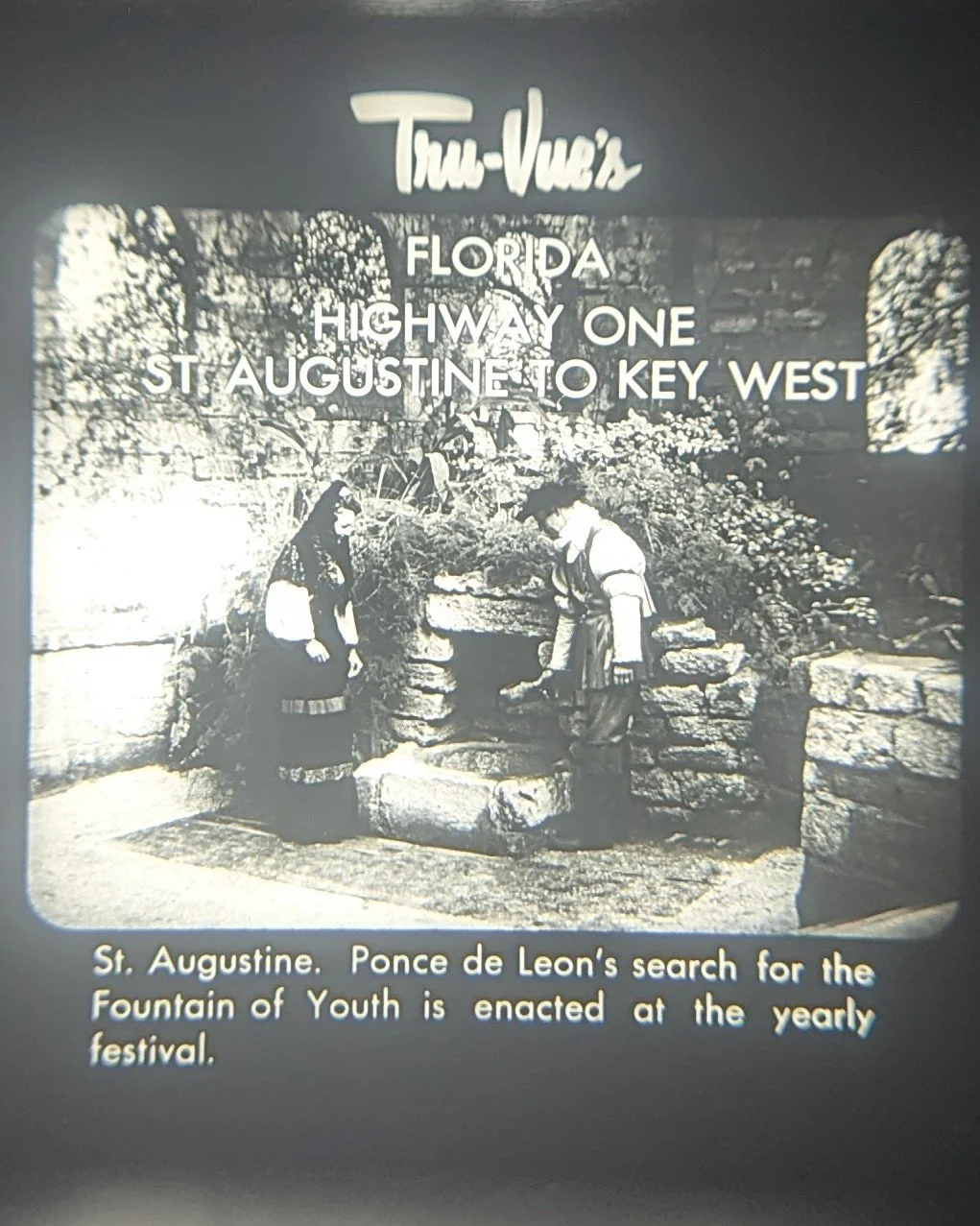
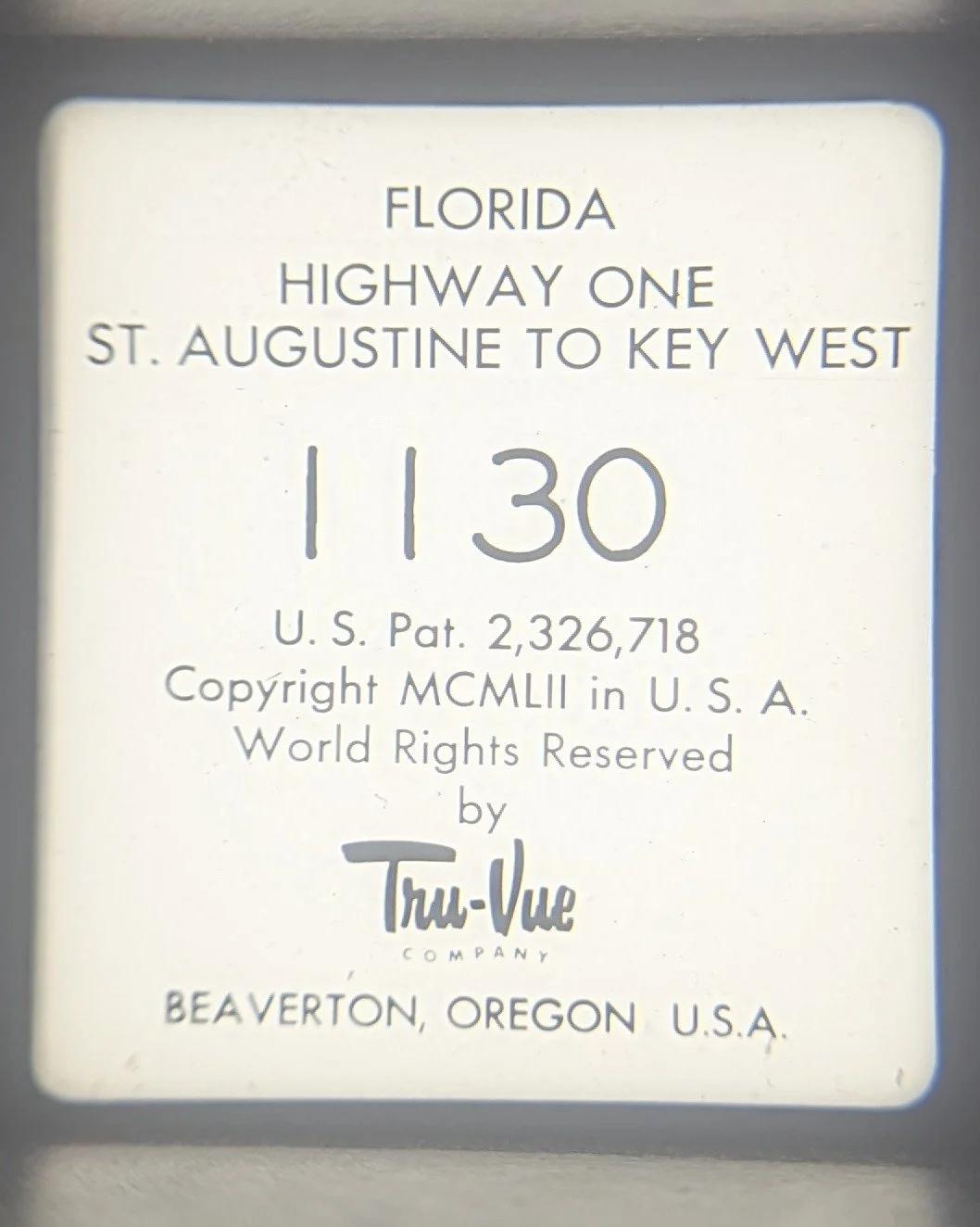
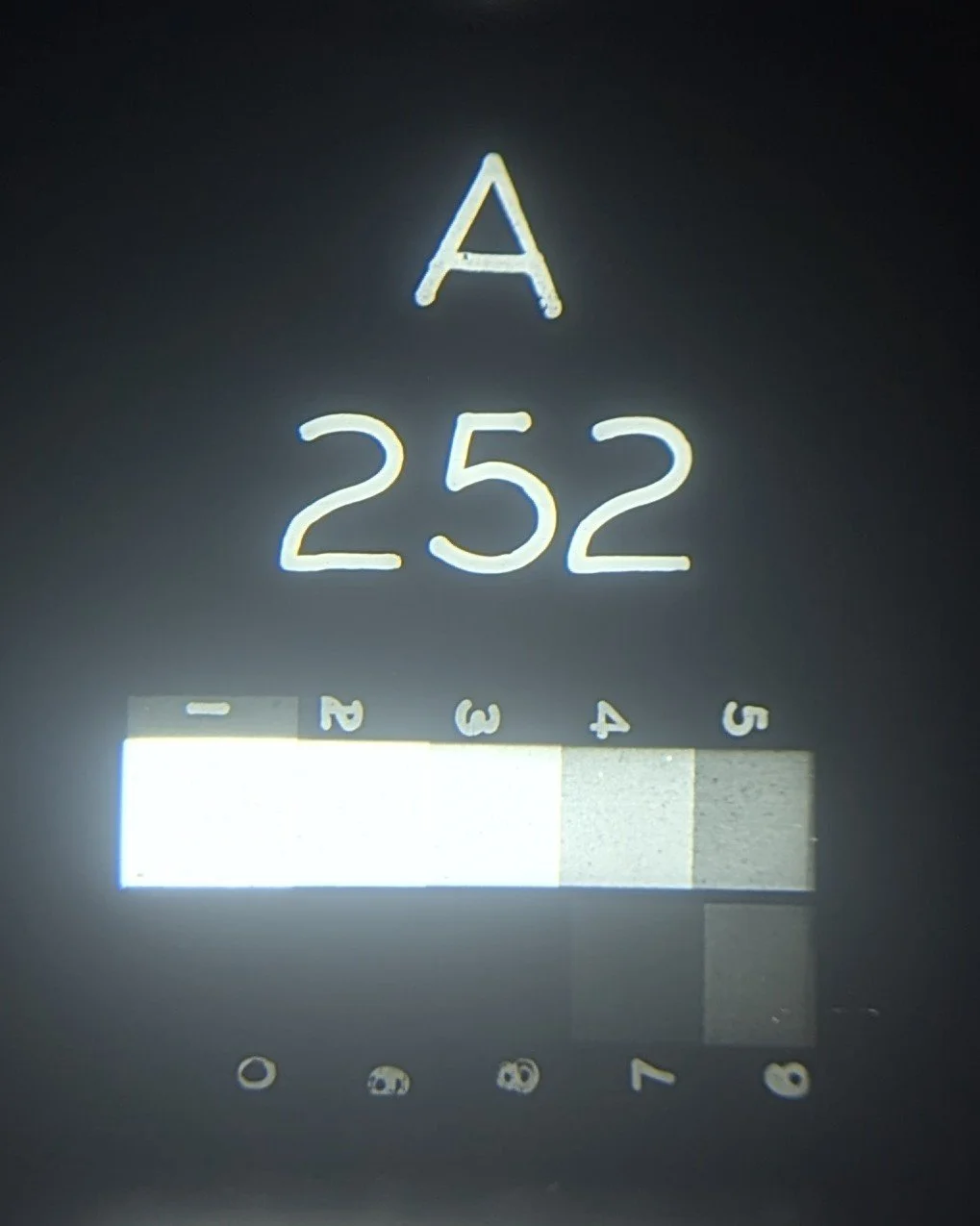
Same Film, Different Box Title
Something to look out for is when the title on the film box changes, but the film inside doesn’t (or at least the images on the film don’t.) Collectors like to have both versions and may pay a bit more for the box title versions that are harder to find.
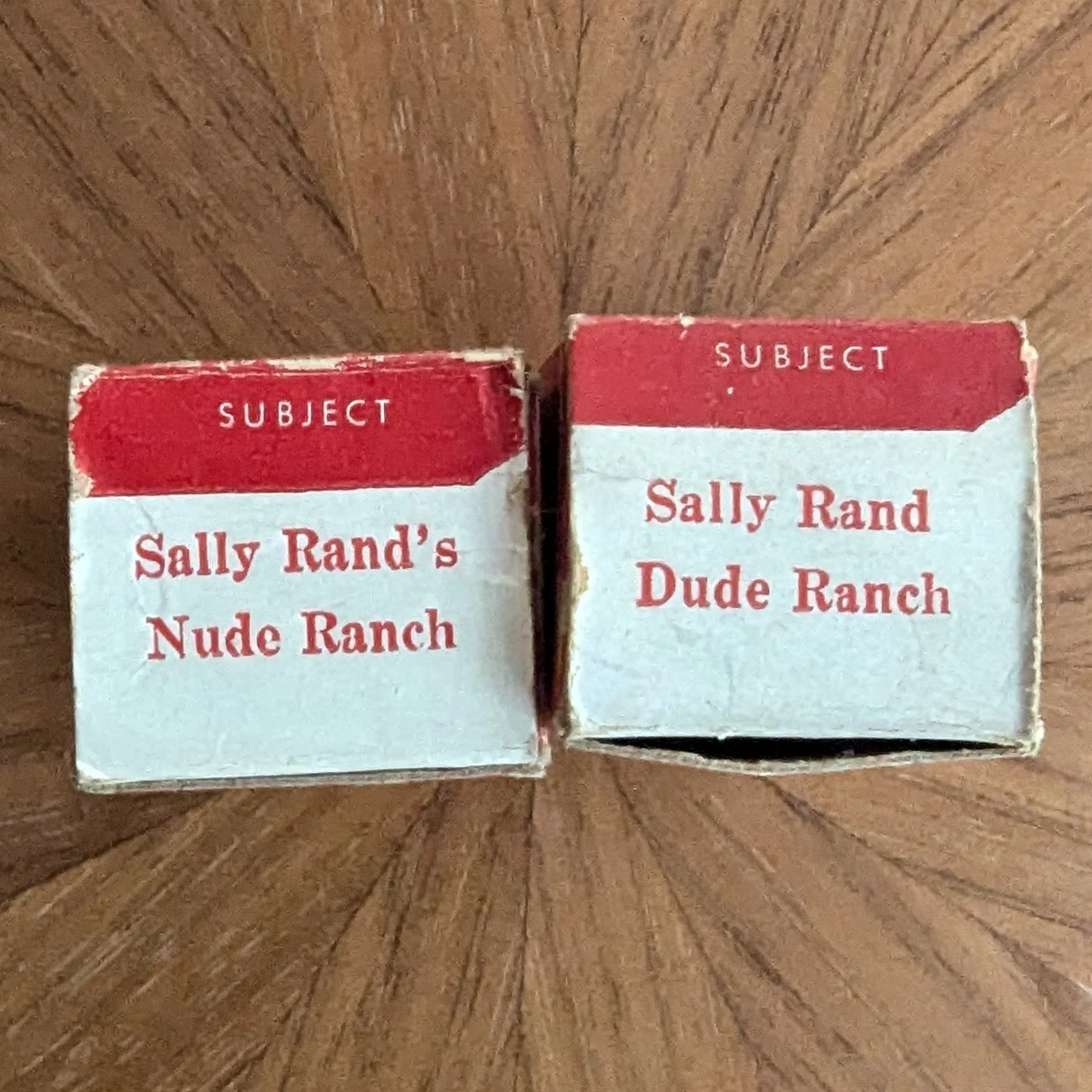
Does Sally Rand have a Nude Ranch or a Dude Ranch? The filmstrip is the same in each but the first version with "Nude" on the box is very hard to find.
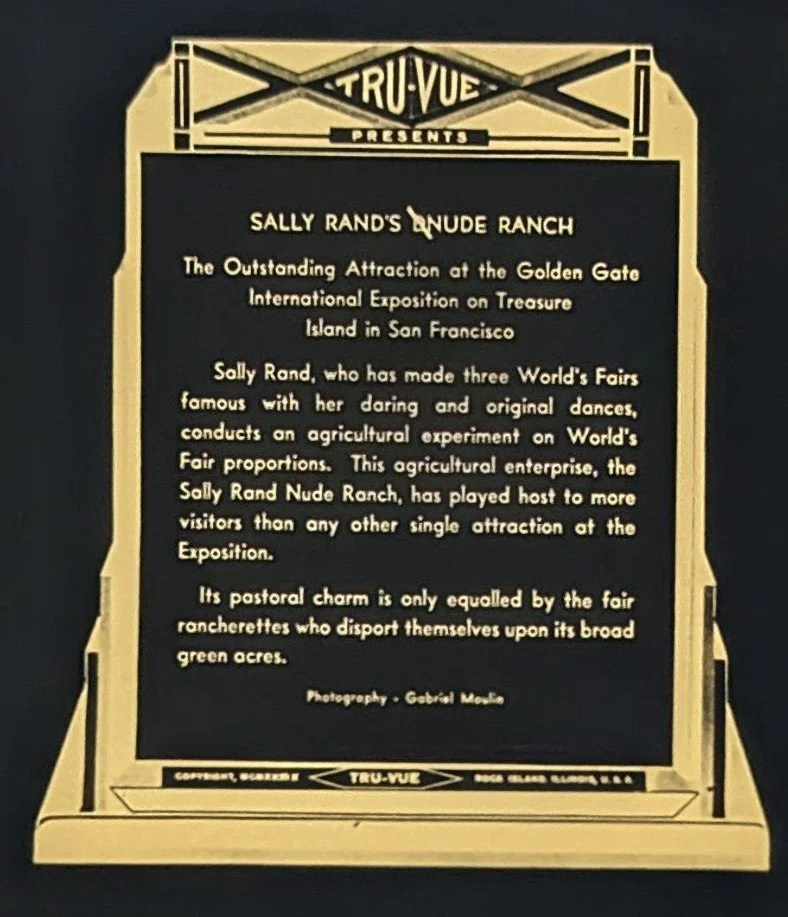
Every version we have has the "D" in Dude crossed out in the title frame.
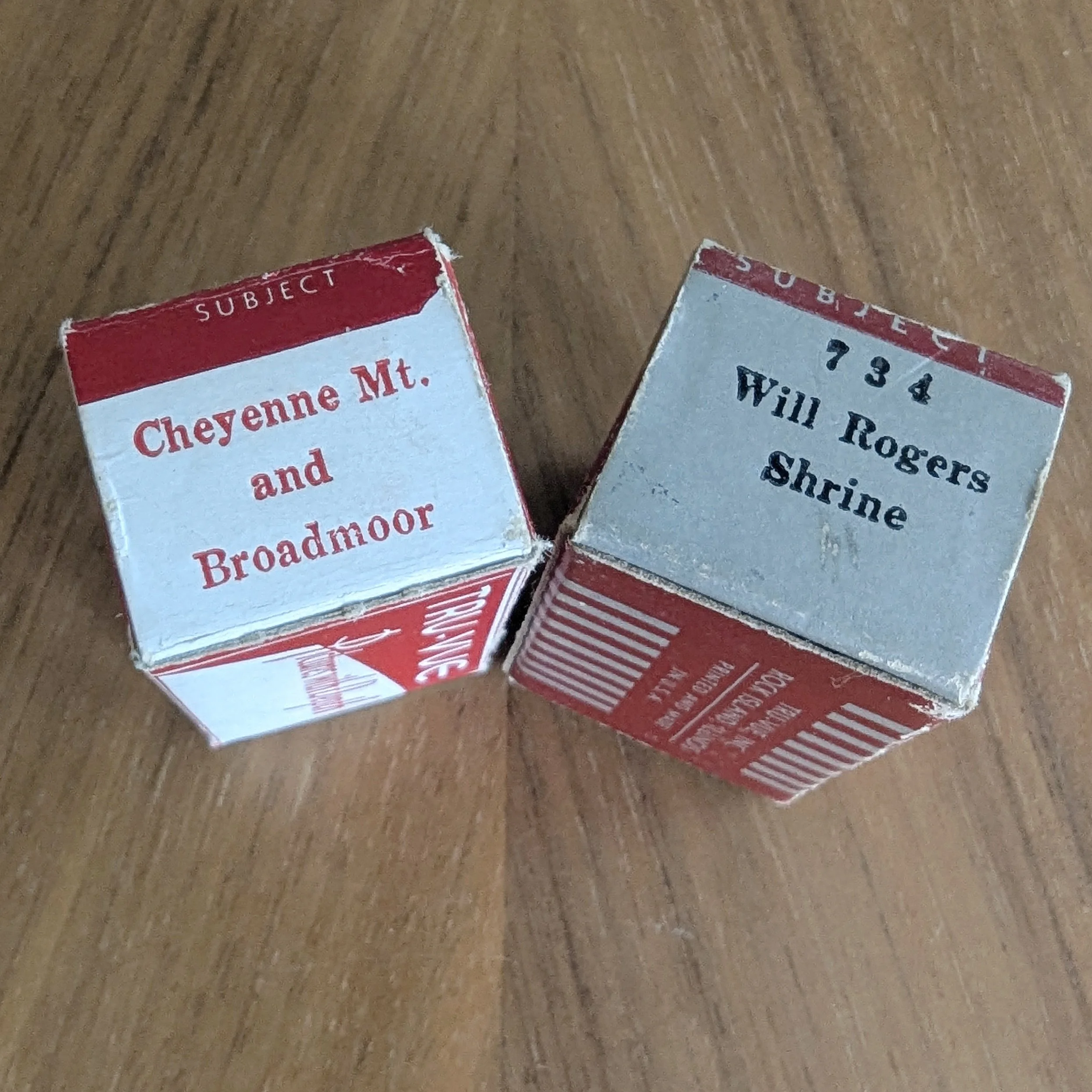
The images on the films in these two boxes are the same and feature Will Rogers. But after Will Rogers died in 1935, Tru-Vue put his name on the box.
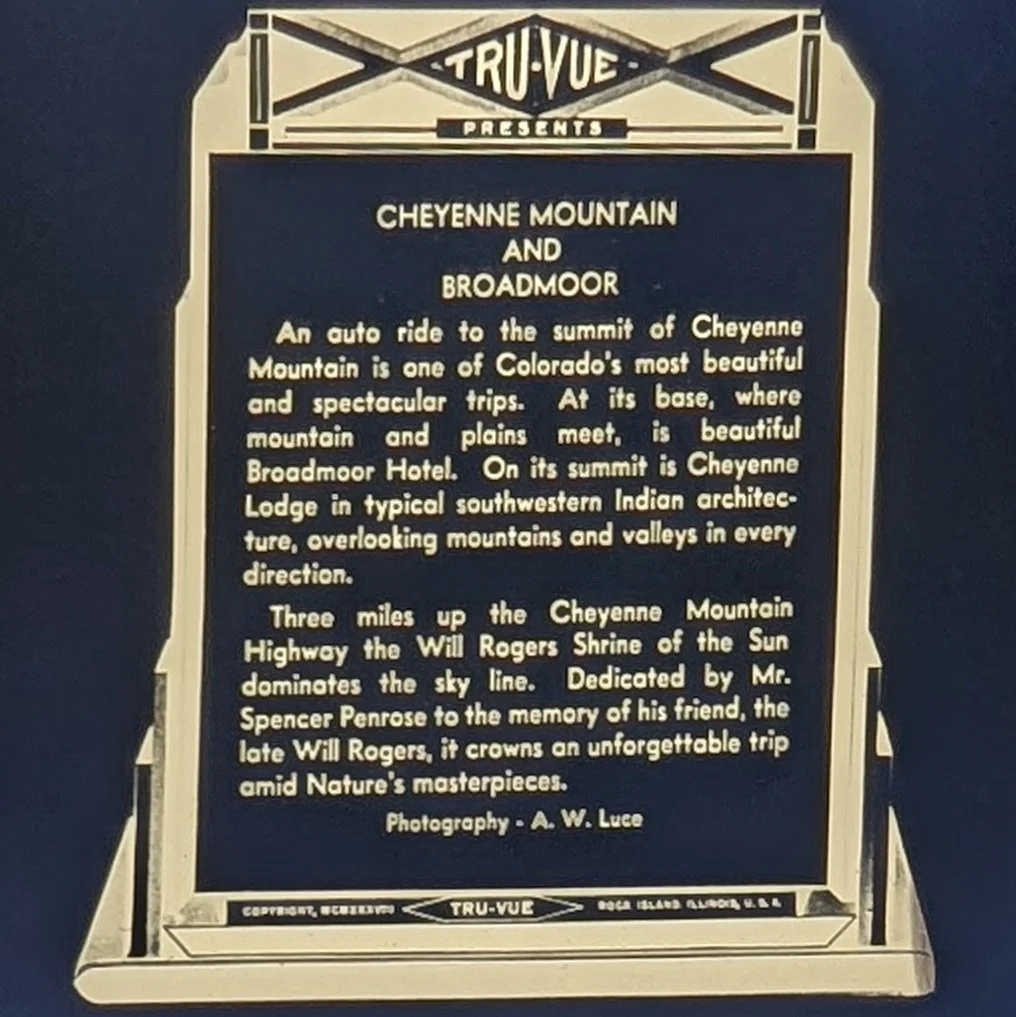
Although the images in the two films are the same, the title frames are different. In the early red/white box version, the paragraph about Will Rogers is second.
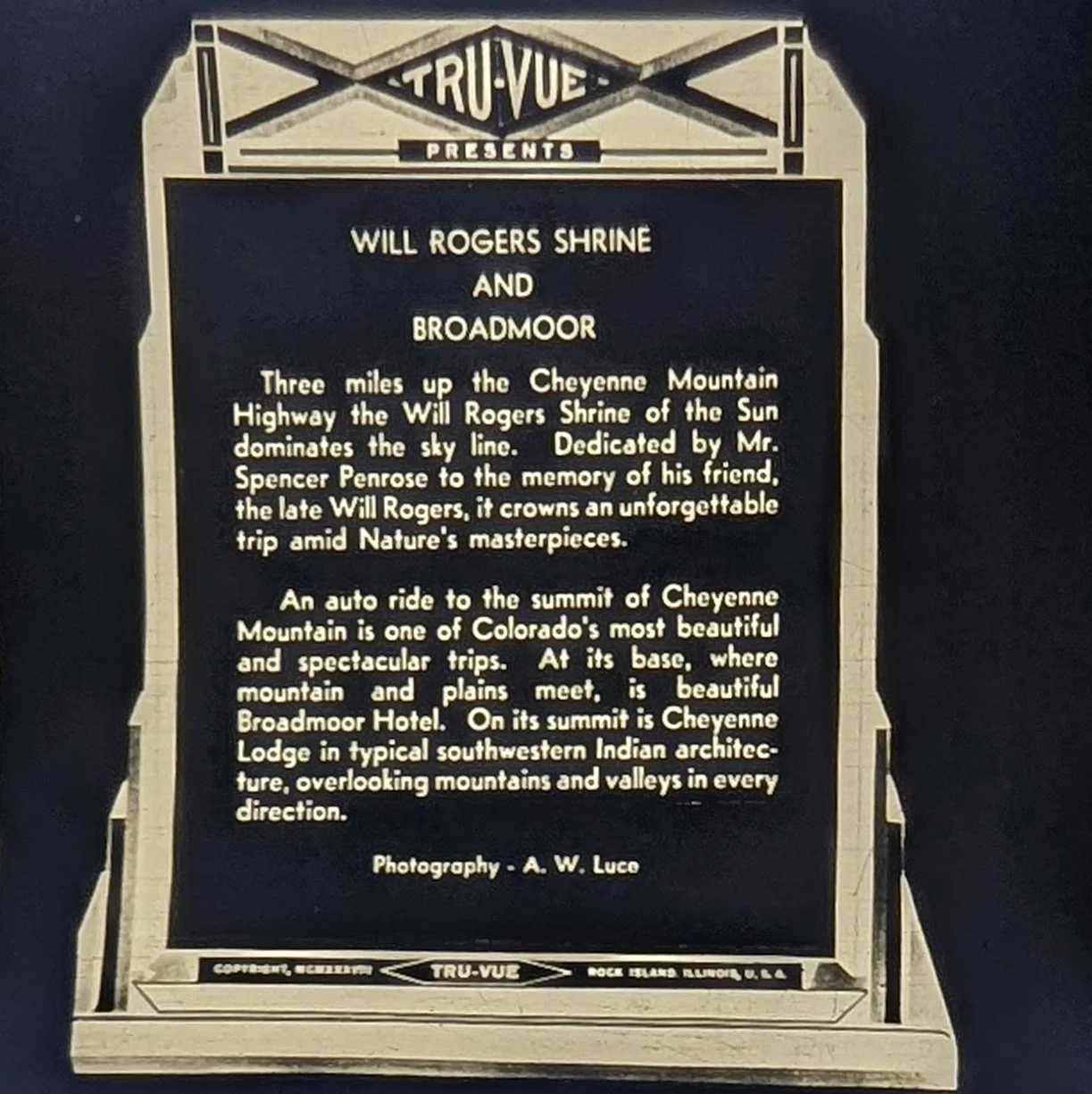
In the box with Will Rogers' name on the end flap, the film's title frame has the order of the intro paragraphs switched so that the paragraph referencing Will Rogers is first.
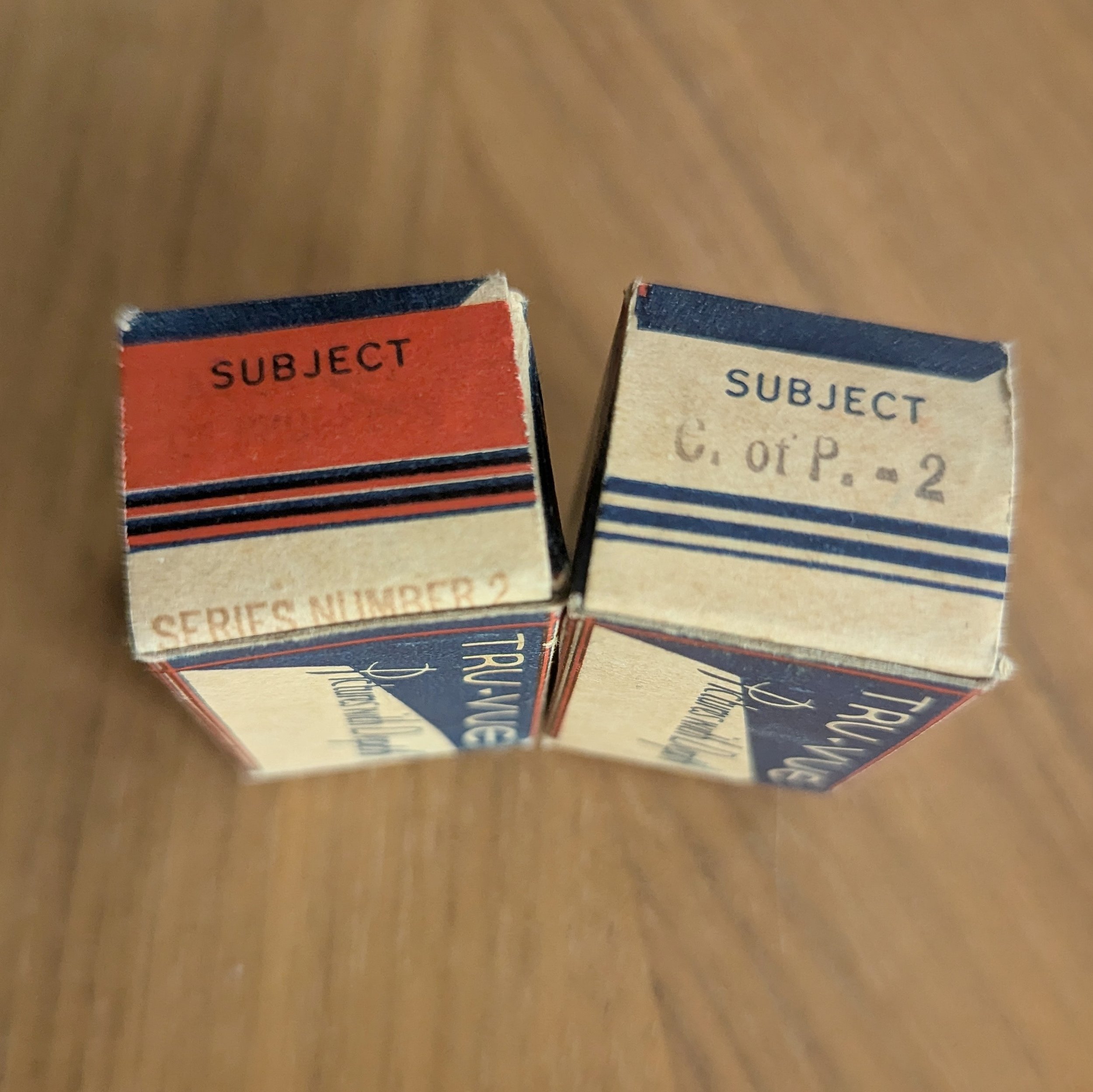
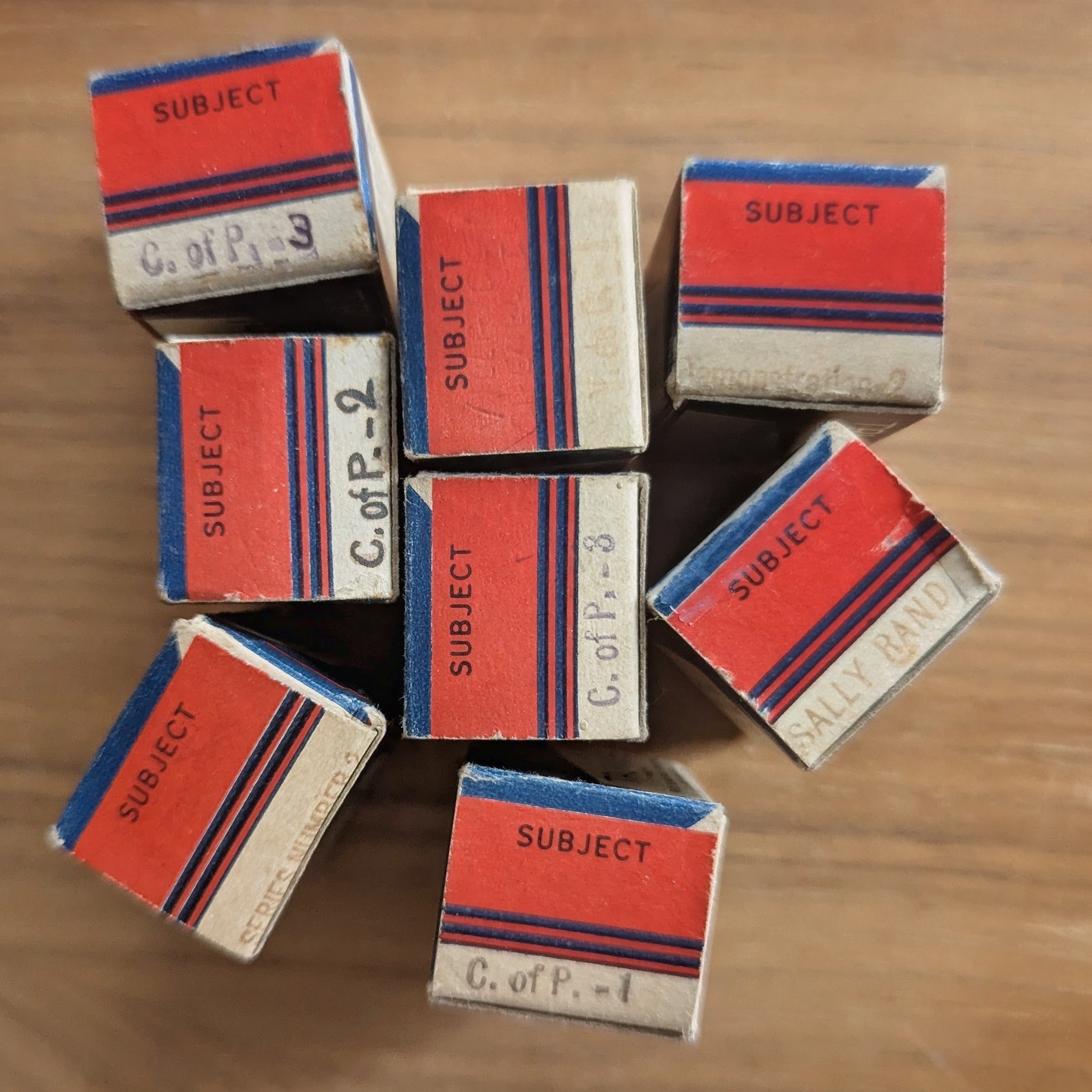
The Century of Progress box titles were eventually shortened and abbreviated. For example, shown here, "Century of Progress Series Number 2" is shortened to "C. of P. -2". (It's very faint, but the red area of the first box has "Century of Progress" in it. It's not common to find text in this red area.)
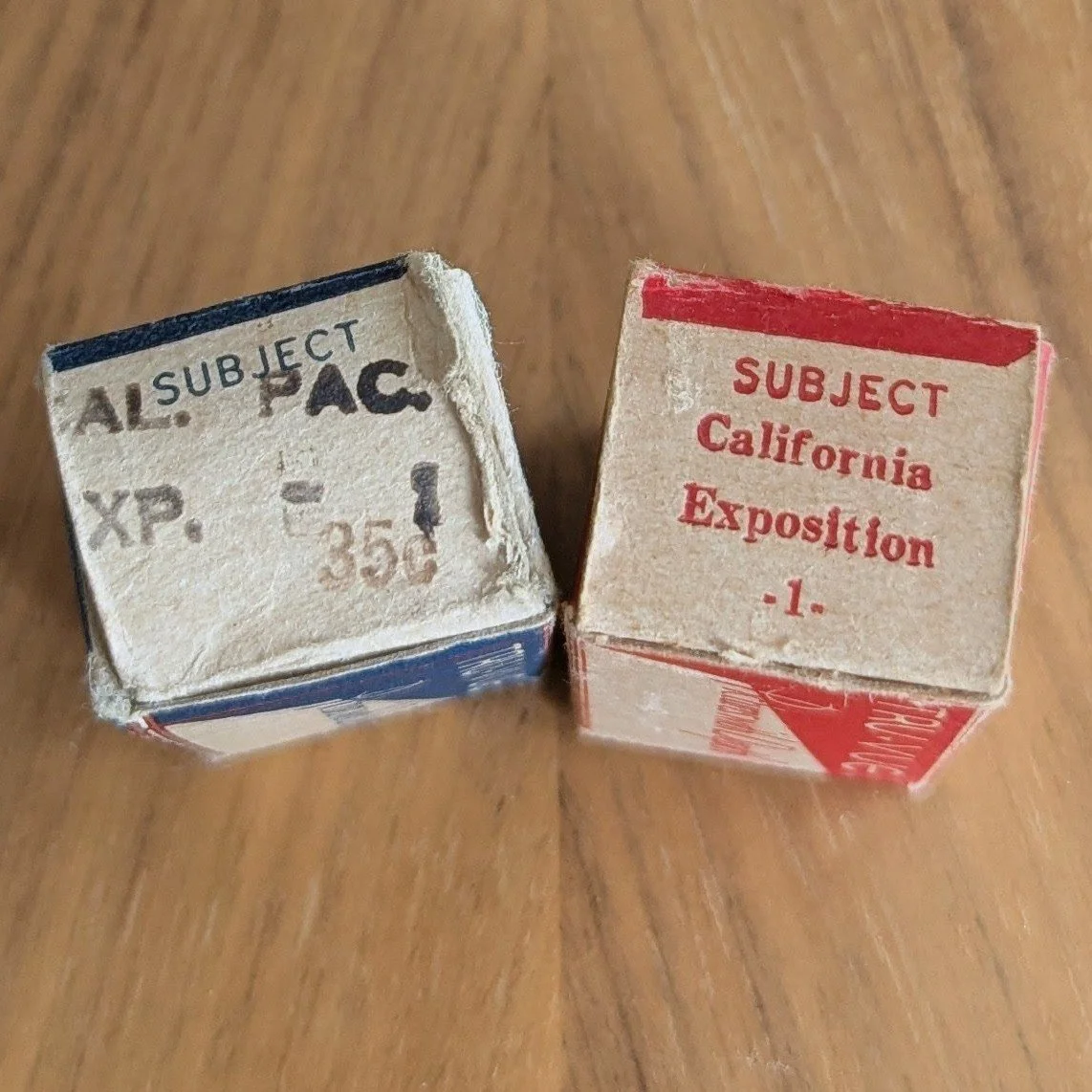
The "Cal. Pac. Exp" title was changed to "California Exposition"
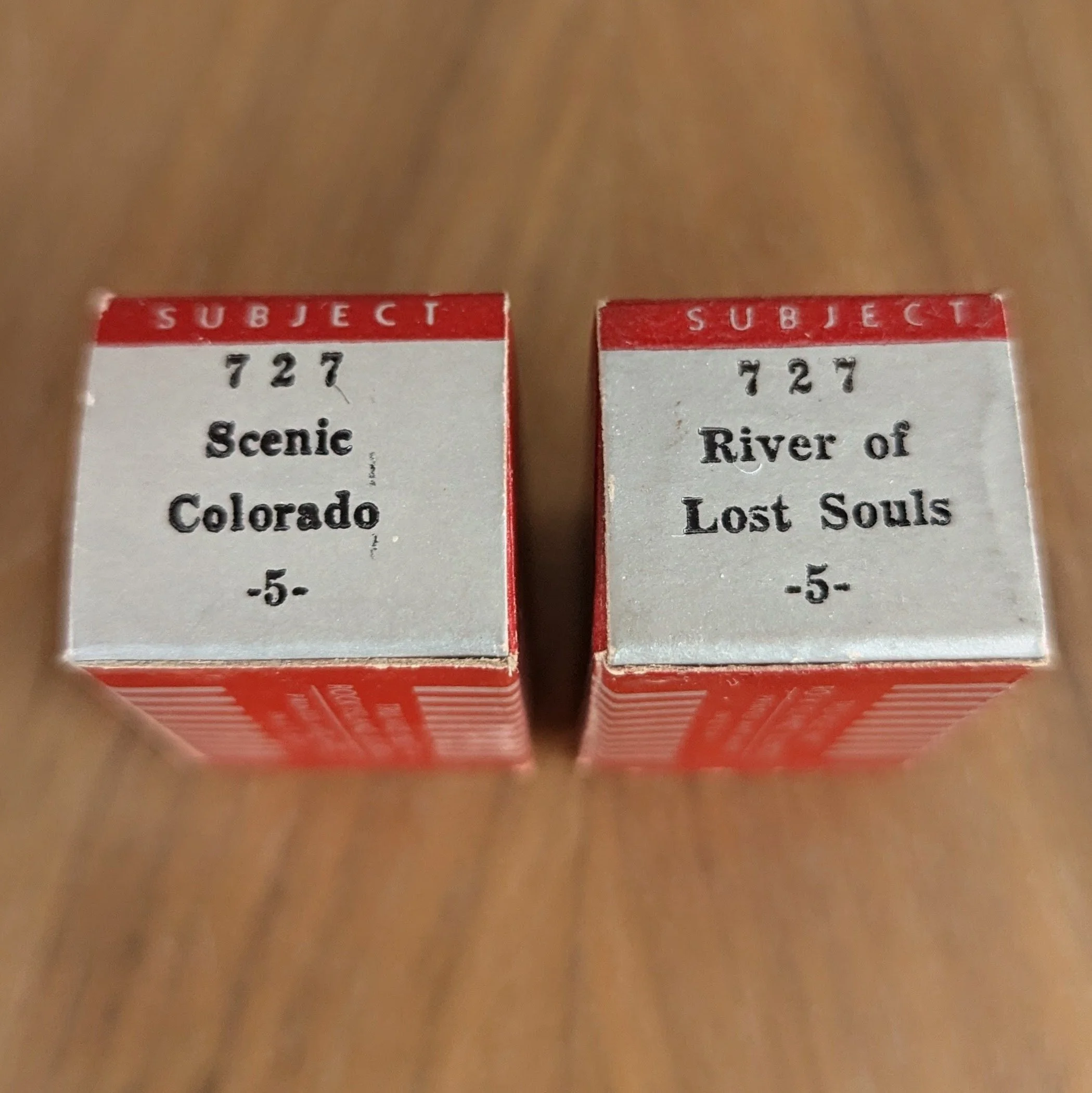
The box titles for the five Scenic Colorado (Numbers 723 - 727) were changed to reflect the title on the filmstrip which was more specific.
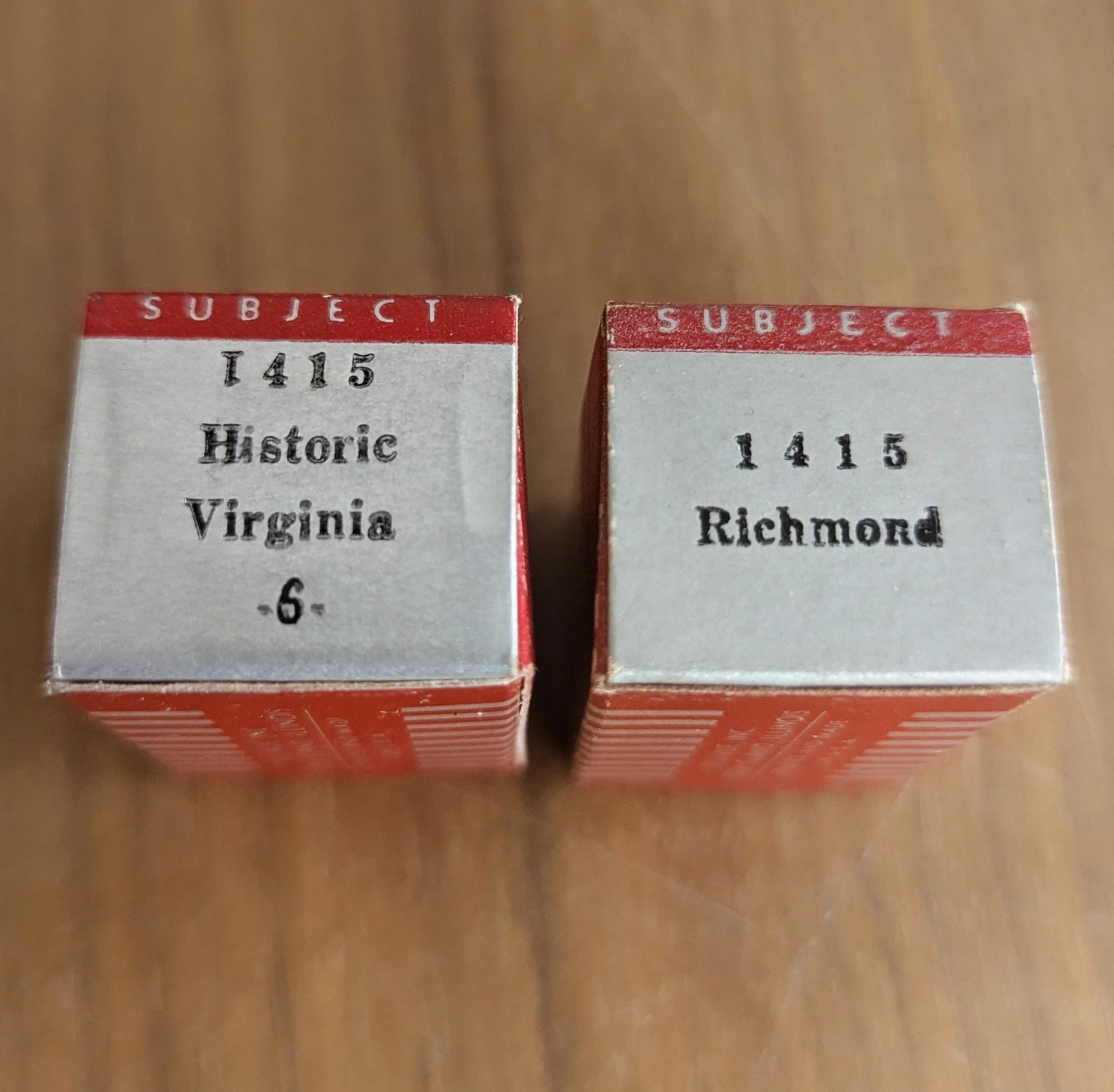
The box titles for the six Historic Virginia (Numbers 1410 - 1415) were changed to reflect the title on the filmstrip which was more specific. Also note the upside down "1" on the first box!
Same Box Title, Different Film
Something else to look out for, opposite of what was described above, is when the film box title doesn’t change, but the film inside does. Here’s an example of that …
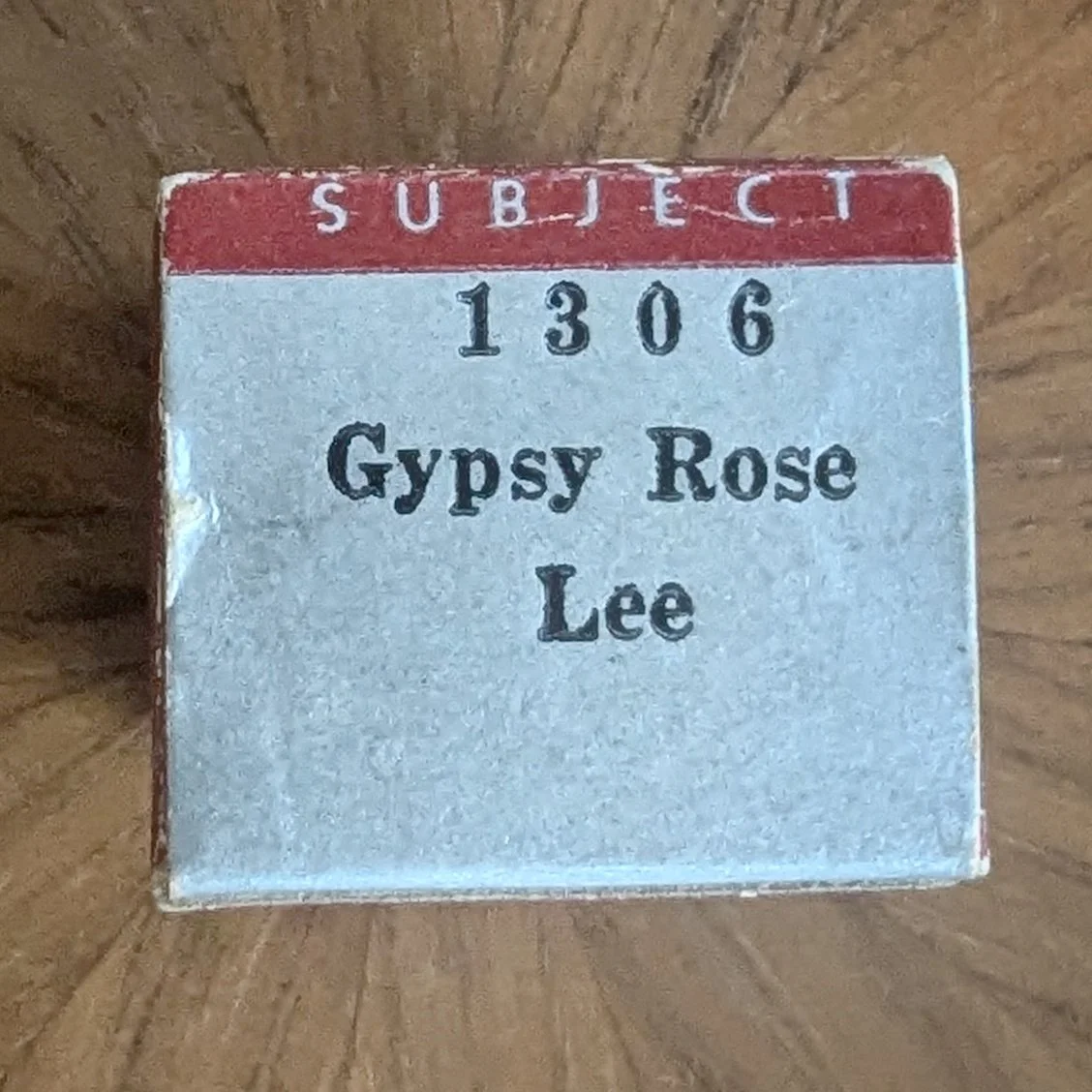
1306 Gypsy Rose Lee
This box could contain one of two different Gypsy Rose Lee films. The most common is “The Difference Between a Strip-Tease and a Tease.” The less common one is “A Personal Appearance”. You can’t tell from the outside of the box which film is inside.
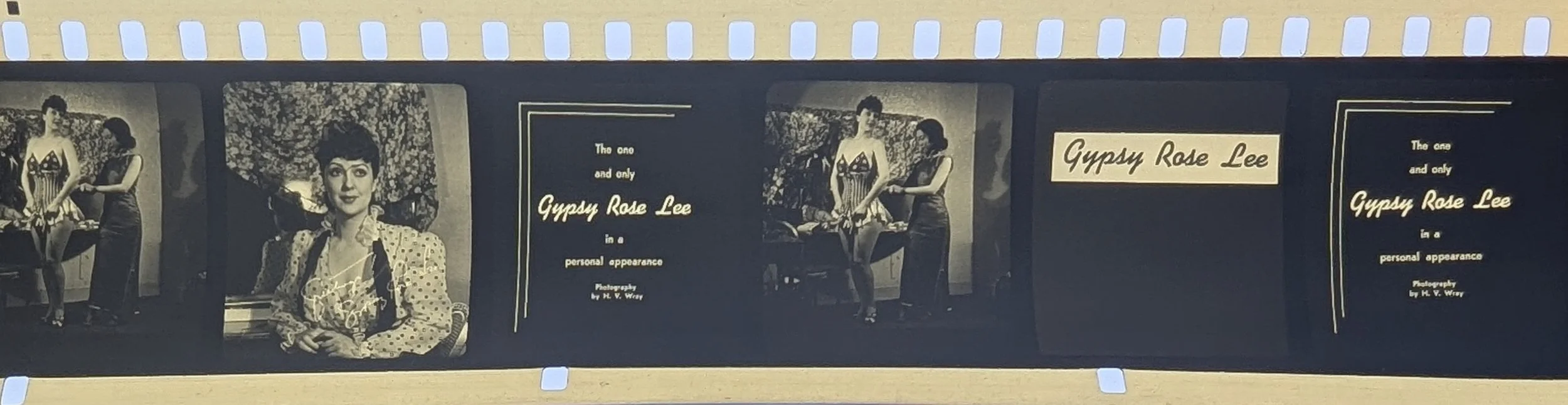
Strip-Tease: The more common Gypsy Rose Lee filmstrip.
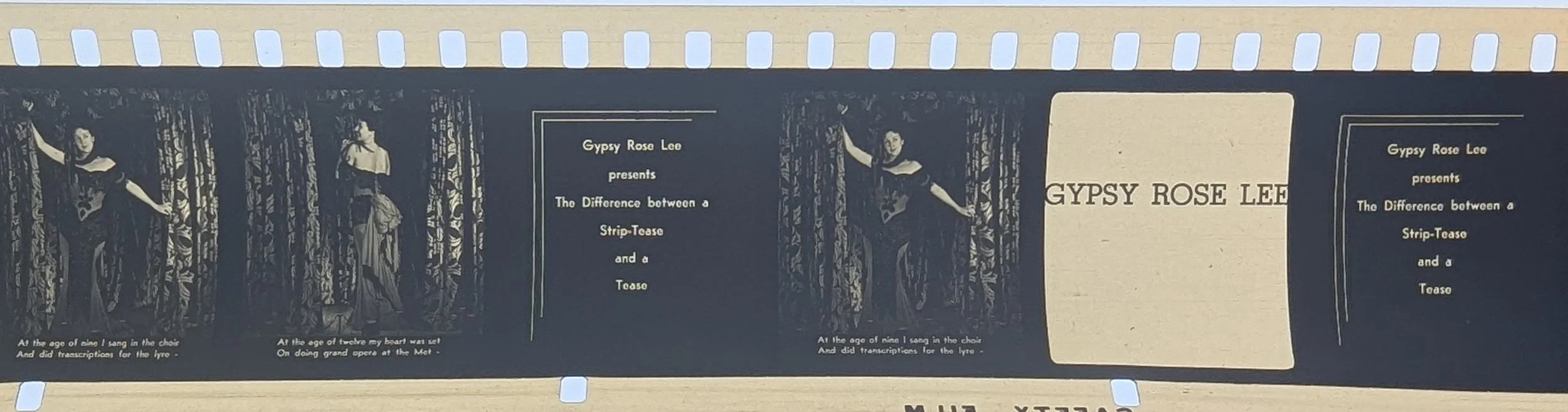
Personal Appearance: The harder-to-find Gypsy Rose Lee filmstrip.
Different Title and Different Film
Sometimes Tru-Vue switched up the title and the film, but kept the same film number. Here’s an example of that …
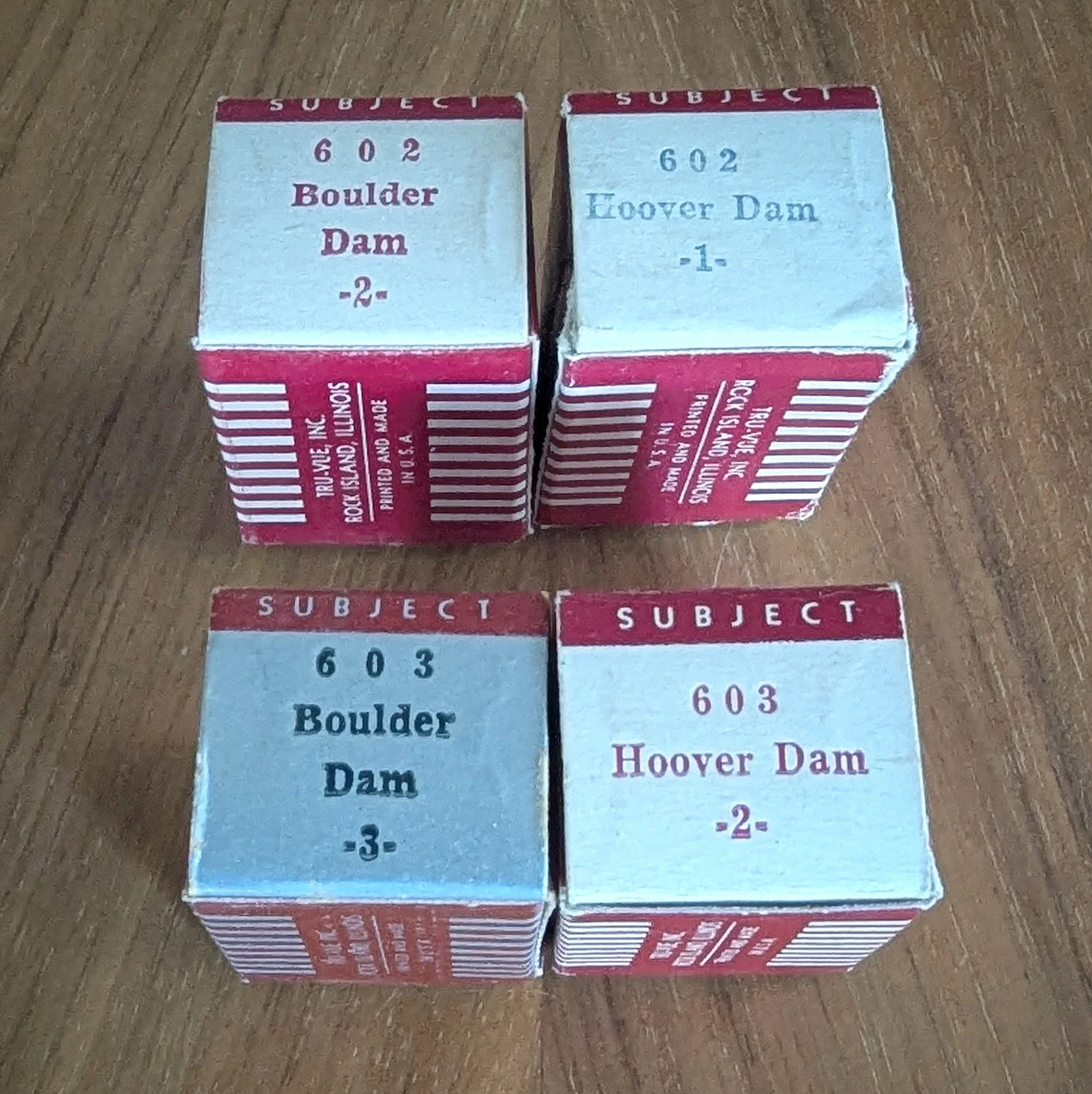
Hoover Dam 1 & 2
602 and 603 are examples of where Tru-Vue kept the number but switched out the film and the title. Boulder Dam 2 & 3 became Hoover Dam 1 & 2. The films are not the same as the original 602 and 603.
Renumbering
In the early ‘50s, Tru-Vue renumbered some films in its catalog. One example from our collection is the China film.
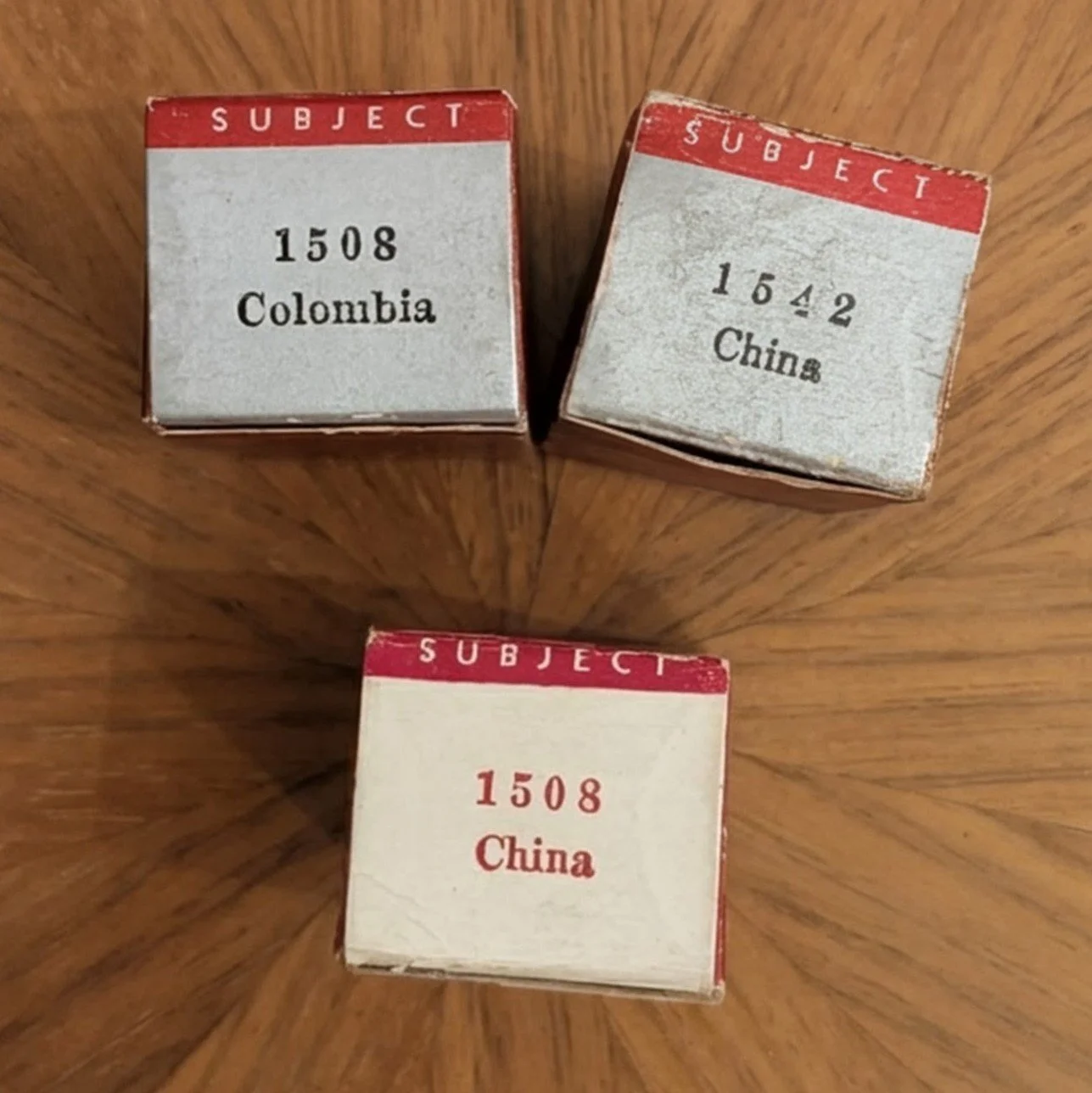
China film
In their earlier catalog, 1508 was Colombia’s catalog number, and 1542 was China’s catalog number, as shown on the two silver piano boxes in the top row of the photo. In a 1952 Tru-Vue film list, after their move to Beaverton, China was renumbered in the catalog and on the box as 1508 — as shown in the later, white piano box at the bottom of the photo — and Colombia was no longer part of the catalog. However, the film inside this renumbered box still has the original film number, 1542.
Blue Base / Purple Filmstrips
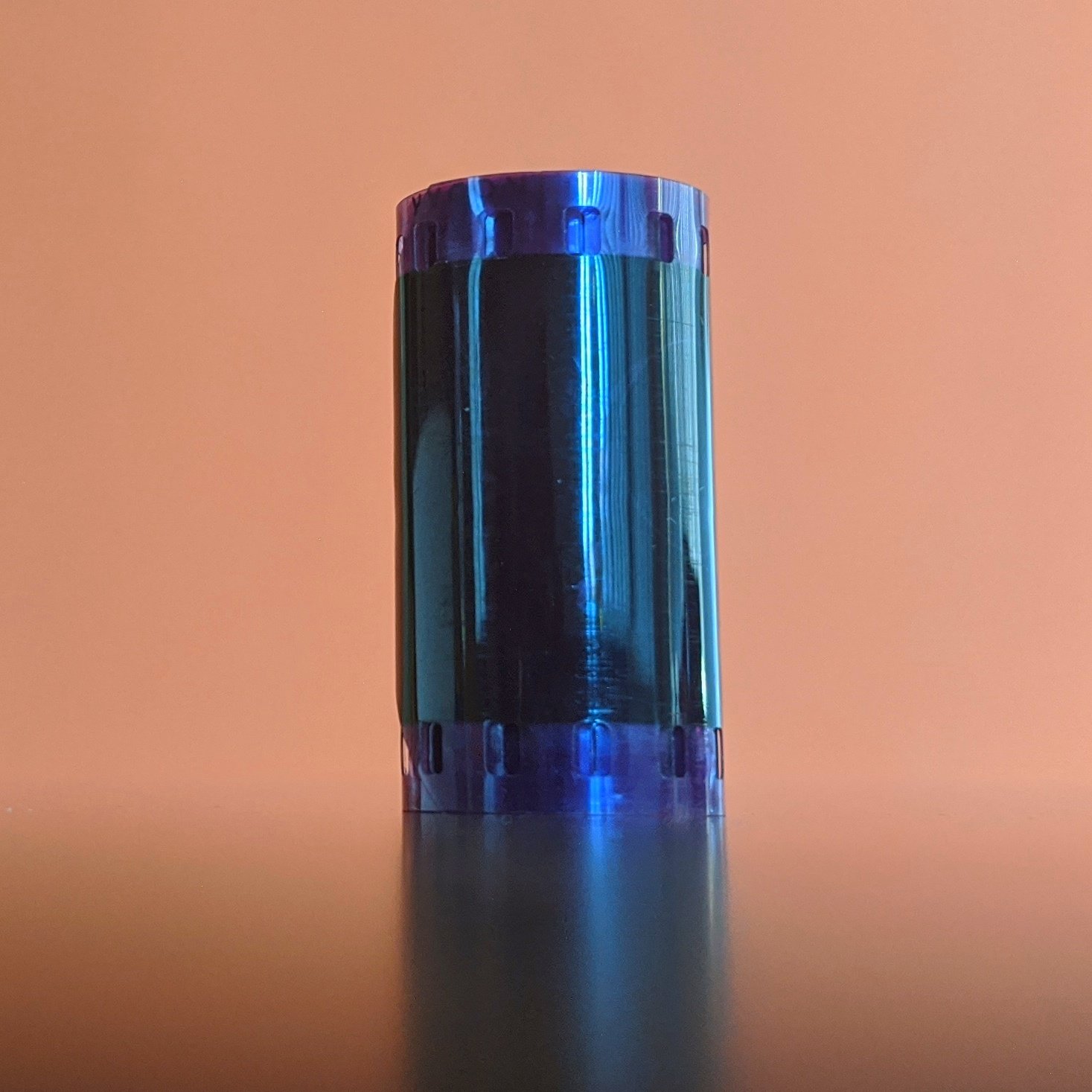
Setting the Mood With Tinting
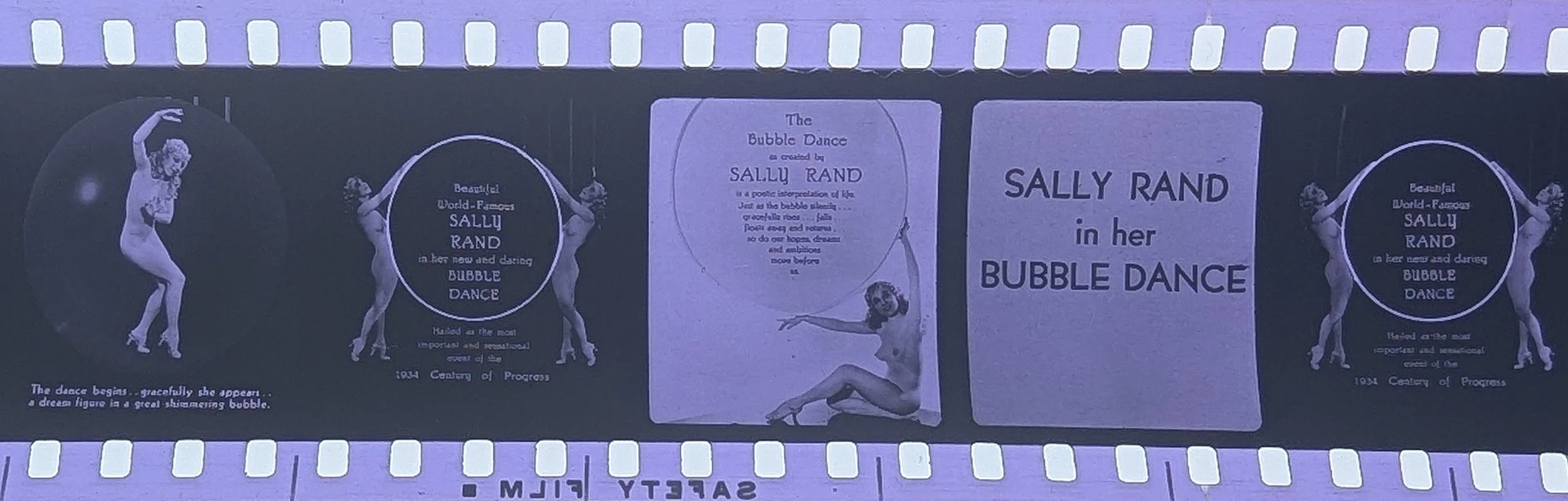
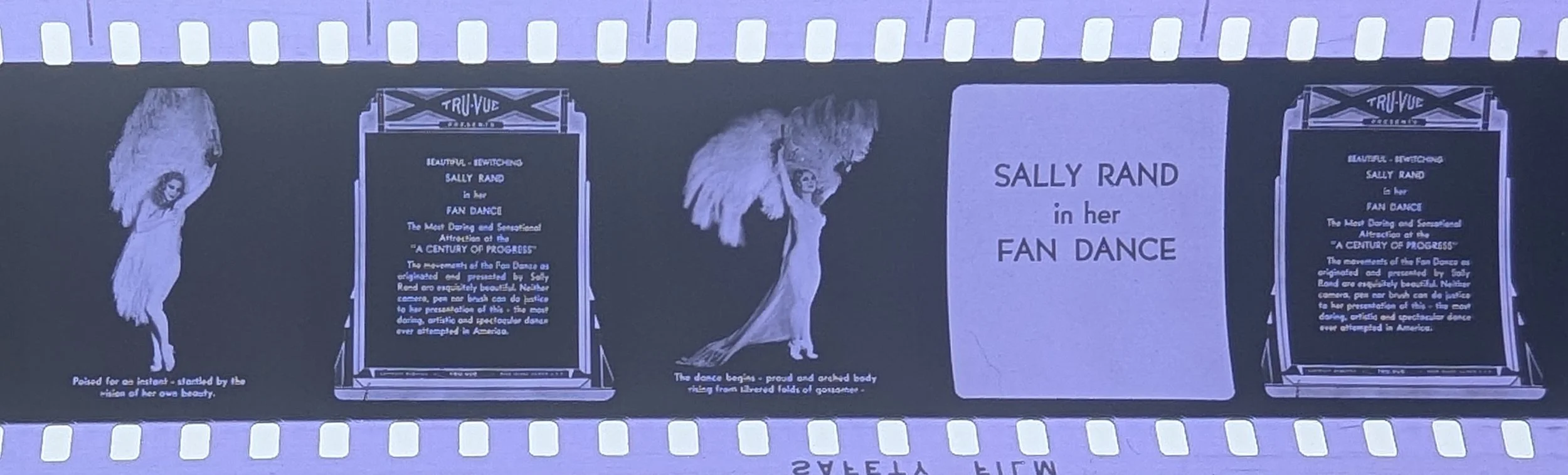
Black & white films were sometimes tinted to create a certain mood or vibe for the viewer. Don’t be surprised if you come across a Sally Rand Fan Dance or Bubble Dance film and it’s blue/purple. There’s nothing wrong with the film — that was intentional.
Tru-Vue Color Films — “Stereochromes”
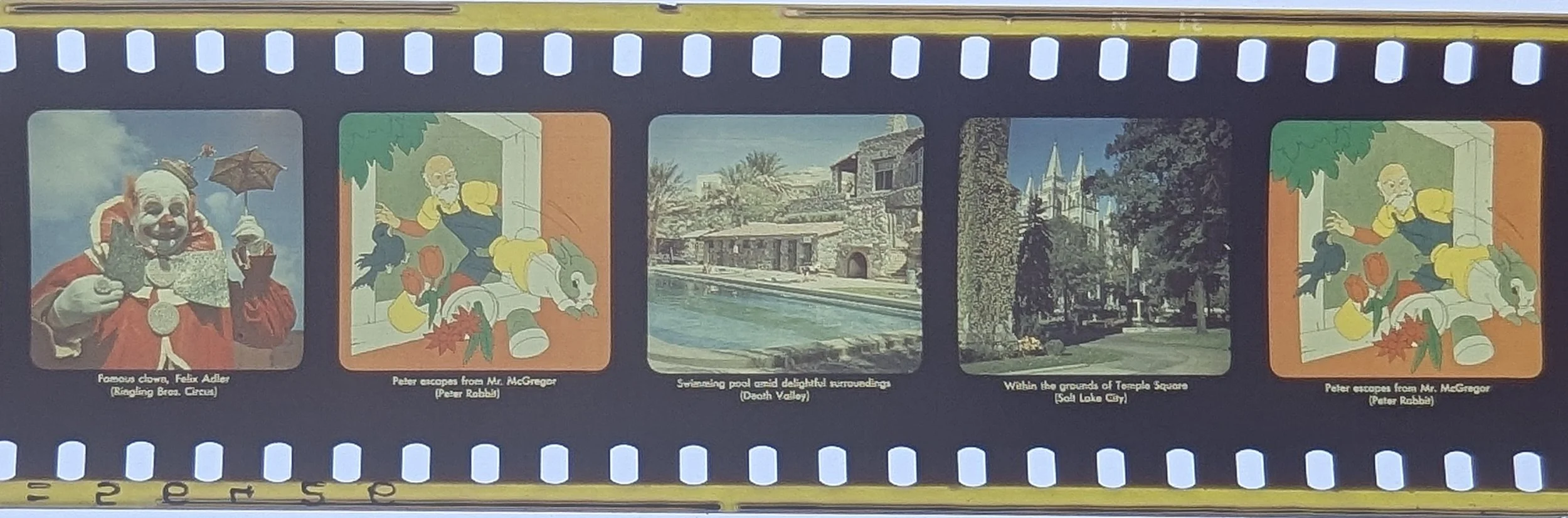
To stay competitive against View-Master, Tru-Vue finally began producing color filmstrips called “Stereochromes,” a pursuit that was delayed by the war. For a brief time, the color films were put in the same white piano box as the black & white films, with the addition of the words “In Color” on the end flap — those boxes are hard to find. Soon, they designed a new, brightly colored yellow, red, and blue box for the color films. Around this time, to save costs, Tru-Vue shortened the length of their filmstrips, first by putting 2 pictures in one frame, and then, when that didn’t sit well with the public, reducing the number of frames from 14 to 10. As a result, many of the color films have only 10 frames instead of 14. Ansco color transparency film was used, and unfortunately, the color has faded from almost all of the filmstrips.
Half-Frame Filmstrips
Below are examples of the color filmstrip “Captain Marvel” (C111). The first image shows the half-frame version with 2 images in one frame. This made each image smaller so we can see why this wasn’t appealing to buyers. The second image shows the full-frame version of the same film. Both have suffered a tremendous amount of color fading over the past 75 years, but there’s still a bit of detectable color. If you’re a “completist” type of collector, you’ll want to have both the full-frame and half-frame versions.
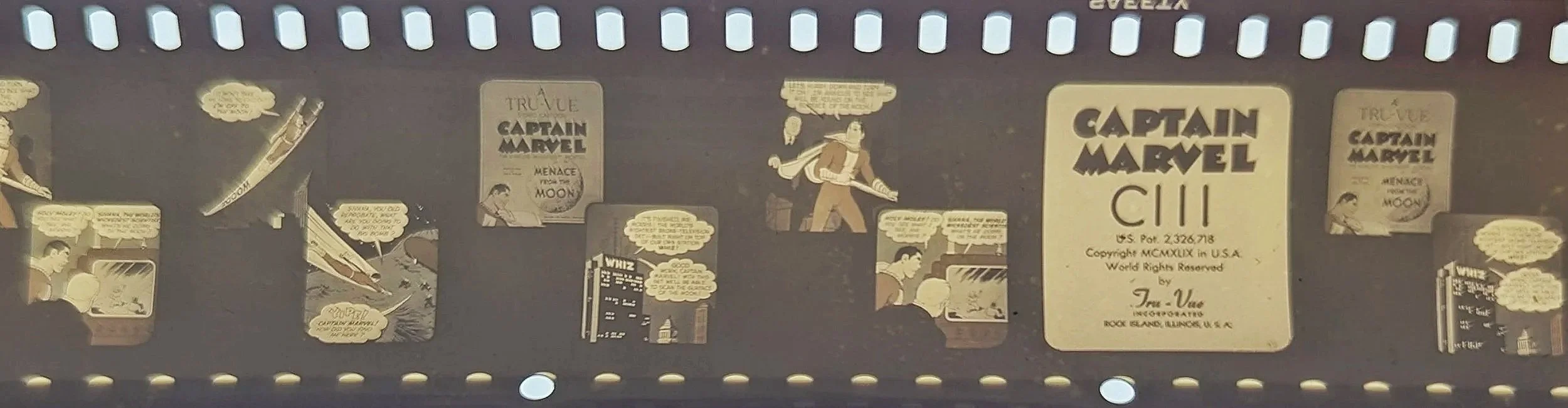
Half-frame Captain Marvel filmstrip
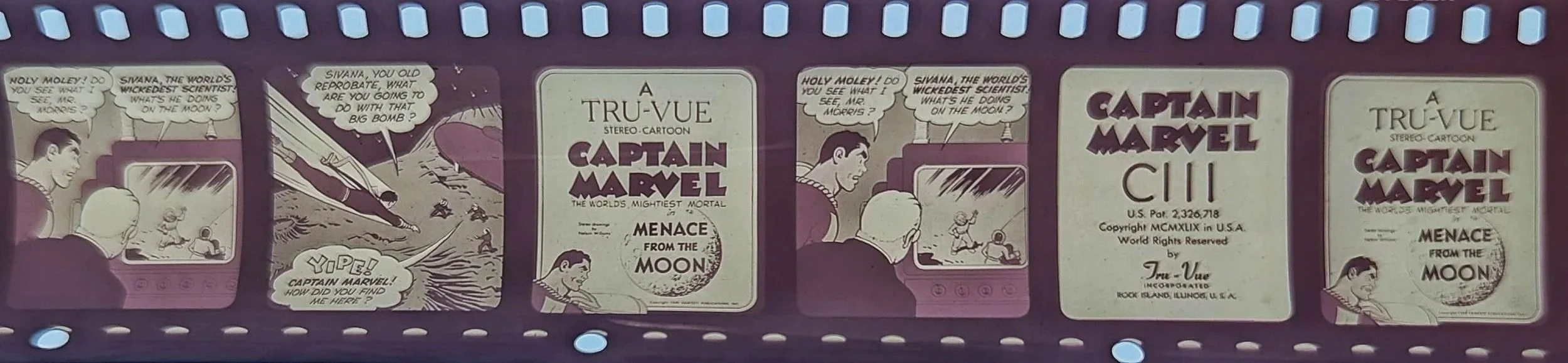
Full-frame Captain Marvel filmstrip
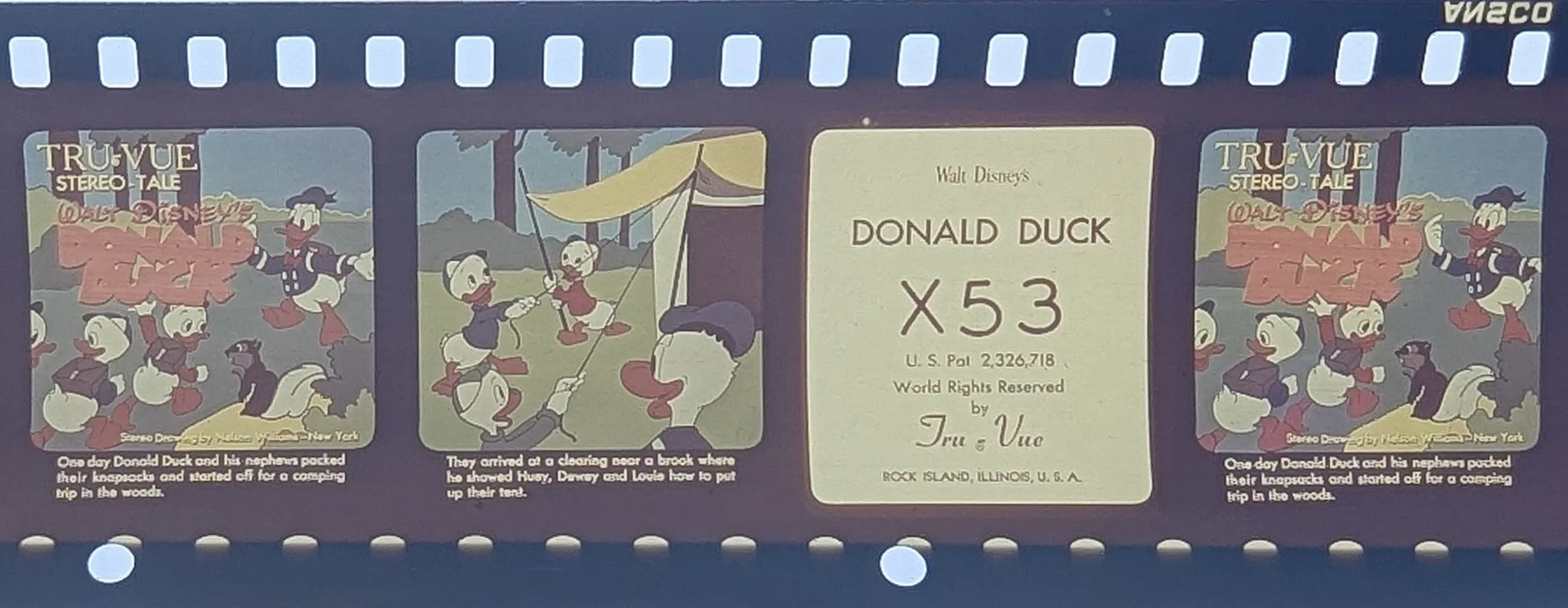
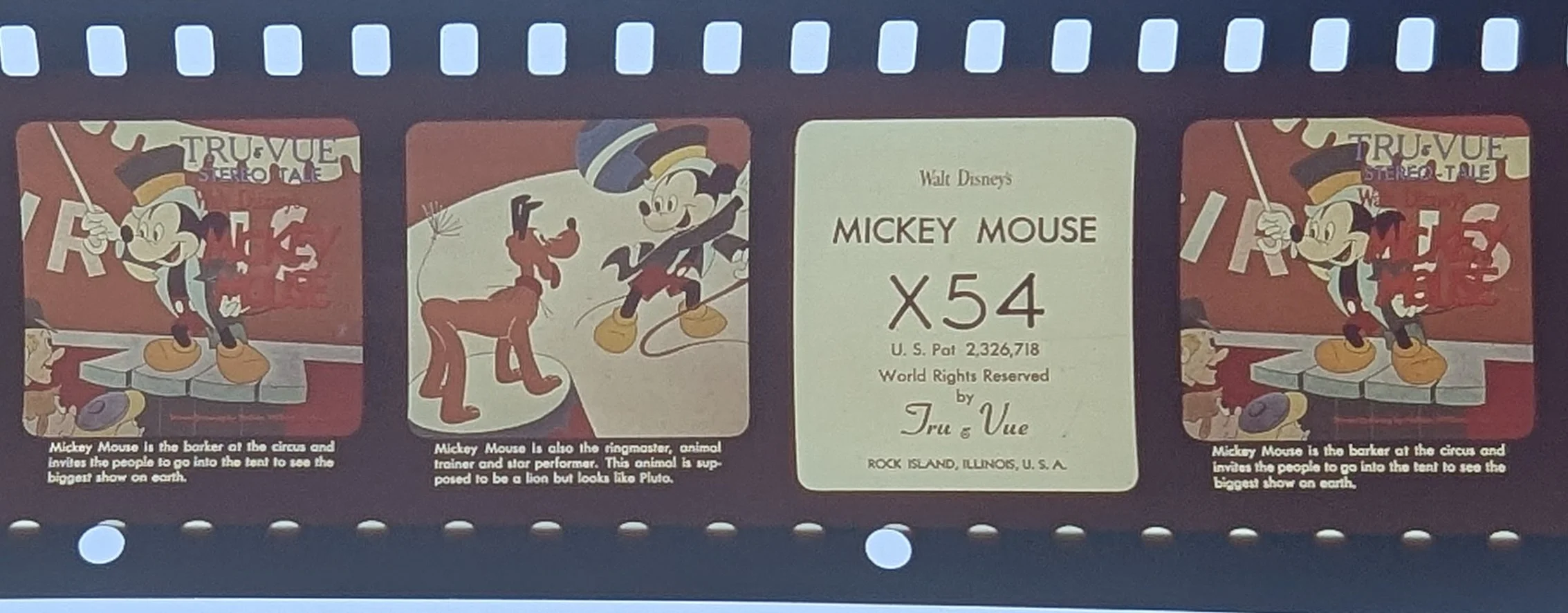
Disney Color Films Retained the Most Color
Of all the mass-produced Tru-Vue color filmstrips, the four Disney films retained their color the best, in particular Alice in Wonderland. Other color cartoon films have also retained some color.
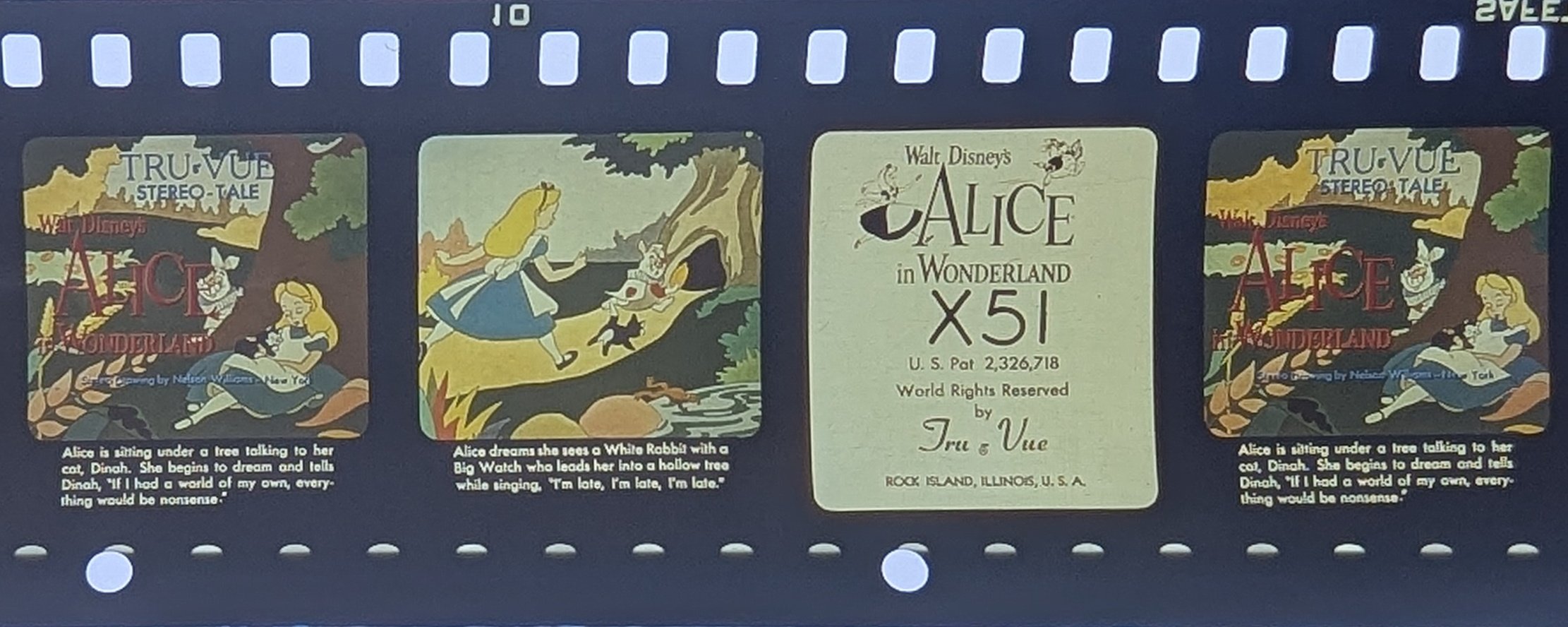
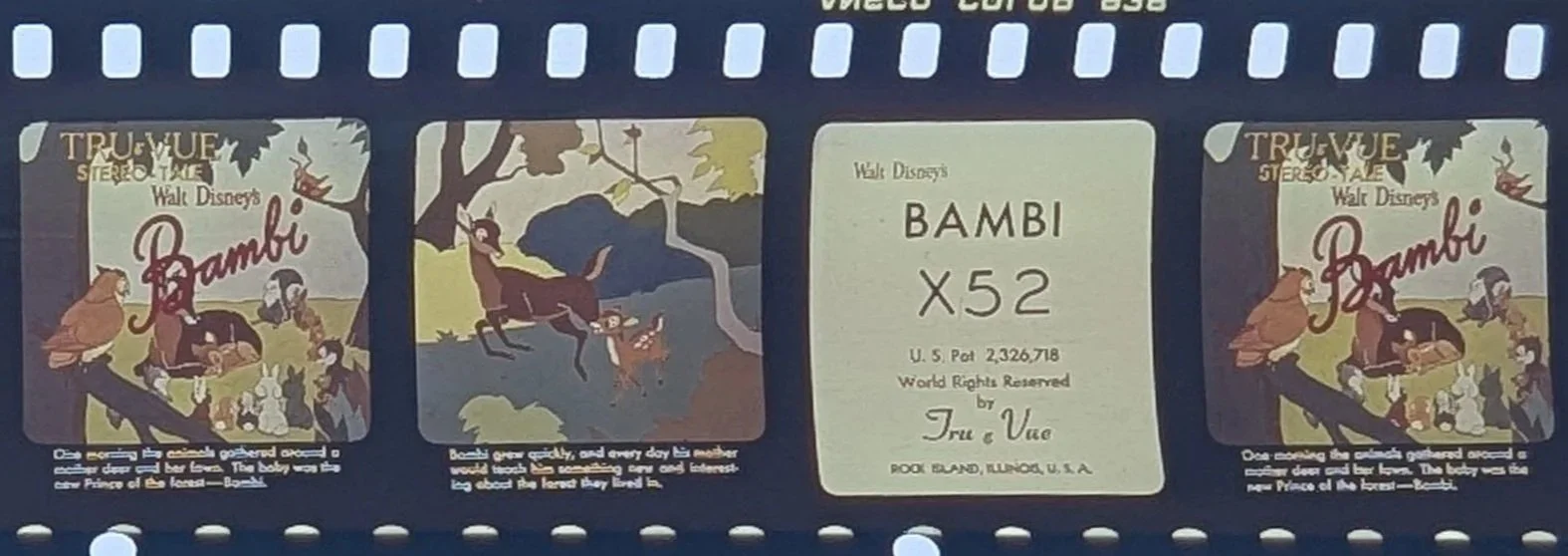
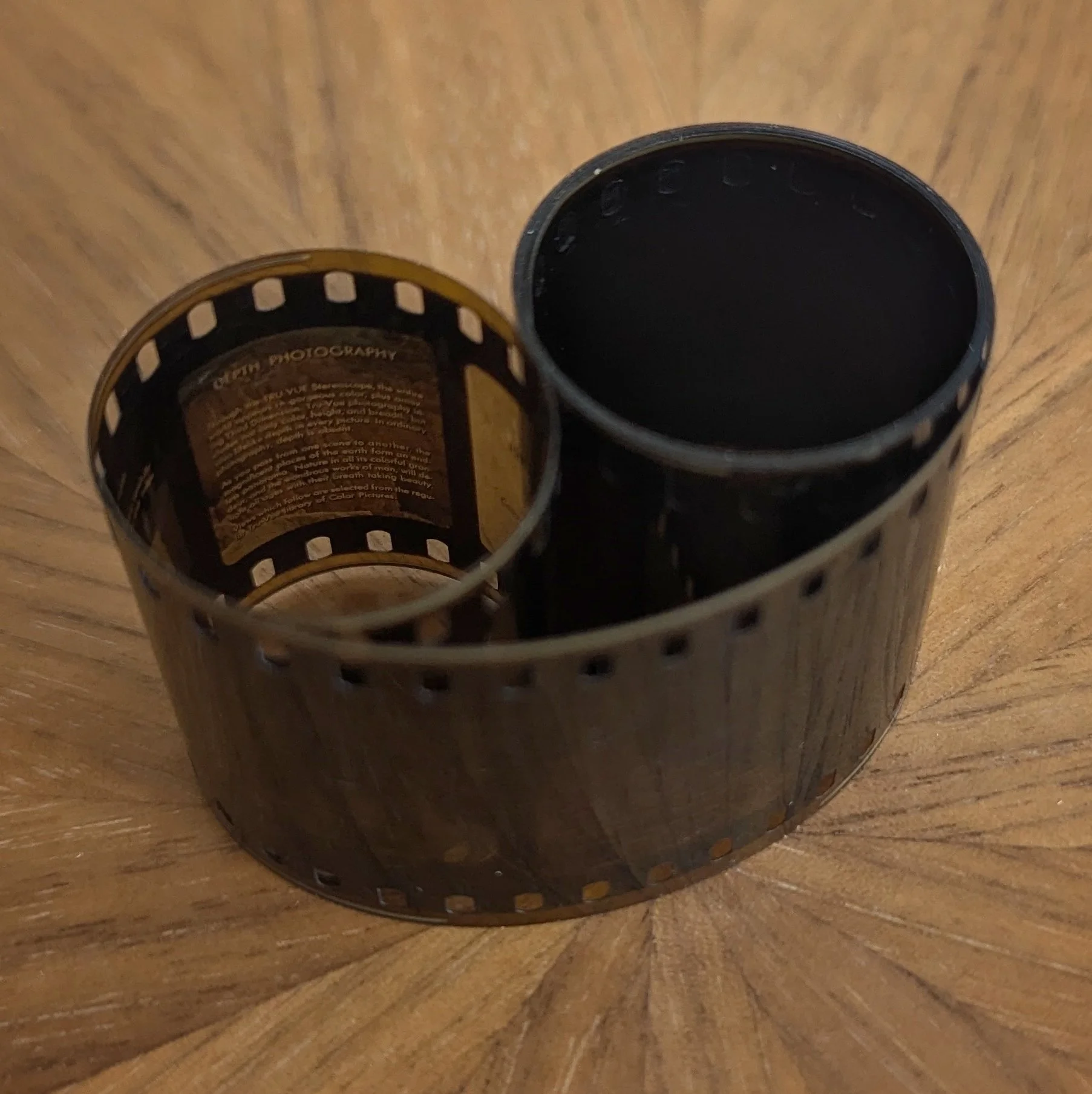
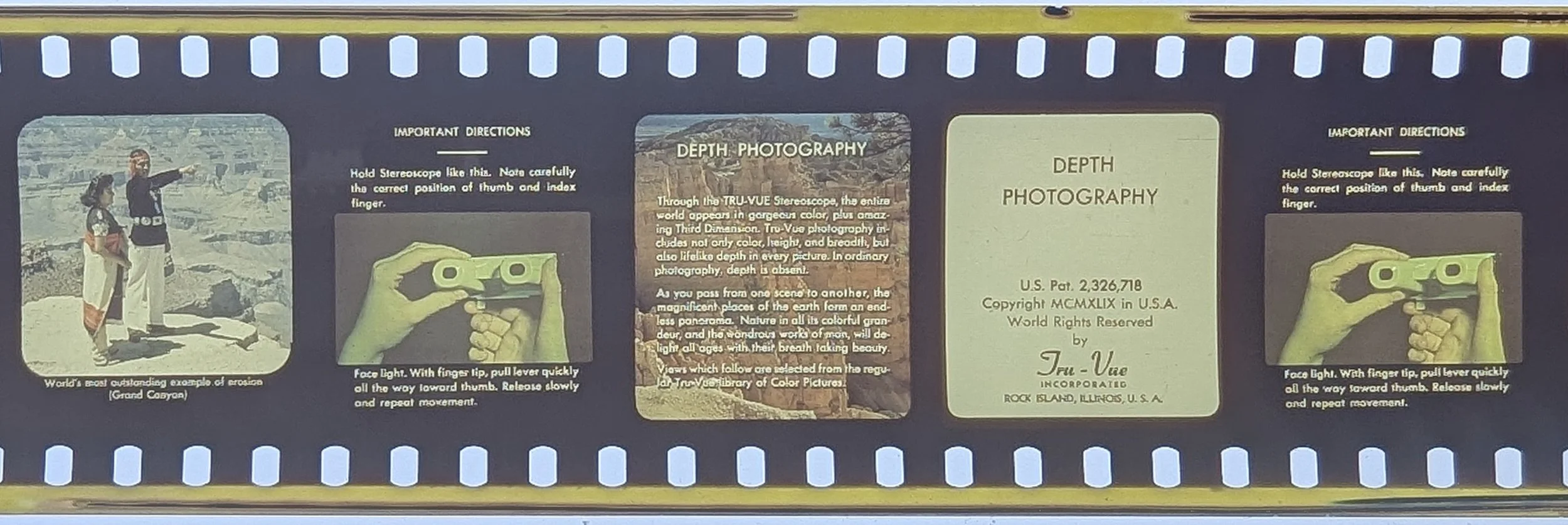
Vivid Color Tru-Vue Depth Photography Filmstrip
Possible Test Color Filmstrip
We have several color Depth Photography filmstrips in our collection, but this one is unique. It didn’t come in a box and it appears to have never been in one, as it doesn’t have the tight coil of other boxed filmstrips. And unlike the other color Depth Photography films in our collection, this one has retained its vivid color.
Commercial Films
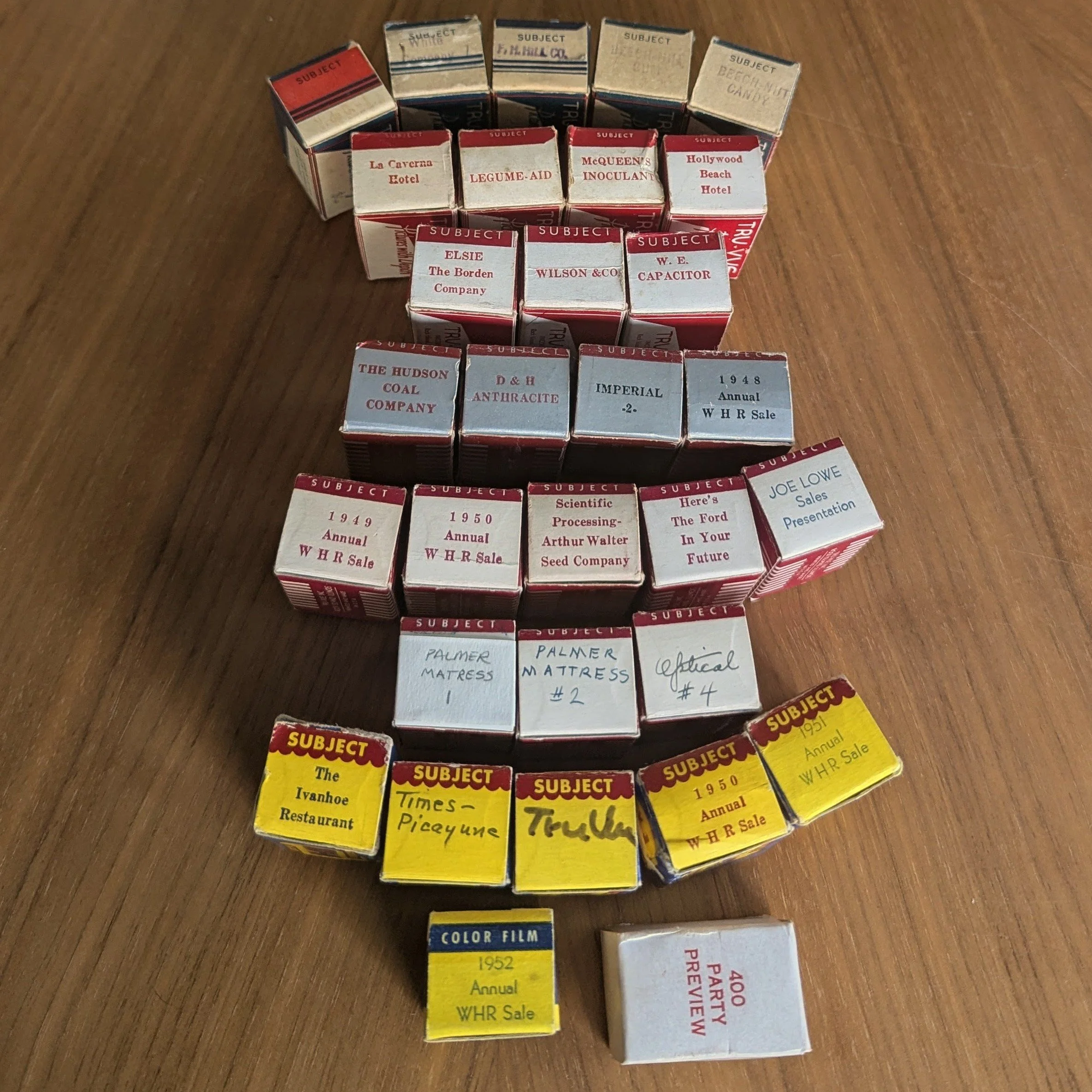
Tru-Vue for Industrial Use
We love finding commercial 3D in whatever format, but finding commercial Tru-Vue films is so excruciatingly difficult that it’s become one of our favorites to spot in the wild. They weren’t made in large numbers and they often weren’t even for sale to the public. The above image shows commercial films in all 7 major box designs, proving that commercial films were a pursuit of Tru-Vue from the very beginning and right up until the very end.
Box Errors
At their peak, Tru-Vue was producing hundreds of thousands of viewers every year and millions of filmstrips. With that kind of output, it’s inevitable that some production errors would happen and that a few of those errors would make it out into the wild. Here are a couple we’ve come across:
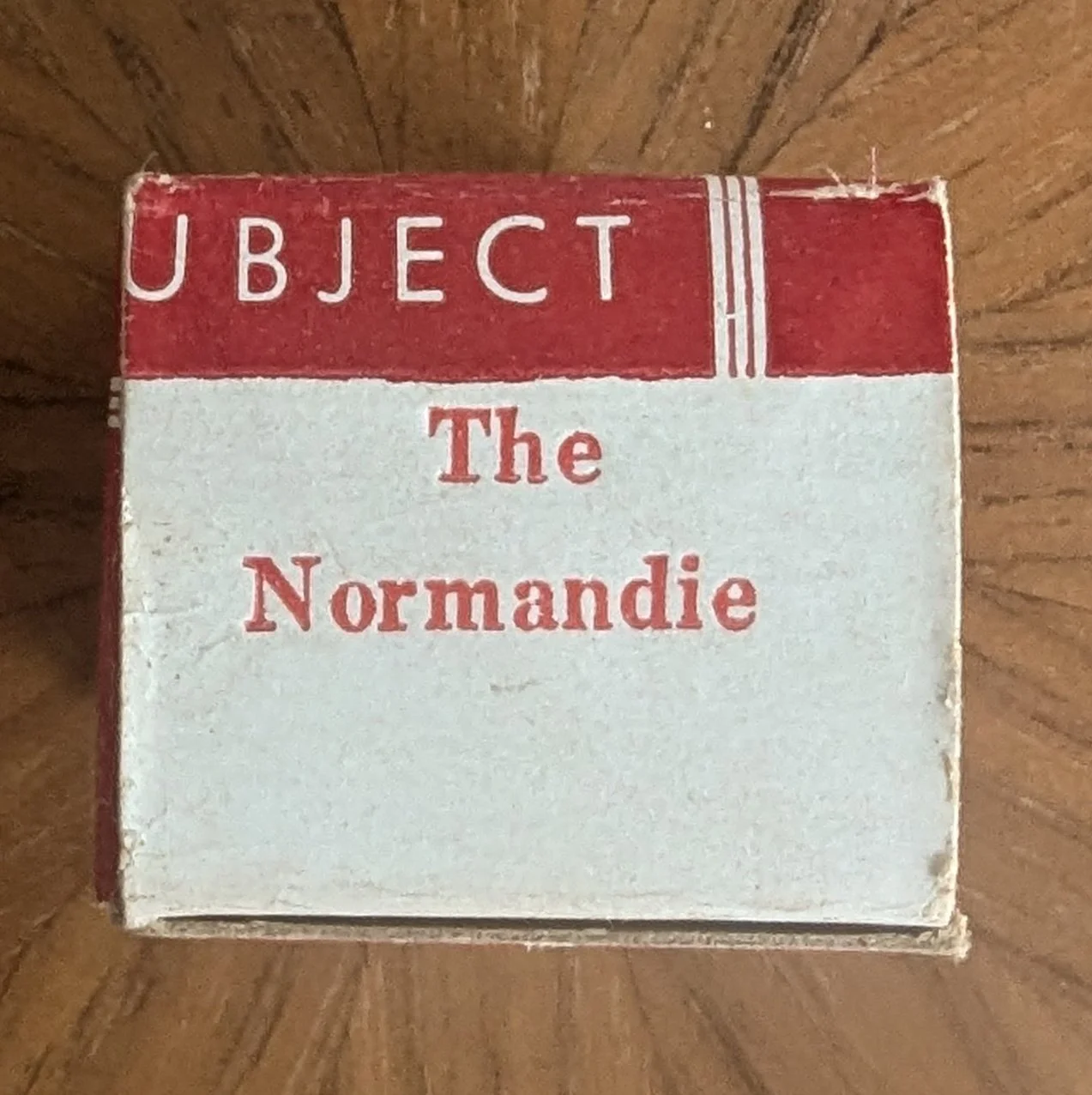
This box has been cut incorrectly but still got folded into a filmstrip box.
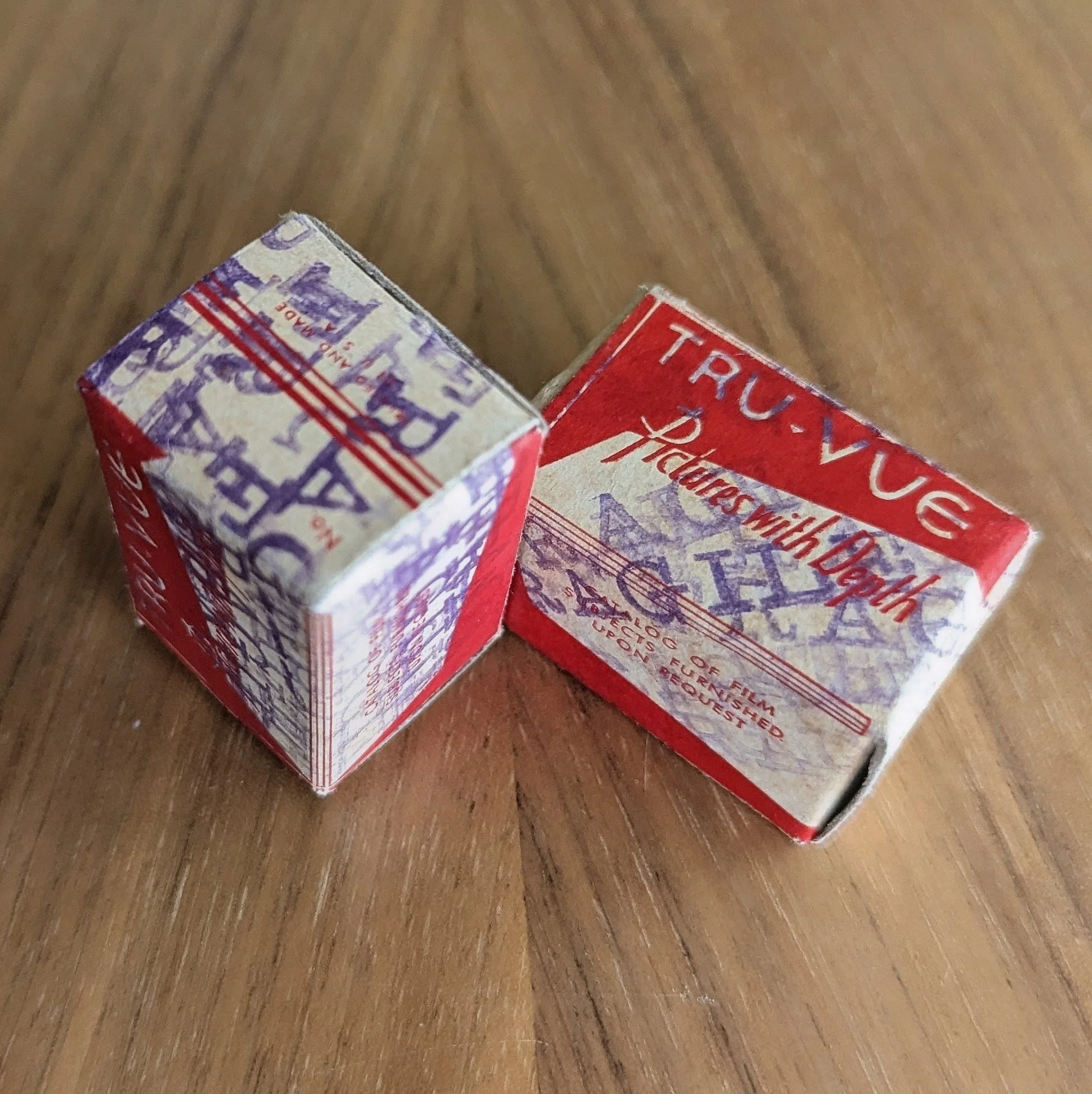
These boxes accidentally had "FRAGILE" stamped all over them but still got folded into filmstrip boxes.
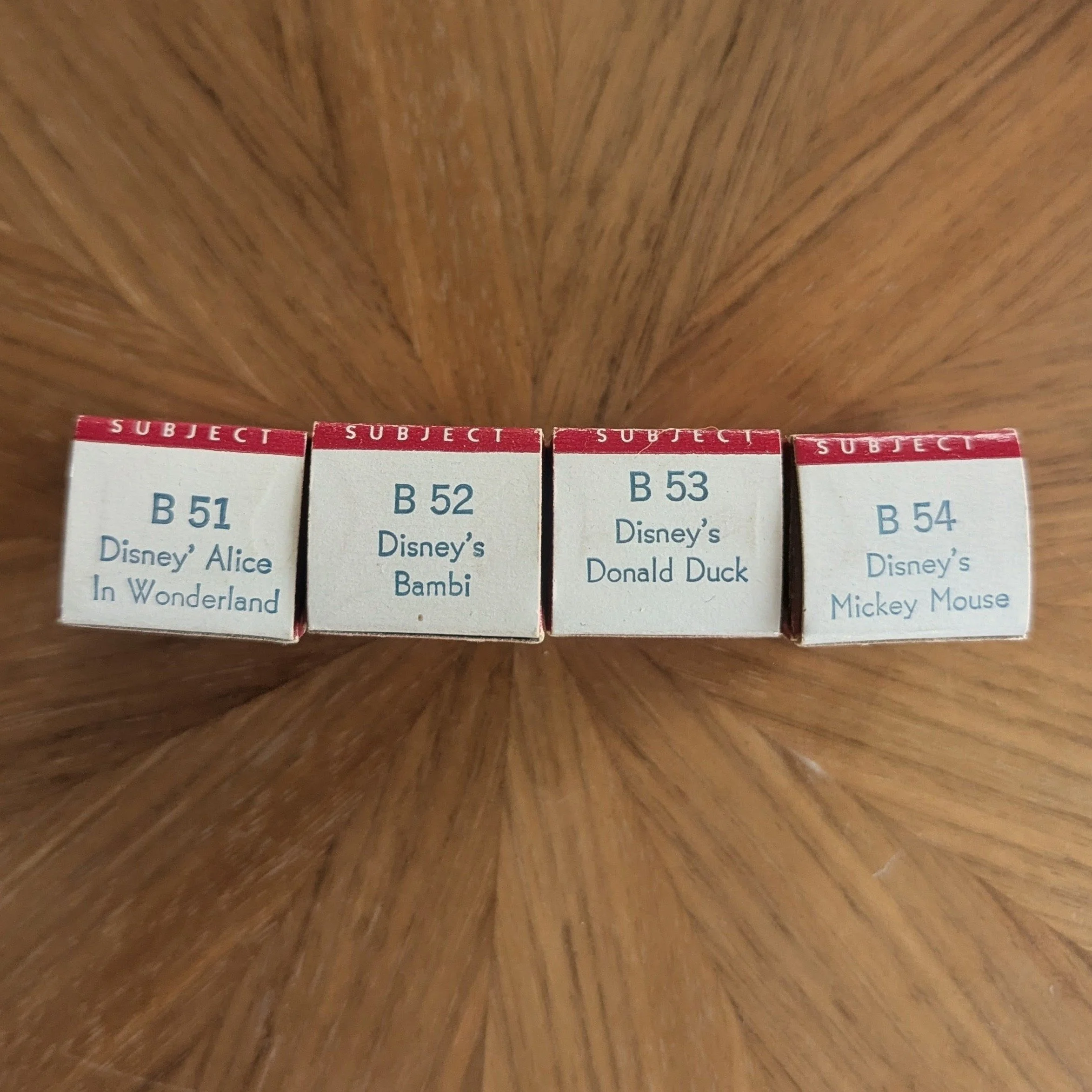
The first box should say "Disney's" but is missing the "s"
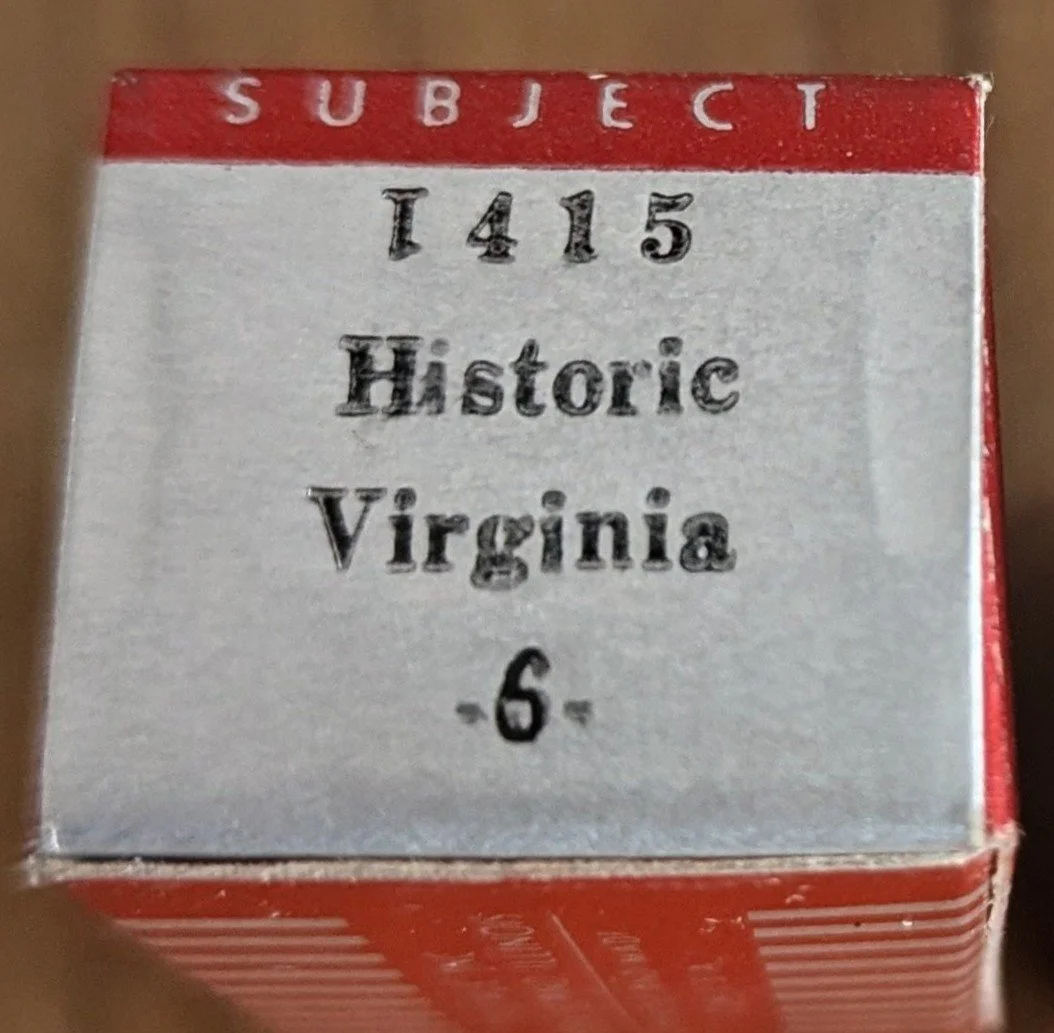
The first "1" in the film number is upside-down.
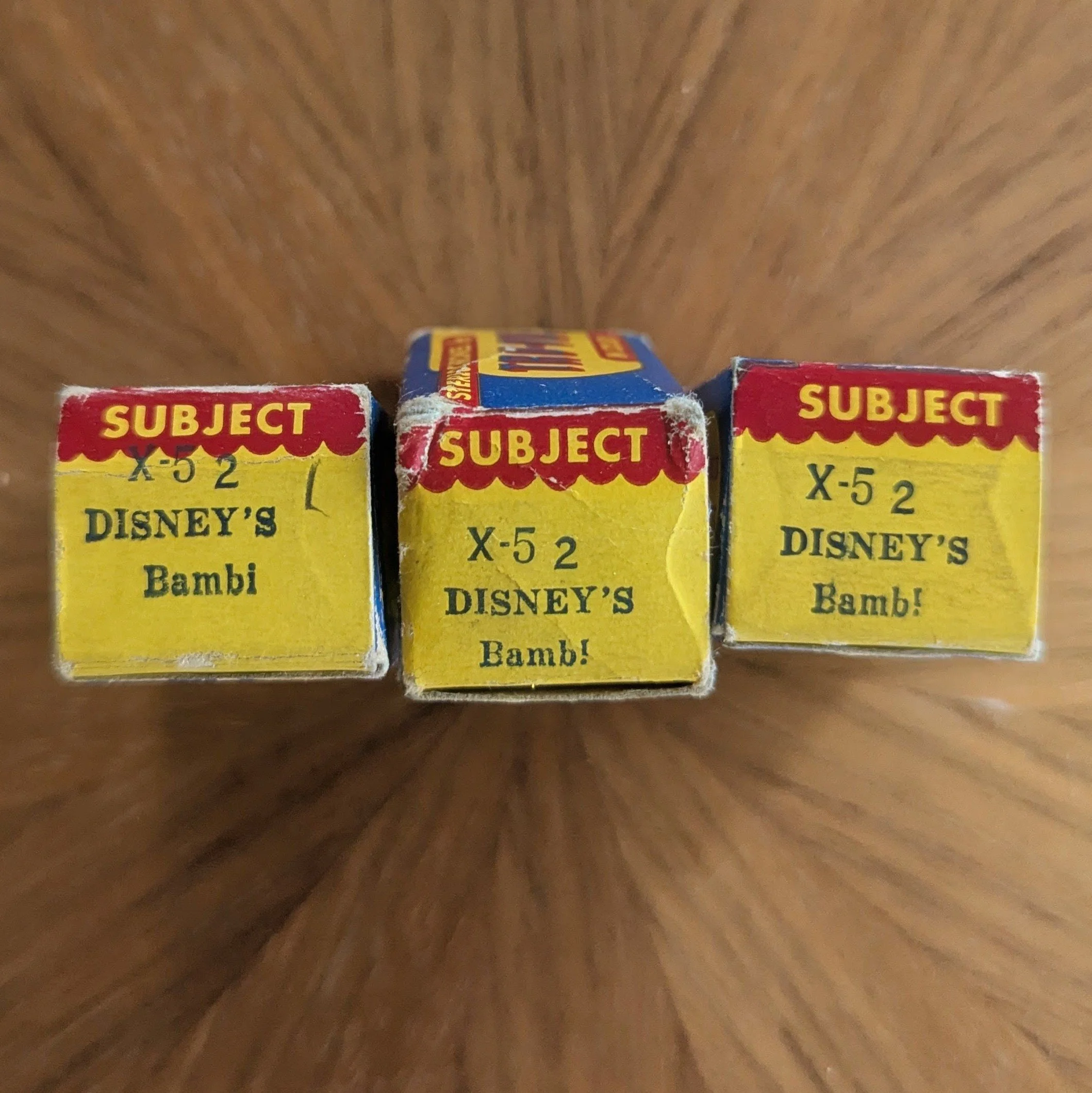
The "i" in "Bambi" is upside-down on the last two boxes.
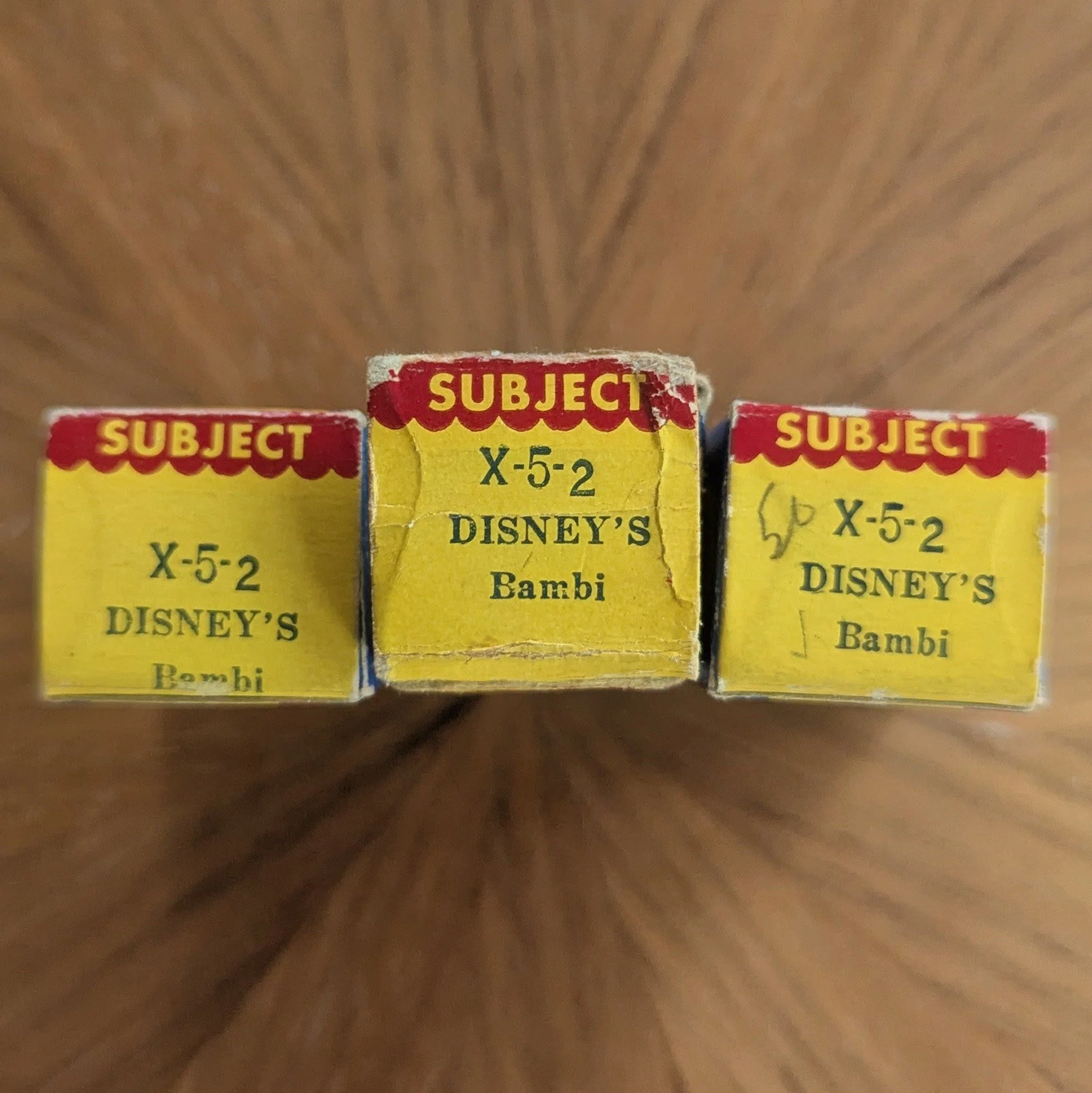
On the "52" an extra dash is accidentally inserted between 5 and 2. It's correct on the other end flap.
Some Final Notes
There’s so much more lurking in our filmstrip collection, so check back here occasionally for updates! Our goal is to share so we can discuss and build on each other’s knowledge. Please contact us if you have information to share.
Continue to explore our Tru-Vue collection:
Tru-Vue Home | History | Viewers | Filmstrips | Cards | Boxes | Cases | Special Sets | Sales & Advertising