Kino-Stereofot (Cine-Stereophot)
Poland, 1950s
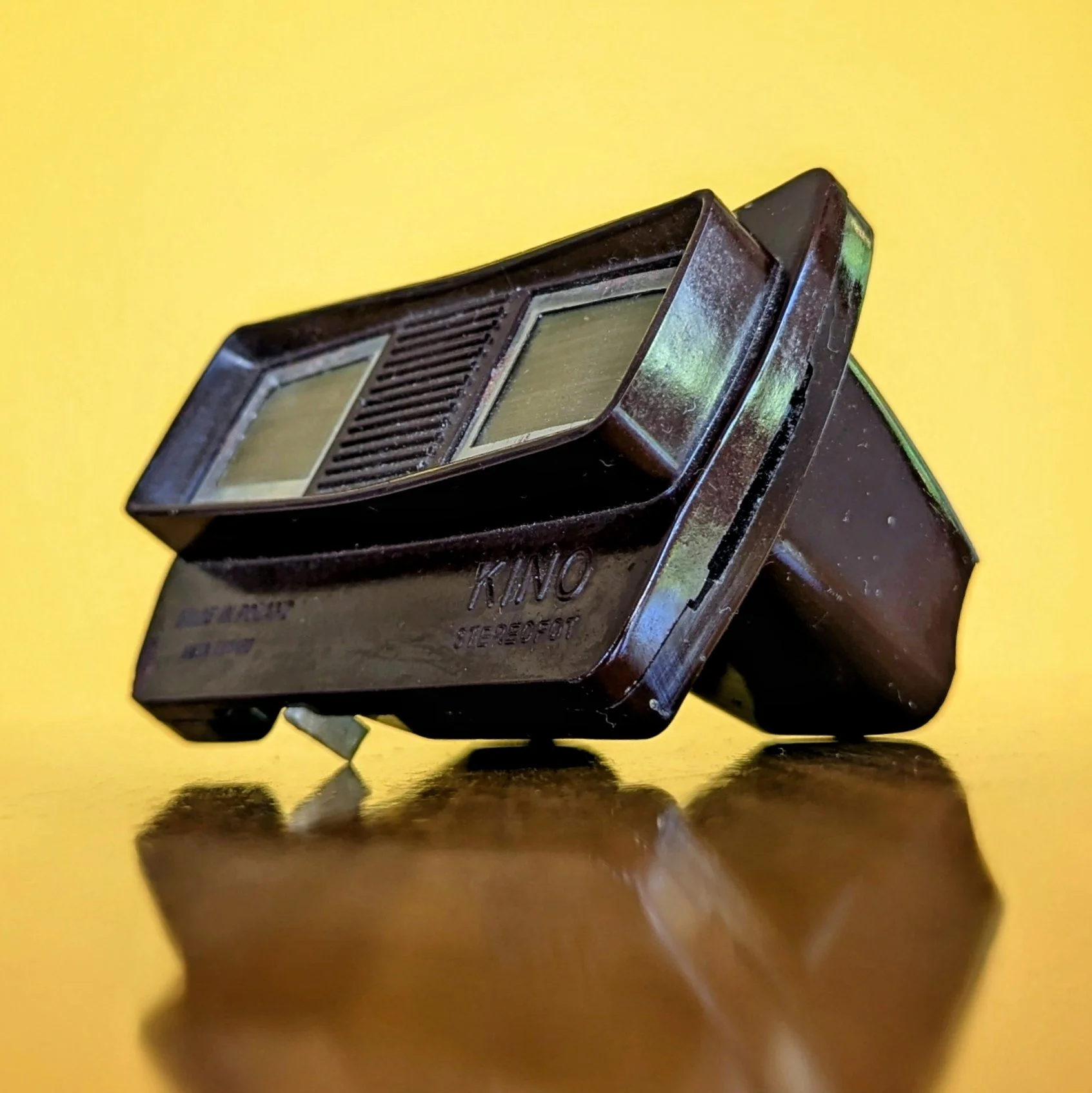
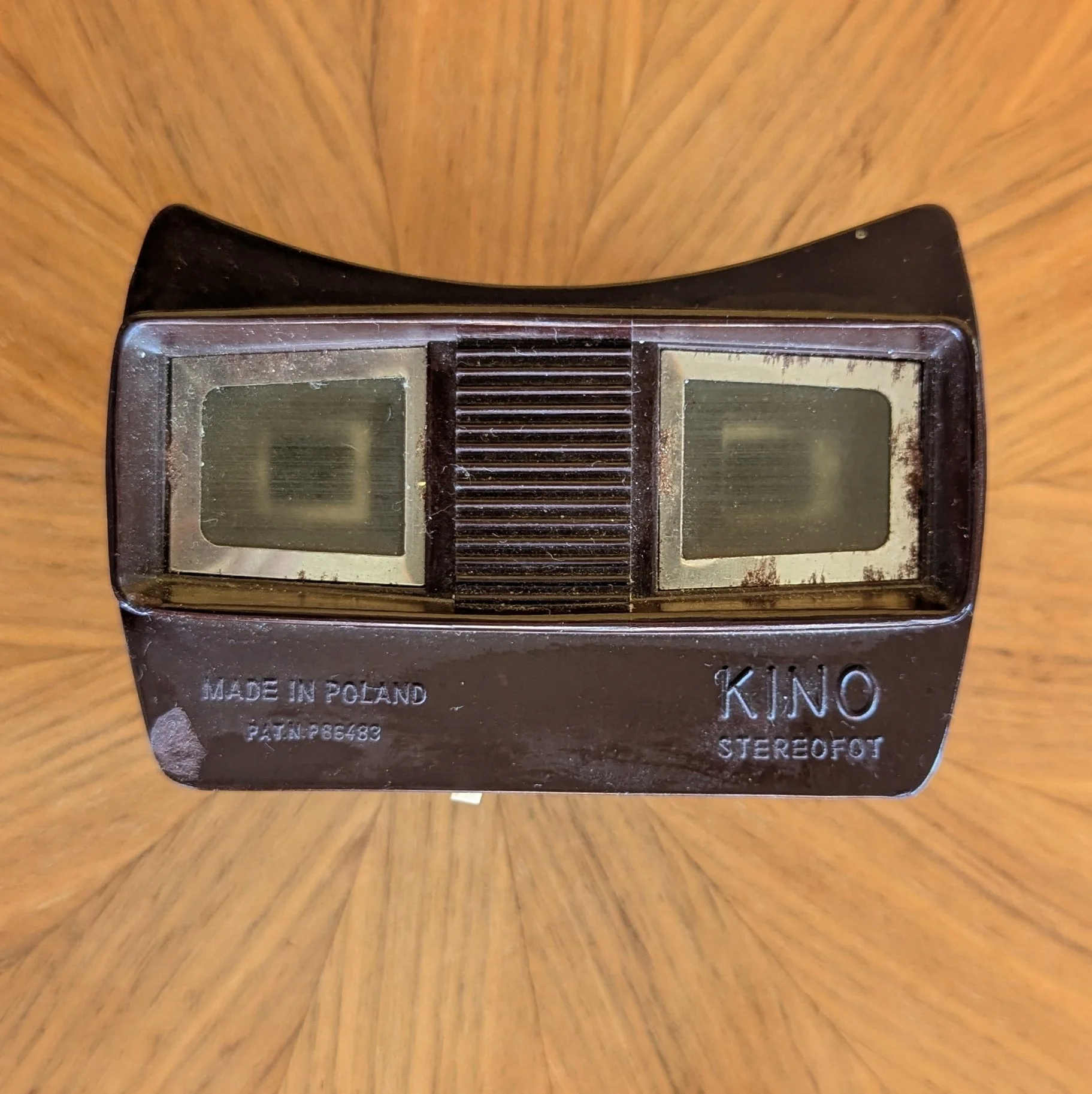
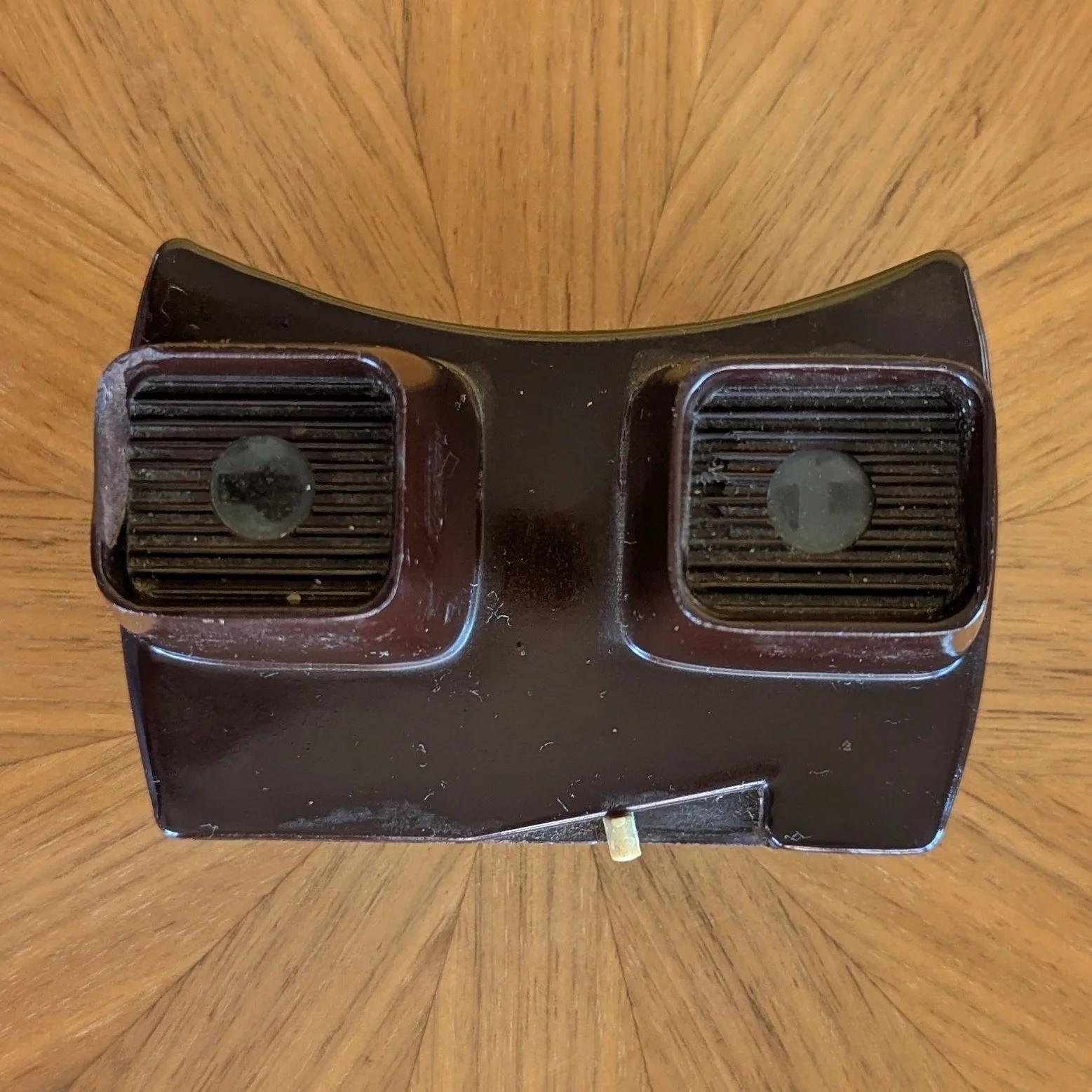
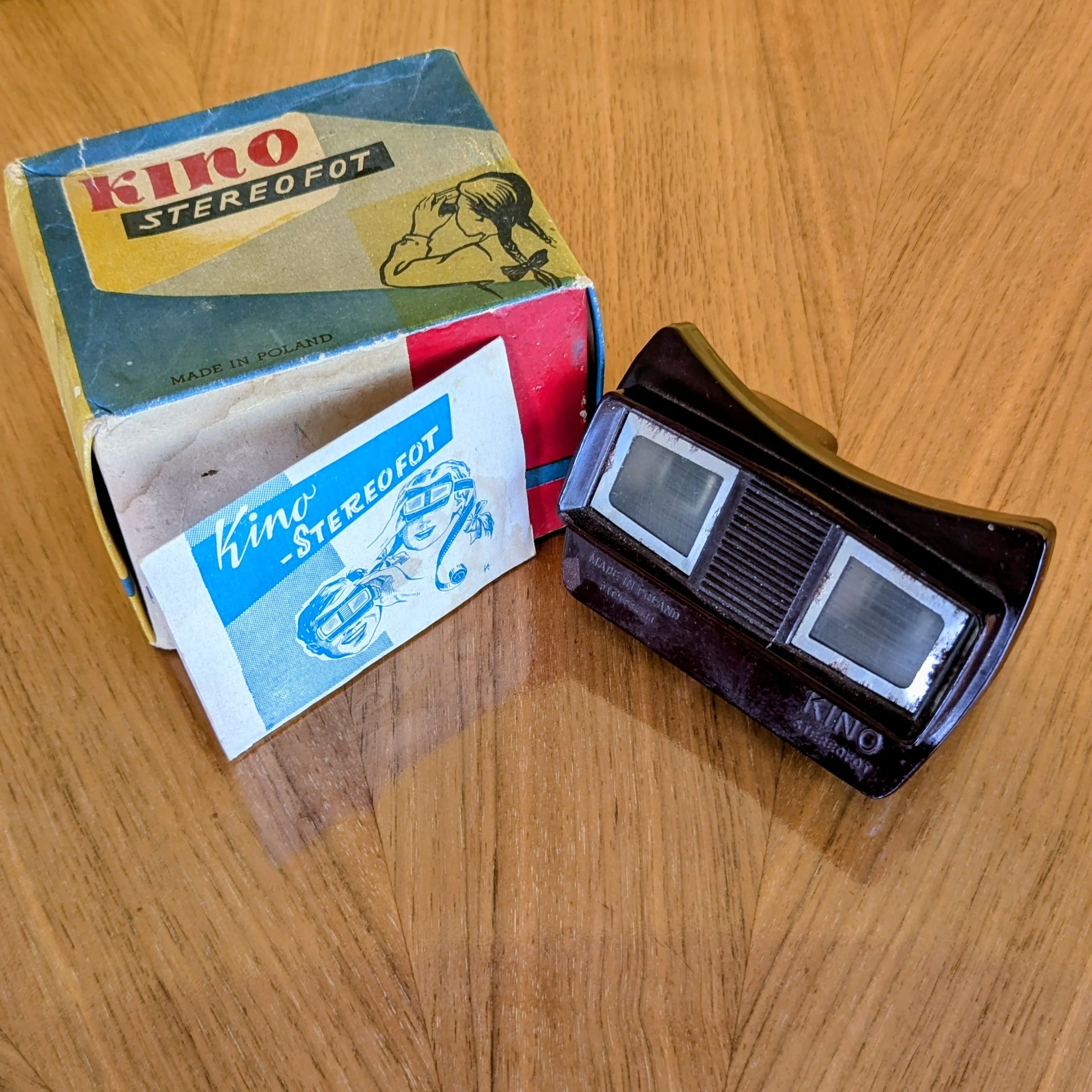
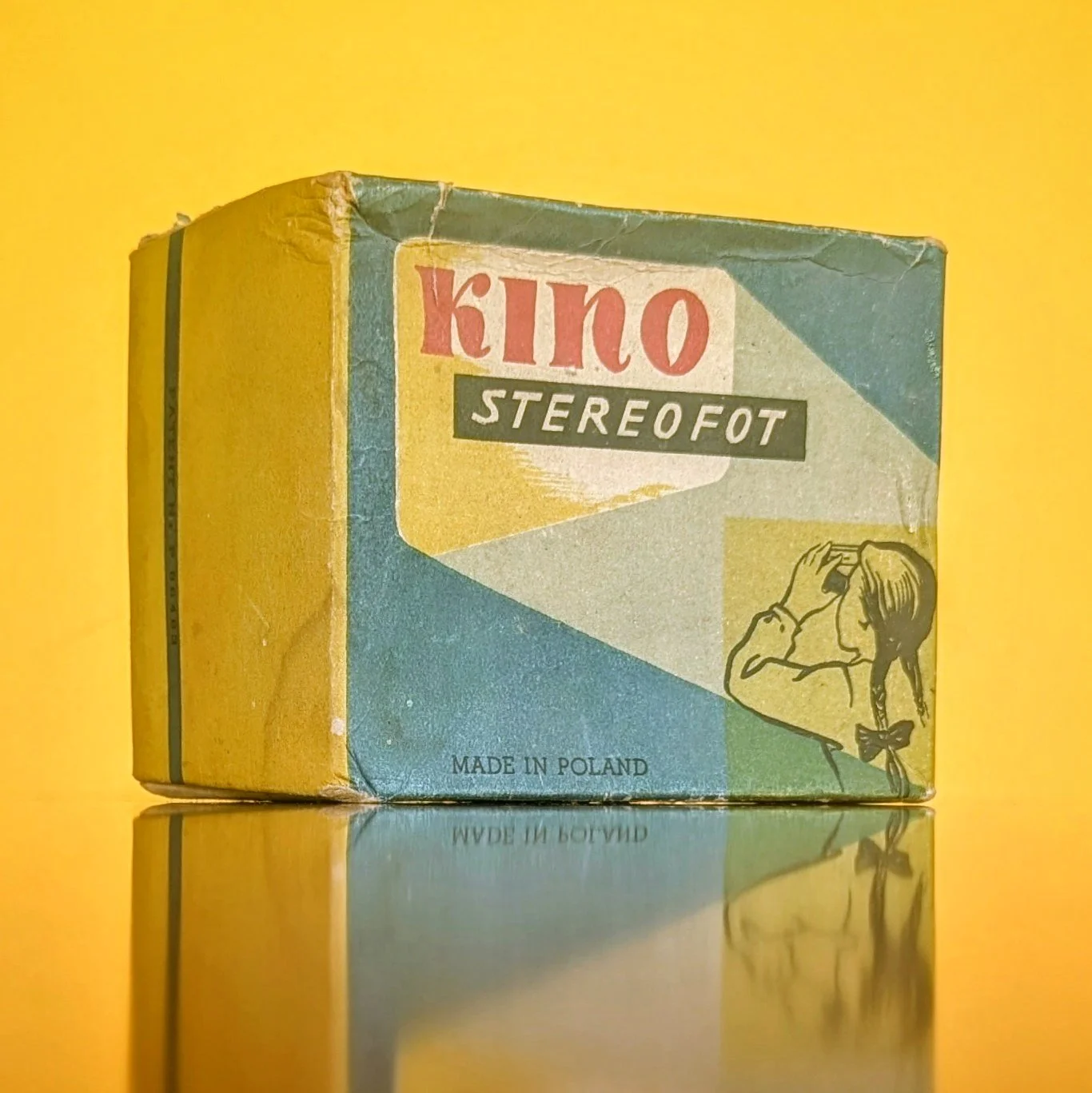
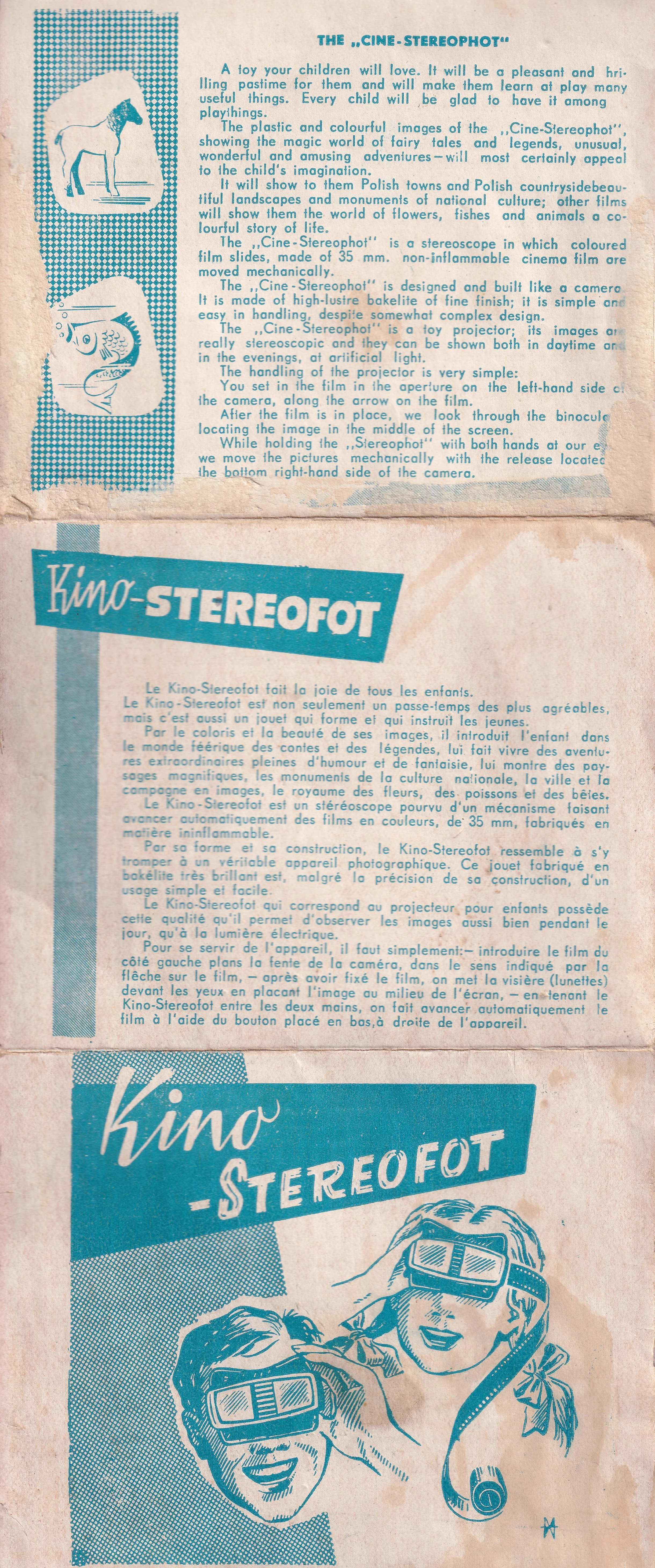
This hard-to-find viewer closely resembles the reel viewers that were being sold in the 1950s. Instead, the Kino-Stereofot has an opening that seems to accommodate either 35mm slides or filmstrips. The accompanying paperwork indicates it uses “coloured film slides made of 35 mm non-flammable cinema film,” and the illustration of the girl shows her holding the viewer with a filmstrip hanging out of it. A strange thing about the viewer design: the film entrance and exit on each side of the viewer are not level with each other, nor with the diffusers. The film crosses the diffusers at a diagonal, so it’s hard to figure out how the stereo images were viewed. Perhaps we’ll come across some original Kino Stereofot media so we can better understand the operation.
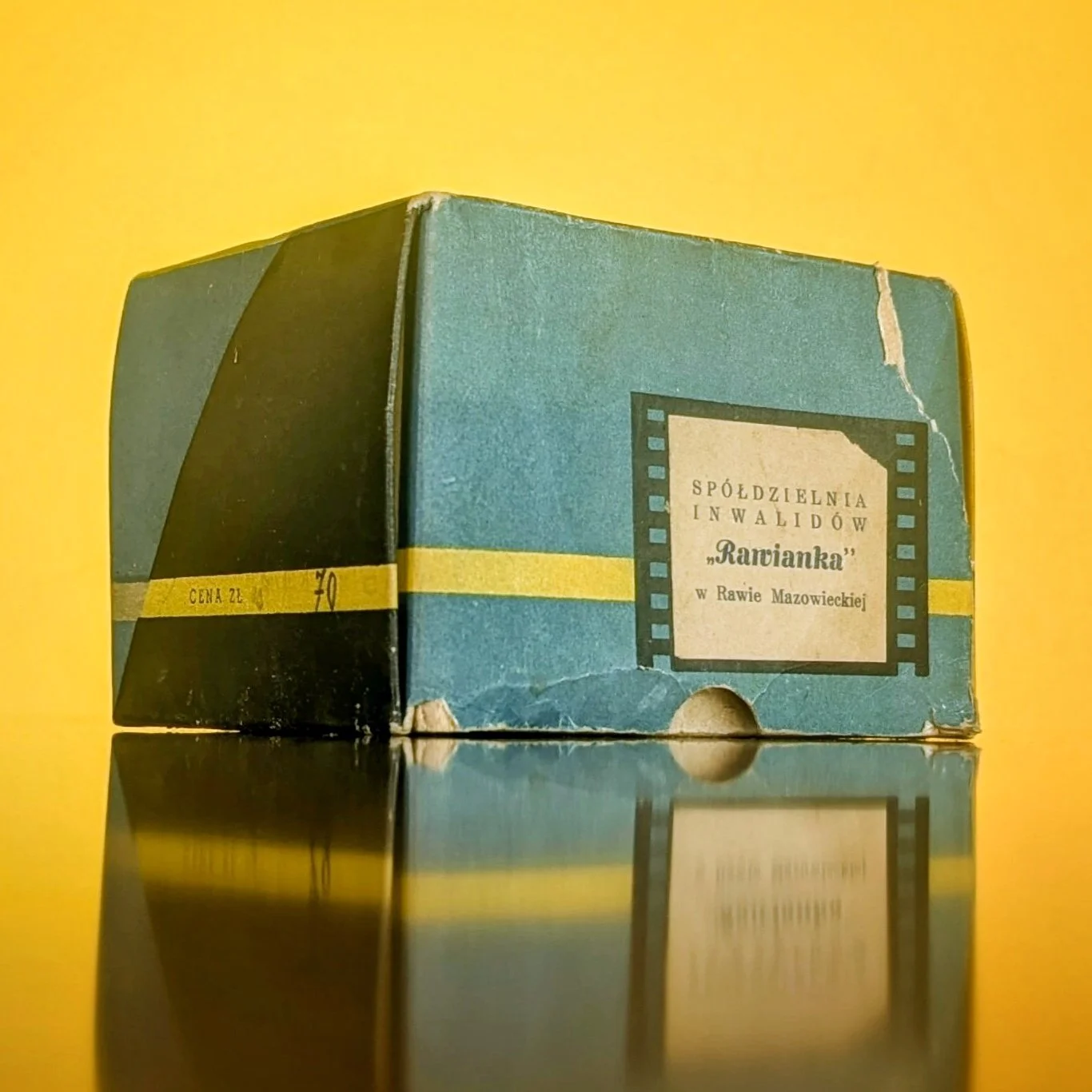
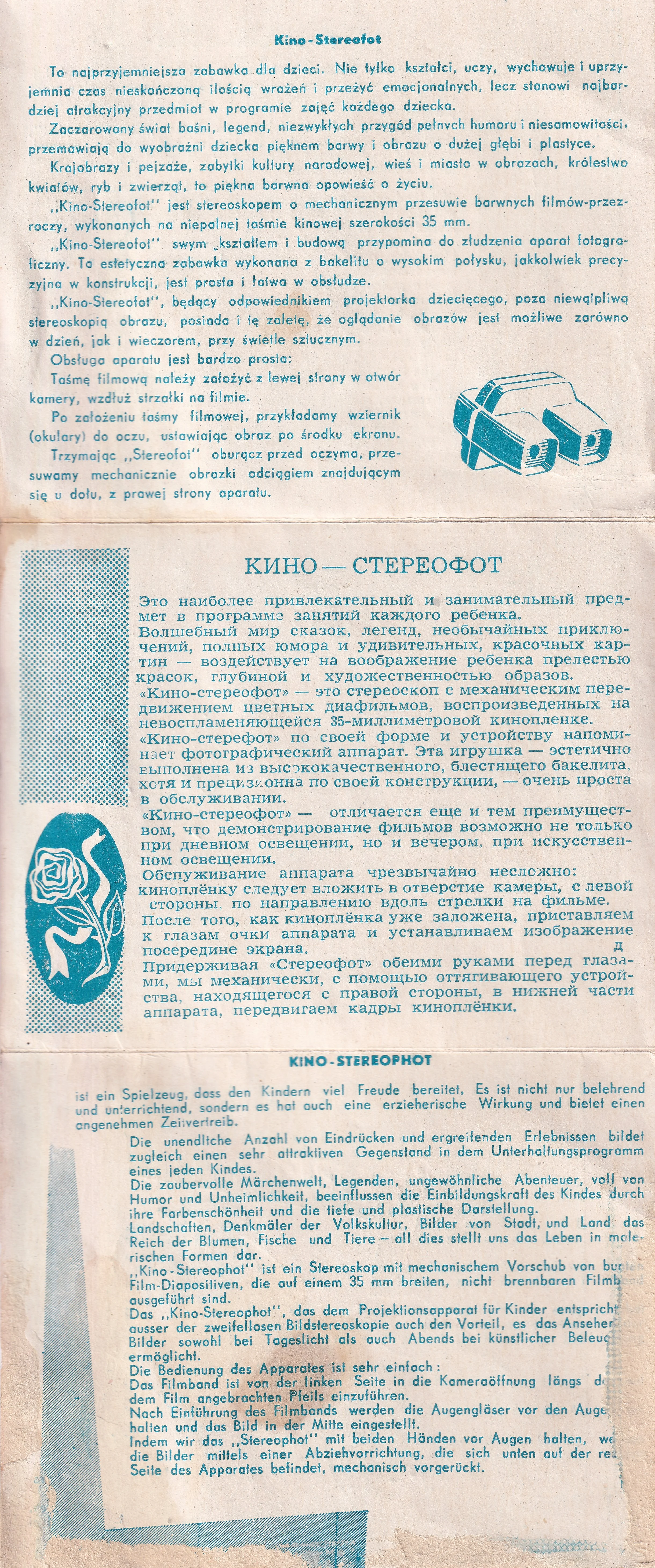
The viewer was made in the Polish town of Rawa Mazowiecka by Spółdzielnia Inwalidów "Rawianka" (which translates to Rawianka Disabled People's Cooperative). It’s described as being made of “high lustre bakelite,” and film subjects included Polish towns, monuments, and nature topics.
Primary Material: Bakelite
Media Format: 35mm filmstrip
Light Source: Natural light
Focus: Fixed
Interocular: Fixed