Hyakunin Isshu Stereoscope
Japan, 1900s
From Torin Boyd’s research:
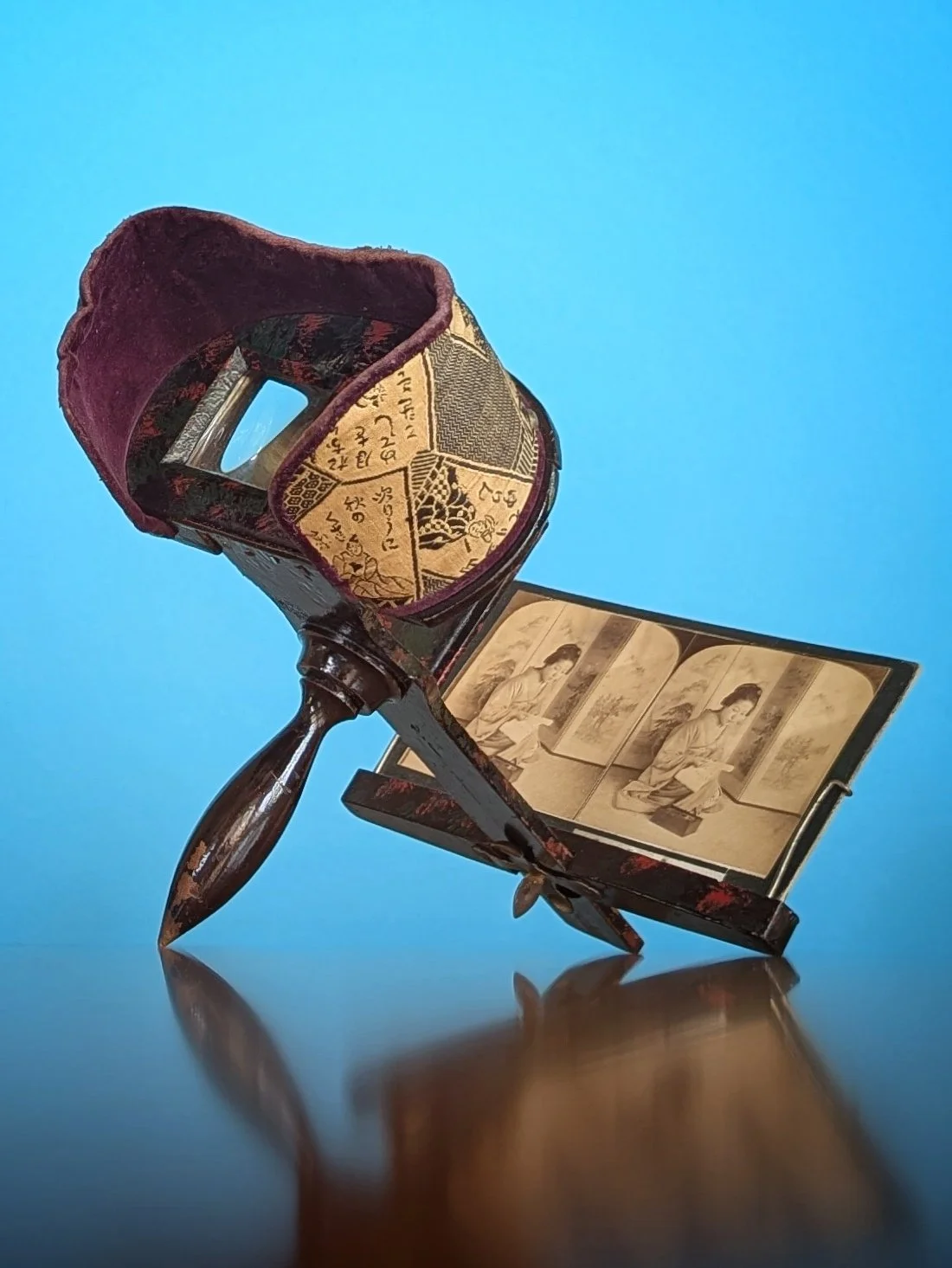
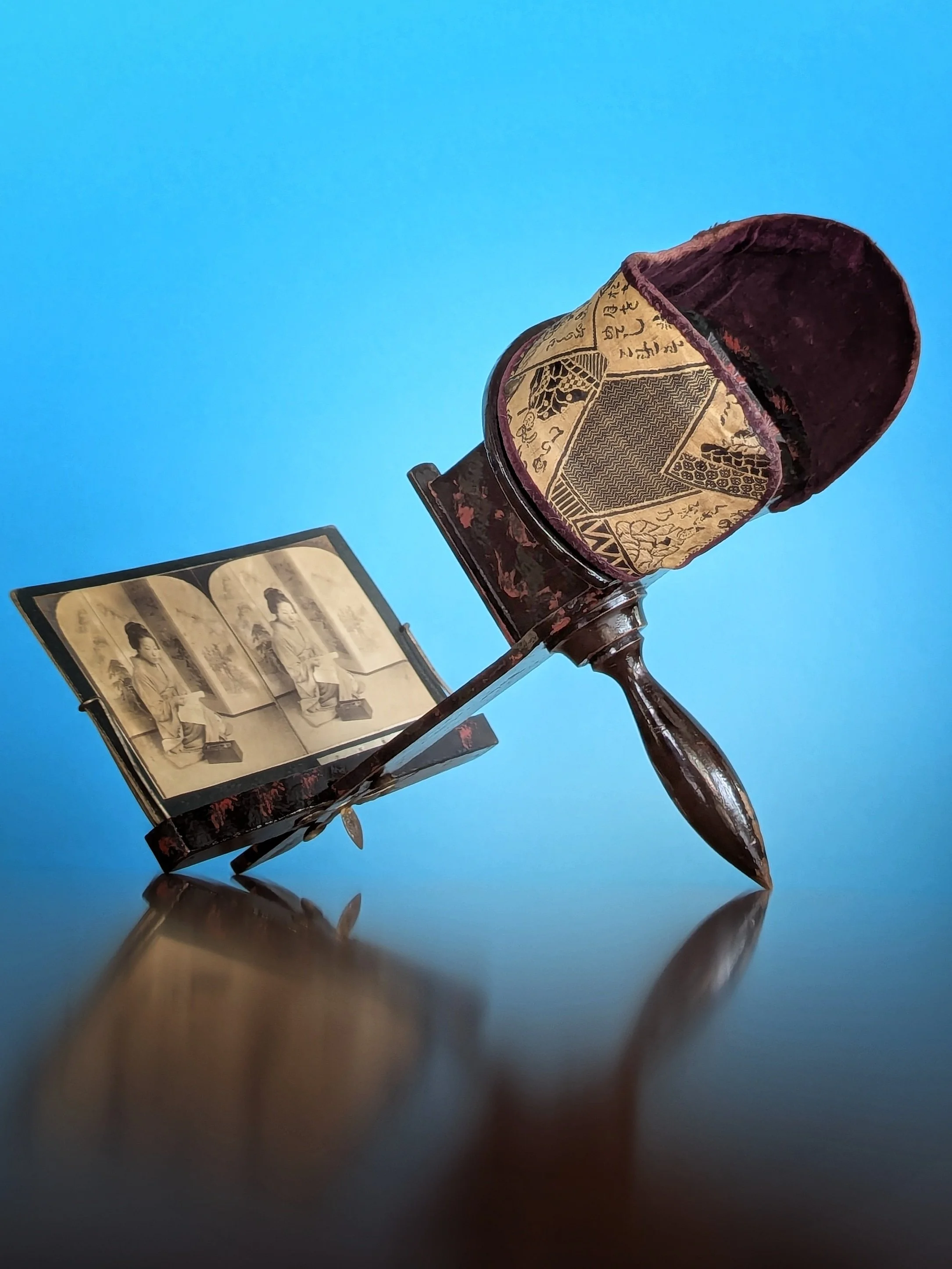
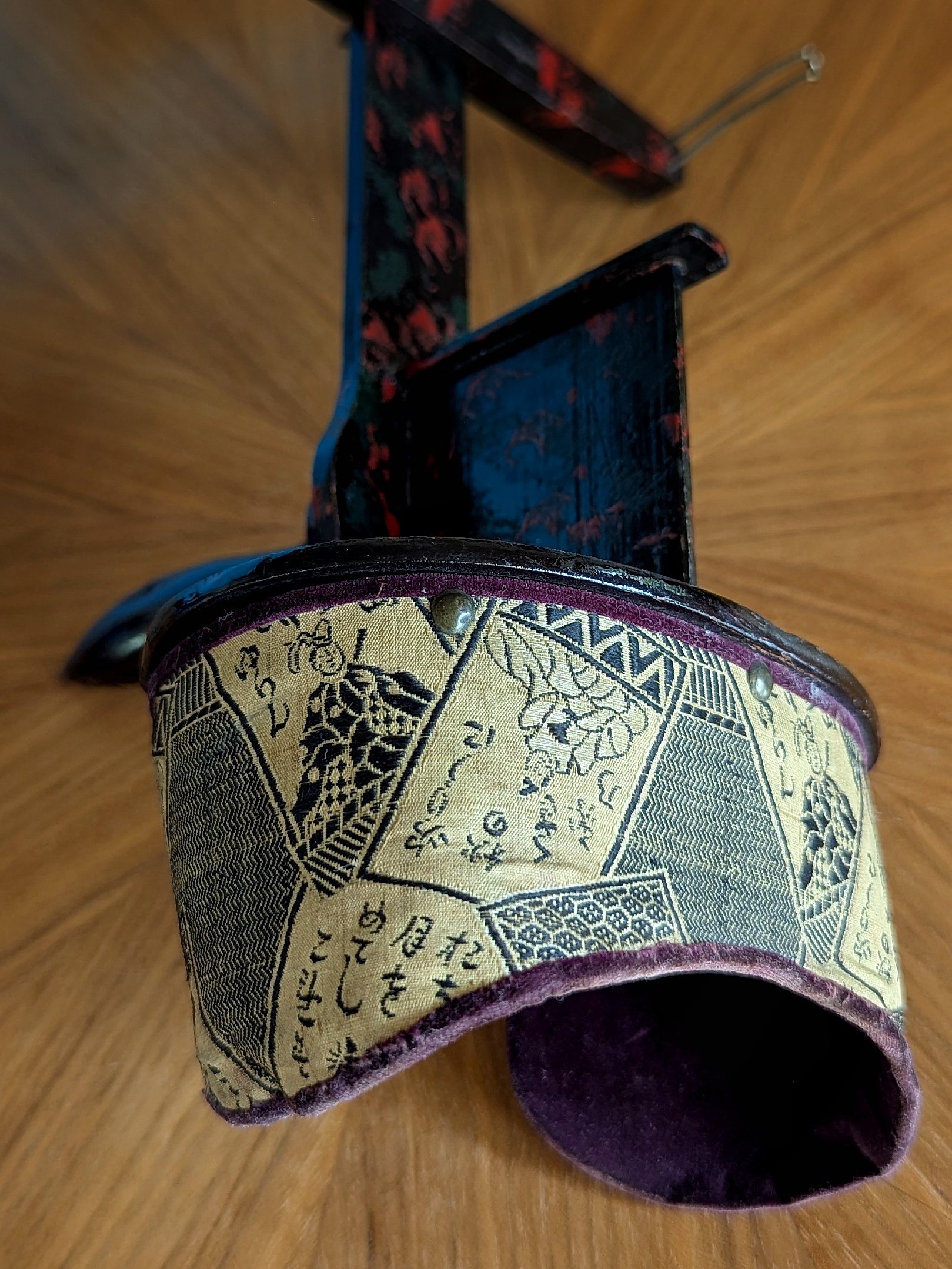
Japanese made stereo viewer with silk brocade hood adorned with Hyakunin Isshu card game motifs. The hood's inside is velvet lined, and the viewer itself has a traditional black lacquer finish with red dappled brush marks. The maker is unknown, but this exact same viewer construction was known to be sold by the stereographic firms H. G. Maruyama and Katsugakwan during the late Meiji era. A likely candidate for this viewer could be Tokkio Company, the only Meiji-era company to aggressively establish the hardware side of the stereoview business in Japan. Sometimes Tokkio sold viewers under the model name "Panorama".
Hyakunin Isshu, literally "One Hundred People, One Poem Each", is one of Japan's most famous literary works and the basis of the traditional card game known as uta-garuta (poetry cards). Although the poems themselves come largely from the Heian period, the anthology was compiled later, during the Kamakura period, by Fujiwara no Teika around 1235. It is an anthology of 100 waka poems, each by a different poet. The poems span roughly 600 years, from the 7th century through Teika's own era. Most of the best-known poets represented lived during the Heian period, when poetry was an essential part of aristocratic life.
Primary Material: Wood
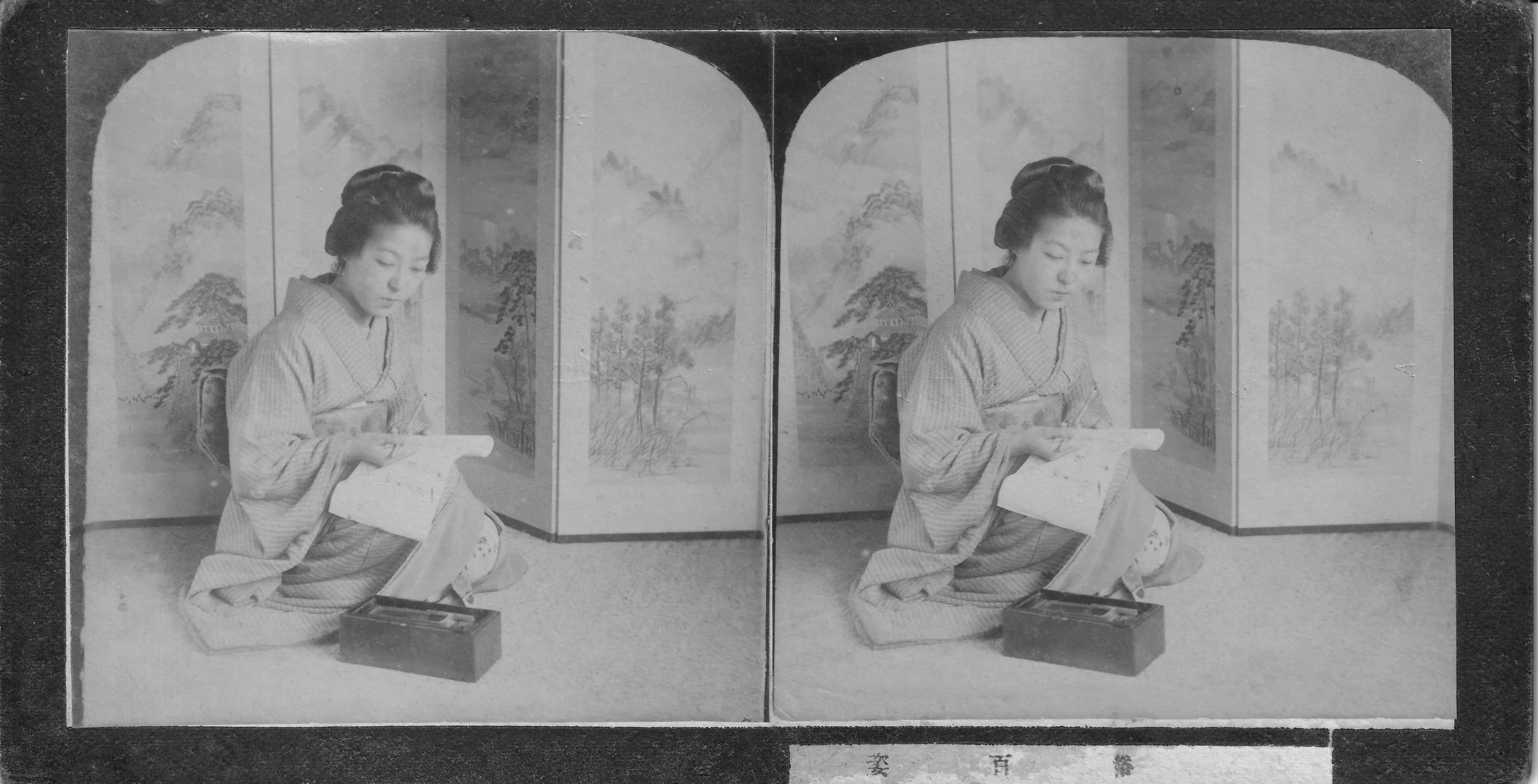
Media Format: Card
Light Source: Natural light
Focus: Adjustable
Interocular: Fixed