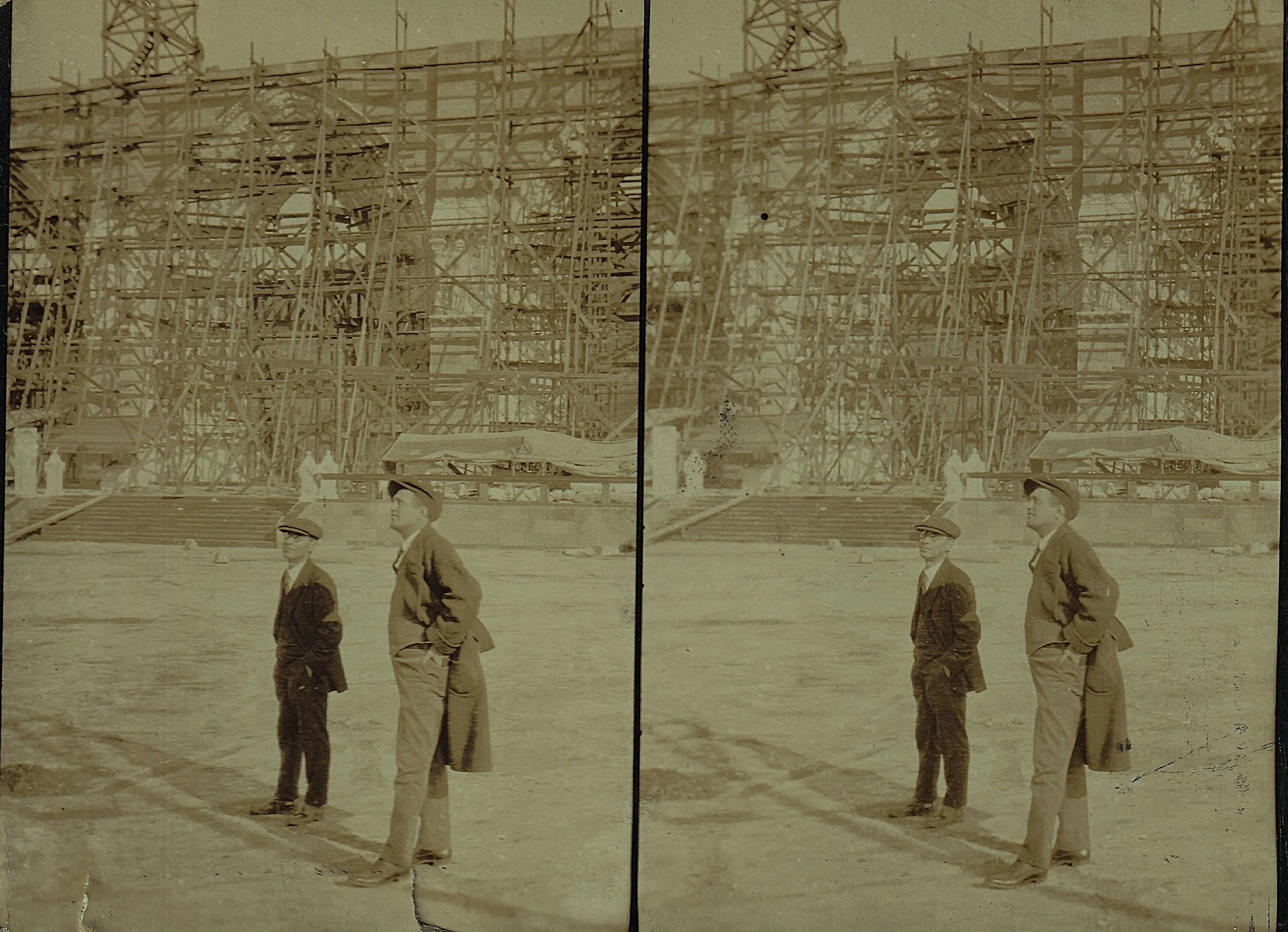
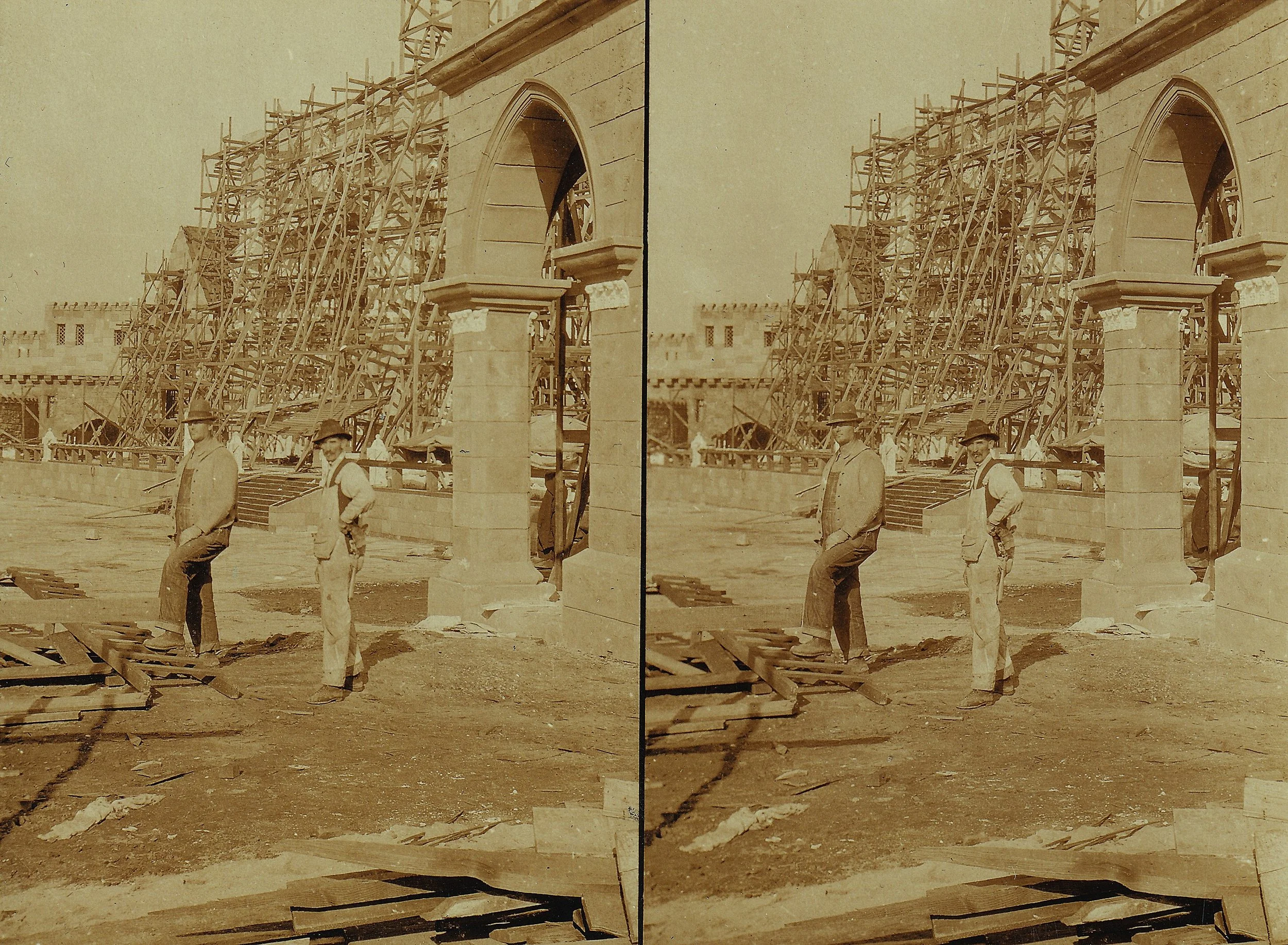
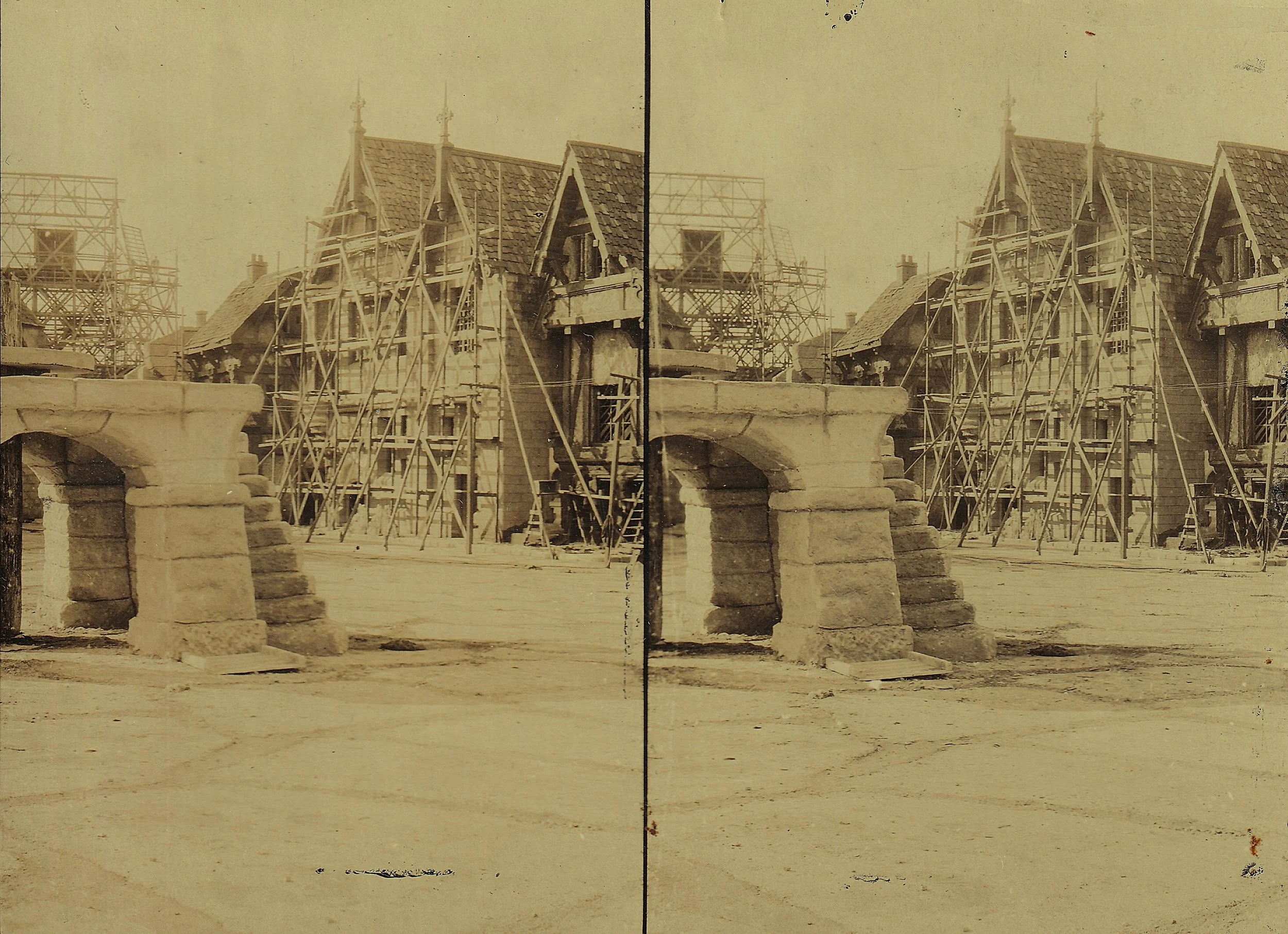
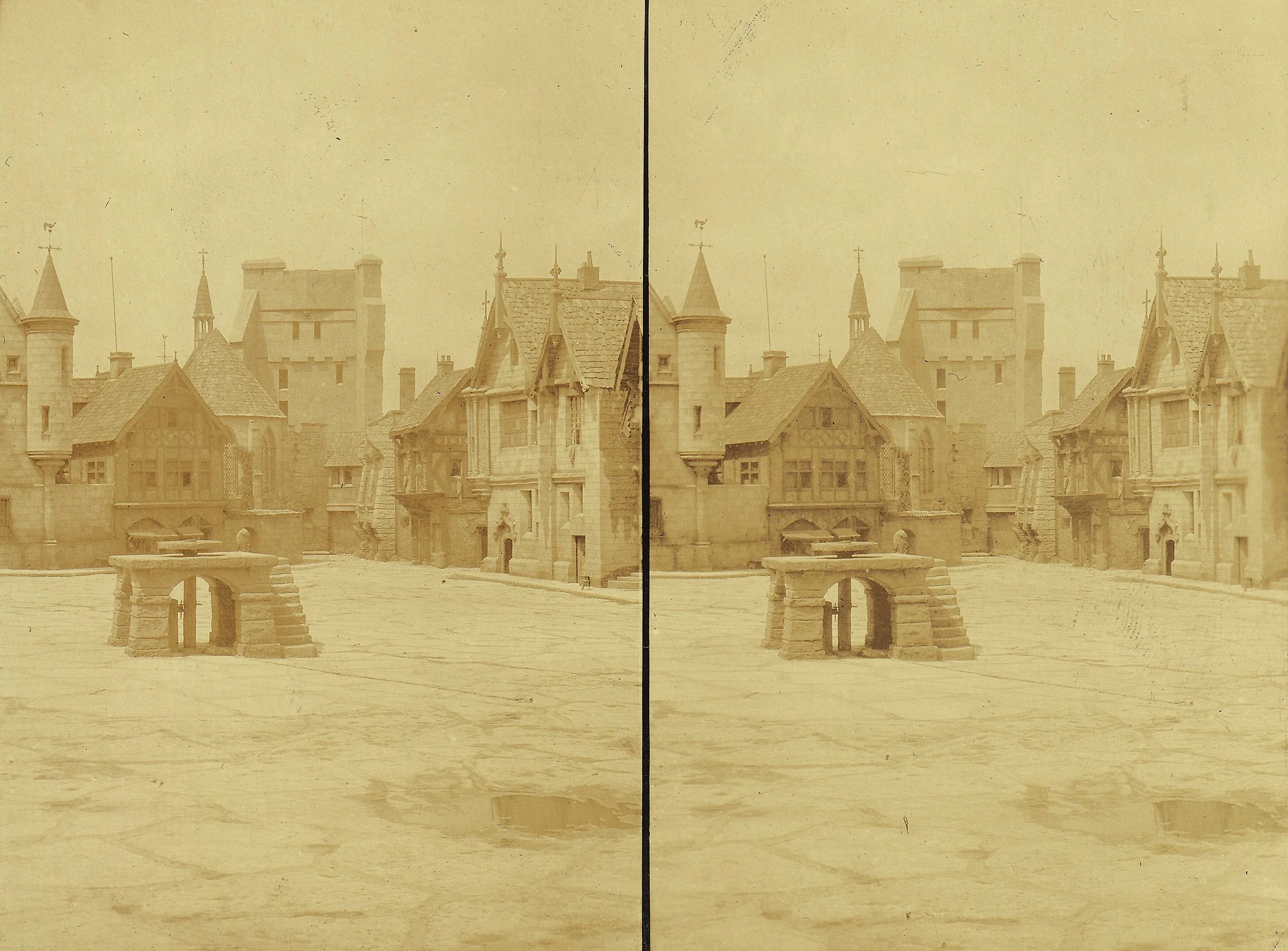
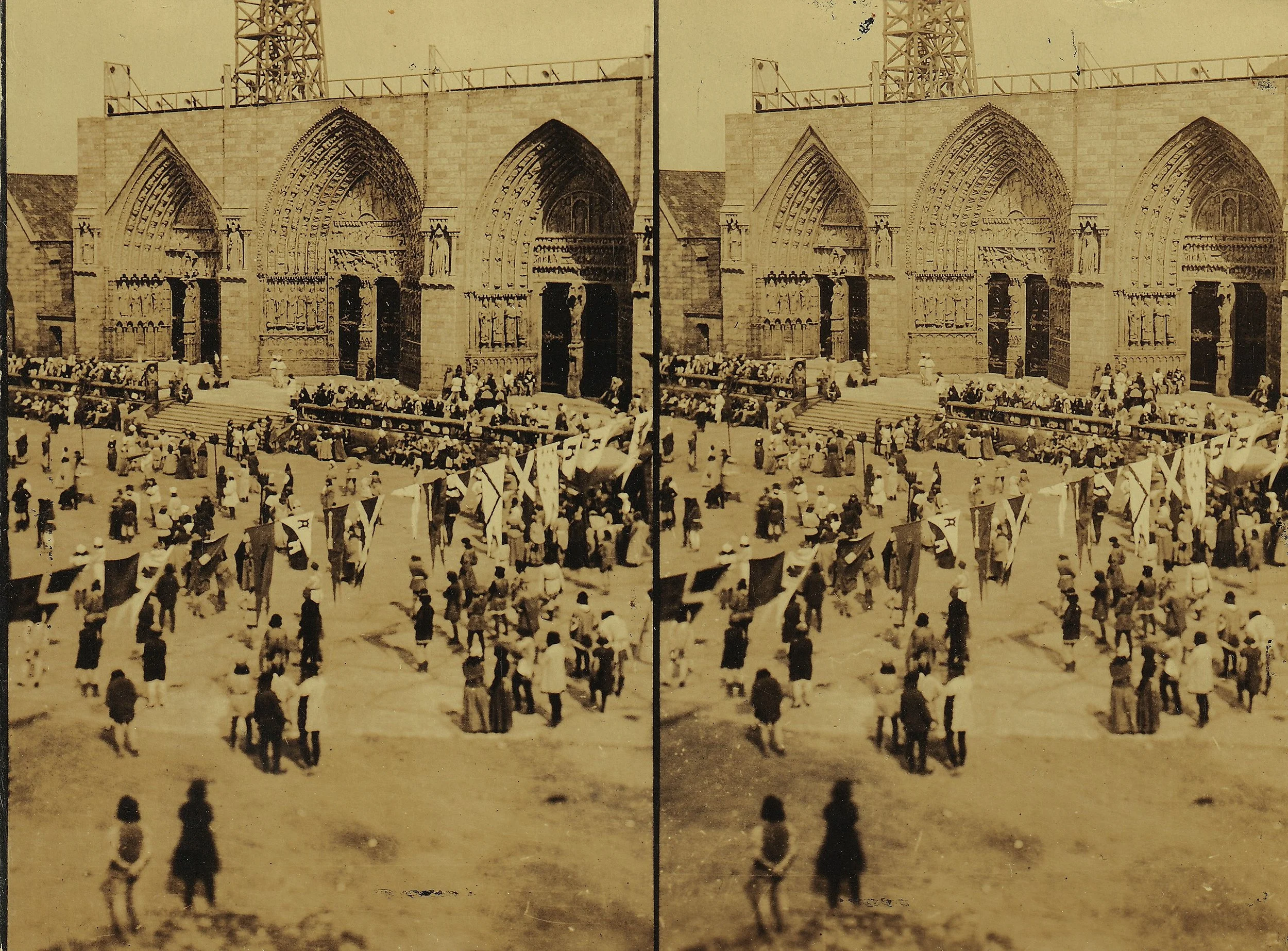
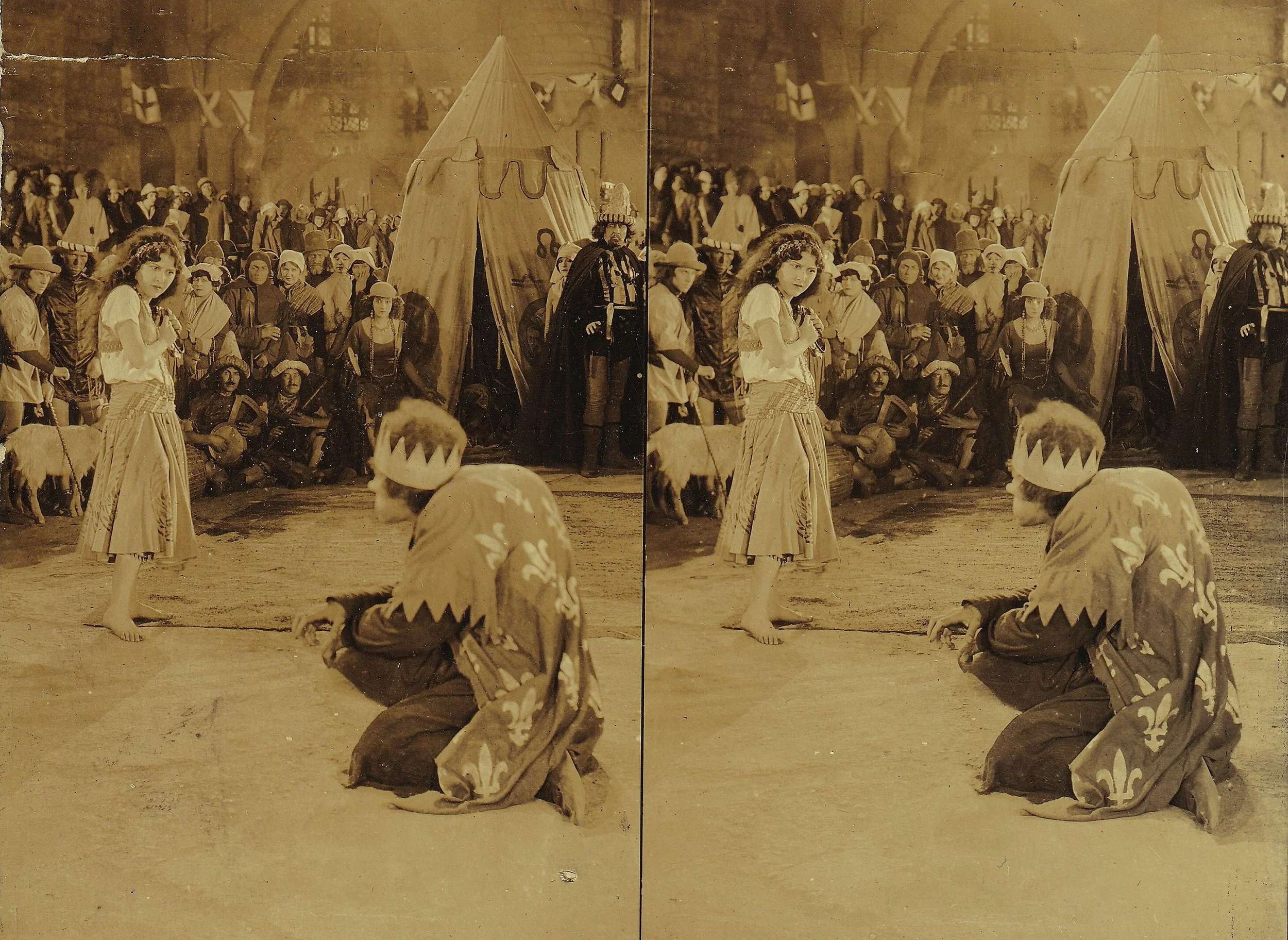
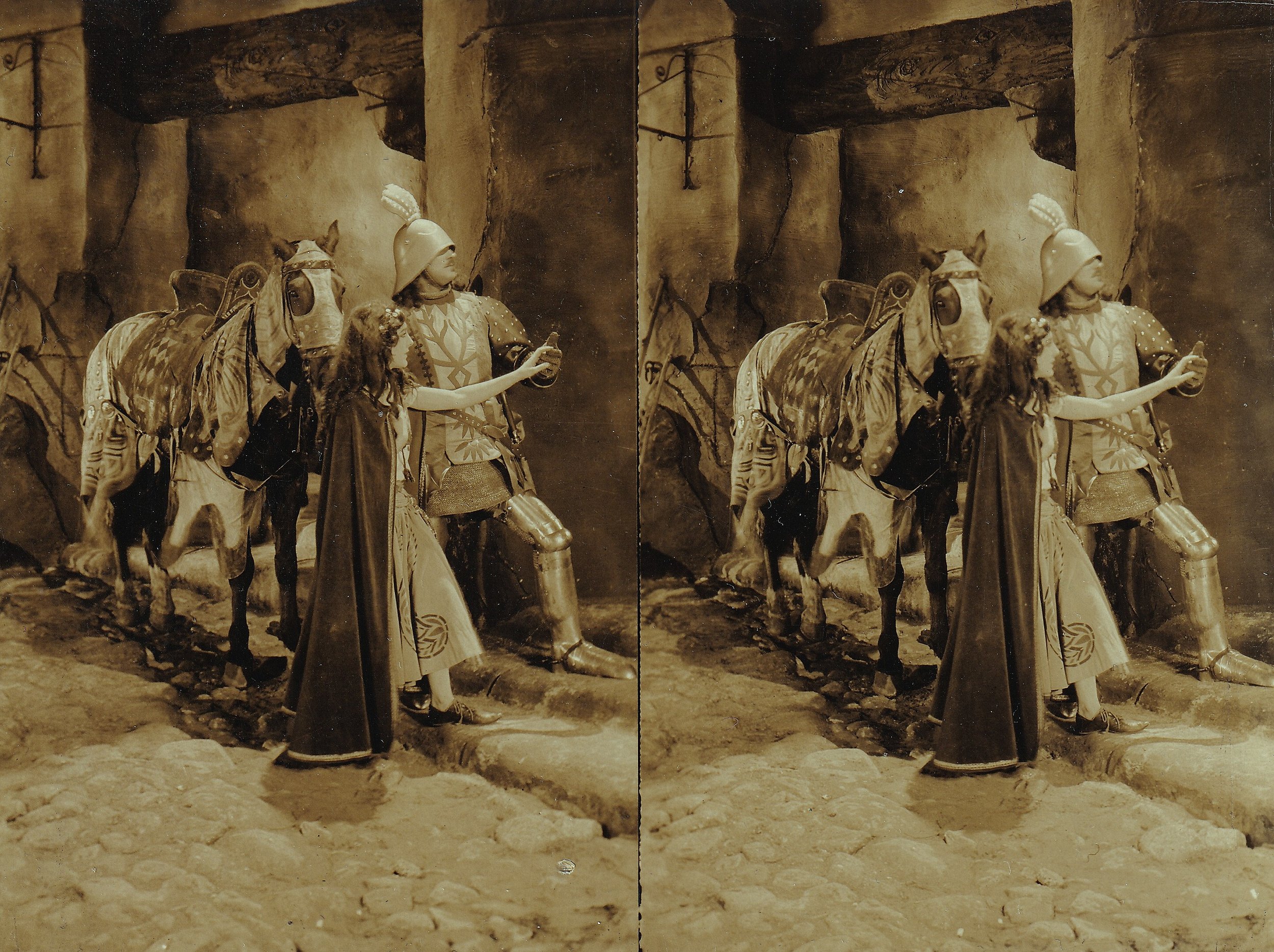
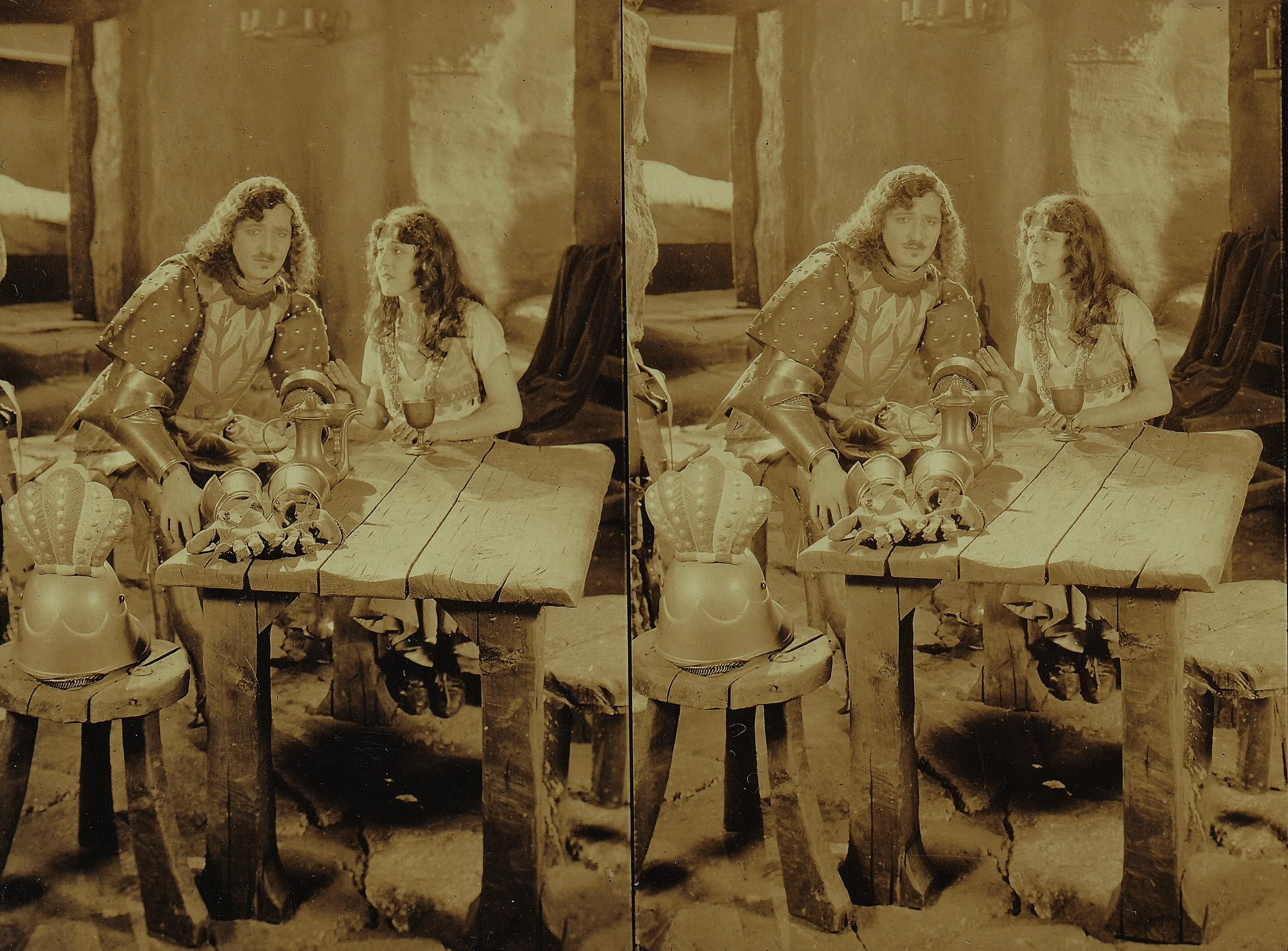
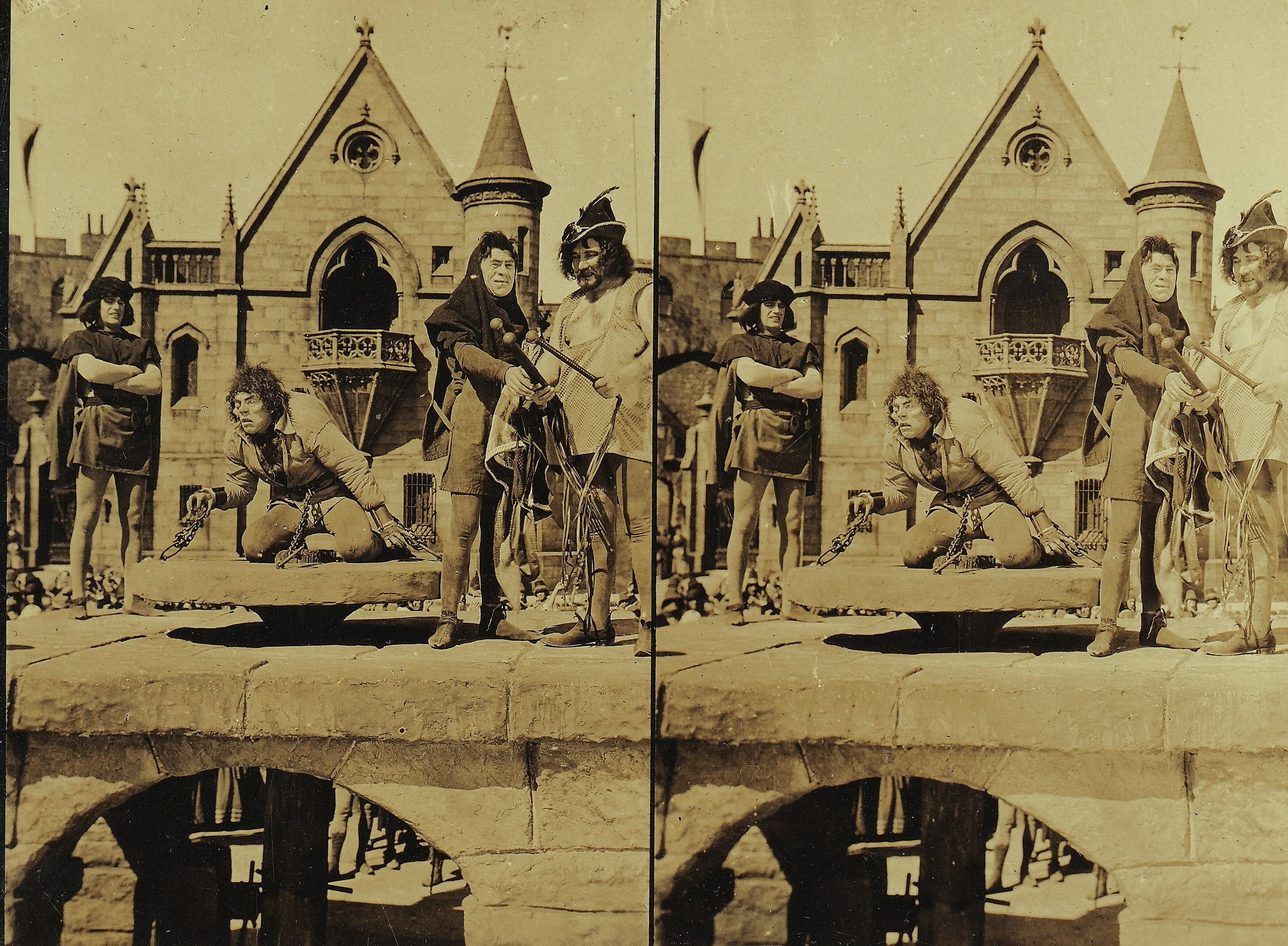
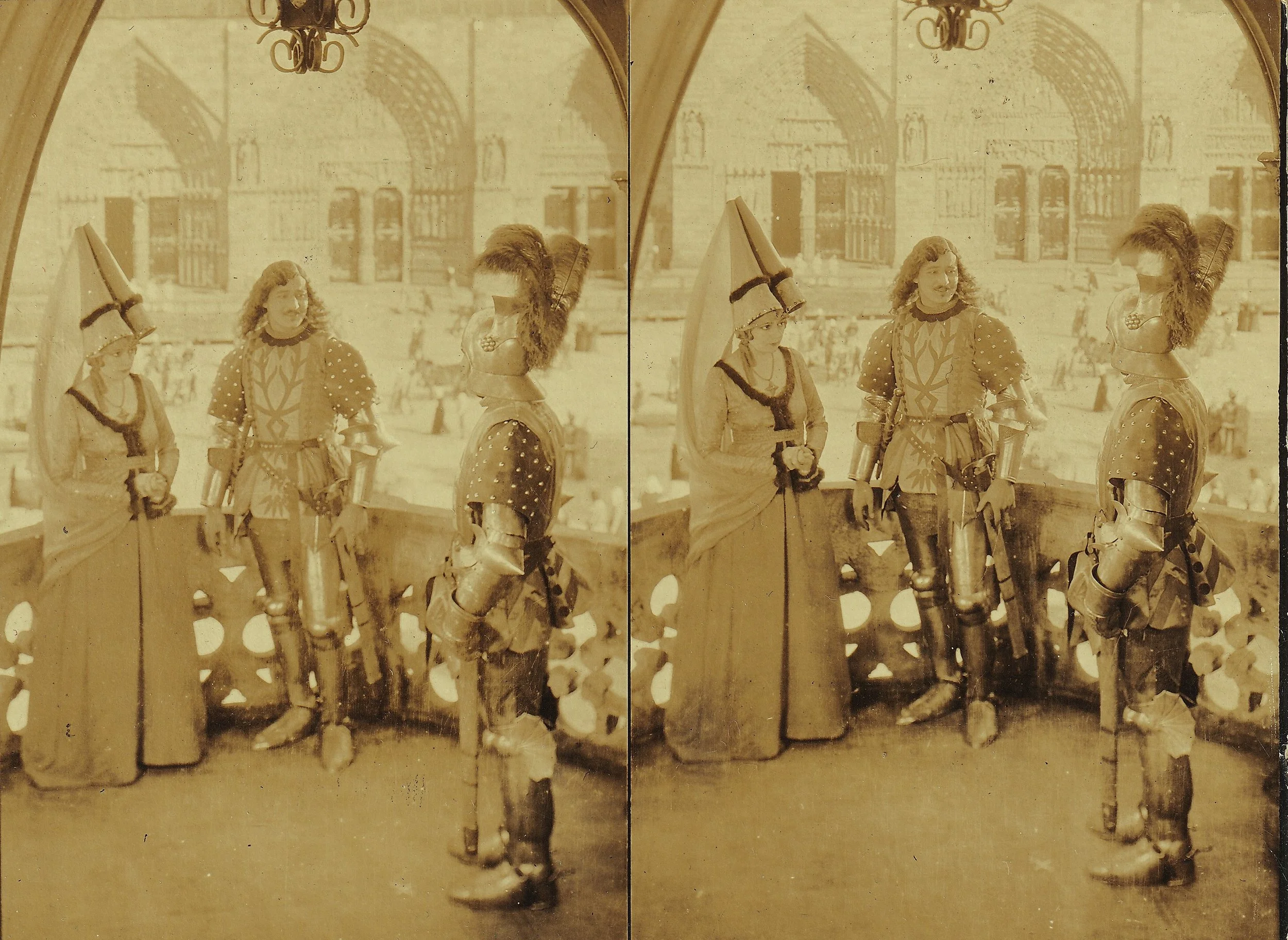
Scenes from the Universal Super-Jewel Photoplay “The Hunchback of Notre Dame” Adapted from Victor Hugo’s Immortal Romance
We originally purchased this set because of our large Indupor/Camerascope collection and our ongoing interest in custom Indupor stereoview sets. The cards were not a standard size and were packaged with an Indupor viewer.
At first glance, we could tell the set depicted stereo images from The Hunchback of Notre Dame. But because we didn’t yet know the original film was produced by Universal, and because early film terms like “photoplay” and “super-jewel” were unfamiliar to us — and because we hadn’t read all of the captions on the backs of the stereoviews — we assumed the images were from a staged reenactment. Perhaps a community theater production, albeit a very committed one.
Then our research began. And turns out that no, these were not images from some charming local production. This was something much more interesting. We learned that “photoplay” was an early term for a motion picture, that Universal Pictures premiered The Hunchback of Notre Dame in 1923, and that “Super-Jewel” was Universal’s branding for its top-tier feature films. As it turns out, The Hunchback of Notre Dame became Universal’s most successful silent film.
Not only did we discover that these stereoviews were from the original movie and included images of the legendary character actor Lon Chaney, but we also found that John Dennis had written a lengthy article about this very set: “Hunchback Turns 90 in 3-D,” published in the March/April 2013 Stereo World issue. One of the images from the set even appeared on the cover of that issue.
In the article, Dennis explores some of the long-standing mysteries surrounding this rare set: who or what inspired its creation, why this unusual stereoview format, what camera was used, who the intended audience was, and how the cards were distributed. And we learned that some collectors have sets with as many as 20 images.
But for us, the most intriguing part of the article involves two additional cards that were included with some sets. One card gives instructions for operating the “Cameroscope” viewer “Compliments of Carl Laemmle, Pres. The Universal Pictures Corp”. The other appears to be a presentation card from Carl Laemmle:
“Mr. Carl Laemmle takes pleasure in presenting to ____ an advance set of stills on ‘The Hunchback of Notre Dame’ the gigantic produciton now being made at Universal City”
The blank space was meant to be filled in by hand with the recipient’s name. In the example shown in the article, the handwritten name looks something like “Mr. P. Kranth,” and Dennis raises the question of who that recipient might have been.
So here is where things get especially interesting for us. Could the handwritten “Kranth” actually be “Krauth”? It certainly looks like it in the article’s image. And if so, could that person be connected to Professor Alfred Krauth?
Professor Alfred Krauth was an award-winning photographer who co-founded the Stereo-Indupor company and designed the Indupor stereo cameras and viewers — the same viewer that comes with the Hunchback set. Krauth was also in America during this general timeframe, producing and publishing commercial stereoview sets, including views of the Textile Machine Works and Berkshire Knitting Mills plants.
That does not prove a connection, of course. But the fact that a customized instruction card for the Indupor viewer was included in the sets suggests this was a much more intentional viewer-and-views pairing than a simple case of “these cards happen to fit this viewer.” Add to that the use of the name “Cameroscope” for the viewer, when just two years later “Camerascope” would become the official name and branding of the Indupor viewer — well, then the possibilities of a Krauth connection become harder to ignore.
Could this help answer some of the lingering questions about why this unusual viewer and stereoview format were chosen, who photographed the images, and what camera system was involved?
We don’t know. And maybe some of the questions have already been answered since that Stereo World article was published 13 years ago. In any case, enjoy our set of 10 stereoviews, shown with their original captions, complete with any misspellings.